3 Appliances You Should Never Plug Into GFCI Outlets
Most of us never think twice about which outlet we plug our appliances into. An outlet is an outlet, right? You find one near the counter, push the plug in, and walk away. The problem is that not all outlets in your home are the same, and plugging the wrong thing into the wrong one can cause real headaches or, in some cases, real harm.
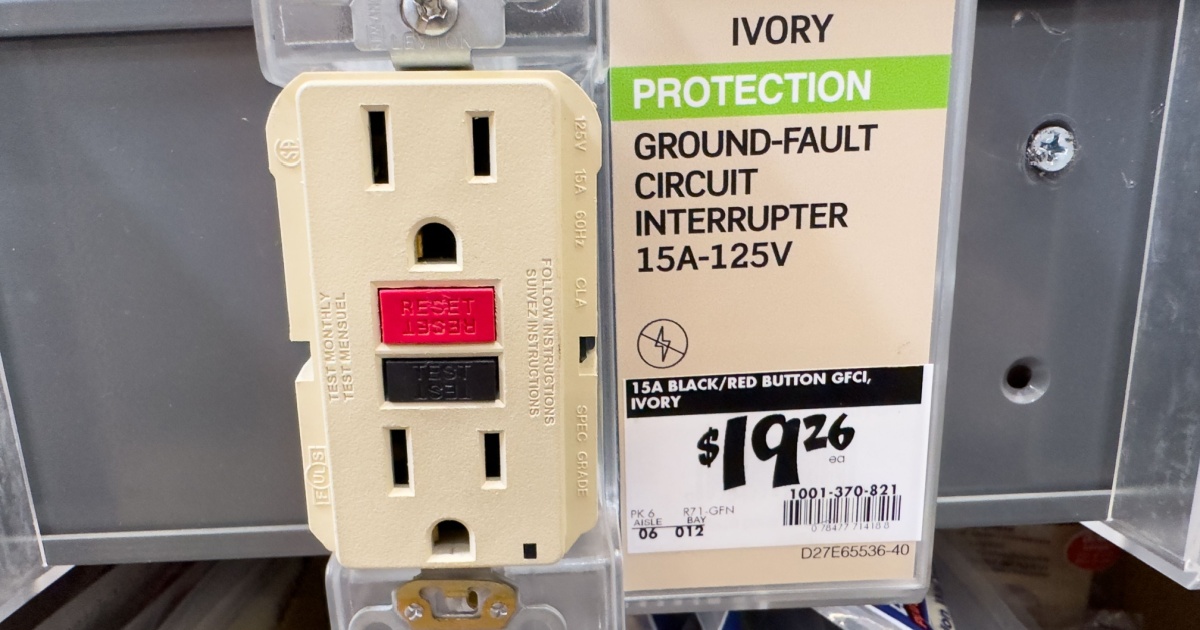
The outlets with the small “Test” and “Reset” buttons you’ll find in your kitchen, garage, and bathroom are a different breed. They are specifically engineered to protect you from electrical shock, and they do their job well. But that extreme sensitivity is also a double-edged sword. There are appliances in your home right now that genuinely should not be connected to these outlets, and knowing which ones can save you from anything ranging from a wasted dinner to a dangerous situation.
Here are the three appliances electricians consistently say you should never plug into a GFCI outlet.
1. Microwave Ovens
Your microwave might be sitting right next to a GFCI outlet in the kitchen, and that’s actually a problem hiding in plain sight. A GFCI outlet constantly compares the electricity leaving on the hot wire to the electricity returning on the neutral, and if even a tiny mismatch appears – typically 4 to 6 milliamps – it assumes current is leaking somewhere unsafe and cuts power almost instantly. Microwaves are high-powered appliances, and the startup surge alone when the magnetron (the component that generates microwave energy) kicks on can be enough to trigger that cut-off.
There’s a second, less obvious reason to keep microwaves off GFCI outlets. Appliances with motors, heating elements, or electronic filters can create leakage current or inrush spikes that cause nuisance tripping. Many modern electronics with motors have small, acceptable amounts of leakage, and when several are on one circuit, the cumulative leakage can exceed the GFCI’s threshold. The pump motor’s startup or an appliance’s internal EMI filters can produce leakage or transient signatures that trip a sensitive GFCI. The result is a tripped outlet that cuts your microwave off mid-cooking, requiring a manual reset every time.
This is what electricians call “nuisance tripping,” and it occurs when the GFCI cuts power during the normal, safe use of an appliance. Nothing is broken, nothing is dangerous – the outlet is simply reacting to electrical characteristics that larger appliances naturally produce. The fix is straightforward: built-in microwaves and wall ovens require a dedicated circuit due to their higher wattage and continuous power draw. A dedicated circuit, meaning one circuit that serves the microwave and only the microwave, eliminates the problem entirely. Many manufacturers specify that the oven must be operated on a separate, dedicated circuit, and that no other appliance should share that circuit, because if one does, the branch circuit fuse may blow or the circuit breaker may trip.
If you’re not sure whether your microwave is on a dedicated circuit, a licensed electrician can check your panel and confirm the setup. Most GFCIs are built to meet UL 943, the safety standard that governs their trip sensitivity. Understanding that standard helps explain why high-draw appliances and GFCI outlets are a poor pairing. It’s a quick job that prevents a daily frustration.
2. Refrigerators
The refrigerator is one of the most common appliances in a kitchen, and the kitchen is one of the most common rooms to have GFCI outlets. That combination makes this an easy mistake to make. Plugging your fridge into a GFCI outlet seems logical – water and electricity mix badly, and the kitchen is full of both. The issue is what happens when the GFCI trips while you’re asleep or at work.
Compressor inrush, defrost heaters, and built-in EMI filters in refrigerators can create small leakage currents that trip a GFCI even when nothing is actually wrong. Cycling is normal behavior for any refrigerator with a compressor, but to a GFCI outlet, the tiny current spike produced when the compressor motor starts up can look like a fault. The outlet doesn’t know the difference between a genuine electrical hazard and a fridge doing its job. Appliances with motors and electronic filters can create leakage current or inrush spikes that cause nuisance tripping, and some equipment must not lose power unexpectedly because the consequences are severe, including spoiled food.
The stakes here are higher than just a tripped outlet. If the GFCI trips without anyone noticing, the refrigerator or freezer will lose power, leading to food spoilage. And it can happen more subtly than you’d expect. Many GFCI outlets are wired in series, meaning that a single tripped GFCI can cut power to multiple outlets. If another appliance trips the circuit, it can shut off power to the refrigerator too, even though the refrigerator wasn’t the source of the fault.
The practical guidance from electricians is consistent: where possible, refrigerators should be on a dedicated circuit to prevent nuisance tripping. Where electrical codes require GFCI protection in these cases, electricians mitigate the risk with dedicated circuits, alarms, and regular testing. Check where your fridge is plugged in. If you see the “Test/Reset” button on the outlet behind it, it’s worth asking an electrician whether a dedicated, non-GFCI circuit is possible in your situation.
3. Medical Equipment
This is the one that matters most. If someone in your home uses a CPAP machine, an oxygen concentrator, a ventilator, or any other form of home medical equipment, the outlet that device is plugged into is not a small detail.
CPAP machines, oxygen concentrators, and home-infusion or dialysis equipment should not be on circuits prone to nuisance trips. Manufacturers and healthcare providers often recommend dedicated, non-GFCI receptacles or medical-grade power where available. The reason is simple: these devices often contain electronic components that produce small, normal amounts of leakage current. That leakage can be misread by a GFCI as a fault, causing the outlet to cut power. If that happens to a refrigerator, dinner spoils. If it happens to an oxygen concentrator, the consequences are far more serious.
For individuals relying on devices such as oxygen concentrators, ventilators, CPAP machines, and infusion pumps, power loss can be more than just inconvenient. It can be life-threatening. A CPAP machine is used to treat sleep apnea by maintaining continuous air pressure to keep the airway open. When therapy is interrupted, oxygen levels can drop, putting strain on your heart and brain. An estimated 6 million Americans currently use CPAP devices to treat their sleep apnea, and for every one of them, a consistent night of treatment is a medical necessity, not a luxury.
Oxygen concentrators are an even more pressing concern. Oxygen concentrator power requirements can vary from 300 to 600 watts, and these must be continuously accommodated. Power outages are a significant concern for individuals relying on oxygen therapy, as a sudden interruption can disrupt oxygen flow and potentially put the user’s health at risk, making a reliable backup power source critical. A GFCI tripping in the middle of the night, with no one awake to notice and reset it, is a genuinely dangerous scenario for anyone dependent on one of these devices.
Manufacturers and healthcare providers often recommend dedicated, non-GFCI receptacles or medical-grade power where available. These devices should never be used in wet locations, and they should be kept on stable, dry circuits with surge protection as specified by the manufacturer. Talk to both an electrician and your healthcare provider about the safest power setup for any medical equipment in your home. And seriously consider a backup power source such as a UPS (uninterruptible power supply) or a home generator for anything your health depends on.
GFCI outlets are excellent safety devices. Electrical safety pros have renewed guidance on GFCI outlets after code updates and new devices have widened their use across homes, emphasizing that knowing what should never rely on them reduces nuisance trips and, more importantly, reduces shock risk where water and electricity meet. The problem isn’t the outlet – it’s using the right outlet for the right appliance.
Take ten minutes this week to look behind your microwave, your refrigerator, and any medical devices in your home. If any of them are plugged into an outlet with “Test” and “Reset” buttons, call a licensed electrician to discuss whether a dedicated circuit makes sense. When GFCI protection is required for a constant-power appliance, risk can be reduced with dedicated circuits, quality devices listed to UL 943, routine testing, clear labeling, and add-on alarms. Appliance manufacturers specify circuit requirements for a reason, and ignoring them can lead to premature equipment failure or unsafe conditions. That small investment in your home’s electrical setup can protect your food, your appliances, and most importantly, the people you live with.
AI Disclaimer: This article was created with the assistance of AI tools and reviewed by a human editor.