
Rudy Giuliani has lived the kind of life that seems to exist in several distinct acts, each one dramatic enough to define a lesser man’s entire career. At 81, the former New York City mayor, federal prosecutor, and one-time presidential contender is back in the headlines, and the news is not good. Hospitalized in critical condition, his current health crisis is the latest chapter in a story that has always moved at a relentless and often turbulent pace.
The man who prosecuted the Mafia, rebuilt a city in the shadow of the worst terror attack in American history, and then became one of the most polarizing political figures of the modern era has never faded quietly from public view. Even in his eighties, Giuliani was hosting a live-streaming show from Palm Beach just days before the hospitalization announcement came.
Whether you regard him as a hero of New York’s darkest hours or a cautionary tale of how reputations can unravel, there is no denying the scope of Giuliani’s life story. This is a report on the man behind the headlines, and on what is known about his condition today.
Breaking: Giuliani Hospitalized in Critical Condition
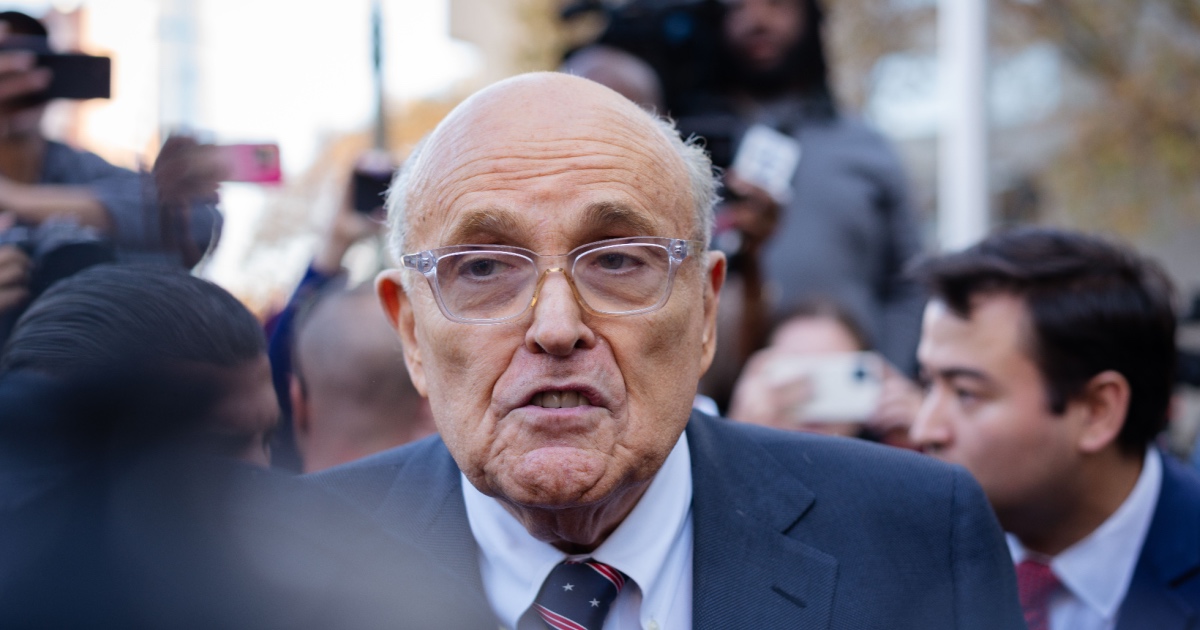
Former New York Mayor Rudy Giuliani is in critical but stable condition in the hospital, his spokesperson said Sunday. The spokesman did not specify why the 81-year-old had been hospitalized or which hospital had admitted him.
The announcement was made by spokesperson Ted Goodman on the evening of May 3. Goodman released a statement saying, “Mayor Giuliani is a fighter who has faced every challenge in his life with unwavering strength, and he’s fighting with that same level of strength as we speak,” adding that Giuliani “remains in critical but stable condition.”
Giuliani told viewers Friday on his X show “America’s Mayor Live” that his “voice is a little under the weather, so I won’t be able to speak as loudly as I usually do,” and was seen coughing a few times on the streamed program. He had missed several episodes in April but worked Monday through Friday as recently as March.
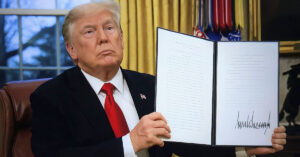
President Donald Trump confirmed Giuliani was hospitalized, describing him as “a True Warrior, and the Best Mayor in the History of New York City, BY FAR.”
This is not the first time Giuliani has found himself in a hospital bed in recent months. He was hospitalized after a car crash in New Hampshire in September 2025, suffering injuries including a fractured vertebra. He was a passenger in an SUV being driven by his spokesperson, Ted Goodman, when it was struck from behind by another vehicle. His spokesperson confirmed Giuliani suffered “fractured thoracic vertebrae, multiple lacerations and contusions, as well as injuries to his left arm and lower leg.” Before the crash, his security chief stated, Giuliani had been “flagged down by a woman who was the victim of a domestic violence incident.” Giuliani “immediately rendered assistance and contacted 911,” and “remained on scene until responding officers arrived to ensure her safety” before his vehicle was later struck on the highway.
In 2020, the former mayor also spent four days in the hospital battling coronavirus.
From Brooklyn to the Courtroom: The Early Career
Rudolph “Rudy” William Giuliani was born on May 28, 1944, in the New York City borough of Brooklyn to Harold and Helen Giuliani. His parents were the working-class children of Italian immigrants. After graduating from law school at New York University in 1968, Giuliani clerked for Judge Lloyd MacMahon in the Southern District of New York.
In 1989, when Giuliani stepped down after six years as U.S. Attorney for the Southern District of New York, he was perhaps the most famous law enforcement official in the United States. He left a legacy of successful prosecutions of leaders of New York’s organized crime families, the Mafia’s international heroin and cocaine ring in the “Pizza Connection” case, as well as high-profile political corruption and Wall Street criminal cases.
Among his most consequential prosecutions: In 1983, Giuliani became the U.S. Attorney for the Southern District of New York and gained public attention for his work bringing Mafia families to trial. The Mafia Commission Trial, which ran from February 25, 1985, through November 19, 1986, saw Giuliani indict eleven organized crime figures, including the heads of New York City’s “Five Families,” under the Racketeer Influenced and Corrupt Organizations Act (RICO) on charges including extortion, labor racketeering, and murder for hire. Eight of them were convicted and most were sentenced to 100 years in prison on January 13, 1987. As the Mob Museum records, Giuliani’s strategy was to prosecute the leaders of the families and their upper-level cohorts together under RICO – the first time the law, passed by Congress in 1970, was employed to prosecute a major federal case of this kind.
Wall Street came next. Michael Milken, known as the “king” of junk bonds, was indicted on 98 counts including racketeering, insider trading, and securities fraud, went to prison for nearly two years, and paid $900 million in fines – a prosecution Giuliani’s office drove. By the time he left the U.S. Attorney’s office, his name was synonymous with accountability at the highest levels of American power.
The Mayor of New York: 1994 to 2001
Giuliani resigned from his prosecutor position in January 1989 and began campaigning for mayor of New York City. Despite narrowly losing that year to Manhattan Borough President David Dinkins, he eked out a victory in a 1993 rematch. This marked the first time a Republican had been elected to the office since 1965.
Rudy Giuliani served as the 108th Mayor of New York City from January 1, 1994 until December 31, 2001. He ran on a platform of restoring order and fiscal discipline to a city many had given up on. Campaigning on the slogan “One City, One Standard,” he focused on reducing crime, reforming welfare, and improving the quality of life.
Crime and the “Broken Windows” Era
After being elected mayor in 1993, Giuliani hired Bill Bratton as his police commissioner to implement new policing policies throughout the city. Giuliani heavily subscribed to the theories of social scientists James Q. Wilson and George Kelling, whose 1982 “broken windows” essay argued that visible signs of minor disorder invite further crime. Such policies emphasized addressing crimes that negatively affected quality of life, with Bratton directing officers to more strictly enforce laws against petty offenses like subway fare evasion, public drinking, public urination, and graffiti.
The results were measurable. During his eight years in office, violent crime was cut roughly in half and murders went down 67 percent. His administration is credited with reducing serious crime in New York by 56 percent, including a 66 percent drop in murders and a 70 percent decline in shootings.
The methods, however, generated sustained controversy. Critics accused the mayor of aggravating race relations and supporting questionable policing tactics. Tensions particularly heated up after four white plainclothes detectives gunned down unarmed African immigrant Amadou Diallo in March 1999. Concurrent with his achievements, a number of tragic cases of abuse of authority came to light, and numerous allegations of civil rights abuses were leveled against the NYPD. More controversial still were several police shootings of unarmed suspects, and the scandals surrounding the sexual torture of Abner Louima and the killing of Amadou Diallo.
Welfare Reform and City Finances
When Mayor Giuliani took office, one of every seven New Yorkers was on welfare. He implemented what his office called the largest and most successful welfare-to-work initiative in the country, turning welfare offices into job centers and reducing welfare rolls by 640,000, nearly 60 percent.
The 2000 Senate Race and a Prostate Cancer Diagnosis
In 2000, Giuliani ran for the U.S. Senate against first lady Hillary Rodham Clinton. Diagnosed with prostate cancer, scandalized by an extramarital affair and separation from his wife, and trailing Clinton by 10 points in the polls, Giuliani withdrew from the race in May 2000. The Senate campaign that had seemed inevitable suddenly ended – a moment that illustrated how personal health crises can rewrite political trajectories without warning.
September 11, 2001: “America’s Mayor”
No single event shaped Giuliani’s legacy more decisively than the morning of September 11, 2001. Al-Qaeda terrorists killed nearly 3,000 people by flying hijacked planes into the World Trade Center’s two towers. Giuliani immediately took charge of rescue and recovery efforts, acting decisively and with poise under pressure to calm the city.
For his mayoral leadership following the September 11 attacks in 2001, he was called “America’s Mayor” and was named Time Person of the Year for 2001. He also received an honorary knighthood from Queen Elizabeth II for his leadership in the face of the attacks.
The praise was not universally held, however. Critics asserted that government officials, notably Christine Todd Whitman, former head of the U.S. EPA, and Mayor Giuliani, downplayed the health risks of the area and rushed to reopen Ground Zero, although this posed a grave and immediate health risk to first responders. Whitman later apologized in 2016 for having assured the public that the air in lower Manhattan was safe to breathe.
Businessman Michael Bloomberg, a Republican, would take over as mayor the following month. Barred by term limits from running for a third term, Giuliani had actively sought an unprecedented extension of at least three months. State and city legislators refused to consider his request, however, and on January 1, 2002, Bloomberg replaced him.
Post-Mayoral Life: Consulting, the Presidency, and Trump
In 2002, Giuliani founded a security consulting business, Giuliani Partners, and acquired, but later sold, an investment banking firm. In 2005, he joined a law firm that was renamed Bracewell and Giuliani.
Vying for the Republican Party’s 2008 presidential nomination, Giuliani launched a bid for the White House and was an early front-runner in the Republican primaries before being eclipsed by Arizona Sen. John McCain, the eventual GOP nominee. By concentrating his campaign efforts on the Florida primary, he conceded nearly a month of caucuses and primaries to other candidates, then withdrew from the race in late January 2008 after finishing a distant third in Florida.
He returned to presidential politics eight years later, not as a candidate, but as a member of Donald Trump‘s team during his successful 2016 bid for the White House. That alliance would come to define the final chapter of his public career – and cost him more than most could have anticipated.
Read More: Former Senator Ben Sasse, Dying of Pancreatic Cancer, Credits ‘Miracle Drug’ for Extending Life
The Legal Reckoning: Post-2020 Controversies
Giuliani, Trump’s former personal attorney, whose leadership of New York in the wake of the September 11 attacks earned him the nickname “America’s Mayor,” faced a slew of legal and financial troubles following the 2020 election.
He was the primary mouthpiece for Trump’s false claims of election fraud after the 2020 vote. On November 7, 2020, four days after the presidential election, Giuliani hosted a press conference at Four Seasons Total Landscaping, a small business in the Holmesburg neighborhood of Northeast Philadelphia. The site selection led to speculation that the Trump campaign had meant to book the upscale Four Seasons Hotel Philadelphia. Shortly after Giuliani began talking to the assembled reporters, the Associated Press projected Joe Biden as the winner of the Pennsylvania vote and thus the nationwide election.
Most notoriously, Giuliani was successfully sued by two Black election workers in Georgia whom he falsely claimed were part of a plot against Trump, frequently using racist pejoratives while doing so, resulting in a $148 million judgment in their favor.
On July 2, 2024, he was disbarred in the state of New York. On September 26, 2024, he was disbarred in the District of Columbia under reciprocal discipline. PBS News reported that the New York court found Giuliani had “essentially conceded” most of the facts underlying the misconduct charges. The panel concluded that the former mayor had “flagrantly misused” his position as Trump’s lawyer and “deliberately violated some of the most fundamental tenets of the legal profession.”
In 2023, Giuliani lost the $148 million defamation lawsuit over his false claims about two Georgia election workers and unsuccessfully attempted to declare bankruptcy. He later reached a settlement to pay damages awarded to the election workers.
He has pleaded not guilty to state criminal charges against him related to an election subversion scheme in Arizona. Prosecutors dropped a similar case against Giuliani and others in Georgia.
Giuliani’s son, Andrew Giuliani, is leading the White House task force for the 2026 FIFA World Cup.
What This Means Now
Rudy Giuliani’s story is a study in contradictions that span more than five decades of American public life. The same man who dismantled Mafia families in federal court and steadied a city after the worst terrorist attack in American history also became one of the most legally embattled public figures of the modern era. Few careers have swung so dramatically between admiration and censure.
As of May 4, 2026, Giuliani is hospitalized in critical but stable condition. The cause has not been publicly disclosed, and his spokesperson has not indicated which hospital admitted him, though Giuliani lives in Florida. What the public record does show is a man who has faced serious health challenges repeatedly in recent years – a coronavirus hospitalization in 2020, a fractured vertebra in a 2025 car crash, and now this latest undisclosed crisis.
His final years in public life have been defined not by the statesman the world praised on September 12, 2001, but by the cascade of legal and financial consequences that followed his alliance with Trump’s post-election claims. History will weigh both chapters. The full verdict, like his current prognosis, remains uncertain.
AI Disclaimer: This article was created with the assistance of AI tools and reviewed by a human editor.
Read More: Trump SSI Rule Change Could Cut Disability Benefits for 400K Recipients