
Most people don’t find out they have pancreatic cancer until the cancer has already gone somewhere it shouldn’t be. There are no early warning signs to speak of, no reliable screening test to catch it quietly in the background, and no standard-of-care drug that has moved the survival needle in any meaningful way for decades. When a diagnosis arrives, it tends to arrive late – and with devastating odds attached.
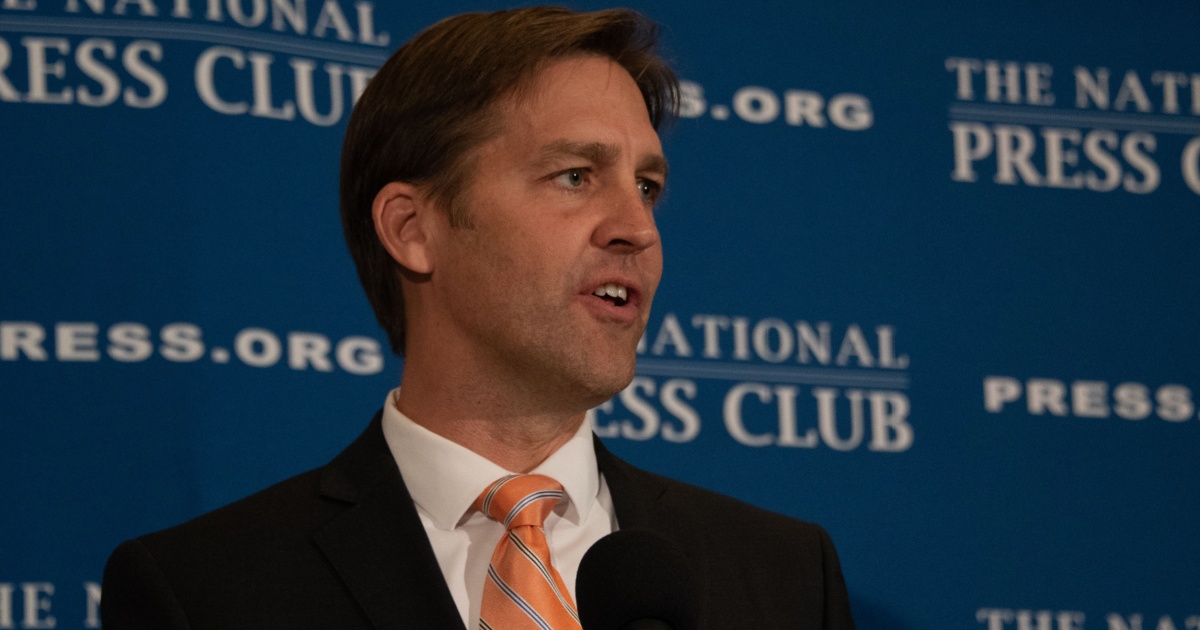
That’s exactly what happened to Ben Sasse. The 54-year-old former U.S. Senator from Nebraska had been living with intense back pain before doctors found the source: tumors pressing against his spine. By December 2025, he had a Stage 4 pancreatic cancer diagnosis, the cancer had already spread to his lungs and liver, and his doctors gave him somewhere between three and four months to live. His public statement at the time was blunt: he called it “a death sentence.”
What happened over the following four months is the kind of story that is hard to process all at once – not because it’s a cure, and not because the science is simple, but because it represents something that oncologists haven’t had many reasons to say about this particular disease in a very long time: genuine, measurable hope.
A Disease That Has Defied Progress
Before getting to the drug, it helps to understand why pancreatic cancer is such a stubborn problem. Pancreatic cancer remains the deadliest major cancer, and the only one with a five-year survival rate below 20%. In 2026, an estimated 67,530 Americans will be diagnosed with it, and 52,740 are expected to die from the disease. It is the third leading cause of cancer death in the United States.
The survival figures are especially stark for patients like Sasse. The five-year survival rate for distant, or Stage IV, pancreatic cancer – where the disease has spread to other organs such as the liver or lungs – sits at just 3%. Pancreatic cancer is particularly lethal because it is difficult to detect in early stages, often presenting symptoms only once it has already spread widely. Patients whose cancer is still localized around the pancreas have a 44% chance of surviving five years after diagnosis.
Part of the reason the disease is so hard to treat comes down to genetics. A gene called KRAS helps regulate cell growth. When it mutates, cells “just keep dividing and growing and dividing,” according to one oncologist, until it threatens the life of the patient. Pancreatic cancer is the most RAS-addicted of all major cancers, with more than 90% of patients having tumors driven by mutations in RAS proteins. For decades, that fact offered researchers little comfort, because no drug existed that could reliably block those mutant signals. Until now.
The Drug Ben Sasse Is Calling a Miracle
After being given three to four months to live, Sasse entered a clinical trial for daraxonrasib, an oral therapy taken as a daily pill, designed to block the defective gene that triggers uncontrolled cellular growth. As Sasse himself put it, if he was going to have “much of a chance of living longer,” he needed to get into an aggressive trial. That turned out to be an early-phase clinical trial testing Revolution Medicines’ daraxonrasib as a first-line therapy.
Daraxonrasib, manufactured by Revolution Medicines, is designed for patients with RAS-connected cancers and is the first of its kind – a drug that inhibits RAS proteins while also addressing a diverse and broad spectrum of cancer-driving RAS variants. Most earlier RAS-targeting drugs focused on a single mutation type, which made them largely irrelevant for pancreatic cancer patients whose tumors carry a different mutation profile.
The drug works by going after a key growth “switch” in many cancers called RAS. In pancreatic cancer, that switch is stuck in the “on” position in the vast majority of tumors, constantly telling the cancer cells to grow and spread. Daraxonrasib is designed to bind to RAS in its active state and turn that signal down.
The results in Sasse’s case have been remarkable. His tumor volume has shrunk by 76% since he began taking the experimental targeted therapy. He has been taking daraxonrasib alongside morphine, and says the drug has significantly reduced his tumors and overall pain levels by around 80%. On CBS News’ 60 Minutes, he described where he stands with striking directness: “I have much, much less pain than I had four months ago when I was diagnosed.”
For readers who want more context on why this cancer so often goes undetected until it reaches Stage IV, 10 signs of pancreatic cancer outlines the warning signals most people miss.
What the Phase 3 Trial Actually Found
Sasse’s personal results are striking, but they’re a single data point. The broader clinical picture tells its own story. In April 2026, Revolution Medicines announced positive results from its global, randomized, controlled Phase 3 RASolute 302 clinical trial evaluating daraxonrasib in patients with metastatic pancreatic cancer who had been previously treated. The oral drug, taken once daily, demonstrated statistically significant improvements in both progression-free survival and overall survival compared with standard intravenous chemotherapy.
The trial showed that daraxonrasib alone can significantly improve the survival of advanced pancreatic cancer patients to 13.2 months versus 6.7 months on chemotherapy for second-line therapy – meaning patients who had already tried one round of standard treatment. That’s nearly double the survival time. In the patient population being evaluated, that six-month difference is, in the words of one MD Anderson surgeon, “a lot.” He called it “a definite win” – and acknowledged it’s an advancement some doctors once thought improbable.
The Pancreatic Cancer Action Network, the leading organization dedicated to advancing progress against the disease, released a statement responding to the trial results. “We are standing at the threshold of groundbreaking treatments for patients with pancreatic cancer,” said Dr. Anna Berkenblit, its chief scientific and medical officer. Patients who received daraxonrasib lived approximately twice as long as those who received standard chemotherapy, “a truly remarkable result in this devastating disease,” she added.
The results also expand the potential benefit of targeted therapies to almost all patients with pancreatic cancer, since RAS mutations are detected in over 90% of cases. That’s the part researchers say is most significant – this isn’t a niche treatment for a small genetic subgroup. It’s potentially relevant to the overwhelming majority of people with this disease.
The U.S. Food and Drug Administration has already granted daraxonrasib Breakthrough Therapy Designation and Orphan Drug Designation for previously treated metastatic pancreatic cancer. The drug was also selected for the FDA Commissioner’s National Priority Voucher pilot program, which is intended to accelerate the development and review of therapies aligned with U.S. national health priorities. Revolution Medicines has said it intends to submit the data to global regulatory authorities as part of a future New Drug Application.
The Real Cost of the Treatment
Sasse has been refreshingly candid about what taking daraxonrasib actually feels like. He’s called it a “miracle drug” in one breath and “a nasty drug” in the next, and both descriptions hold.
RAS proteins are found throughout the body, particularly in the skin. Because daraxonrasib doesn’t distinguish between the mutated version and the normal version, it produces unpleasant side effects – exactly the kind Sasse has experienced. The new medication causes skin rash, peeling, and bleeding, similar in some ways to severe psoriasis. Sasse has described his face as feeling “nuclear,” with bleeding from spots that shouldn’t be bleeding. His description of his body being unable to grow skin properly has been widely quoted since his 60 Minutes interview.
Prior studies with daraxonrasib have shown that rash is the most common side effect, with mouth sores, diarrhea, nausea, and vomiting also common. In the clinical trials, most of these problems have been managed by adjusting the dose or adding supportive medications.
Revolution Medicines has stated that the majority of rash cases observed have been low-grade, with no patients discontinuing treatment because of rash. The company added that reports of rashes with bleeding have been described anecdotally by clinical trial investigators and are considered uncommon.
As one oncologist noted, it’s also worth being transparent about limits: daraxonrasib is still not FDA-approved, and it is not a cure. Over time, most cancers will eventually find ways to grow around the drug. That’s a critical point – what the trial results represent is a meaningful extension of survival, not an eradication of the disease.
What Comes Next for This Drug
Going to daraxonrasib even earlier as a frontline therapy, as Sasse has done, may have even greater benefits over chemotherapy. Researchers are already looking at this. Two Phase 1/2 datasets evaluating daraxonrasib as first-line therapy for metastatic pancreatic cancer were presented at the 2026 American Association for Cancer Research Annual Meeting, offering the first comprehensive look at the drug’s activity in patients who hadn’t yet received any prior treatment.
In the first-line monotherapy setting, daraxonrasib produced an overall response rate of 47% and a disease control rate of 92% – meaning nearly all patients in that early trial either saw their tumors shrink or stop growing.
Brian Wolpin, director of pancreatic cancer research at Dana-Farber Cancer Institute in Boston and the principal investigator for the RASolute 302 trial, said of the drug: it might be “the turning point for the field of pancreatic cancer” and “feels like the foundation on which we can really build effective treatments.”
That framing matters. The Phase 3 trial studied patients who had already failed chemotherapy once. The question researchers are now pursuing is whether daraxonrasib, used earlier and potentially in combination with other agents, could produce even larger gains. Resistance to treatment can still develop, and research into drug combinations is ongoing to overcome those challenges.
Read More: The Biggest Breakthrough in Pancreatic Cancer in Decades Is Here
What This Means for You
Daraxonrasib is still an investigational drug. It is not yet FDA-approved for general use, and it is currently available only through clinical trials. If you or someone close to you has been diagnosed with pancreatic cancer, the most direct action you can take right now is to ask your oncologist whether you qualify for a clinical trial – particularly any trial involving RAS-targeting agents. Research has shown that pancreatic cancer patients who participate in clinical research have better outcomes. Eligibility depends on factors including cancer stage, prior treatments, and mutation profile, so the conversation is worth having early.
For the broader picture, Sasse’s story – and the trial data behind it – represents the clearest signal the pancreatic cancer field has produced in years that a different kind of outcome is possible. As of January 2026, the five-year survival rate for pancreatic cancer sits at 13%. But over the past decade, that figure climbed from 7% to 13% – slow progress, yes, but progress. What Daraxonrasib’s Phase 3 data suggests is that the pace of change may be about to accelerate. Sasse himself, a man who was told he had months left, put it simply in his 60 Minutes interview: he’s grateful for the extra time, realistic about the limits, and fully aware that the drug giving him that time is not perfect. That combination of honesty and hope might be the most useful lens through which to follow what comes next for this research.
AI Disclaimer: This article was created with the assistance of AI tools and reviewed by a human editor.
Read More: Netanyahu Reveals He Underwent Secret Prostate Cancer Treatment