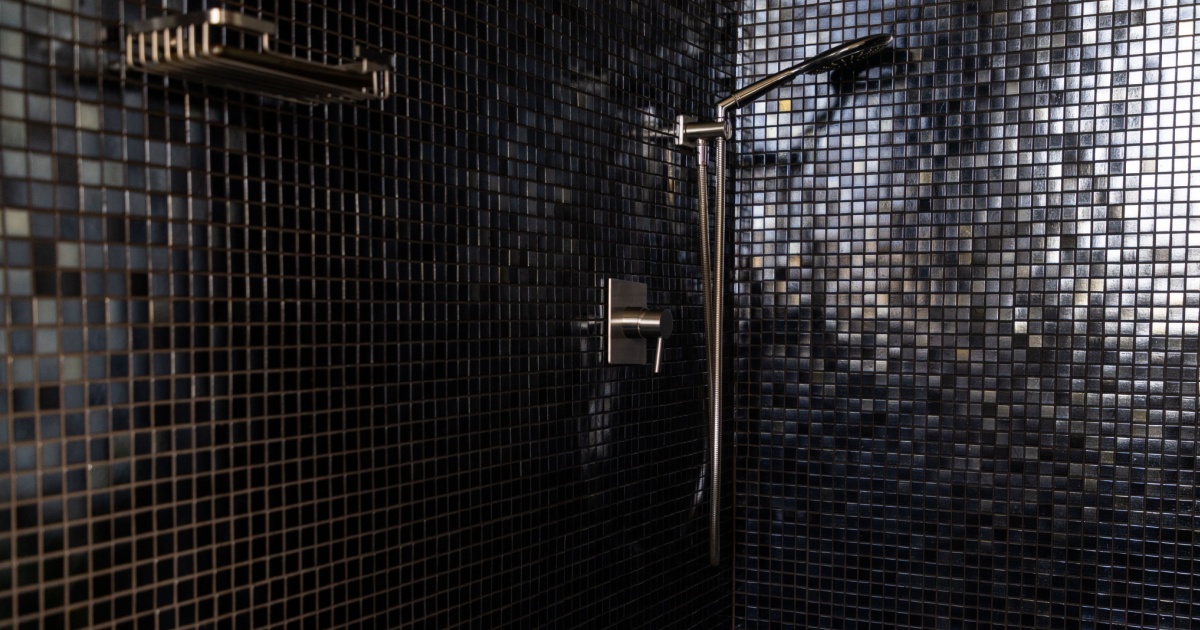

Something small is happening in bathrooms around the world every night, and it has nothing to do with a new skincare routine or an expensive shower head. Women are turning off the lights before stepping into the shower, standing in near darkness under warm water for 15 to 20 minutes, and then reporting that they’re falling asleep faster and waking up feeling more rested. The trend has a name – dark showering – and it’s moving quickly from niche wellness circles on TikTok and Instagram into mainstream conversation.
At first, the idea sounds more like a mood than a method. Shower in the dark? Why would that matter? But the more you look at the biology underneath the ritual, the more it starts to make sense. The bathroom at night turns out to be one of the most physiologically disruptive rooms in the house – and for reasons most people have never considered.
This isn’t a story about one magic fix or a singular viral hack. It’s a story about light, heat, and how the nervous system decides whether it’s safe to rest. The science behind dark showering pulls from several different fields of research, and the picture it paints is worth understanding in full – both for what the trend gets right and where the evidence still falls short.
What Dark Showering Actually Is
Dark showering refers to showering in a very low light environment to help reduce stimulation and sensory input before bed. In practice, that means switching off the overhead bathroom light, dimming it significantly, or replacing a bright bulb with a warm amber one before your evening wash. The routine typically involves dimming lights and creating a calming environment for around 15 to 20 minutes, and is considered particularly relevant for people dealing with anxiety, ADHD, or insomnia.
The latest iteration of this sleep hack involves switching off the bathroom light before stepping in. In the dimness, the water feels louder, the day’s visual clutter fades, and the hope is that sleep will come more easily. The practice has spread on social media, with people claiming that washing before bed in near darkness leads to deeper and faster sleep.
There is little research on dark showering as a standalone sleep technique. However, sleep science is clear about two key factors this ritual changes: light and heat. Both can nudge the body toward sleep or keep it alert. That distinction matters. This isn’t a trend built on nothing – it’s a trend built on adjacent science that, taken together, provides a reasonable biological rationale.
The Light Problem Nobody Talks About
How the Brain Reads Evening Light
Light is not only for seeing. Bright light in the evening signals to the brain’s internal body clock that it is still daytime. This delays the release of melatonin, a hormone that helps regulate sleep and is often described as the body’s “darkness signal.”
The pathway that makes this happen is called the retinohypothalamic tract. This is a pathway that connects your eyes to the brain’s master body clock, called the suprachiasmatic nucleus. When photoreceptors in the eye detect sufficient light – especially blue-spectrum light – they send a signal through this pathway that suppresses the pineal gland’s melatonin output. The body keeps running in daytime mode. Evening winds down, but the biology doesn’t follow.
Lighting has a strong impact on sleep quality because it alters our circadian rhythm, the body’s internal clock. Bright light and sunlight let the body know it’s time to wake up, while darkness and nighttime signal sleep. Creating a dark environment at home can help trigger those restful cues and ready your body for high-quality sleep.
What Laboratory Research Actually Shows
One of the most cited studies on this topic, conducted at Brigham and Women’s Hospital in Boston, enrolled 116 healthy adults in a controlled inpatient protocol. Researchers measured melatonin duration, onset and offset, and suppression. Compared with dim light, exposure to room light before bedtime suppressed melatonin, resulting in a later melatonin onset in 99.0% of individuals and shortening melatonin duration by about 90 minutes. That finding – published in the Journal of Clinical Endocrinology & Metabolism – means that standard room lighting before bed isn’t a minor inconvenience. In nearly everyone tested, it meaningfully compressed the body’s biological window of darkness.
Even relatively modest light exposure, equivalent to a well-lit living room or bedroom, significantly disrupts the natural rise in melatonin that prepares the body for sleep, demonstrating that modern lighting environments may be chronically interfering with healthy sleep preparation.
If typical indoor lighting can delay melatonin onset by 90 minutes, it means that if your natural bedtime should be 10 PM, room lighting could push your biological readiness for sleep to 11:30 PM or later. This explains why so many people struggle with falling asleep despite feeling tired.
LED Lighting and the Bedroom-Adjacent Problem
A 2025 crossover trial compared pre-bed exposure to cool white LED lighting with softer fluorescent lighting at the same brightness level. The LED lighting delayed the time it took participants to fall asleep by about ten minutes and left them feeling less sleepy. This matters because most modern bathrooms are lit with exactly the kind of cool white LEDs that performed worst in that trial.
Bright, blue-rich LED lighting can raise heart rate and reduce vagal tone within minutes. A 2025 systematic review found that dimmer, warmer lighting allows heart rate variability to increase, signaling a calmer nervous system. Vagal tone is a measure of how active the parasympathetic nervous system is, the system responsible for slowing the heart rate and creating the biological conditions that allow sleep to begin.
Another study of adolescents found that a burst of bright light in the early evening reduced melatonin levels three hours later and delayed the normal rise in sleepiness. The effect isn’t immediate and local. Light exposure earlier in the evening can shift the body’s internal clock hours later than the exposure itself.
For anyone who showers at night under full bathroom lighting – often the brightest room in the house – this body of evidence has a direct practical implication. Turning off that light, or even swapping to a dim warm amber bulb, removes a strong physiological signal that keeps the body in daytime mode.
“In contrast to blue light from screens, which can keep us awake when we’re ready for bed, orange hues can help our minds relax. Dim, warm light (red or orange hues) can facilitate the release of melatonin,” according to Rebecca Robbins, PhD, assistant professor at Harvard Medical School, speaking to TODAY.
You can read more about the ways modern bulbs interfere with your body’s sleep signals in this overview of how lighting affects your health.
The Heat Mechanism: Why Warm Water Works
Core Temperature and Sleep Onset
The relationship between body temperature and sleep is counterintuitive until you understand the mechanism. The body doesn’t need to be warm to fall asleep – it needs to cool down. Core body temperature drops naturally in the lead-up to sleep as part of the circadian process, and that drop is one of the key triggers for drowsiness. A warm shower accelerates this process.
Researchers at the University of Texas at Austin found that the optimal timing of bathing for cooling down of core body temperature is about 90 minutes before going to bed. Warm baths and showers stimulate the body’s thermoregulatory system, causing a marked increase in the circulation of blood from the internal core to the peripheral sites of the hands and feet, resulting in efficient removal of body heat and decline in body temperature. If baths are taken at the right biological time, they will aid the natural circadian process and increase one’s chances of not only falling asleep quickly but also of experiencing better quality sleep.
What the Meta-Analysis Found
The most comprehensive evidence on this comes from a 2019 meta-analysis published in Sleep Medicine Reviews, conducted by biomedical engineers at the University of Texas at Austin. The search yielded 5,322 candidate articles, of which 17 satisfied inclusion criteria, with 13 providing comparable quantitative data. Water-based passive body heating at 40 – 42.5°C was associated with both improved self-rated sleep quality and sleep efficiency, and when scheduled one to two hours before bedtime for as little as ten minutes, it produced a significant shortening of the time it took to fall asleep.
The meta-analysis concluded that about ten minutes in warm water one to two hours before bedtime shortened the time it took to fall asleep by roughly nine minutes and improved sleep efficiency, the proportion of time in bed actually spent asleep. Warm water widens blood vessels in the hands and feet, helping core body temperature drop afterwards, a key signal for drowsiness.
Nine minutes may not sound dramatic, but for someone who lies awake for 30 to 45 minutes most nights, it’s a meaningful reduction in sleep onset latency without medication or supplements.
The Nervous System Connection
The heat effect doesn’t stop at thermoregulation. Research on thermal bathing has consistently found that the cooling-down phase after warm water immersion promotes a shift in autonomic nervous system balance – specifically, from sympathetic (alert, reactive) toward parasympathetic (calm, restorative) dominance.
A study on sauna bathing found that the cooling-down period decreased low-frequency power and increased high-frequency power in heart rate variability measurements, favorably modulating the autonomic nervous system balance. The session demonstrated that during the cooling down period, there was an increased dominant role of parasympathetic activity and decreased sympathetic activity.
Higher vagal tone is linked to steadier breathing, lower stress hormone levels and an easier transition into sleep. The warm shower, in other words, isn’t just relaxing you in a vague, subjective sense. It is measurably shifting the state of your autonomic nervous system in the direction required for sleep to begin.
The Nervous System Reset: More Than Just Warmth and Darkness
Reducing Sensory Load
Dark showering may help prepare the nervous system for sleep. Low light reduces the brain’s alerting signals and makes it easier to shift from a state of vigilance, often called the “fight or flight” response, into a calmer “rest and digest” state.
Dr. Daniel Amen, a double board-certified psychiatrist and founder of Amen Clinics, explained the mechanism to Fox News: when the lights go out, “low or no light signals safety, activates the parasympathetic nervous system, and begins the body’s natural descent into rest and repair mode.”
As Amen explains, “the brain thrives on predictability,” and evening routines can help move us from alertness to restfulness. “Dark sensory rituals are more passive and somatic – you’re not doing something to calm the brain; you’re creating an environment that allows the brain to downshift on its own.”
The Role of Sound
One element of dark showering that doesn’t get much attention is auditory. In a dark shower, with visual input reduced, the sound of running water becomes the dominant sensory experience – and that appears to carry its own physiological benefit.
A 2024 systematic review and meta-analysis published in the journal Stress found that exposure to natural sounds – including flowing water – produced measurable differences in heart rate, blood pressure, and respiratory rate compared to a quiet environment, with natural sounds proving more beneficial for stress reduction overall.
Heat, darkness, and soft background noise may therefore combine to signal to the body that it is safe to relax. This is not a minor point. Modern evenings are dense with visual and auditory stimulation – screens, notifications, conversation, artificial light. A dark shower removes almost all of it simultaneously, giving the nervous system an unusually clear signal that the active day is over.
Sleep coach Patricia Read, in an interview with Healthline, described the sensory shift this way: “In the dark, we create space for our other senses to take over. We can focus more on the comforting feel of the warm water hitting us, the pleasant smells we chose for our cleansers, and the soothing sounds of the shower water.” She added that this can feel similar to being in a state of meditation.
The Mindfulness Layer
For those prone to racing thoughts, worry, or nighttime restlessness, dark showering can act as a transitional ritual – a moment to consciously shift from daytime alertness to nighttime calm. Establishing this kind of consistent, low-stimulation routine is a core principle of behavioral treatments for insomnia, including Cognitive Behavioral Therapy for Insomnia (CBT-I).
This is a significant point. CBT-I (a structured form of therapy that addresses the thought and behavior patterns that interfere with sleep) is the first-line treatment recommended by the American Academy of Sleep Medicine for chronic insomnia. The fact that dark showering aligns with its core logic – using consistent behavioral cues to train the brain to associate nighttime with rest – gives it a credibility that purely anecdotal sleep trends lack.
What the Evidence Does Not Yet Show
Intellectual honesty requires acknowledging the limits of what we currently know. No large trial has directly compared dark showers with brightly lit showers while measuring objective sleep outcomes, so the idea is based on combining related findings rather than direct evidence.
That means the case for dark showering rests on a logical chain: we know evening light suppresses melatonin, we know warm water before bed reduces sleep onset time, we know dim environments support parasympathetic activation, and we know consistent pre-sleep rituals support sleep hygiene. Dark showering pulls all of these levers at once. But a controlled randomized trial testing the combined practice against a bright-shower control, measuring actigraphy data and melatonin levels, has not yet been done.
There aren’t any obvious downsides to dark showering, though it shouldn’t be used as a quick fix for sleep problems. “Someone with chronic sleep issues or an underlying sleep disorder may find limited to no success without medical intervention,” according to sleep researcher Chelsie Rohrscheib, speaking to Healthline.
If dark showering replaces time spent under bright bathroom lights or scrolling on a phone, it may help simply by reducing evening light exposure. The benefit will be smaller if the shower is followed by time under full lighting to dry hair, choose clothes for the next day, and tidy up. In other words, context matters. A ten-minute dark shower followed by re-entering a brightly lit room and checking a phone screen is not going to override the light signal that those activities send.
There are also safety considerations. People with mobility difficulties may need some light to reduce the risk of slips, and those who experience night-time anxiety may feel uneasy in complete darkness. For this group, a dim amber nightlight or a low-lumen warm bulb achieves most of the biological benefit without the risk of a fall. For individuals with trauma histories, depression, or dissociation, being alone in the dark might feel more vulnerable than calming. In those cases, soft lighting, quiet music, or a comforting scent can make the space feel safer.
Read More: 6 Things You Shouldn’t Do In Bed To Improve Sleep Quality
What This Means for You
Dark showering is not a single magic intervention. It is a convergence of several well-supported sleep science principles – light reduction, pre-bed warming, parasympathetic activation, and behavioral cueing – packaged into one 15-to-20-minute evening routine. The biology behind each component is solid. The combined practice has not been tested head-to-head in a clinical trial, but that gap in the research does not undermine the logic.
For anyone who showers before bed anyway, the case for doing it in dim or zero light is straightforward. The physiological cost of keeping bright bathroom lights on in the hour before sleep is real and well-documented: melatonin suppression, delayed sleep onset, elevated alertness, and disrupted circadian signaling. Turning off the light removes those costs with zero financial investment and no side effects.
The practical protocol, based on what the research supports, looks like this: shower in warm water (approximately 104 – 109°F) about 90 minutes to two hours before your target bedtime, for at least ten minutes. Use no overhead lighting, or replace your bathroom bulb with a dim, warm-spectrum (amber or red-toned) alternative. Leave your phone outside the bathroom. Let the sound of the water be the only thing you’re paying attention to. After the shower, keep the rest of your home dim – avoiding bright lighting undoes the melatonin benefit quickly.
For those with mobility concerns, a small amber nightlight placed low on the wall provides enough visibility to move safely without triggering the circadian response that bright overhead lights produce. And for anyone who has been lying awake longer than they’d like each night, this is a genuinely low-barrier adjustment worth trying. “It’s a good way to relax and de-stress before bed, moving our nervous system into the parasympathetic state, which is responsible for relaxation and sleepiness,” according to Rohrscheib. That description – modest, mechanistic, and proportionate – is about right. Dark showering is not a cure for insomnia, hormonal sleep disruption, or any diagnosed sleep disorder. But for the large population of adults who fall asleep harder than they should because their evenings are too bright and too stimulating, it is a low-cost, zero-risk adjustment with a real biological rationale behind it.
Disclaimer: This information is not intended to be a substitute for professional medical advice, diagnosis or treatment and is for information only. Always seek the advice of your physician or another qualified health provider with any questions about your medical condition and/or current medication. Do not disregard professional medical advice or delay seeking advice or treatment because of something you have read here.
AI Disclaimer: This article was created with the assistance of AI tools and reviewed by a human editor.
Read More: 10 Weird Signs That May Indicate You’re Sleep-Deprived (Beyond Fatigue)