
There’s a particular cruelty to a hidden threat. Not the kind that announces itself – the kind that sits quietly in a glass of water, in a child’s bath, in the sweet tea brewed on a summer afternoon. For the people of northwest Georgia, that quiet threat has a name. They just weren’t told about it for nearly two decades.
The story emerging from this corner of the American South isn’t simply about polluted water. It’s about who knew, what they chose to do with that knowledge, and what happened to the families who were never told. It involves some of the most recognizable flooring brands in the country, a class of chemicals that has accumulated inside human bodies across the region, and a state regulatory agency that scientists and federal officials say failed to act even as the evidence mounted.
The fallout is still unfolding – in courtrooms, in bloodwork, and in the lives of people who grew up drinking from a tap they trusted.
What Are “Forever Chemicals” and How Did They Get Into Georgia’s Rivers?
PFAS stands for per- and polyfluoroalkyl substances. These are a group of man-made chemicals prized for their water- and stain-resistance, and they have been ubiquitous in U.S. manufacturing, found in everything from nonstick pans and raincoats to shoes and carpets. They’re called “forever chemicals” because they persist in people and take decades or more to break down in the environment.
Starting in the 1970s, the textile mills of northwest Georgia relied on chemicals known as PFAS to add stain resistance to the carpets they manufactured. For decades, those mills used PFAS in popular brands like Stainmaster and Scotchgard, and some of the chemicals that didn’t adhere to carpets were flushed with the industry’s wastewater into local sewer pipes and, eventually, the region’s rivers.
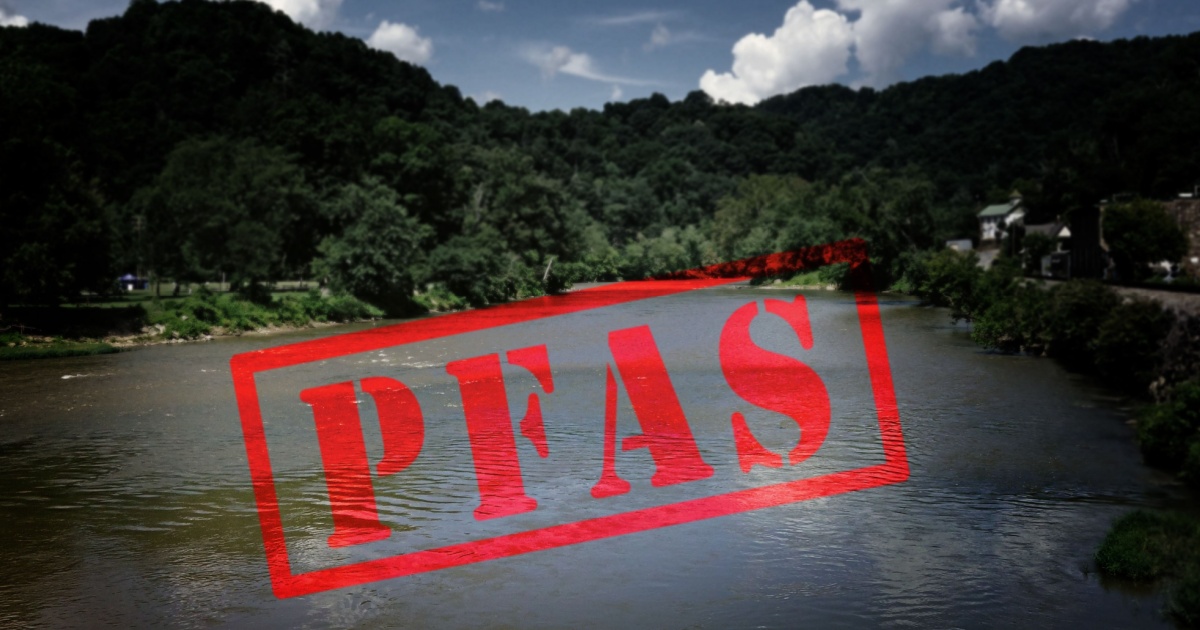
The issue comes into sharp focus in northwest Georgia, home to some of the world’s largest carpet companies, which for decades used products containing PFAS to make carpets stain resistant. The rivers those mills drained into – the Conasauga, the Coosawattee, the Coosa – happen to be the same rivers that supply drinking water to communities throughout the region and, as contamination spread, well into neighboring Alabama.
Officials Knew. The Public Didn’t.
This is where the story becomes hard to accept. Testing by the University of Georgia that alerted both the industry and the state in 2008 showed the local Conasauga River, which supplies the region’s drinking water, was polluted. That same year, the state’s environmental director told carpet manufacturers the agency would not take action on the chemicals.
The state’s own testing, which did not occur until 2012 and 2016, confirmed the university’s results. And in 2019, federal tests still detected PFAS. Through all of this, families were still drinking from the tap.
Even without federal limits on chemicals like PFAS, states have the authority to protect public health and the environment. Instead, Georgia’s Environmental Protection Division did little to confront the problem, issuing neither fish advisories nor do-not-drink orders to the public even as concerns grew among scientists and federal regulators about the dangers of PFAS, a joint investigation by reporters and documentary filmmakers has found.
Today, Georgia is still not regulating PFAS, in contrast to other states that have invested tens of millions of dollars in cleanups and sued polluters to recoup costs.
Georgia’s EPD has pushed back against that characterization. Deputy Director Anna Truszczynski said her agency looked to federal regulators for guidance and waited for scientists to better understand the risks of PFAS. She said her agency helped several cities struggling with contamination by providing testing support, connecting them to potential funding sources and advising them on possible filtration technologies.
But Scott Gordon, a former chief of water enforcement for the EPA’s regional office in Atlanta, described the situation more bluntly. Referring to Dalton Utilities and the carpet industry, Gordon said they “remained in the complete shadows – and, honestly, they still are.”
Today, under EPD oversight, PFAS levels at Loopers Bend remain largely unmonitored.
What the Chemicals Are Doing to People’s Bodies
The science on PFAS and human health has been building for years, and it is troubling. PFAS exposure is associated with adverse health risks including cancer, steroid hormone disruption, infertility, lipid and insulin dysregulation, higher cholesterol levels, liver and kidney disease, altered immunological and thyroid function, and cardiovascular effects.
Exposure to certain PFAS may be associated with increased risk of thyroid cancer, and a large-scale study on exposure to PFAS in humans and rodents showed consistent evidence of liver damage. Research published in 2025 from the National Institute of Environmental Health Sciences also notes that PFAS are known to accumulate in body tissues, particularly in the liver.
For children, the risks extend further. In infants and children, PFAS exposure can cause adverse effects on premature babies and lead to reduced growth, lower visual motor skills and attention-deficit/hyperactivity disorder in childhood, lower levels of antibody concentrations against mumps and rubella, and reduced lung and respiratory function. These findings come from a 2025 comprehensive review published in peer-reviewed literature and are based on observational studies – causal conclusions for individuals remain difficult to establish, but the weight of evidence has led public health bodies to take the risks seriously.
A 2025 study from researchers at the University of Southern California found that PFAS in drinking water was associated with increased cancer incidence across multiple organ systems, and estimated that PFAS-contaminated water may contribute to thousands of incident cancer cases in the U.S. each year. The researchers note this is an ecological study – meaning it examines population-level patterns, not individual exposure – and acknowledged the findings require further research to confirm.
The Blood Tests That Confirmed Community Fears
The abstract risk became concrete when researchers started testing people in the region directly. Nearly a decade after state regulators discovered toxic chemicals in northwest Georgia’s drinking water, a preliminary Emory University study tested the blood of 177 residents living in Rome and Calhoun. The findings showed that nearly 25% of participants had PFAS concentrations high enough to warrant additional medical evaluations, according to guidelines set by the National Academies of Sciences, including screenings for cancer, thyroid disease, and high blood pressure.
Around 40% of study participants had higher levels of PFAS in their blood than 95% of the U.S. population. One participant was found to have a PFAS blood level of 141 nanograms per milliliter, far exceeding the recommended safe threshold of 2 ng/mL.
The lead researcher at Emory University’s Rollins School of Public Health, Dr. Dana Barr, found that drinking tap water rather than filtered or bottled water was associated with higher PFAS exposure. The study did not explore health outcomes directly, and Emory researchers say follow-up research is needed – but those efforts will require more funding and support from state and federal agencies.
Environmental activist Erin Brockovich, who has held multiple town halls across northwest Georgia, described the PFAS contamination in the region as among the worst she has encountered in 30 years of environmental advocacy. She drew a crowd of over 600 people to a Rome town hall in March 2026.
The Blame Game Between Carpet Makers and Chemical Suppliers
So who is responsible? That question is now being fought out in courts across the country, with no clear resolution in sight.
The country’s two largest carpet companies, Shaw Industries and Mohawk Industries Inc., both based in the region, blame the contamination on their chemical suppliers, which they said for years hid the dangers of PFAS in their products. The carpet companies said they followed regulators’ guidance and pointed out there are still no enforceable limits on the chemicals. In court filings, chemical suppliers 3M and DuPont said it was ultimately the carpet industry, not them, that put PFAS in the waters of northwest Georgia.
Meanwhile, the communities themselves have been left to bear the cost. The city of Rome prevailed in its own lawsuit, filed in 2019, and is using the funds to build a $100 million water treatment plant. Calhoun, following a 2024 settlement with environmental groups, turned around and sued carpet manufacturers and their chemical suppliers, as did the city of Dalton.
The politics inside Georgia have been equally fractious. Residents protested in early 2026 at the Dalton restaurant of Republican Rep. Kasey Carpenter, who had sponsored a bill to shield carpet companies from legal liability. Carpenter has said chemical manufacturers, not carpet manufacturers, are to blame. His legislation didn’t pass. A separate bill co-sponsored by state Sen. Chuck Payne, another Dalton Republican, would have given authority to EPD and Georgia’s attorney general to handle PFAS lawsuits brought by local government.
Advocates say state-led action becomes more important as the federal government retreats from environmental regulations, including on PFAS. While the EPA has still not put enforceable limits on forever chemicals in place, the agency’s proposed limits include the two that carpet manufacturers used most, and those limits are set to go into effect in 2031.
Read More: PFAS are in the US Food Supply, here’s why you should care
What to Do Now
The Georgia situation is extreme in its scale and its duration, but it is not unique. PFAS contamination has been documented across the United States in water systems near industrial sites, military bases, and manufacturing facilities. The EPA set maximum concentrations of PFAS in drinking water at 4 parts per trillion for PFOA and PFOS in 2024 – but those are federal standards, and enforcement timelines are long. Many communities, particularly those in states without their own PFAS regulations, are still waiting for meaningful protection.
If you live near an industrial area, a military base, or a region with a history of textile or chemical manufacturing, the most immediate step you can take is finding out what is actually in your water. Request a water quality report from your local utility – every regulated public water system is legally required to provide one. If you want independent testing, look for a certified lab that can screen specifically for PFAS compounds. Standard household filters do not remove PFAS, but reverse osmosis systems have been shown to be effective.
Emory’s Dr. Barr found that residents who drank tap water tended to have higher PFAS exposure than those who drank bottled water or water filtered through a refrigerator. That is a low-cost protective measure while broader solutions are pursued. Switching to filtered water and storing it in glass or stainless steel, rather than plastic, which can introduce its own contaminants, is a reasonable precaution for anyone concerned about their exposure.
For residents in northwest Georgia and comparable regions, the Emory study’s findings make it worth discussing PFAS exposure with your doctor, especially if you have unexplained changes in thyroid function, liver enzymes, or cholesterol. Those conversations are more productive now that the National Academies of Sciences’ 2022 clinical guidance report has given clinicians a clear framework for testing and follow-up care for patients with a history of elevated PFAS exposure. The CDC’s Agency for Toxic Substances and Disease Registry has since updated its guidance for clinicians based on those recommendations.
What happened in Georgia is a stark reminder that regulatory silence is not the same as safety. The chemicals were in the water. The data existed. The people who needed to act had every tool available to them. The families filling their pitchers at the kitchen tap had no idea.
Disclaimer: This information is not intended to be a substitute for professional medical advice, diagnosis or treatment and is for information only. Always seek the advice of your physician or another qualified health provider with any questions about your medical condition and/or current medication. Do not disregard professional medical advice or delay seeking advice or treatment because of something you have read here.
AI Disclaimer: This article was created with the assistance of AI tools and reviewed by a human editor.
Read More: Toilet Paper May be a Source of Cancer-Linked PFAS. 6 Brands to Avoid