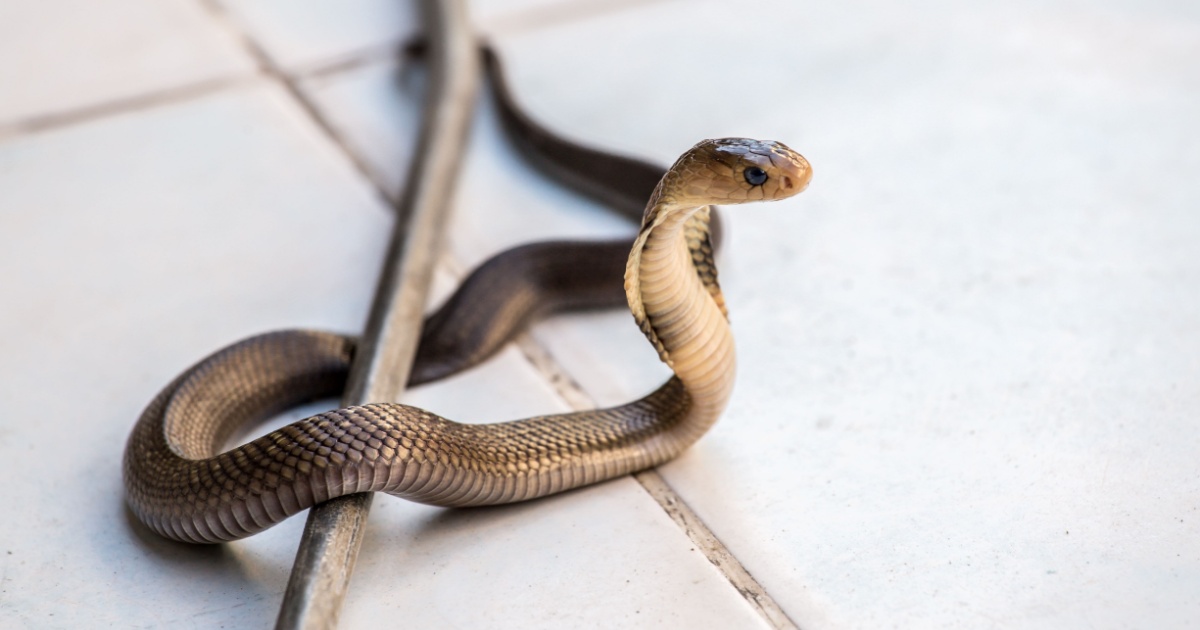

Most people spot a snake near their home and immediately wonder two things: is it dangerous, and how do I stop it from coming back? The second question turns out to have a surprisingly elegant answer. Snakes live and die by their sense of smell, and that extraordinary sensitivity is also their Achilles’ heel. The right scents, placed in the right spots, can make your yard feel deeply unwelcoming to any serpent doing its reconnaissance.
Snakes don’t smell the world the way you or I do. They don’t just inhale and process aromas through their nose. Snakes use their Jacobson’s organ to sense prey, sticking their tongue out to gather scents and touching it to the opening of the organ when the tongue is retracted. The Jacobson’s organ is most developed in lizards and snakes, in which its connection with the nasal cavity has been closed and replaced by an opening into the mouth. Every time a snake flicks that forked tongue, it’s essentially reading a chemical map of everything nearby – prey location, potential mates, threats, and the safety of a given area. When a powerful, irritating scent floods that system, the snake doesn’t just find it unpleasant. It loses its ability to make sense of its surroundings entirely.
That’s the logic behind scent-based deterrence. When a snake samples intensely scented air, the fumes bombard the Jacobson’s organ, overloading those receptors. The sudden flood of confusing signals throws off the snake’s sense of direction, so it turns away to find fresher air rather than risk moving while effectively “blinded.” With that mechanism in mind, here are the eight scents that snakes genuinely hate, and how to put each one to work.
1. Cinnamon Oil
Of all the scents on this list, cinnamon oil has the strongest scientific backing. Research shows that cinnamon oil, clove oil, and eugenol are effective snake repellents, and snakes will retreat when sprayed directly with these oils. That finding comes from a USDA APHIS Wildlife Services technical note on snake repellents, which has used these compounds to manage invasive brown tree snake populations on the Pacific island of Guam. Chemical irritants useful as repellents for brown tree snakes were identified in a published study, with exposure to various compounds producing a range of intensities for locomotory behavior in snakes.
The active compound responsible for cinnamon’s repellent effect is cinnamaldehyde – the same volatile compound that gives cinnamon its sharp, penetrating aroma. To use it at home, mix 5 to 10 drops of cinnamon essential oil with water in a spray bottle, shake well, and apply along fence lines, shed doorways, and entry points around your home’s foundation. Reapply every few days, and always after rain. Keep the spray away from pets, as concentrated essential oils can be irritating to cats and dogs.
2. Clove Oil
Clove oil works through a nearly identical mechanism to cinnamon and is just as well-supported. Essential oils like cinnamon and clove oil produce intense aromas that snakes dislike. These oils can irritate the snake’s senses, making them avoid areas where the scent is present. The two are often combined for maximum effect, and many commercial snake repellents are built around exactly this pairing.
The USDA’s Animal and Plant Health Inspection Service (APHIS) confirms that cinnamon oil, clove oil, and eugenol are all proven effective snake repellents and irritants, and these substances are minimum risk pesticides exempt from EPA registration requirements. Eugenol, for those unfamiliar, is the primary active compound found in clove oil itself. You can use clove oil in the same spray preparation as cinnamon, or soak cotton balls in a clove oil solution and tuck them into crawl spaces, gaps under decks, or corners of garages. For indoor use, you can also diffuse cinnamon and clove oils in enclosed areas like basements, attics, or garden sheds to help maintain an uninviting scent barrier.
3. Garlic
Garlic is one of the most widely used natural snake deterrents, and the chemistry behind it makes the case reasonably well. Allicin is an organosulfur compound obtained from garlic. When fresh garlic is chopped or crushed, the enzyme alliinase converts alliin into allicin, which is responsible for the aroma of fresh garlic. When snakes come around garlic-treated areas, they may be repelled due to the effect of this acid compound, which produces a disorienting aroma they dislike.
Garlic and onion are among the strongest natural snake repellents because of their high sulfur content. When crushed or mixed into a spray solution, these scents linger in the air and soil, creating an environment that snakes find irritating and unsafe. Crush several cloves and scatter them near potential entry points, or mix them with water to create a spray. One honest note: the evidence for garlic specifically is mostly anecdotal and observational rather than from formal controlled trials, so use it as part of a broader strategy rather than a standalone fix. Allicin can be unstable, breaking down within 16 hours at room temperature outdoors, which means consistent reapplication really does matter.
4. Peppermint Oil
Peppermint is one of the most intense smells in nature, and snakes want no part of it. Peppermint and other plants in the mint family are considered a safe and effective snake deterrent. Because mint is such a strong smell, snakes hate it and will usually stay away. Peppermint oil, and minty fragrances in general, are widely regarded as snake repellents. Peppermint is also considered a mice repellent, which makes food sources scarcer for snakes around your home.
Snakes don’t show up to a yard randomly. They come because there’s food there, usually mice, rats, or other small rodents. Deterring the food source removes a key reason for a snake to be there in the first place. You can apply peppermint oil similarly to cinnamon and clove – diluted in water as a spray, or via soaked cotton balls. You can also plant mint directly in your garden, where it functions as a living, continuously releasing deterrent that refreshes itself with every rainfall. If you’re dealing with other uninvited backyard visitors at the same time, this article on plants that repel pests covers a range of companion planting strategies worth reading alongside this one.
5. Vinegar
White vinegar is a practical, low-cost deterrent that works particularly well around water features and hard surfaces. Experts say vinegar works as a snake deterrent. The most important reason is that vinegar is an acidic substance, and snakes are very sensitive to acidic substances, avoiding anything that is even slightly acidic. Spraying white vinegar around the perimeter of a water body can help keep snakes away, as the strong scent of vinegar can deter snakes, especially from areas where they might come to hydrate.
Pour undiluted white vinegar along fence lines, around pool edges, garden pond borders, and near foundation gaps. The effect is temporary, so this approach works best when applied consistently, especially during warmer months when snakes are more active. Because vinegar is non-toxic to soil and plants at typical use concentrations, it’s one of the safer options if you have a vegetable garden you’re trying to protect. It does, however, evaporate and lose potency quickly, so plan to reapply every few days or after any significant rainfall.
6. Citrus
One of the most commonly used snake-repelling scents is citrus. Citrus fruits like lemons, oranges, and grapefruits contain a chemical called limonene, which is a natural snake repellent. Limonene is a monoterpene – a type of aromatic hydrocarbon – that registers as overwhelming and disorienting to snakes when the concentration is high enough to saturate the area around Jacobson’s organ.
You can boil citrus peels in water for 15 to 20 minutes, allow the mixture to cool, pour it into a spray bottle, and apply the spray around garden beds, porches, and entry points. You can also simply scatter fresh citrus peels around problem areas, or rub citrus zest directly onto fence posts or door frames. The smell won’t linger as long as an essential oil spray, so think of peels as a daily refresh option. Lemon, orange, and lime all work, and you can rotate them to keep the scent environment varied and unpredictable for any snake checking your perimeter.
7. Lemongrass
Lemongrass earns its place here through its citronella content, a natural oil with a sharp, lemony aroma that repels a surprising range of pests. West Indian lemongrass is a variety that snakes avoid owing to its strong lemony odor. It’s also used to make citronella candles. Lemongrass plants are simple to find, easy to care for, drought tolerant, and may be used as a spice in cooking. The active ingredient in lemongrass responsible for its repellent property is citronellal, the natural oil found in the plant – the same compound used in mosquito repellents, which has been found to repel snakes as well.
This one is particularly attractive as a long-term solution because lemongrass functions as a physical planting, not just a product you have to keep buying. Plant it around the perimeter of your yard, near garden gates, or in large pots flanking doorways. It grows quickly and can reach several feet tall, creating both a scent barrier and a visual border. As a bonus, you’ll keep mosquitoes at bay at the same time, which is a worthwhile payoff during summer months regardless of any snake concerns.
8. Ammonia
Ammonia is the most potent scent on this list, and it comes with a serious caution attached. Ammonia’s strong and pungent smell is a proven deterrent for snakes. Its harsh scent irritates their respiratory system and creates a barrier they avoid crossing. Soaking rags in ammonia and placing them near snake-prone areas like crawl spaces or under decks can help keep them away, but you must be cautious when handling ammonia, as it can be harmful if not used correctly.
Ammonia should never be used near pets, children, food gardens, or water sources. The smell of naphthalene in mothballs is a traditional remedy touted as a snake repellent, but its effectiveness is debated and it’s toxic to humans, pets, and the environment, so its use is generally not recommended. Ammonia, by contrast, dissipates over time and doesn’t accumulate in soil the way synthetic chemicals can, but it still demands respect. Use it only in enclosed or isolated areas with good ventilation, and keep it well out of reach of children and animals. Soak old rags, place them in sealed containers with holes cut in the lid, and position them near crawl space entrances or under outbuildings where snakes are likely to shelter.
DIY Natural Snake Repellent Spray
You don’t need to buy a commercial product to get solid results. This simple essential oil spray uses the two most scientifically supported repellent compounds, cinnamon and clove oil, in a formula that’s easy to make and safe to use around most gardens.
What you need: – 1 cup of water – 10 drops of cinnamon essential oil – 10 drops of clove essential oil – 5 drops of peppermint essential oil (optional, for added potency) – A few drops of liquid dish soap (acts as an emulsifier to help the oils blend with the water) – A clean spray bottle
Combine the water and dish soap in the spray bottle first. Add the essential oils, cap the bottle, and shake thoroughly before each use. Spray the mixture around sheds, garages, or garden edges to create a protective barrier. Since the smell fades over time, reapplying every few days ensures continued effectiveness. For particularly stubborn entry points, soak cotton balls or strips of cloth in the mixture and place them near vents, cracks, or known entry points. They hold the scent longer than a spray alone and can be replaced as needed.
Vary your scent strategy so snakes never get too comfortable. Switch among clove leaf oil, cinnamon bark oil, cedar shavings, and other deterrents every couple of weeks. This rotation approach prevents snakes from becoming habituated to a single scent over time.
Read More: What Does It Mean If You See a Yellow Ladybug
What to Do Now
Scents can genuinely deter snakes, but they work best as one layer of a broader strategy. The most honest assessment of the evidence is this: research from APHIS confirms that cinnamon oil, clove oil, and eugenol are effective snake repellents. Other scents on this list, like garlic, vinegar, and peppermint, have strong anecdotal and some scientific support, but the research is less conclusive. Treat them as useful additions rather than guaranteed barriers.
Scent alone won’t solve a snake problem if your yard is actively inviting them in. To keep snakes away from your property, remove their hiding spots and food sources. Clear rock piles, wood stacks, thick mulch beds, and dense shrubs, and cut the grass short while trimming brush back from your home’s foundation. If you want a broader approach to physical exclusion, this guide on keeping snakes out of your home covers sealing methods, entry point management, and safe removal techniques in detail.
Apply your DIY spray along the perimeter every few days during warm months, rotate your scents every couple of weeks, and pair the whole effort with basic yard maintenance. Snakes are opportunists. Remove the opportunity, and they’ll move on.
AI Disclaimer: This article was created with the assistance of AI tools and reviewed by a human editor.
Read More: Top 10 Biggest Snakes in The United States