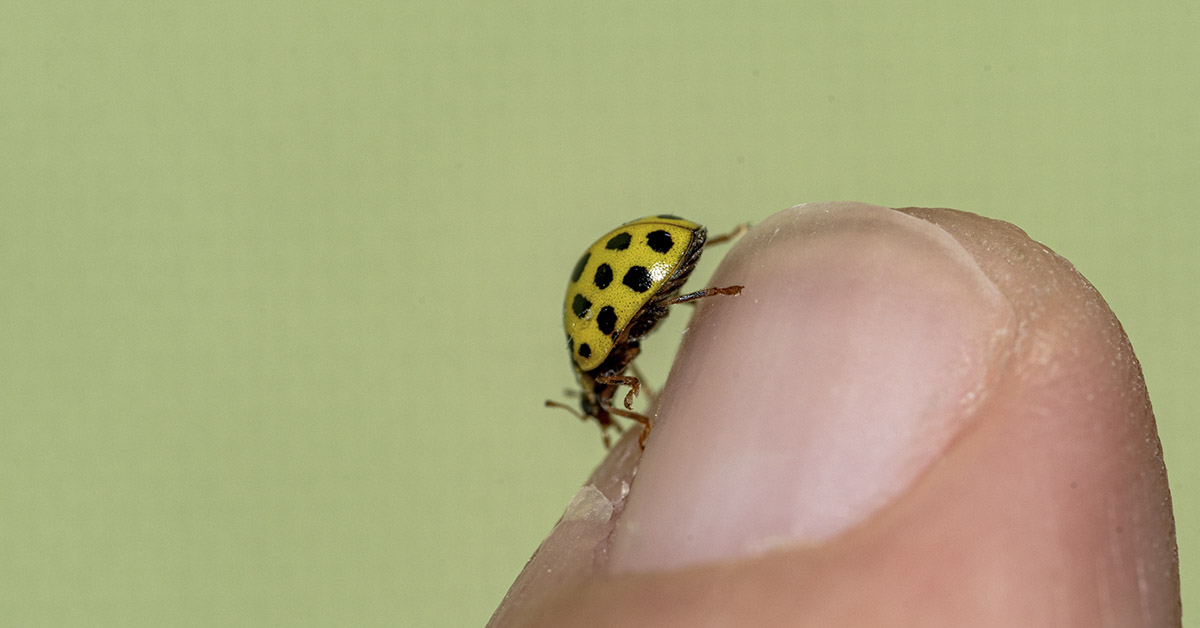

A yellow ladybug usually catches our attention because most people expect the classic red type. Yet yellow is not really that unusual within this insect family. In fact, university sources describe lady beetles in yellow, orange, red, pink, and black. So the first answer is simple. A yellow ladybug usually means you have found a real lady beetle, but not the color form you expected. The better question is what that sighting says about the place around it. A yellow ladybug on a leaf may signal aphids, scales, or other small prey. Furthermore, a pale yellow one on a sunny wall in fall may be searching for winter shelter.
Or, a tiny yellow species on a powdery leaf may be feeding on mildew. The insect’s location usually tells more than its color alone. That is why color should start identification, not end it. Some yellow ladybugs are helpful predators. Some are harmless fungus feeders in ordinary garden settings. A few yellow-spotted relatives can damage crops. Good identification turns a pretty sight into useful information for gardeners and homeowners. Yellow matters, but shape, spot count, season, and behavior matter more.
Yellow Ladybugs Usually Mean Food, Shelter, or a Certain Species
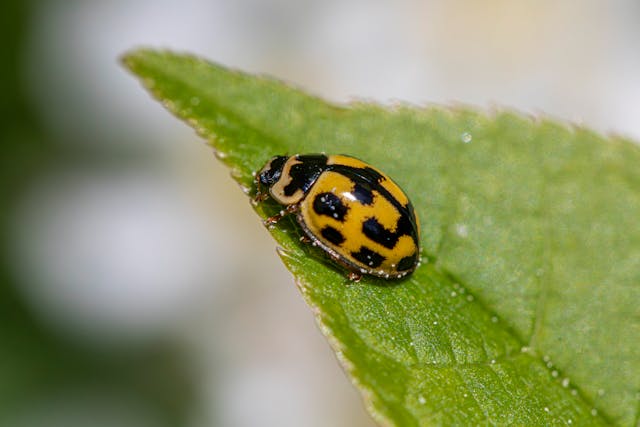
A yellow ladybug often points to species identity first. Illinois Extension explains that lady beetles are not all red. Its guide states, “colors can range from yellow, pink, red, orange, or black.” Lady beetles form a large family with many species. Some are naturally yellow and black. Others shift across several color forms within one species. Regional species lists can look different as well. A beetle that seems rare in one yard may be ordinary nearby. So a yellow ladybug does not automatically signal rarity. It often means you are seeing a common insect in an unfamiliar color.
The place where you find it gives the next clue. A yellow ladybug walking through aphid clusters is probably hunting. Colorado State University says adults and larvae feed on pest insects and mites, especially aphids and scales. University of Georgia Extension also lists aphids, mites, scale insects, and whitefly eggs among common prey. In a garden, that usually means the insect is working in your favor. It may have arrived because the plant offers food, not because the plant itself attracted it. Look closely, and you may spot the prey before you notice any plant damage. That makes the beetle a useful early warning sign.
A house wall in the fall tells a different story. Multicolored Asian lady beetles often gather on warm, bright sides of buildings before colder weather. NC State Extension says that in fall, they “sometimes congregate on the sunny sides of houses.” Minnesota also describes yellow, orange, red, and rarely black forms. So a pale yellow ladybug near windows, siding, or attic spaces may be looking for a protected overwintering site. In that setting, the meaning is seasonal shelter, not garden activity. Warm siding, window frames, and soffits create the kind of refuge these beetles seek. Their arrival often increases on bright autumn afternoons.
Some yellow ladybugs point to mildew instead of prey or shelter. The Wildlife Trusts says the 22-spot ladybird “feeds on mildew (fungus) on a variety of plants.” Many people still assume all lady beetles hunt aphids. A tiny bright yellow beetle on a leaf with white fungal growth may be responding to that food source. So the real meaning of a yellow ladybug is usually concrete. It reflects species, nearby food, or seasonal behavior, not a hidden sign floating above the facts. Once you know that, the sighting becomes easier to interpret. You can read the habitat instead of guessing from color alone.
Yellow ladybugs can also point to a rich feeding zone, even when aphids are not obvious yet. Cornell notes that many lady beetles eat pollen and nectar when prey runs short. South Dakota State adds that females place yellow to orange eggs near pest colonies. That means one adult on a plant can signal a larger food web nearby. Check new growth, leaf undersides, and flower stems before assuming the beetle arrived by chance. If prey is building, adults often appear before heavy curling or sticky honeydew becomes obvious. In that sense, a yellow ladybug may mark the start of a pest cycle. It can also mark the arrival of one of your earliest natural defenders.
How to Identify a Yellow Ladybug Without Guessing
Start with the body shape. True lady beetles are rounded, dome-shaped, and compact. Kentucky Entomology says adult lady beetles have “convex, hemispherical to oval-shaped bodies.” Their backs usually look polished and raised. That separates them from many flatter beetles with longer bodies. Color can mislead people very easily. Shape is much steadier in practice. It is often the fastest way to decide whether you are seeing a lady beetle. Size also helps once you gain practice. Once that outline is clear, the spots and markings become easier to read.
One of the most common yellow forms in and around homes is the multicolored Asian lady beetle. This species varies more than most people expect. University of Minnesota says to “look for the distinct black ‘M’-shaped marking behind its head.” It also notes orange, yellow, red, and black forms. The spot count may be heavy, faint, or absent. That broad variation explains why one porch can host several different-looking beetles that all belong to the same species. People often mistake that variation for a separate species. The head marking helps cut through that confusion.
Other yellow lady beetles are smaller and easier to sort by their spots. Minnesota Extension notes that fourteen-spotted ladybugs are yellow and black. The Wildlife Trusts describes the 22-spot ladybird as bright yellow with 22 round black spots. The difference is not just the total number. The Fourteen-spots type often looks more broken and patchy. Twenty-two spots are tiny and neat, with round dots that stay separate. If the beetle is very small and sits on mildew-covered leaves, the 22-spot type becomes more likely. Spot edges, body size, and feeding site usually work best together. One trait alone can still mislead.
A careful check also helps you avoid lookalikes and pest relatives. The University of Connecticut says squash beetles are yellow or orange. It describes 12 large black spots on the wing covers and 4 smaller spots on the thorax. Clemson describes the spotted cucumber beetle as yellowish-green with black spots. Those insects can appear on cucumbers, melons, squash, and related plants. If a yellow spotted beetle is chewing flowers, leaves, or seedlings, do not assume it is beneficial. Watch its body shape and feeding behavior before you decide. The plant itself also provides evidence. Heavy chewing on cucurbits should make you slow down before calling it a helpful ladybug.
Identification also improves when you look beyond the adult beetle and study nearby life stages. South Dakota State says lady beetle eggs are usually yellow to orange and laid in clusters. The larvae look nothing like the adults and are often mistaken for small pests. Many are dark with orange or yellow markings and move quickly across leaves. The same guide notes that larvae may consume more prey than adults. So a yellow ladybug near clustered eggs, empty pupal skins, or active larvae deserves extra patience. You may be looking at a breeding site, not a single visitor. That wider view makes identification stronger and prevents useful insects from being removed too quickly.
What to Do When You Find a Yellow Ladybug Outdoors or Indoors
If you find a yellow ladybug outside, the best response is usually restraint. Illinois Extension states, “The vast majority of lady beetles are predators,” though it notes a few plant-feeding exceptions. That is a strong reason not to crush or spray first. Many yellow ladybugs are helping with aphids, scales, mites, or insect eggs. Even when they are not predators, they may still be harmless. A quick photograph and a minute of observation often tells you more than a fast reaction ever could. Check nearby leaves, buds, and stems before acting. The scene around the beetle often supplies the answer.
Next, pay attention to the plant and the season. A lady beetle on roses, peppers, beans, citrus, or fruit trees may be following soft-bodied pests, and a tiny yellow one on mildew-covered foliage may be feeding on fungus. A group near doors, attic vents, or bright siding in autumn points toward overwintering behavior. West Virginia University Extension notes that Asian lady beetles enter homes through small openings. It lists windows, doors, siding gaps, and attic vents. Those details turn one insect sighting into a useful clue. Instead of asking what the insect symbolizes, ask what the site is offering it. Food, fungus, and shelter are usually the real answers.
If the beetle is already indoors, removal should stay simple. The University of Connecticut says, “There is no perfect method to get rid of lady beetles that make their way indoors.” The guide suggests an open window or a covered container. Vacuuming can also work, but the bag should be sealed and emptied promptly. New Hampshire Extension warns that disturbed beetles can leave an odor and a yellowish staining fluid. Gentle handling reduces that problem indoors. A jar, cup, or folded paper often works better than bare fingers. It also lowers the chance of stains on walls or fabric.
Long-term control depends on keeping them out, not fighting them after entry. New Hampshire Extension advises sealing cracks around windows and doors before beetles search for winter shelter. West Virginia University Extension recommends the same strategy around siding, utility entry points, and attic gaps. Indoor pesticides are usually a poor solution for this problem. Exclusion lasts longer and creates less mess. If yellow Asian lady beetles appear every fall, the meaning is clear. Your home offers openings and warmth. Caulk, weatherstripping, and careful exterior checks can reduce next year’s problem. Prevention takes more effort once, but far less effort later.
When you keep yellow ladybugs outdoors, the garden usually benefits over the next several weeks. Colorado State says adults use nectar and pollen sources, especially when prey numbers dip. It also advises using insecticides with care, since careless spraying reduces helpful predator activity. A mixed planting with flowering herbs can support adults between pest outbreaks. Indoors, capture still works better than crushing when beetles collect near windows or light fixtures. Ohio State recommends a vacuum method that uses a nylon stocking inside the wand. That approach traps the beetles cleanly and keeps stains or odor from spreading. Once removed, seal the entry points so the next wave does not follow.
What the Color Yellow Can and Cannot Tell You
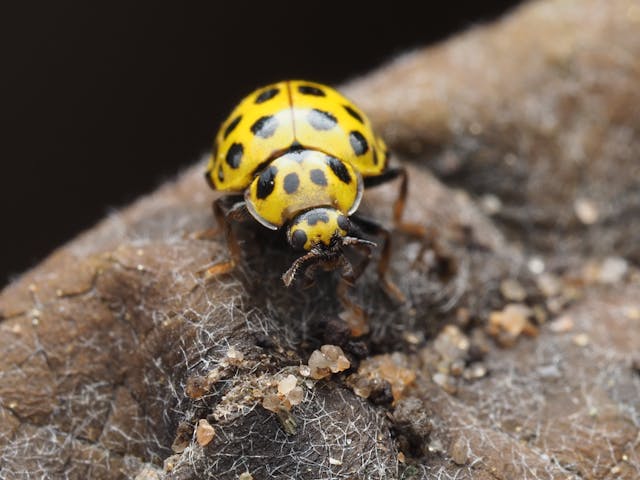
Yellow can tell you something, but not everything. It can point toward a certain species or color form. It can also hint at a shared defensive strategy. Kentucky Entomology explains it this way: “The bright body coloration helps some predators to remember the encounter.” It says predators then avoid insects with similar markings. In practical terms, yellow, orange, and red often function as warning colors. They tell predators the insect may taste bad or defend itself with chemicals. That warning system helps explain why bright colors repeat across many lady beetle species. The color is functional, not decorative.
What yellow cannot do is deliver one universal meaning. On an Asian lady beetle, yellow may simply reflect normal variation within the species. However, on a 22-spot ladybird, bright yellow helps identify a distinct mildew-feeding species. Yet on a squash beetle, yellow may mark a plant-feeding pest. So the same color can signal 3 very different roles. That is why the smartest reading is always ecological. Color matters most when it is paired with spot count, body shape, plant choice, and season. The insect’s setting usually settles the question quickly. Context gives color its practical meaning.
Bright colors also connect with another well-known defense. Illinois Extension says lady beetles may release a smelly, bad-tasting liquid from their leg joints when disturbed. Nebraska Extension describes this as bright yellow hemolymph that is distasteful to many predators. That fluid helps explain why handling lady beetles can leave an odor on your fingers. It also explains why birds and other predators learn caution around boldly colored species. Color and chemistry work together in the same warning system. That combination also explains why predators do not need many bad experiences to learn. One sharp lesson can be enough.
So the yellow color has a real biological meaning, but it is not mystical. It points to defense, identity, or ordinary variation. Then the setting fills in the rest. A yellow ladybug on aphid-covered growth suggests feeding. One on a mildew-coated leaf suggests a fungus eater. One on your curtains in late autumn suggests shelter-seeking behavior. The color begins the story, but the insect’s actions finish it. That approach gives a better answer than any fixed superstition. It also produces better decisions in homes and gardens. Clear observation beats folklore every time.
The yellow color also fits a wider survival strategy that scientists call warning coloration. University of Georgia notes that bright yellows, oranges, reds, and blacks can signal distasteful defenses. Ohio State explains that disturbed lady beetles may release yellow-orange hemolymph from their leg joints. Predators learn quickly from that combination of color, smell, and taste. So, yellow is not a random decoration on these beetles. It helps advertise that grabbing one may be a bad decision. That does not tell you the exact species on sight. Yet it does explain why bright lady beetles often stand out so strongly against leaves, bark, or siding.
Read More: Natural Pest Control: Does Rice Work Against Rats and Cockroaches?
Why Most Yellow Ladybugs Help, and When Caution Makes Sense
Most yellow ladybugs are worth protecting. Colorado State University says the habits of lady beetles are “highly beneficial to human interests.” Other guides describe them as predators of aphids, scales, mites, whiteflies, and insect eggs. In gardens, orchards, and farm fields, they make them useful natural control agents. A yellow ladybug on a plant often means a small predator has arrived before a human notices the pest problem. That is usually a helpful sign. In many cases, the beetle arrives before the gardener notices the infestation. Its presence can prompt a closer look at stressed growth.
Some yellow species help in less obvious ways. The 22-spot ladybird feeds on mildew, not aphids. It still occupies a legitimate niche in the landscape. Its role is simply different from that of a hunting Asian lady beetle or a fourteen-spotted species. This matters because people often divide insects too quickly into good and bad. Yellow ladybugs show that the real picture is broader. One supports control of insect pests. Another responds to fungal growth on leaves. Both can belong in a healthy garden. One supports control of insects. The other reflects activity around mildew and plant surfaces. Diversity in the family is part of the point.
Still, caution has an important place. Illinois Extension notes that a few lady beetles, including squash beetles and Mexican bean beetles, feed on plants. The University of Connecticut describes squash beetles as yellow or orange with large black spots. Maine and Maryland extension guides identify Mexican bean beetles as pest species in the same family. If a yellow spotted beetle is skeletonizing bean or squash leaves, move from admiration to identification. The family includes many allies, but it does not grant every relative a free pass. Plant damage should always carry more weight than wishful identification. A pretty color does not cancel chewing.
So what does it mean if you see a yellow ladybug? Most often, it means you have found one member of a varied, colorful insect family. It may be hunting pests, feeding on mildew, or searching for winter shelter. Less often, it may be a plant-feeding relative that deserves management. The sound response is steady and simple. Watch where it lands first outside. Notice what it does next there. Then identify it before you decide whether to welcome it, move it, or control it. That measured response protects beneficial insects and limits avoidable mistakes. It is the most useful meaning any yellow ladybug can offer.
If you want more helpful lady beetles, the yard itself can encourage them without buying anything. Colorado State says gardeners can invite lady beetles by providing pollen sources and treating insecticides carefully. Cornell adds that many species stay where aphids, mites, scales, or other small prey remain available. A few aphids on a noncritical plant can therefore support a larger beneficial population. That balance helps explain why spotless gardens often attract fewer natural enemies. Still, the plant should guide your judgment when chewing damage appears on beans or squash. Plant-feeding relatives exist, and their feeding pattern usually gives them away. Watching the insect and the leaf together remains the safest final check.
A.I. Disclaimer: This article was created with AI assistance and edited by a human for accuracy and clarity.
Read More: Identify Pest Droppings at Home: Bed Bugs, Spiders & More