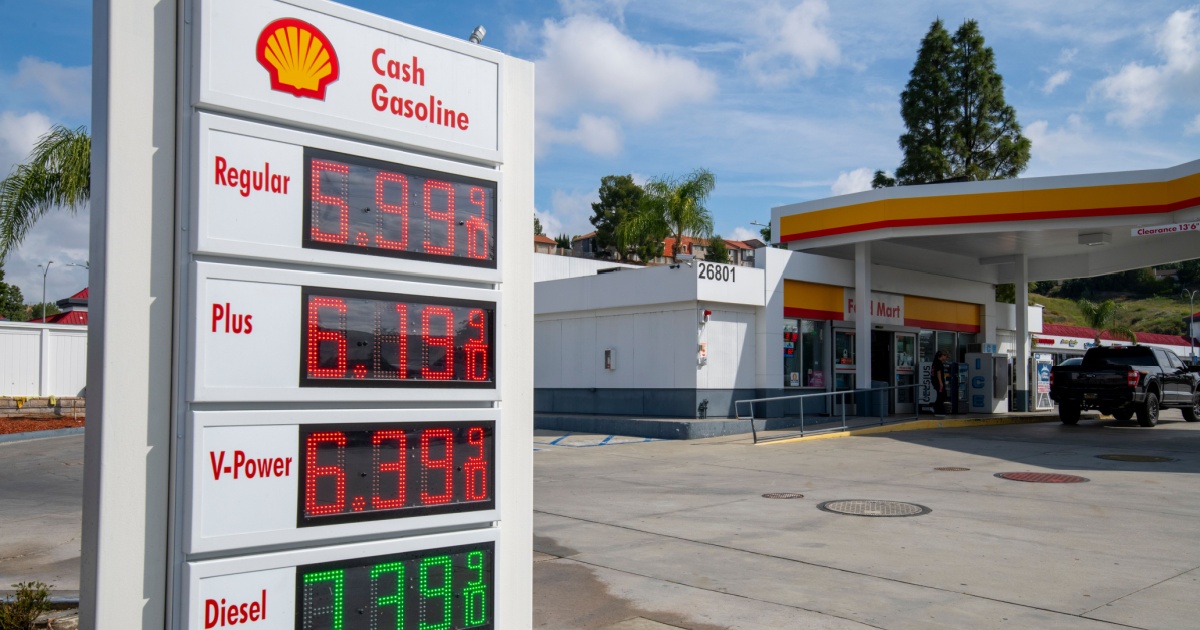

Every decade or so, Washington rediscovers the federal gas tax. The last time a U.S. president seriously floated suspending it was 2008, when Barack Obama was running against Hillary Clinton and John McCain, and gas had briefly crossed $4 a gallon. Congress ignored all three of them. The tax stayed put. Now, with pump prices surging past $4.52 a gallon and a war with Iran dragging into its eleventh week, the conversation has returned with real urgency, and this time the president is not a candidate floating a campaign talking point. He is the sitting commander-in-chief, and he is saying he will do it.
On Monday, May 11, 2026, President Trump told CBS News in a morning phone interview that he aims to suspend the federal gasoline tax “for a period of time.” “I think it’s a great idea,” he said. “Yup, we’re going to take off the gas tax for a period of time, and when gas goes down, we’ll let it phase back in.” Later that same day, reporters caught up with him in the Oval Office. Asked how long the suspension would last, the president responded: “Till it’s appropriate.”
The move is a dramatic pivot. A White House official had previously indicated that a gas-tax suspension was not under active consideration. The shift tells its own story. When your Energy Secretary is appearing on Sunday morning television to say the administration is “open to all ideas,” and 48 hours later the president himself is confirming the suspension to a national audience, it signals that something changed. What changed, broadly, is the political math.
The Energy Crisis Behind the Proposal
To understand why the White House reversed course, you have to understand the scale of the price shock that has hit American consumers since late February 2026.
Shipping traffic through the Strait of Hormuz, a major maritime chokepoint for world energy trade, has been largely blocked by Iran since February 28, 2026, when the United States and Israel launched an air war against Iran and assassinated its supreme leader, Ali Khamenei. The Strait is not a peripheral shipping lane. Its two unidirectional sea lanes facilitate the transit of around 20 million barrels of oil per day, representing roughly 20% of global seaborne oil trade.
The conflict in the Middle East has created the largest supply disruption in the history of the global oil market, due to the near halt in shipping traffic through the Strait of Hormuz, according to the International Energy Agency. The 2026 Iran war caused immediate volatility in energy markets, with Brent crude oil prices surging 10 to 13% to around $80 to $82 per barrel by early March.
Before the United States and Israel launched their attacks on Iran in late February, about 3,000 vessels typically passed through the Strait of Hormuz each month, according to Lloyd’s List Intelligence. Oil tankers passing through accounted for an estimated 15 million barrels per day of crude and other oil product exports – about one-fifth of the world’s oil trade. Since the war began, traffic has been reduced to a trickle, with just 191 vessels recorded crossing in the entire month of April.
The consequences at U.S. filling stations have been swift and severe. Americans face the highest prices at the pump since 2022, with a gallon of gas surging roughly $1.54 since the U.S. and Israel attacked Iran in late February. On Monday, drivers nationwide paid an average of $4.52 a gallon, according to AAA. Diesel is running even higher. The national average for diesel fuel is nearly $5.70 per gallon.
For the full picture of how the Strait of Hormuz closure is expected to keep fuel expensive for an extended period, this analysis details why energy economists believe any meaningful price recovery is months away, not weeks.
The Trump administration has already released oil from the Strategic Petroleum Reserve and eased some fuel regulations as it weighs further steps, including a possible federal gas tax suspension. Those earlier measures were not enough to meaningfully move the needle. The call for a tax holiday is the next escalation.
What the Federal Gas Tax Actually Is
Before evaluating whether a suspension makes sense, it helps to understand what exactly the federal gas tax funds and how it got to its current rate.
In 1993, President Clinton increased the gas tax to 18.4 cents with the Omnibus Budget Reconciliation Act of 1993, with all of the increase going towards deficit reduction. Congress has not raised fuel taxes since 1993. That means the rate has sat unchanged for 33 years. Because the federal gas tax is not pegged to inflation, the purchasing power of the revenue has eroded over time – 18.4 cents bought 55% less in 2025 than it did in 1993.
Suspending the excise taxes – 18.4 cents per gallon on gas and 24.4 cents a gallon on diesel – requires an act of Congress, and pausing it would cost the federal government about a half billion dollars a week.
The Congressional Budget Office reports that the Highway Trust Fund received 83% of its revenue in 2022 from excise taxes on motor fuel. Since 1993, fuel tax rates have been fixed at 18.4 cents per gallon for gasoline, and 24.4 cents per gallon for diesel. Highways, bridges, commuter rail systems, and bus networks all depend on this stream of revenue. Cutting it off, even temporarily, has consequences that extend well beyond the pump.
The Congressional Response
Trump cannot declare a gas tax holiday alone, since Congress has sole authority over taxation. That constitutional reality sent the president’s announcement directly to Capitol Hill, where it landed on fertile ground.
Sen. Josh Hawley, R-Mo., introduced a bill Monday. Hawley’s measure would suspend the 18.4-cents-per-gallon federal tax on gasoline and the 24.4-cents-per-gallon federal tax on diesel fuel for 90 days after enactment. It would also give the president the authority to extend the suspensions for 90 more days if he determined that economic conditions merit an extension. In a statement from his Senate office, Hawley said: “President Trump has proposed to suspend the federal gas tax and he’s exactly right. American workers and families deserve immediate relief.”
Rep. Anna Paulina Luna, R-Fla., said Monday on X that she would introduce a bill “to suspend the federal gas tax in light of Trump’s recent remarks.” “American families need this relief on gas prices,” Luna wrote.
The push is not strictly partisan. The Gas Prices Relief Act of 2026, introduced by Sens. Mark Kelly (D-AZ) and Richard Blumenthal (D-CT), establishes a gasoline tax holiday in an effort to temporarily ease prices at the pump. The holiday would last until October 1. A similar bill has been introduced in the House by Rep. Chris Pappas (D-NH). Rep. Chris Pappas responded to Trump’s support by saying on X, “This should have happened months ago.”
Suspending the gas tax is quickly picking up more support among Republicans on Capitol Hill who are worried about a voter backlash over the rise in oil and natural gas prices since the start of the military conflict with Iran in late February. The November midterms are providing significant motivation. Voters are souring on Trump’s economy ahead of the 2026 midterm elections, and high gas prices are only adding to consumer discontent.
Senate Majority Leader’s Position
Senate Majority Leader John Thune’s office has since commented on the push, and the story has evolved rapidly as multiple Republicans have lined up behind the concept within hours of the president’s announcement. The speed of that legislative mobilization is itself a signal of how politically urgent this issue has become.
The Political Calculus
The White House’s decision to back a gas tax suspension is not primarily a fiscal judgment. It is a response to public opinion data that has become impossible to ignore.
The potential suspension of the gas tax is a tacit acknowledgment from the White House of the toll that high gas prices have taken on American consumers. This NPR/PBS News/Marist poll was conducted April 27 through April 30, 2026, with 1,322 adults contacted by phone, text, and online. Results are statistically significant within plus or minus 3.1 percentage points. Eight in 10 Americans say gas prices are straining their budgets, including overwhelming majorities of Democrats, independents, and Republicans alike, according to the latest NPR/PBS News/Marist poll. In addition, 63% of Americans say they blame Trump “a great deal” or “a good amount” for those higher gas prices. That includes more than 6 in 10 independents and nearly one-third of Republicans.
That last figure is the one that commands attention in the West Wing. When a Republican president is losing a third of his own party on an economic issue, with midterms approaching, the calculus shifts quickly. Just 37% of respondents approve of the job Trump is doing overall, while 59% disapprove – the highest level of disapproval ever in the Marist poll for Trump between both of his terms.
Trump’s answer to CBS News was explicit about the connection between the gas price crisis and the ongoing conflict. Asked by reporters whether he would suspend the tax, Trump said, “Yeah.” “I’m going to reduce until the – let me tell you, as soon as this is over with Iran, as soon as it’s over, you’re going to see gasoline and oil drop like a rock,” he said. The gas tax suspension, in other words, is framed as a bridge measure – a hold-until-the-war-ends intervention, not a structural reform.
Would Drivers Actually Feel It?
This is where the economics get uncomfortable for the proposal’s supporters. Several independent analysts reviewed the likely effect of a federal gas tax holiday in 2026, and the consensus is consistent: the relief would be real but modest, and the gap between what the tax suspension saves and what the war has added to prices is enormous.
Based on modeling by the Penn Wharton Budget Model, consumers would see roughly 60 to 72% of the tax savings at the pump, with the remainder captured by suppliers. For a household filling a 15-gallon tank once per week over the 122-day period, the gasoline savings would amount to approximately $35. Penn Wharton’s analysis used supply projections from the U.S. Energy Information Administration and applied pass-through rate estimates derived from its earlier study of state-level gas tax holidays in 2022. The figures represent economic modeling, not observed outcomes.
Kent Smetters, faculty director at Penn Wharton, said plainly: “The actual benefit to consumers is going to be pretty small.”
GasBuddy petroleum analyst Patrick De Haan offered his professional assessment, as reported by CBS News. “I really don’t think it would make much of a difference when gas prices are $1.50 a gallon more than last year,” De Haan said. “That 18 cents doesn’t really amount to a whole lot, in my mind.” De Haan’s view reflects his professional read of price dynamics, not a peer-reviewed finding.
Andrew Lautz, director of tax policy at the nonpartisan Bipartisan Policy Center, said in a social media post Monday: “The irony of a gas tax suspension is that the higher prices go, the less of an impact it has. For a sedan at national average prices, filling up your car costs $18-$25 more than it did before the war. A federal gas tax holiday saves you up $2 per fillup.”
The comparison between federal and state tax suspensions is also instructive. Because state fuel taxes range from 15 cents to about 60 cents per gallon, state suspensions can provide more meaningful relief than waiving the federal gas tax, according to experts. As GasBuddy’s De Haan noted in a May 10 social media post, “Indiana is seeing huge gas price drops thanks to the state waiving the use tax and excise tax – motorists getting a nearly 60c/gal discount with prices falling below $4 at some stations.”
The federal gas tax has never been suspended since it was created in 1932, despite proposals during the 2008 election amid sky-high prices then, and again in 2022, when soaring inflation and rising fuel prices prompted calls for short-term relief at the pump. The precedent of Congress passing on this every time it comes up is worth keeping in mind as the current push moves forward.
The Highway Trust Fund Problem
Even if the political will exists to pass a gas tax suspension, there is a structural fiscal complication that will shadow any legislation through Congress.
The federal gas tax has been a critical source of revenue for financing federal transportation spending through the Highway Trust Fund since 1956, according to the Bipartisan Policy Center. A five-month suspension of the federal gas tax would reduce gas tax revenue by approximately $17 billion, or 46% of total projected fiscal year 2026 gas and diesel tax revenue to the Highway Trust Fund. The tax already doesn’t provide enough revenue for the fund, which has run deficits since fiscal year 2008 and required infusions of general revenue. Based on current trends, the Congressional Budget Office projects that in fiscal year 2028, the highway account may not have sufficient funds to fulfill federal obligations to states and local governments for transportation projects. Suspending the tax could force lawmakers to decide between filling an even larger gap with taxpayer funds or reducing spending on highways, bridges, and mass transit.
Since 2008, Congress has transferred general revenues to the fund on numerous occasions, including $118 billion in the Infrastructure Investment and Jobs Act of 2021. Those transfers have kept the fund alive, but they have not fixed the underlying problem. The fund is already struggling to keep up with the rising costs of construction. Because the tax has not been increased in more than three decades, the purchasing power of those 18.4 cents has diminished significantly while the cost of labor and raw materials has climbed.
A suspension would provide modest, temporary relief to consumers at the pump, but in doing so, would blow another hole in the federal deficit and further strain the user-pay, user-benefit system of the Highway Trust Fund. While proposed bills would offset any lost Highway Trust Fund revenue with general funds, the American Road and Transportation Builders Association, which represents the transportation construction industry, has warned that this could jeopardize the long-term sustainability of investments for highway and public transit programs.
Allowing roads and bridges to deteriorate will also cost consumers in the long run, including in wear and tear expenses for their vehicles, said Xan Fishman, vice president of the energy program at the Bipartisan Policy Center.
Amid soaring gas prices due to the Iran war, Trump on Monday said he supports congressional action to suspend the federal gas tax, a move experts describe as more of a Band-Aid for drivers than a long-term solution. “A gas tax holiday would give consumers some momentary relief,” said Christopher Bosso, professor of public policy and political science at Northeastern University.
Read More: Why It Could Take Months for Gas Prices to Fall
Key Takeaways
The debate over the federal gas tax suspension is happening at the intersection of three very different problems, and failing to separate them leads to muddled thinking.
The first problem is a genuine energy crisis rooted in geopolitics. Crude and oil product flows through the Strait of Hormuz plunged from around 20 million barrels per day before the war to just over 2 million barrels per day in March, according to the IEA. No domestic tax policy change can fix a global supply shock of that magnitude. Trump acknowledged as much when he told reporters that prices would drop “like a rock” as soon as the Iran conflict ends.
The second problem is short-term household financial stress. A poll from NPR, PBS News, and Marist shows that 81% of Americans say gas prices are a strain on their household budgets, and a majority say that the economy is not working well for them personally. On that dimension, a gas tax holiday provides real, if limited, relief. A family spending $80 a week on gas would save roughly $8 to $10 over the course of the suspension based on Penn Wharton’s pass-through estimates. That is not life-changing, but it is not nothing.
The third problem is the structural deterioration of the Highway Trust Fund. Based on current trends, the Congressional Budget Office projects that in fiscal year 2028, the highway account may not have sufficient funds to fulfill federal obligations to states and local governments for transportation projects. A suspension that drains the fund further, without a credible replacement revenue mechanism, converts a short-term political win into a long-term infrastructure liability. The roads that deteriorate as a consequence of deferred maintenance have costs that fall right back on the same drivers the holiday was meant to help.
What This Means for You
The Constitution gives Congress the power to tax, not the president, and Congress has never suspended the gas tax, which dates back to 1932. That means the coming days in Washington will determine whether this moment is different – whether the combination of a war-driven price shock, a president’s direct endorsement, and the pressure of approaching midterms is finally enough to move a measure that has been proposed and rejected for decades.
If a suspension does pass, managing your expectations matters. The Penn Wharton modeling suggests the average household filling up weekly would save around $35 over a four-month window, with only 60 to 72% of the tax cut actually reaching pump prices. That is real money, but it is a fraction of what the Iran conflict has added to a typical family’s monthly fuel bill. If your household drives multiple vehicles or travels long distances regularly, the savings will be somewhat larger – but they will not come close to erasing the war premium embedded in current prices.
The broader takeaway is this: the gas tax debate is a symptom, not the disease. The disease is a global energy supply shock that only ends when the Strait of Hormuz reopens and commercial shipping resumes something close to normal volumes. Until that happens, any domestic policy measure – tax holidays, reserve releases, fuel regulation waivers – is a partial offset, not a solution. Watch the shipping data from the Strait, not just the headlines from Washington. That is where the real price signal lives.
AI Disclaimer: This article was created with the assistance of AI tools and reviewed by a human editor.
Read More: Trump Is Now A Nuclear Risk, Doctors Issue Warning