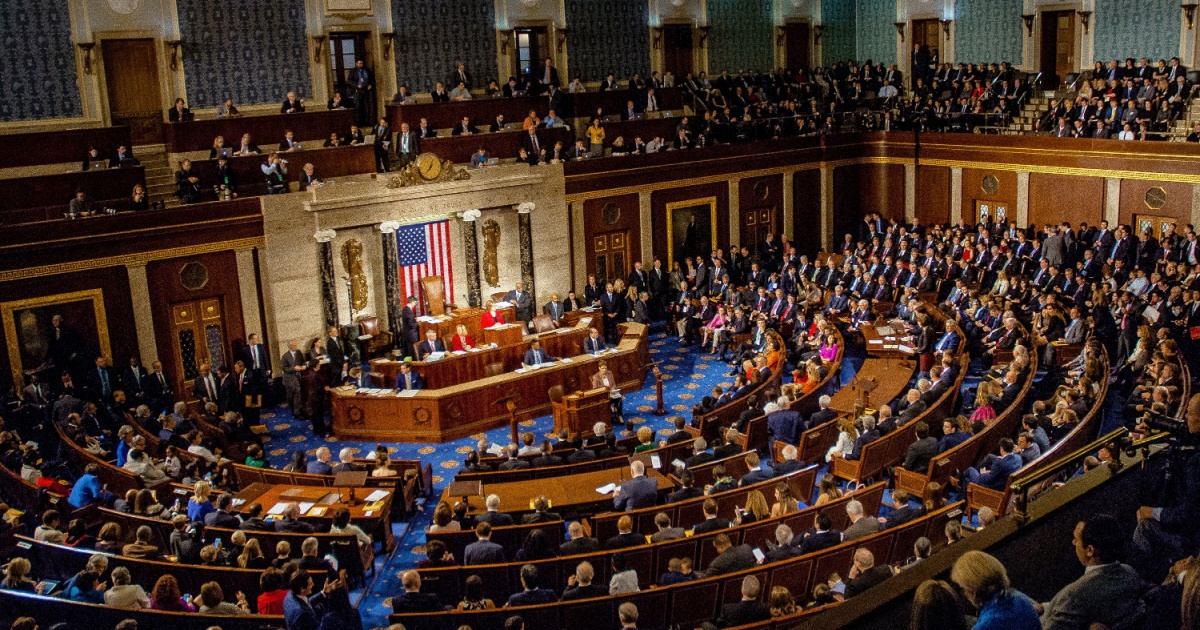

There is something quietly telling about the way a government shutdown actually plays out in Washington. The offices go dark. The park rangers go home. The TSA agents keep showing up to work – just without a paycheck. And through all of it, Congress keeps getting paid.
That dynamic has been a source of public frustration for decades, but it took the longest government shutdown in American history – one that stretched across 43 consecutive days last fall – to finally produce a legislative response with unanimous support. When a chamber as reliably fractured as the United States Senate agrees on anything by a vote of 99-0, it is worth paying close attention to what just happened and what it means going forward.
The resolution the Senate has now adopted is not a dramatic overhaul of Washington’s budget process. It is narrower than that. But in a political environment where even modest reforms collapse under the weight of partisan disagreement, the breadth of support it received suggests this one struck a nerve on both sides of the aisle.
The Kennedy Resolution: What It Does and How It Works
The resolution, sponsored by Sen. John Kennedy of Louisiana, directs the secretary of the Senate to withhold pay from senators during a lapse in appropriations for one or more federal agencies or departments. Senators would still get paid, but their paychecks would be held in an escrow account until the government reopens.
The resolution only applies to members of the Senate and does not need to be approved by the House or signed by President Trump. That distinction matters in practical terms: because it is a Senate resolution rather than a bill, it can govern the internal rules of the Senate without going through the full legislative process.
The resolution defines a shutdown as the lapse in funding for one or more federal agencies or departments, which means a partial government shutdown could trigger it, not just a full closure. Kennedy said he wanted to make the resolution effective immediately, but included language to delay its implementation because the 27th Amendment prohibits any law that increases or decreases the salaries of members of Congress until after the next election of the House of Representatives.
Accordingly, the legislation, which would take effect after the November 2026 election, would instruct the secretary of the Senate to place senators’ paychecks on hold during the duration of any future federal government shutdowns. Those payments would be released to lawmakers only after the government reopens.
The 27th Amendment Constraint
The constitutional limitation here deserves some explanation for anyone unfamiliar with it. The 27th Amendment to the United States Constitution states that any law that increases or decreases the salary of members of Congress may take effect only after the next election of the House of Representatives has occurred. An unintended consequence of the amendment is that, unlike executive branch employees or congressional staff, all members of Congress continue to get paid during a shutdown.
The amendment was ratified on May 7, 1992, and it forbids any changes to the salary of Congress members from taking effect until the next election concludes. If Congress voted to slash its salary by half, that cut would also have to wait until after the next House election to take effect. In practical terms, this means Kennedy’s resolution, no matter how popular in the chamber, cannot be applied retroactively to the senators who voted for it – only to those serving after the November 2026 midterms.
Kennedy first introduced early versions of his resolution in November 2025, and he fought for passage during the historic 43-day full government shutdown. He continued pushing after the government reopened, and his resolution received unanimous, bipartisan support in the U.S. Senate Committee on Rules and Administration in December 2025. In March, Kennedy attempted to pass his resolution by unanimous consent during the Department of Homeland Security shutdown, but Sen. Brian Schatz of Hawaii objected without comment.
On Wednesday, Kennedy’s resolution cleared a motion to invoke cloture by a vote of 99-0. In a show of bipartisan support, the Senate then adopted the measure by voice vote the following day.
The Shutdown Record That Prompted the Push
The Kennedy resolution did not emerge from abstract principle. It was born directly from two consecutive government funding crises that, together, left the federal government in a full or partial shutdown for an extraordinary stretch of time.
According to Sen. Kennedy’s official office, the federal government was in a full or partial shutdown for more than 119 days between October 1, 2025, and May 1, 2026, during which all members of Congress received their full pay while federal employees missed paychecks.
The most significant of these was the first shutdown under President Trump’s second presidency, which began on October 1, 2025, and lasted for 43 days – surpassing the 35-day record set during Trump’s first term as the longest in modern U.S. history. The federal government shut down over soon-to-expire enhanced tax credits for Affordable Care Act marketplace insurance premiums, with Democrats demanding their extension as part of any deal to reopen and Republicans insisting on negotiating them separately.
The human toll of that standoff was severe. Over the course of the 43-day shutdown, nearly 3 million paychecks were withheld from federal civilian employees, representing almost $14 billion in missing wages, according to the Bipartisan Policy Center. Approximately 670,000 federal workers were furloughed, 60,000 workers outside the federal government lost their jobs, and Supplemental Nutrition Assistance Program (SNAP) recipients lost out on benefits – all while members of Congress continued to receive their regular salaries.
Many federal workers earn less than $90,000 a year – 43%, according to a 2025 analysis of federal workforce data by the Pew Research Center. For workers at those income levels, missing even one full pay cycle creates serious financial strain. “Maybe a family can weather one missed paycheck, but then two missed paychecks and beyond, it certainly gets much harder,” said Caleb Quakenbush, associate director at the Bipartisan Policy Center’s economic policy program.
Following that shutdown, Republicans were still in the process of reopening the Department of Homeland Security, which shuttered more than two months ago over Democratic opposition to the agency’s aggressive immigration enforcement tactics. An even larger swath of government was closed for 43 days last fall due to a separate dispute with Democrats over Obamacare subsidies.
According to DHS’s shutdown contingency plan, most DHS employees are considered “excepted,” meaning they continued working as usual but did not receive pay until after the shutdown ended – including employees at the Transportation Security Administration, Federal Emergency Management Agency, Cybersecurity and Infrastructure Security Agency, Coast Guard, and Secret Service.
The Pay Disparity at the Center of the Debate
The core issue Kennedy’s resolution targets is a stark asymmetry: the people who cause government shutdowns by failing to pass funding legislation continue to be paid throughout them, while the people who have no role in those failures bear the financial consequences.
Since the early 1980s, rank-and-file members of Congress have earned $174,000 annually, a figure that has remained frozen since 2009. The Speaker of the House earns $223,500 per year. Four other congressional leaders – the Senate Majority Leader, the Senate Minority Leader, the House Majority Leader, and the House Minority Leader – each earn $193,400, as does the President Pro Tempore of the Senate.
Even when the government is shut down, Congress members continue to be paid, since Article I, Section 6 of the Constitution says they “shall receive a Compensation for their Services, to be ascertained by Law” and the 27th Amendment says their compensation can’t change until after the next congressional election.
Kennedy has been direct about what this situation looks like from the outside. “This is about shared sacrifice. If senators are going to vote to shut down the government and prevent millions of federal workers from getting paid, they ought to have the same skin in the game. My resolution will ensure that senators aren’t the only people receiving their paychecks during a government shutdown,” Kennedy said.
Bipartisan Support – and Its Limits
One of the notable features of this resolution is that it drew support from across party lines at a moment when bipartisanship in the Senate is exceptionally rare. The resolution had the public backing of Senate Majority Leader John Thune of South Dakota and his Democratic counterpart, Sen. Chuck Schumer of New York. Passage of the measure marked a rare break from the partisan gridlock that has defined much of President Trump’s second term in office.
Sen. Roger Marshall of Kansas hailed the proposal as a smart move to “put pressure” on senators not to force another government shutdown. “I think anything we can do to put pressure on senators in this case to come to the table and make a deal is a good thing,” he said.
Still, Kennedy has acknowledged the resolution doesn’t go as far as he would like. He said: “If I were king for a day, I’m not, I don’t aspire to be, but if I were, I’d make this resolution effective immediately.” The constitutional constraint tied his hands on that point.
Kennedy has also been candid about a forward-looking political motivation. He told reporters he fears Senate Democrats will engineer another shutdown before the midterm elections as a political weapon, stating he is “very concerned that my Senate colleagues on the Democratic side are going to try to shut down government yet again right before the elections to try to create chaos to affect the midterm elections.”
Why the House Is Not Included
While multiple similar House bills have been introduced, it’s unclear if legislation in the lower chamber will pass. Kennedy addressed the question of why his resolution only covers the Senate directly, stating that “the House’s business is the House’s business.” The resolution operates as a rule governing the Senate’s own internal conduct, which is why it requires no House vote and no presidential signature.
Kennedy’s resolution is not the only legislative idea aimed at the shutdown problem. Sen. Ron Johnson of Wisconsin has been pushing his Shutdown Fairness Act, which takes a different approach: instead of targeting lawmakers’ wallets, it would guarantee that federal workers who continue working during a shutdown get paid on time. Sen. James Lankford of Oklahoma has proposed the Prevent Government Shutdowns Act, which would automatically fund the government in two-week increments until Congress reaches a compromise – a mechanism that would eliminate the shutdown lever entirely by removing the fiscal cliff.
These parallel proposals reflect a growing consensus that the current shutdown framework is structurally broken, even if lawmakers disagree on the best fix.
What Federal Workers Face During a Shutdown
For anyone outside Washington wondering what a government shutdown actually means for the people who work there, the mechanics are worth understanding. A shutdown furlough, also called an emergency furlough, occurs when there is a lapse in appropriations and can occur at the beginning of a fiscal year if no funds have been appropriated for that year or upon expiration of a continuing resolution if a new continuing resolution or appropriations law is not passed.
During these periods, known as government shutdowns, some federal employees are placed on temporary unpaid leave, called furloughs, while others continue working in essential roles. Federal workers deemed essential, including Capitol Police officers, Transportation Security Administration workers, and air traffic controllers, were forced to work without pay during the shutdown.
Back pay protections do exist. Congress has traditionally voted to retroactively pay federal workers who were furloughed or working unpaid, once a deal is reached to reopen the government. During the 2018-19 shutdown, Congress passed the Government Employee Fair Treatment Act of 2019, which has been broadly interpreted to mandate back pay for federal employees who are furloughed or required to work unpaid during a government shutdown. However, the practical reality is that retroactive pay arrives after the damage has already been done – bills have gone unpaid, food banks have been tapped, and financial stress has accumulated.
Even once a funding conflict is resolved, it may have lasting effects on the government’s ability to attract talent. Many federal workers could be making more in the private sector, but choose the work they do because of a sense of mission or purpose. “But our ability to attract quality federal workers in the long term, it really matters how we treat them,” said Quakenbush of the Bipartisan Policy Center.
Read More: Trump’s “Personal Casino”? What to Know About Truth Predict and Prediction Markets
What This Means for You
The Senate’s unanimous adoption of S. Res. 526 represents a meaningful, if limited, structural reform. For the first time, senators will have a direct financial stake in preventing the shutdowns they help cause. Their paychecks will be held in escrow until government funding is restored, mirroring the experience of the federal employees who bear the costs of congressional inaction.
The key caveats matter. The resolution takes effect only after the November 2026 midterm election, meaning it offers no protection in the event of a shutdown this fall. It applies only to the Senate, not the House. And given that many senators are independently wealthy, the deterrent effect of a delayed paycheck may be limited in practice compared to what a typical federal worker faces when their income stops.
What the resolution does accomplish is symbolic and political, in the best sense of both words. A 99-0 vote in the United States Senate sends a signal that even in a maximally partisan environment, there are standards of basic accountability that both parties can agree on. If the resolution functions as intended – making senators feel the financial sting of the shutdowns they engineer – it introduces a modest but real incentive to reach funding agreements before the cliff. Whether that changes behavior in practice will only become clear the next time a fiscal deadline looms and the pressure builds. In the meantime, if you want to make your voice heard on this issue, you can contact your senator directly and ask where they stand on broader shutdown reform proposals, including those from Johnson and Lankford, which go further than Kennedy’s resolution by either guaranteeing worker pay or eliminating the shutdown mechanism altogether.
AI Disclaimer: This article was created with the assistance of AI tools and reviewed by a human editor.
Read More: Trump’s Beijing Summit Ends With Few Wins as China Holds Firm