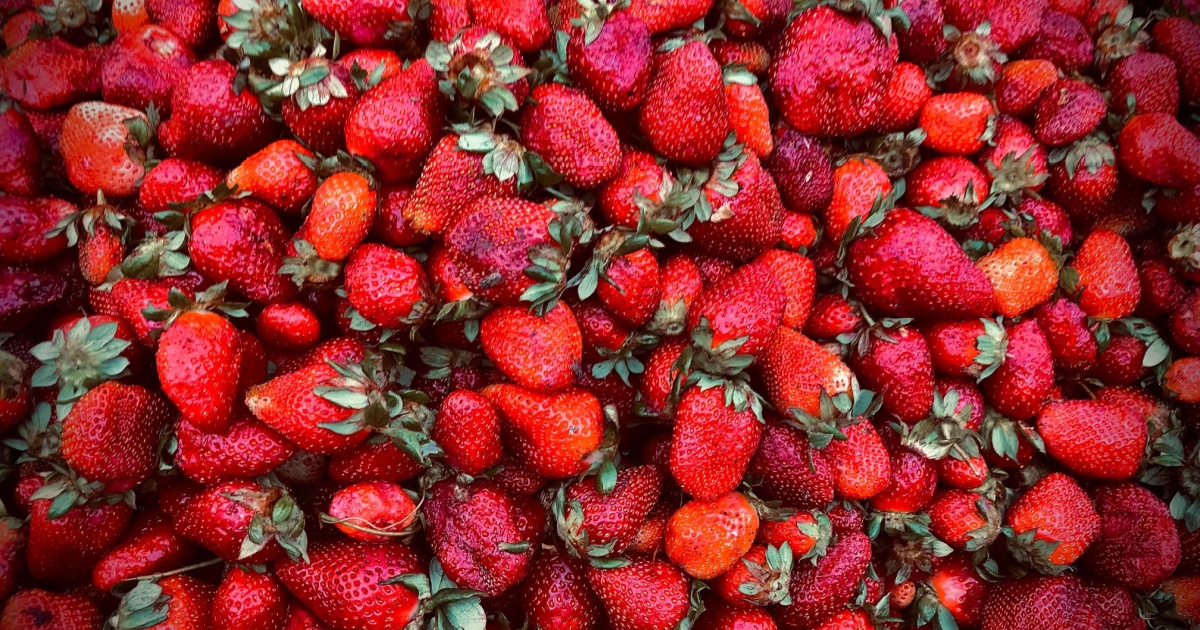

Every spring, millions of Americans load their grocery carts with the same produce they always buy: a bag of spinach for the salad, a punnet of strawberries for the kids, a bunch of kale for the smoothies. These are the foods we reach for specifically because they’re supposed to be good for us. So the findings from this year’s annual pesticide report land with a particular sting.
The 2026 season has brought a fresh wave of data on what’s actually on the produce we eat every day, and the picture is more complicated than most shoppers realize. Pesticide residues are turning up on fruits and vegetables even after they’ve been washed and peeled under laboratory conditions. More striking is a new layer to the concern: a class of chemicals that scientists call “forever chemicals” are now showing up on our food at rates that researchers say deserve serious attention.
This isn’t a reason to stop eating fruits and vegetables. Produce is still one of the cornerstones of a healthy diet, and experts are clear on that. But understanding which items carry the heaviest chemical load, and why, puts you in a far better position to make smart choices at the store. Here is the full 2026 Dirty Dozen, with details on what was found on each item and what it means for you.
How the 2026 List Was Made
Before getting into each item, it helps to understand the scale of this research. The Environmental Working Group (EWG), a nonprofit organization focused on environmental health research, examined the most recent pesticide residue tests conducted by the USDA’s Pesticide Data Program on 54,344 samples of 47 fruits and vegetables. Before the USDA examines each sample, the fruit or vegetable is peeled or scrubbed and thoroughly washed to mimic what a consumer would do at home. Even after taking those steps, testing found traces of 264 pesticides, of which 203 appeared on Dirty Dozen produce.
For the 2026 rankings, EWG analyzed four factors: the abundance, diversity, intensity, and toxicity of pesticides detected on each crop. That last factor is new. Since 2025, EWG ranks produce based not just on how much pesticide is present but how toxic each detected compound is, meaning the current rankings reflect real-world health risk more accurately than older lists.
The headline finding this year is something new entirely. For the first time, the report found that over 60% of all Dirty Dozen samples contain pesticides that are also “forever chemicals” called PFAS. The top three most frequently detected pesticides on produce were these substances, which are called forever chemicals because their molecular bonds can take years to decades, even centuries, to completely break down in the environment.
1. Spinach
Spinach has been sitting at or near the top of this list for years, and 2026 is no different. Spinach held the list’s top spot for the second year in a row, containing more pesticide residues by weight than any other type of produce. Conventionally grown spinach was found to have seven different pesticides on individual samples.
Part of what makes spinach so susceptible is its structure. It has soft, thin leaves with a large surface area and no protective outer skin. Pesticides applied during growing or storage cling to those leaves, and washing removes only some of what’s there. Many pesticides used on these crops are systemic, meaning they are absorbed into the plant’s tissue, so surface washing reduces but does not eliminate exposure.
If spinach is a regular part of your diet, opting for the organic variety is one of the more impactful swaps you can make. Frozen organic spinach is widely available and often costs no more than its conventional counterpart.
2. Kale, Collard, and Mustard Greens
Leafy greens as a category are among the most pesticide-heavy produce items tested. The USDA tests found 100 different pesticides in leafy greens as a category. On average, samples of kale, collard, and mustard greens had detectable levels of more than five different pesticides, with up to 21 different pesticides on a single sample. And 86% of samples had detectable levels of two or more pesticide residues.
One finding stands out. More than half of the kale samples tested contained possibly cancer-causing pesticides. The specific pesticide linked to that concern is DCPA (also called Dacthal), a herbicide that the EPA classified as a possible human carcinogen.
Previous USDA kale tests also showed 30% of kale samples had detectable levels of imidacloprid, a neonicotinoid insecticide banned in the EU because of harm to bees, which has also been associated with harm to the human nervous system and reproductive system in animal studies. Given how commonly kale, collards, and mustard greens appear in “healthy eating” plans, the pesticide load on these vegetables is something worth factoring into your shopping decisions.
3. Strawberries
Strawberries are among the most beloved fruits in America, and the average American eats about eight pounds of fresh strawberries a year, and with them, dozens of pesticides. Their popularity, combined with the way they’re grown, makes them a persistent fixture on this list.
The PFAS concern is especially pronounced with strawberries. Strawberries had detections of 14 different PFAS pesticides, with 84% of samples detecting at least one of these chemicals, and 5% having detections of at least 10 PFAS pesticides.
Strawberries are grown low to the ground and exposed to heavy fungicide use to prevent mold on their delicate skin. Because they have no peel and their flesh is porous, there is no practical way to wash off everything that gets in. Buying organic strawberries, or choosing frozen organic varieties, is the most reliable way to reduce your exposure.
4. Grapes
Grapes, like strawberries, have thin skins, high pest pressure, and intensive fungicide applications throughout the growing season. Cherries, strawberries, and grapes had PFAS pesticides in 80% or more of samples in testing.
Both table grapes and wine grapes are treated repeatedly across the season, and the residues that remain tend to be a mix of fungicides and insecticides. Because grapes are eaten whole and rarely peeled, whatever is on the skin goes directly into the body. Most items on the Dirty Dozen had an average of four or more pesticides per sample. Grapes are no exception to that pattern.
If you’re buying grapes for children, this is one of the items where the organic upgrade is worth the extra cost. Kids eat grapes frequently, and their smaller body weight means any given level of exposure represents a proportionally higher dose.
5. Nectarines
Nectarines rank as one of the most heavily contaminated stone fruits tested. The PFAS pesticide fludioxonil, a fungicide applied after harvest to prevent mold during storage and shipping, is particularly prevalent on stone fruits. Residue of the PFAS pesticide fludioxonil was found in 14% of all produce samples and in nearly 90% of peaches and plums. Nectarines, which are closely related to peaches, show similarly high contamination rates.
Newer PFAS pesticides show worrisome impacts on human cells and animal reproductive and nervous systems. Fludioxonil, which is added to produce after harvest to stop mold and mildew, has killed human cells and damaged DNA in laboratory tests. Those findings come from lab studies, not human trials, but they help explain why researchers are paying close attention to PFAS pesticides specifically. Choosing organic nectarines, especially during peak summer season, is a practical step.
6. Peaches
Peaches sit alongside nectarines in terms of PFAS pesticide exposure. More than half of USDA samples of peaches, plums, nectarines, and pears carried residues of fludioxonil, the specific PFAS fungicide that may harm the liver, hormones, and nervous system based on findings from animal studies.
In November 2024, the European Food Safety Authority (EFSA) concluded that fludioxonil meets the criteria for an endocrine-disrupting chemical, meaning it has the potential to interfere with the body’s hormone system. The hormone system regulates everything from metabolism to reproduction to brain development. EFSA’s assessment found that fludioxonil affects estrogen, androgen, and steroidogenesis pathways in humans and animals.
The fact that fludioxonil is applied after harvest, rather than during growing, is especially relevant. There’s no rain to wash it off between application and the moment the fruit reaches your plate. Peeling the skin before eating can help reduce exposure, though it won’t eliminate it entirely.
7. Cherries
Cherries appeared among the most contaminated stone fruits in additional PFAS testing conducted on California-grown produce. More than 90% of nectarines, plums, and peaches tested contained the PFAS pesticide fludioxonil. Cherries, strawberries, and grapes had PFAS pesticides in 80% or more of samples.
Beyond PFAS, cherries are treated with multiple classes of pesticides throughout their growing season, and their sweet, thin skin offers no barrier. Because the growing season for domestic cherries is short, most off-season cherries in US stores are imported, often from regions where pesticide regulations differ from US standards. Checking where your cherries come from and opting for organic when the domestic season ends is a reasonable approach.
8. Apples
Apples have appeared on the Dirty Dozen list year after year, and 2026 is no exception. Apples are treated with fungicides, insecticides, and post-harvest wax coatings that can trap pesticide residues on the skin. Because most of the apple’s nutrients and fiber sit just under the skin, peeling isn’t an ideal solution.
Research has identified consistent associations between chronic pesticide exposure and non-communicable diseases, including cancer, neurological disorders, and endocrine disruptions. While that research focuses on chronic exposure across many sources, apples are among the fruits people eat most frequently, making it one of the more significant sources of ongoing dietary pesticide exposure for adults and children alike.
9. Blackberries
Blackberries are a newcomer in terms of comprehensive USDA testing. Blackberries’ appearance on the Dirty Dozen comes after the USDA tested the fruit for the first time in 2023. The results were not reassuring. Blackberries, newly tested in recent years, carried an average of more than four pesticides per sample.
Organophosphate insecticides can be found on crops like blueberries and, according to the most recent data, blackberries imported from Mexico. Organophosphates are a class of insecticide linked to nervous system effects, and regulators have been working to reduce their presence in food over time, though they haven’t disappeared from the supply. Fresh blackberries from domestic sources, preferably organic, are your safest bet.
10. Pears
Pears were determined to be among the most contaminated fruits on the list. Like peaches and nectarines, pears are susceptible to post-harvest fungicide applications, and fludioxonil residues have been found on a significant share of USDA samples.
Pears are often eaten with the skin on, which is where most of their fiber is concentrated. That makes reducing pesticide exposure through peeling a trade-off most people won’t want to make. Buying organic pears eliminates that dilemma, and organic pears are increasingly available at mainstream supermarkets and in the frozen fruit section.
11. Potatoes
Potatoes are the most consumed vegetable in the United States, which is exactly what makes this finding significant. Ninety percent of potatoes tested contained chlorpropham, a sprout inhibitor banned in the European Union due to health concerns.
Since 1990, chlorpropham has mostly been used on potatoes in the US to prevent them from sprouting during storage. In 2019, the European Union rolled back its approval of chlorpropham. The EU’s decision followed a scientific risk assessment finding that chlorpropham and its breakdown product, 3-chloroaniline, posed dietary risks. The European Food Safety Authority raised concerns about the degradation of chlorpropham into 3-chloroaniline, a breakdown product structurally similar to a cancer-causing compound. The US EPA still permits chlorpropham’s use, and as of 2026, it remains widely applied. Studies have found that washing and even peeling potatoes does not fully remove chlorpropham. Choosing organic potatoes is the most reliable way to avoid it.
12. Blueberries
Blueberries round out the 2026 Dirty Dozen, a reminder that “superfood” status says nothing about pesticide load. Blueberries are small, have thin skins, and are eaten whole, meaning there’s no practical way to reduce exposure through preparation.
Every type of produce on the Dirty Dozen, except potatoes, had on average four or more pesticides detected on individual samples. Blueberries fit that pattern. They’re also one of the fruits most often eaten in large quantities in a single sitting, whether in smoothies, on oatmeal, or by the handful. That frequency of consumption is worth considering when you’re weighing whether the organic option is worth the price difference at your store.
Read More: Pesticide Exposure Linked to 150% Higher Cancer Risk: Study
Criticism of the Dirty Dozen List
The “Dirty Dozen” list has long been criticized for potentially exaggerating the health risks of conventional produce by focusing on pesticide presence rather than actual risk. Critics, including agronomists and toxicologists, argue that detection does not automatically imply danger, since residues on fruits and vegetables are often far below regulatory safety limits set by agencies like the U.S. Environmental Protection Agency. They also point out that the list may discourage fruit and vegetable consumption overall, which carries well-established health benefits.
At the same time, concerns about “forever chemicals” (PFAS) in agriculture have added a more complex dimension. PFAS contamination can persist in soil and water, and trace levels have been detected in some produce in certain regions. However, researchers emphasize that these findings are still being studied, and dietary exposure from produce is generally considered low compared to other sources like drinking water or packaging. The debate highlights a tension between precautionary messaging and risk-based scientific assessment.
What This Means for You
The most important thing the 2026 Dirty Dozen tells you is not that you should eat less produce. EWG’s own scientists reiterate that eating plenty of fruits and vegetables is crucial, whether organic or not, and that the benefits of produce consumption outweigh the risks of pesticide exposure. The list exists to help you make better choices within that reality, not to scare you away from the produce aisle.
The practical approach is to prioritize organic versions of the highest-ranked items on this list, particularly if you have children, are pregnant, or are trying to conceive. Children are especially susceptible to contaminants such as pesticides, even while in the womb, according to the American Academy of Pediatrics. Exposure of men or women to certain pesticides at sufficient doses may increase the risk for sperm abnormalities, decreased fertility, spontaneous abortion, birth defects, or fetal growth retardation.
For items where organic isn’t in the budget, there are still steps worth taking. Washing all produce thoroughly reduces surface residues, even if it doesn’t eliminate them. EWG also creates an annual “Clean Fifteen,” a list of nonorganic produce with the least amount of pesticide residue. This year, nearly 60% of Clean Fifteen samples had no detectable pesticide residues. Pineapple, sweet corn, and avocados topped the list as the least contaminated of all produce tested. Leaning more heavily on those items when budget is tight is a sensible strategy. The goal is to keep eating well while being smarter about where your grocery dollars go.
Disclaimer: This information is not intended to be a substitute for professional medical advice, diagnosis, or treatment and is for information only. Always seek the advice of your physician or another qualified health provider with any questions about your medical condition and/or current medication. Do not disregard professional medical advice or delay seeking advice or treatment because of something you have read here.
AI Disclaimer: This article was created with the assistance of AI tools and reviewed by a human editor.
Read More: Easy Hack to Keep Strawberries Fresh in the Fridge for Weeks