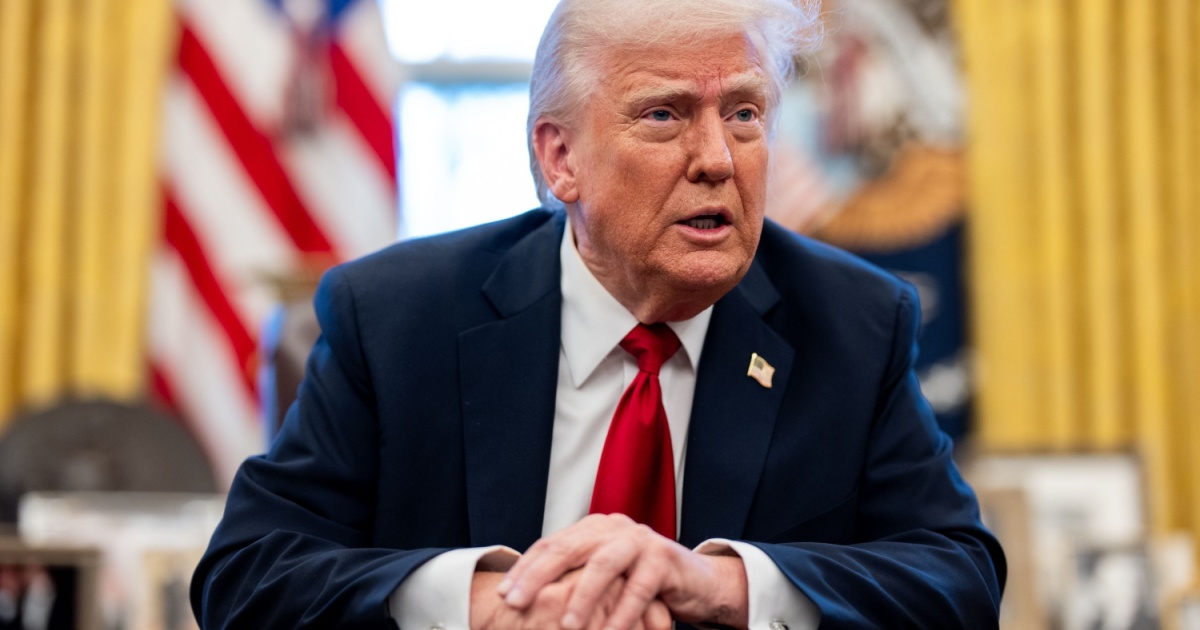

Something about the runway scene stops you cold. A sitting president, microphone-ready, pivots from praising a foreign leader to casually suggesting he could run for that country’s top job himself, and then doubles down on a poll number to justify it. People who watched it weren’t sure whether to laugh or feel unsettled. Some felt both. And for a growing portion of Americans, the feeling that something is off has been building for a while now.
The moment itself was brief. But it landed in a culture already primed to scrutinize every public appearance Donald Trump makes. At 79, he is the oldest person ever inaugurated as U.S. president, and every speech, every press gaggle, every social media post is now being watched with a kind of clinical intensity that was once reserved for medical waiting rooms, not political news cycles.
What’s driving that scrutiny is not just one remark or one stumble. It’s a pattern that has accumulated quietly, then loudly, over the past year and a half. And what the public sees on camera is now being matched, and sometimes outpaced, by what doctors are saying in formal, documented, legal language.
A Runway, a Boast, and a Very Odd Segue
Trump told reporters on an airport runway that he could run for Prime Minister of Israel once his time as U.S. President is over, while lavishing praise on Prime Minister Benjamin Netanyahu and boasting about his popularity in the country. He cited a polling figure of 99% support in Israel as his rationale, making the suggestion with apparent seriousness. The remarks follow a now-familiar pattern of blending freewheeling political commentary with personal flattery and self-promotion, even as critics raise questions about his age, fitness, and mental sharpness.
The runway episode didn’t happen in isolation. Just days earlier, Trump had posted a series of social media images claiming that he is “aging in reverse,” an apparent attempt to mock or bulldoze through anxiety about his age. The posts seemed to echo comments from Bo Loudon, a 19-year-old right-wing influencer who shared photos of Trump at a Virginia golf course and declared, “79 is the new 39. President Trump is aging in reverse.” For many observers, the contrast between that kind of messaging and what’s being captured on camera is the crux of the concern.
What the Cameras Have Been Catching
At 79 years old, Donald Trump became the oldest person in American history to become president upon his second inauguration in 2025. Since then, the public record of unusual moments has grown steadily longer.
Trump has repeatedly boasted about acing cognitive tests since he was first elected in 2016. Just in recent weeks, he bragged about successfully identifying a bear in one such test while touting how smart he is. Yet the behavioral record captured on camera tells a more complicated story. Since taking office his second time around, Trump has been observed falling asleep in public settings on multiple occasions, including during Cabinet meetings, at the U.S. Open, while meeting foreign leaders, and even during the Pope’s funeral. His trademark tangents have grown longer, veering into unexpected segues on topics ranging from wind farms and White House décor to personal details about First Lady Melania Trump.
In one particularly striking moment, Trump froze as a man collapsed behind him in the Oval Office. He had also dozed off during an earlier Oval Office meeting and appeared disoriented when a man passed out next to the Resolute Desk.
On January 21, 2026, while speaking in Davos, Trump referred to Greenland as “Iceland” on multiple occasions. His language became a further subject of concern throughout April 2026, with lengthy and expletive-laden social media posts, including apparent threats against Iran and rebukes of Pope Leo XIV, reigniting debates over his mental fitness.
Physically, questions have mounted as well. In July, the White House announced that Trump had been diagnosed with chronic venous insufficiency, a condition common in older adults that causes blood to pool in his veins. Large bruises continued to appear on the back of Trump’s hands, which his physician attributed to “minor soft tissue irritation from frequent handshaking and the use of aspirin,” calling it “a well-known and benign side effect of aspirin therapy.” Doctors, however, have recommended Trump take a smaller dose of aspirin than he currently takes for cardiac prevention, specifically citing concerns about easier bruising. Trump himself dismissed concerns in an interview with the Wall Street Journal, blaming the bruising on a high daily aspirin dose and insisting he has plenty of energy.
You can learn more about signs of cognitive decline in aging adults and what to watch for in people you love.
What the Cognitive Tests Actually Measure
Trump has repeatedly cited cognitive test results as proof that nothing is wrong. He has undergone the Montreal Cognitive Assessment (MoCA) at least twice: in January 2018 during his first presidency, and in April 2025 during his second. According to both administering physicians, he scored a perfect 30 out of 30 on each assessment.
But doctors and the test’s own creator have been clear about what that number actually means. The MoCA was developed by Canadian neurologist Dr. Ziad Nasreddine and is widely used to assess mild cognitive impairment. According to the MoCA’s official documentation, it tests language, memory, visuospatial abilities, and orientation, and the standard version takes about 10 minutes to complete. Nasreddine himself has noted that a 30/30 score is “reassuring for ruling out Mild Alzheimer or Dementia,” while also stating that very mild cognitive impairment can be missed by the screening, particularly in highly educated patients.
The MoCA can help rule out some forms of cognitive impairment, but cannot by itself prove lifelong cognitive fitness or measure complex executive functions. It is most useful as a screening step that can prompt further neuropsychological testing if concerns arise. The Montreal Cognitive Assessment is not an IQ test but a screening designed to detect early signs of Alzheimer’s or dementia. Trump has been criticized for distorting or misrepresenting the nature of the test, suggesting it is an IQ test rather than a screen for severe cognitive impairment.
Passing a brief screening tool is genuinely meaningful. But it is not the same as a clean bill of neurological health. Those are two very different things.
What Doctors Are Formally Saying
The debate about Trump’s health crossed a significant threshold in late April 2026. On April 30, 2026, a group of 36 leading physicians and other doctors with expertise in mental health issued a statement calling for President Trump’s immediate, lawful removal from office for medical reasons, declaring that his mental instability, coupled with his sole, unchecked authority to launch nuclear weapons, makes him “a clear and present danger to the safety of all Americans.”
The group is made up of neurologists, forensic psychiatrists, and other specialists. The roster includes clinicians from Harvard, Columbia, Tufts, and George Washington University, along with figures such as Eric Chivian, a co-founder of the International Physicians for the Prevention of Nuclear War and a Nobel Peace Prize recipient.
The statement was formally entered into the Congressional Record by Senator Sheldon Whitehouse, who asked unanimous consent to have it printed in the Record on behalf of himself and Senator Jack Reed. Entering a document into the Congressional Record does not trigger any automatic legal process, but it ensures the warning is permanently embedded in the formal record of government and escalates the political stakes, forcing lawmakers to publicly acknowledge or dismiss the doctors’ concerns.
The group is explicit that it has not examined the president in person and is not offering a formal clinical diagnosis. Its assessment is based on public behavior and statements, which the signers argue are sufficient to raise serious red flags about fitness.
There is an important ethical boundary worth acknowledging here. For decades, a professional norm has governed how mental health clinicians belonging to the American Psychiatric Association talk about public figures: don’t diagnose someone you haven’t examined. Known as the Goldwater Rule, it was established in 1973 by the APA after the 1964 presidential campaign. These 36 doctors stepped around that norm deliberately, arguing that the national security stakes make silence indefensible. The move is controversial within the medical community, and not every physician agrees with their approach.
The White House has dismissed the doctors’ claims, with spokesperson Davis Ingle calling Trump “the sharpest and most accessible President in American history” and affirming his “excellent health.” Trump has frequently cited his performance on cognitive tests as evidence of his mental acuity. These rebuttals come ahead of his scheduled May 26 evaluation at Walter Reed National Military Medical Center, which officials describe as part of routine preventive healthcare.
What the Public Is Thinking
The medical community’s concerns are not unfolding in a vacuum. Public opinion has been shifting steadily, and the numbers are striking.
A Washington Post/ABC News/Ipsos poll found that 59 percent of U.S. respondents indicated Trump does not have the mental sharpness it takes to lead the country. Forty percent said the president is mentally equipped for leadership, while 55 percent said Trump is not in good enough physical health to serve as president.
A Reuters-Ipsos poll found 61 percent of Americans agreed that Trump has “become erratic with age.” Even 30 percent of Republicans agreed with that sentiment. A separate Washington Post-ABC News-Ipsos survey showed majorities said Trump didn’t have the mental sharpness, at 56 percent, or physical health, at 51 percent, to serve effectively.
Among Republicans and Republican-leaning independents, the percentage who are “very confident” in Trump’s mental fitness dropped from 75 to 66 percent, while confidence in his physical fitness fell from 65 to 55 percent.
Read More: New Proposed Law Would Require Cognitive Fitness Tests For Aging U.S. Lawmakers
By May 2026, multiple polls showed a majority of Americans did not believe Trump was mentally fit to be president. That’s a notable shift for a man who made Biden’s age and sharpness a central theme of his 2024 campaign.
What This Means for Everyone
This story isn’t really just about one president. It’s about a question that affects everyone with aging parents, aging leaders, aging institutions: how do we honestly assess cognitive health, and what do we do when the signs don’t match the official story?
The tools we currently use to measure cognition in public figures are limited. The MoCA and selective health summaries from a White House physician have been the administration’s primary reassurances. But a brief screening and a thorough, independent neurological evaluation are not the same thing. That gap is where most of the serious public debate is happening, among physicians, legal scholars, and voters alike.
The physicians who signed the April 30 statement urged invocation of the 25th Amendment, the constitutional mechanism that allows the vice president and a majority of Cabinet secretaries to declare a president unable to perform his duties. If invoked, the vice president would assume presidential powers unless the president contested the move, which would then require Congress to decide the outcome. No president has ever been removed through the 25th Amendment.
The deeper question this moment raises goes beyond Trump: the United States has no formal, independent system for evaluating whether any sitting president is mentally fit to control nuclear weapons. A runway interview, a boast about Israeli polls, and a signed letter from 36 doctors have forced that question into the open. Whether anything changes because of it is a different story entirely. But the conversation is now on the record, in Congress, in polling data, and in the public square. That alone is something the next generation of voters and lawmakers will have to reckon with.
Disclaimer: The author is not a licensed medical professional. The information provided is for general informational and educational purposes only and is based on research from publicly available, reputable sources. It is not intended to constitute, and should not be relied upon as, medical advice, diagnosis, or treatment. Always consult a licensed physician or other qualified healthcare provider regarding any medical condition, symptoms, or medications. Do not disregard, avoid, or delay seeking professional medical advice or treatment because of information contained herein.
AI Disclaimer: This article was created with the assistance of AI tools and reviewed by a human editor.
Read More: Trump Called Melania ‘Melody’ by Autocorrect. Now Doctors Are Talking.