

Most people know heart disease is dangerous. Fewer realize that some of the foods they eat most often, the ones they keep on the breakfast table or grab from the pantry without a second thought, may be quietly chipping away at their heart health with every bite. That disconnect, between what we think is harmless and what is actually happening inside our arteries, is exactly what concerns Dr. Philip Ovadia.
Dr. Ovadia has spent more than 20 years as a cardiothoracic surgeon, and the view from his operating table is not reassuring. He has carried out over 3,000 heart surgeries, and over that career he says he has seen, firsthand, what causes a person’s heart to fail. Not abstract statistics. Actual plaque. Actual arteries. Actual damage that built up over decades of eating.
What he has been saying recently has struck a nerve with millions of people, because the food he’s warning about isn’t the obvious stuff. It’s not the birthday cake or the occasional fast food run. It’s the everyday foods sitting in nearly every American kitchen right now. If you’ve been focused on cutting saturated fat and salt while loading up on “lighter” or “healthier” options, this might be the moment to reconsider.
The Numbers Behind the Problem
Before getting into exactly what Dr. Ovadia says could be affecting your heart health, it’s worth understanding just how serious America’s heart disease crisis actually is. According to the CDC, coronary heart disease killed 371,506 people in 2022 and remains the leading cause of death in the United States. Someone in the United States has a heart attack every 40 seconds, with about 805,000 heart attacks occurring annually.
In 2022, cardiovascular disease accounted for 941,652 deaths in the United States, according to the American Heart Association’s 2025 statistical update. Those aren’t just numbers. They represent a pattern of daily habits, replicated at scale, across a population that is largely unaware of the specific dietary triggers at play.
What the Surgeon Actually Sees
Veteran heart surgeon Dr. Philip Ovadia has warned that refined carbohydrates may quietly damage heart health over time, describing this food as something that “drives insulin resistance, triggers chronic inflammation, and is slowly destroying your heart.”
He has described seeing the buildup of plaque that is “soft, unstable, and highly inflammatory,” which “suddenly ruptures and blocks the artery,” as well as “hard, calcified plaque” that has “gradually choked off that blood supply going through that artery.”
While many people assume red meat, saturated fats, and salt are the prime suspects, Dr. Ovadia argues that “highly processed carbohydrates” are the real culprit. This is a perspective that cuts against decades of mainstream dietary messaging, and it’s one backed by his own surgical experience. He has stated that he “discovered a great deal of science that implicates sugar and insulin resistance, and ultimately poor metabolic health, as central factors in the development of heart disease,” and has come to believe that “metabolic health is actually more important than cholesterol.”
Insulin resistance, for anyone unfamiliar with the term, is when the body’s cells stop responding properly to insulin, the hormone that regulates blood sugar. Over time, this forces the pancreas to produce more and more insulin to do the same job, creating a cascade of metabolic disruption that damages blood vessels and fuels chronic inflammation throughout the body.
The Foods Destroying Your Heart, According to Dr. Ovadia
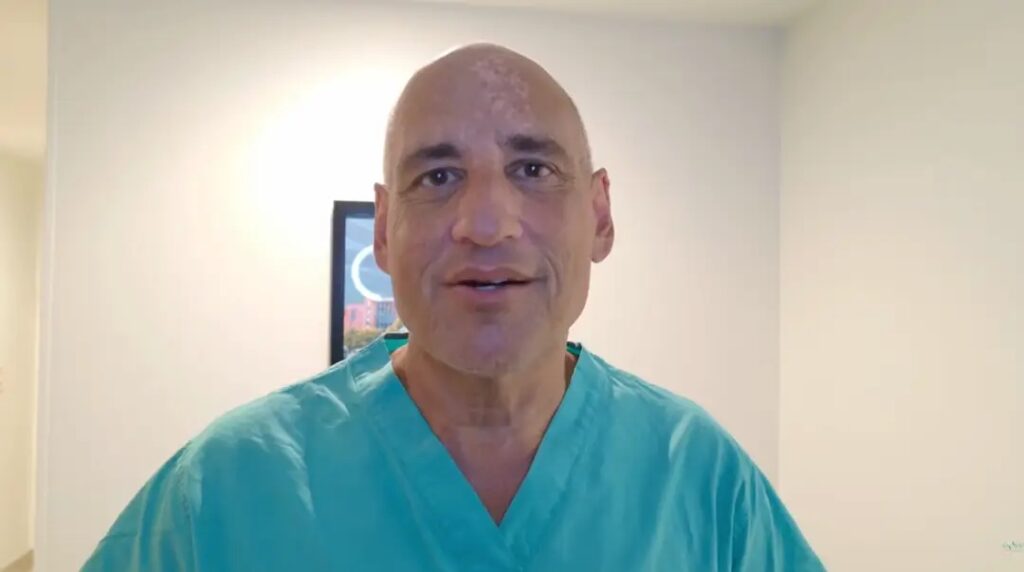
Dr. Ovadia is explicit that his concern goes well beyond candy and soda. He warns against “even foods marketed as healthy, like low-fat granola, whole wheat bread, and rice cakes,” noting they are “loaded with these refined carbs.”
Other foods he advises limiting include bagels, flavored yogurts, fruit juice, instant oatmeal, breakfast cereal, crackers, and potato chips.
These foods “spike your blood sugar and your insulin repeatedly, promote chronic inflammation, and drive visceral fat storage,” he explains. Visceral fat is the deep abdominal fat that wraps around internal organs, and it’s far more metabolically dangerous than the fat you can pinch at the surface.
What makes this message particularly important is the delivery mechanism. These aren’t niche foods that most people avoid. They are the default breakfast foods, the “healthy” desk snacks, the lunchbox staples. Dr. Ovadia points to “processed foods – the things that come in the packages, in the boxes, in the bags” with “long ingredient lists” as the core problem, because they are so deeply embedded in how most Americans eat.
What the Research Says
Dr. Ovadia’s clinical observations are increasingly supported by population-level data, and the numbers are striking.
A major U.S. study found that eating large amounts of ultra-processed foods, including chips, frozen meals, sugary drinks, and packaged snacks, significantly raises the risk of serious heart problems. People consuming around nine servings per day had a 67% higher risk of heart attacks, strokes, or death from heart disease compared to those eating about one serving. That study, published in JACC: Advances, was presented at the American College of Cardiology’s 2026 Annual Scientific Session.
The risk didn’t only spike at the highest levels of consumption. Each additional daily serving increased the likelihood of these events by more than 5%, even after accounting for calories, overall diet quality, and common health conditions.
A separate 2026 study from Florida Atlantic University, published in The American Journal of Medicine, found that adults who consumed the highest amounts of ultra-processed foods had a statistically significant 47% increased risk of cardiovascular disease.
European scientists also reported that adults with a high consumption of ultra-processed foods have a 19% higher risk of coronary artery disease, a 13% higher risk of atrial fibrillation (an irregular heart rhythm), and as much as a 65% higher risk of cardiovascular-related death compared to those with lower consumption, according to a 2026 report published in the European Heart Journal.
The Saturated Fat and Processed Meat Questions
The conventional wisdom that saturated fat is the primary driver of heart disease is not as settled as it once seemed. That said, the evidence on certain foods remains clear and shouldn’t be dismissed.
Processed meats – bacon, deli meats, sausages, hot dogs – sit at the intersection of several cardiac risk factors. Ultra-processed foods also worsen key risk factors for conditions such as obesity, type 2 diabetes, high blood pressure, and the buildup of unhealthy fats in the bloodstream. And research specifically on processed meat has shown consistent harm. According to a 2013 meta-analysis published in BMC Medicine, processed meats are associated with higher cardiovascular disease risk.
For context, you can read more about the specific risks associated with this food category in this deep look at why processed meat raises serious health concerns.
On the fat question, the American Heart Association states that eating too much saturated fat raises LDL (bad) cholesterol and increases the risk of heart disease and stroke, and recommends limiting saturated fats to less than 6% of total daily calories. Trans fats, the artificially produced kind once common in packaged pastries and margarine, are even more directly dangerous. According to the Mayo Clinic, trans fat raises bad cholesterol and lowers good cholesterol, and a diet high in trans fat raises risk of heart attack and stroke.
Dr. Ovadia’s point isn’t that saturated fat is completely harmless. His argument is more specific: that it has taken the blame for damage that highly refined carbohydrates and ultra-processed foods are primarily responsible for, and that the relentless focus on fat reduction over the past several decades may have pushed people toward a different set of dangers.
Sugary Drinks Deserve Their Own Category
One food group that consistently appears in the research, and on Dr. Ovadia’s list, is sugary beverages. Juice, sweetened iced tea, energy drinks, sports drinks, and sodas all deliver a concentrated hit of refined sugar directly into the bloodstream with little to slow absorption.
Research partly funded by the National Heart, Lung, and Blood Institute found that drinking one or more sugary beverages daily was associated with a nearly 20% greater likelihood of cardiovascular disease in women. That risk applies specifically to women in that research, but the broader pattern linking sugar-sweetened drinks to heart risk is consistent across many populations and study designs.
The mechanism aligns precisely with what Dr. Ovadia describes. Individuals who eat a lot of sugar and refined carbohydrates, such as white bread, pasta, and rice, may develop insulin resistance, where the body gradually struggles to cope with high levels of glucose in the blood. Liquid sugar hits faster than almost any other food source, making sweetened beverages a particularly efficient driver of the very process he warns about.
Sodium’s Quieter Role
Salt doesn’t generate the same headlines as sugar, but its role in heart disease is well-established. High sodium intake is a well-established contributor to elevated blood pressure and adverse cardiovascular outcomes, with strong evidence that reducing it significantly lowers blood pressure in adults. The World Health Organization recommends that adults consume less than 2 grams of sodium per day, equivalent to less than 5 grams of salt, to reduce cardiovascular disease risk.
The problem is that most sodium in the American diet doesn’t come from a salt shaker. It comes from the exact same packaged and ultra-processed foods that Dr. Ovadia warns about: crackers, cereals, packaged deli meats, flavored chips, sauces, and instant meals. A single serving of some of these products can contain more than half the daily recommended limit.
Read More: Cardiologist Reveals Three Things He Would Never Eat or Drink
What This All Means
Dr. Ovadia’s message, backed by a growing body of research, points in a clear direction: the foods most quietly destroying your heart are not the obvious indulgences. They are the everyday packaged staples, the processed carbohydrates marketed as convenient, affordable, and even healthy.
His recommendation is straightforward: eat plenty of vegetables, healthy fats, and protein, and move away from anything that comes with a long ingredient list of processed grains, added sugars, and refined flours. This lines up with what the broader evidence supports. A heart-healthy diet centers on fruits, vegetables, whole grains, plant-based proteins, and unsaturated fats, while limiting sugar, sodium, and ultra-processed foods, according to guidance from the American Heart Association.
The practical starting point doesn’t have to be complicated. Check what you eat for breakfast, because that’s where ultra-processed carbohydrates tend to cluster most. Swap flavored instant oatmeal for plain oats. Replace fruit juice with whole fruit. Choose plain yogurt over the flavored kind. Read ingredient labels and if a food has a long list of ingredients you can’t picture in a kitchen, treat it as a processed food. Cook more from real ingredients, even once or twice more per week than you currently do. The changes don’t need to be dramatic to matter. According to the research, even reducing your daily intake of ultra-processed foods by a serving or two can meaningfully lower your cardiovascular risk over time.
The research is converging, and the surgeon’s warning from the operating room is consistent with it: the foods destroying your heart are the ones you might not have been thinking twice about. Start there.
Disclaimer: The author is not a licensed medical professional. The information provided is for general informational and educational purposes only and is based on research from publicly available, reputable sources. It is not intended to constitute, and should not be relied upon as, medical advice, diagnosis, or treatment. Always consult a licensed physician or other qualified healthcare provider regarding any medical condition, symptoms, or medications. Do not disregard, avoid, or delay seeking professional medical advice or treatment because of information contained herein.
AI Disclaimer: This article was created with the assistance of AI tools and reviewed by a human editor.
Read More: 40 Worst Foods For Heart Health