
If you or someone you know is struggling, please call or text 988 to reach the Suicide and Crisis Lifeline, available 24/7.
Ryan Kingerski had been looking forward to this for years. Like a lot of people who spend their days in glasses or contacts, he was ready to finally be free of them. He was 26, healthy, and working a job he had dreamed about since he was a child. The procedure was supposed to take seconds. It did. What came after is something his family never could have imagined.
The story of what happened to Ryan has now reached millions of people, and for good reason. It forces a conversation that the laser eye surgery industry has largely avoided: what happens to patients when things go wrong, and how serious can those consequences really be? Not just physically. Psychologically. Permanently.
LASIK is one of the most performed elective surgeries in the country. Clinics market it as quick, life-changing, and overwhelmingly safe. For the vast majority of patients, those descriptions hold true. But for a smaller group of people, the reality is far more complicated, and far more painful. The full picture is something every prospective patient deserves to understand.
What the Numbers Actually Say About LASIK Eye Surgery Complications
About 800,000 Americans undergo laser eye surgery every year. The procedure is, by most measures, a medical success story. It is one of the most frequently performed and successful operations in medicine, with a 96% postoperative patient satisfaction rate. According to the American Refractive Surgery Council, LASIK has a 96% patient satisfaction rate, and the organization reports that far less than 1% of patients suffer sight-threatening complications.
Those numbers are real. But they don’t tell the complete story, especially for patients who fall outside the success margin. The possible side effects of laser refractive surgery include dry eye syndrome, blurred vision, glare, and night vision disturbance. These are usually transient, but sometimes persist.
The frequency of some of those side effects is much higher than most people realize going in. About 95% of patients have been reported to experience some dry eye symptoms immediately following refractive laser surgery, according to a 2023 study published in the NIH’s PubMed Central, because corneal nerves are disrupted during surgery. Dry eye symptoms are most bothersome in the first month after surgery and gradually improve over three to twelve months for many patients. But improvement is not guaranteed. Available data suggest that approximately 20 – 55% of patients report persistent eye symptoms, generally regarded as those lasting at least six months post-operation, after LASIK surgery. The FDA has also weighed in directly: complications like dry eye, inflammation, or infection may cause severe, constant pain in some patients, preventing them from doing their normal activities, according to the FDA’s own draft guidance on LASIK risks.
Night vision problems are another common complaint. Up to 40% of participants who had no halos before LASIK developed halos three months following surgery, according to the FDA’s LASIK Quality of Life Collaboration Project. For some patients, particularly those who drive or work at night for a living, that kind of change is not a footnote. It changes their entire life.
When Complications Become Life-Altering
Most LASIK complications are manageable. But the spectrum runs wide. Intraoperative complications, meaning problems that occur during the procedure itself, are reported at a rate of up to 6.6%. At the more serious end of the scale sits a condition called corneal ectasia, where the cornea progressively bulges outward after surgery, distorting vision in ways that are difficult to correct. The estimated incidence of post-LASIK ectasia is between 0.04% and 0.09%, according to a review published on NIH’s PubMed Central. Studies suggest corneal ectasia may occur in roughly one of every 2,000 LASIK procedures.
For patients who develop severe, persistent complications, the psychological toll can be significant. According to the FDA’s draft guidance, a few LASIK patients have become severely depressed, even considering suicide, after experiencing complications from the surgery. Research on surgical complications suggests that psychiatric effects such as psychosis, depression, and suicidal ideation can occur, though they are very rare. The connection between unresolved post-surgical suffering and mental health crisis is well-documented enough that comprehensive psychological support after a bad surgical outcome is not optional. It’s essential.
The connection between dry eye disease specifically and psychological distress has attracted research attention. Dry eye syndrome has been associated with increased psychological distress and suicidal ideation in vulnerable patients, a finding that gives more weight to why so many patients who experience severe post-LASIK dry eye describe their quality of life as fundamentally destroyed.
Ryan Kingerski and a Story the Industry Would Prefer to Ignore
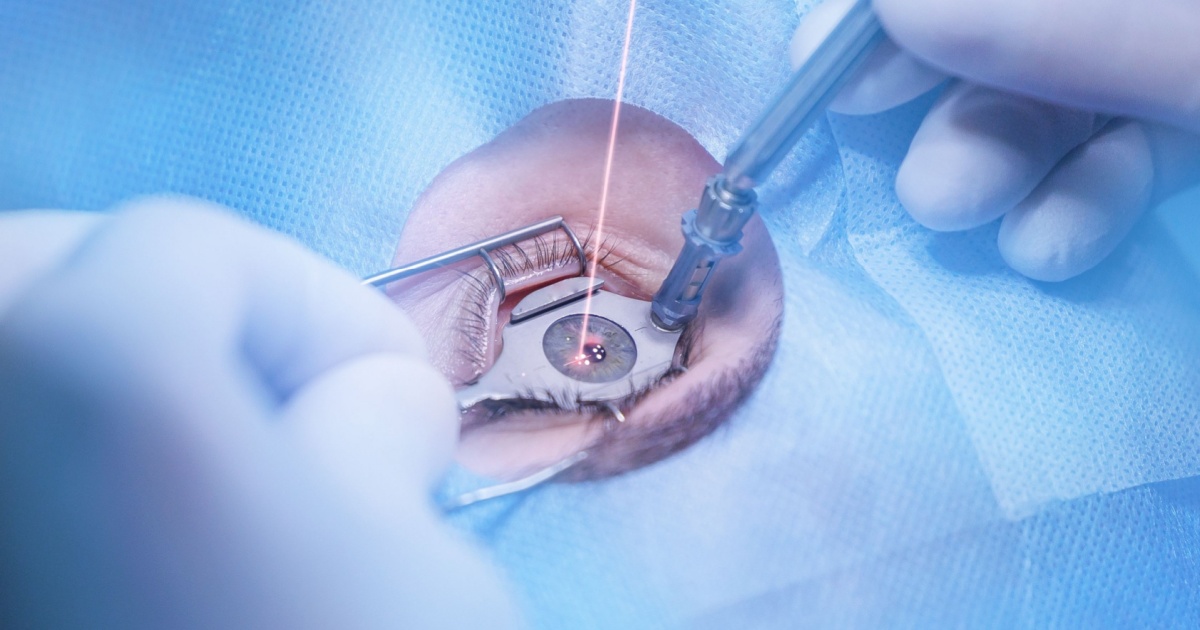
Ryan Kingerski, a 26-year-old police officer in Pennsylvania, died by suicide after his life became unbearable due to complications from LASIK vision correction surgery, according to his parents. In August 2024, Kingerski underwent LASIK in both eyes at a Pittsburgh clinic, a procedure in which a laser removes a thin layer of tissue in the cornea to improve how it focuses light on the retina.
His vision problems started immediately after surgery and became progressively worse. Since his surgery, he had been living with excruciating headaches, double vision, dark spots floating in his eyesight, and extreme sensitivity. Kingerski reached out to a corneal specialist for help and was told his corneas were thin and that his problems were irreversible, according to his father.
In August 2024, he underwent LASIK, and just months later, he took his own life, leaving behind a note that read, “LASIK took everything from me. I can’t take it anymore.”
Ryan Kingerski died on January 25, 2025, five months after undergoing the procedure. He was never able to return to the police career he loved. His family said he was supposed to go back to work in a few days, but was never able to.
His parents, Tim and Stefanie Kingerski, have spoken publicly and widely since his death. Seven million people have viewed Ryan’s story on social media, and his family has heard from many people who said they were considering the surgery and changed their minds after learning what happened.
Ryan Is Not Alone
Ryan’s case is the most recent to make national news, but it is not an isolated tragedy. Detroit TV meteorologist Jessica Starr took her own life after posting online about her complications and struggles following refractive eye surgery. Starr was a meteorologist at Fox 2 News in Detroit who underwent a laser eye procedure in October 2018. Only two months later, she died by suicide at age 35, leaving behind her husband and two young children. Her husband told ABC News that “without a doubt in my mind, something related to this procedure triggered this.”
Texas college student Max Cronin also died not long after undergoing laser eye surgery. His mother reported that complications from the surgery prevented him from continuing with school and kept him from working. In his final note, his family said he blamed the surgery.
Peer-reviewed literature has examined this pattern formally. A 2020 review published by the National Institutes of Health examined databases from inception through October 2019. Researchers found six patients, mainly young men, who completed suicide after laser refractive surgery. The same review notes that a patient advocacy website had catalogued approximately 34 patients reporting psychiatric complications following the procedure, including completed suicides. The researchers concluded that suicide following laser refractive surgery is exceedingly rare, and that suicide is a complex mental health issue with a myriad of contributing factors.
That caveat matters. No responsible reading of the evidence supports the claim that LASIK directly causes suicide. What the evidence does suggest is that severe, unresolved post-surgical complications can create extreme suffering, and that suffering, in people who may already be vulnerable, can spiral into crisis.
What the FDA Knows and What Patients Are Told
The FDA has been engaged on LASIK safety for years, though critics argue that engagement has not gone far enough. The FDA has been considering a policy requiring health providers to warn patients about the potential side effects of getting LASIK, including the risks of double vision, dry eyes, ongoing pain, and other issues from the surgery.
Dr. Morris Waxler is a retired senior FDA official who regrets the role he played in LASIK’s approval over 20 years ago. He has since said that approval was a mistake, telling reporters that the original FDA-required clinical trials had failed to pick up serious long-term side effects because the patient numbers were small and the follow-up was short-term. In January 2011, Waxler filed a citizen’s petition with the FDA calling for a recall of the procedure’s approval, a request that was ultimately denied.
Many patients, including Ryan Kingerski, have reported that consent forms and pre-surgical consultations did not adequately prepare them for the possibility of lasting complications. The Kingerski family believes that if doctors and industry leaders conveyed more complete information about real complication rates, patients would be better educated about the risks. They believe the industry is trying to downplay complications. LasikPlus, the clinic where Ryan’s procedure was performed, declined media interviews but issued a statement noting that patients receive consent forms outlining recognized risks before surgery.
The gap between what consent forms contain and what patients actually understand when they sign them is a persistent problem in medicine, not unique to LASIK. But given the permanence of this surgery, and the severity of outcomes in the worst cases, informed consent carries particular weight here.
Who Is Most at Risk – and What to Ask Before You Decide
The majority of people who are well-screened candidates for LASIK do fine. The problems disproportionately affect people who should not have been approved for the procedure in the first place, or who were not fully counseled about their individual risk profile.
Medical experts warn that people with thin corneas, large pupils, or unstable vision are poor candidates. Those with autoimmune diseases, diabetes, or existing dry eye problems face much higher complication rates. For police officers, firefighters, and military personnel who work in environments where eye trauma can occur, a head injury can dislodge the corneal flap created during LASIK, potentially leading to serious damage.
If you are considering LASIK, the right surgeon will welcome your questions rather than rush you through. Ask specifically about your corneal thickness measurements, your pupil size in low light, and your dry eye history. Ask what the clinic’s process is if you experience complications. Ask what “rare” actually means in statistical terms. A clinic that gives vague answers or pressures you toward a quick booking date is a clinic worth walking away from.
Read More: Officer Dies by Suicide After Reported Struggles Following LASIK Eye Surgery
What This Means for You
LASIK is not a dangerous surgery for most people, and painting it that way would be dishonest. According to Marietta Eye Clinic’s analysis of LASIK outcomes data, 99.5% of individuals who receive LASIK achieve 20/40 or better vision, and 90% achieve 20/20 vision. The procedure has given millions of people freedom from glasses and contacts without serious consequences. That reality should not be discarded.
But the experiences of Ryan Kingerski, Jessica Starr, and others make clear that the current system is failing a specific group of patients. Some people who were not good candidates were approved. Some patients were not adequately warned about complications that are, statistically, far from trivial. And some patients who experienced severe outcomes found themselves with nowhere to turn, dismissed by clinics and overwhelmed by pain that left them feeling hopeless.
If you are currently struggling after LASIK, know that support communities exist, that corneal specialists and dry eye clinics offer options that general LASIK providers may not discuss, and that the FDA’s MedWatch program allows you to file a formal report of any adverse outcome. Your experience matters and it should be documented.
If you or someone you know is in crisis, call or text 988 to reach the Suicide and Crisis Lifeline, available 24 hours a day, seven days a week.
Disclaimer: The author is not a licensed medical professional. The information provided is for general informational and educational purposes only and is based on research from publicly available, reputable sources. It is not intended to constitute, and should not be relied upon as, medical advice, diagnosis, or treatment. Always consult a licensed physician or other qualified healthcare provider regarding any medical condition, symptoms, or medications. Do not disregard, avoid, or delay seeking professional medical advice or treatment because of information contained herein.
AI Disclaimer: This article was created with the assistance of AI tools and reviewed by a human editor.