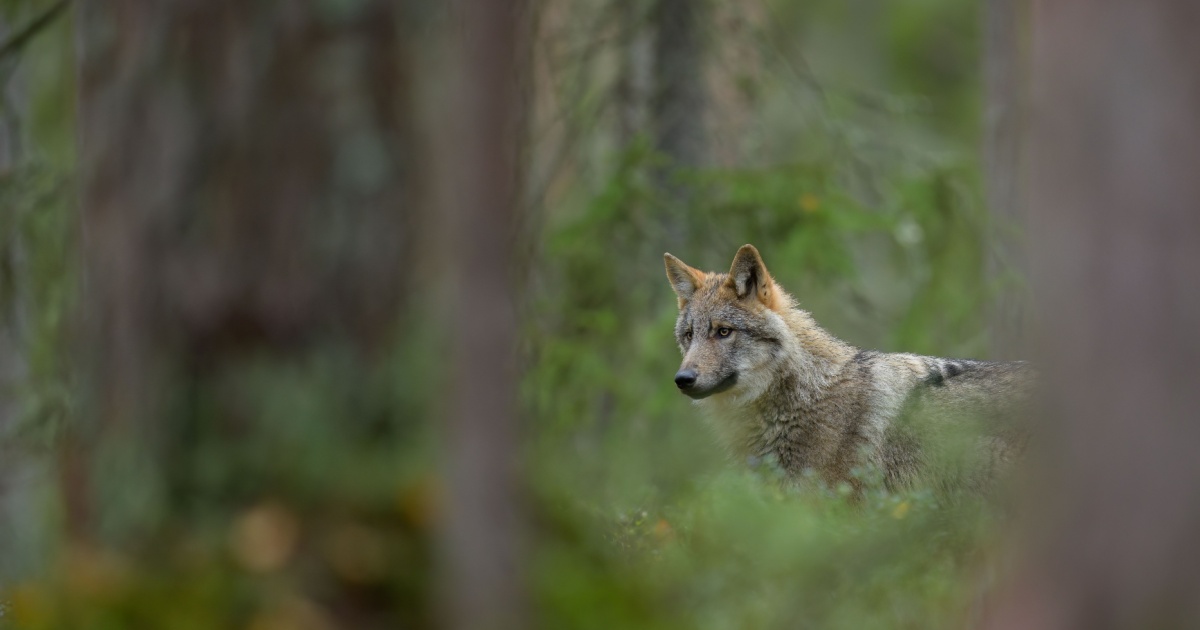

Something extraordinary happened in Sequoia National Park on the morning of May 17, 2026. A GPS collar pinged somewhere near the eastern edge of the park, close to the rugged slopes of Mount Pickering. The signal belonged to a wolf. For the first time in over a century, a gray wolf had set foot inside one of America’s most iconic national parks, and almost nobody had seen it coming.
Her story, though, had been unfolding for months. Long before she crossed into Sequoia, she had already rewritten California wildlife history twice over. Her solo trek south through the Sierra Nevada had become one of the most closely watched journeys in modern American conservation. And the pack she was born into had become the center of a firestorm that forced the state to make decisions no California wildlife official had made in living memory.
This is the story of a 3-year-old wolf, a disappearing pack, a state straining to balance conservation with the realities of rural livelihoods, and what the next chapter looks like for a predator that was nearly erased from California forever.
The First Gray Wolf in Sequoia in Over 100 Years
A female gray wolf known as BEY03F became the first wild wolf to enter Sequoia National Park in more than 100 years, according to the California Wolf Foundation. The California Department of Fish and Wildlife’s wolf-tracking system showed the wolf most recently entering the eastern end of the park near Mount Pickering.
BEY03F is just 3 years old, and photos taken by the CDFW show a wolf with a blackish-gray coat traveling alone through wild backcountry terrain. According to John Marchwick of California Wolf Watch, who wrote the post announcing her arrival, she is looking for a mate and her own territory. That search has taken her further south than any gray wolf tracked in the modern era of California wildlife monitoring.
Gray wolves were extirpated from California, with the last known wolf killed in 1924. In December 2011, a radio-collared wolf entered California from Oregon, marking the species’ return after decades of complete absence. The wolf that entered Sequoia this May arrived in a park that had not heard a howl in more than 100 years.
A Journey That Keeps Breaking Records
BEY03F has been rewriting the record books one county at a time. She was born to the former Beyem Seyo Pack in 2023, but dispersed from her pack prior to the livestock conflicts in 2025 that caused several members of the pack to be lethally removed by the California Department of Fish and Wildlife. That decision to leave her birth pack early would prove to be one of the most consequential choices a California wolf has ever made.
In 2025, she dispersed 370 miles south of her natal pack. In May 2025, she was collared in the Yowlumni Pack’s territory by the CDFW so she could be tracked. That collar has made her one of the most monitored animals in the state. Every ping of her GPS tracker has produced a news cycle.
In February 2026, she was documented in Los Angeles County after traveling nearly the length of the Sierra Nevada, marking the farthest south a gray wolf has been tracked in California. California Wolf Watch said she had reached Los Angeles County earlier in the year and Inyo County in April, with each new county representing a first confirmed wolf sighting in over a century.
Susan Dewar, ecologist and president of the nonprofit California Wolf Foundation, describes wolves like BEY03F as “pioneering individuals” as the species slowly reestablishes itself across California.
What Happened to Her Pack
To understand BEY03F’s journey, you need to understand what happened to the pack she left behind. The Beyem Seyo Pack became the center of the most severe wolf-livestock conflict in modern California history, and its story ended in a way the state had never seen before.
That pack was lethally removed by the CDFW in late 2025 after unprecedented livestock losses that included at least 88 cattle kills over one summer. Several members of BEY03F’s natal pack were euthanized after they became heavily dependent on preying on livestock in the Sierra Valley instead of hunting natural wild game. The lethal action by the CDFW was the first of its kind since gray wolves returned to the state in 2011.
Wildlife wardens said the wolves had become so deeply conditioned to feeding on cattle that the behavior could not be reversed with non-lethal deterrents. According to the CDFW’s 2025 Annual Wolf Report, four wolves from the Beyem Seyo Pack were removed as a management action due to chronic livestock depredation. The economic fallout was staggering. Conservative estimates placed direct livestock losses at nearly $250,000, and when unconfirmed losses and agency intervention costs were factored in, the total impact over seven months reached a minimum of $2.6 million.
In 2025, state wildlife officials documented 198 confirmed or probable livestock kills by wolves statewide. California had opened 267 investigations into wolf-livestock predation in 2025, according to CDFW depredation investigation data, up from just 74 the previous year. For ranching communities in the Sierra Valley, these were not abstract numbers. They were livelihoods.
Marchwick confirmed that the wolf now drawing international attention, BEY03F, was not linked to those incidents. She left before the conflict escalated, which is likely why she is still alive and wandering free today.
A Growing Population Facing Growing Pressure
Despite the drama surrounding the Beyem Seyo Pack, California’s wolf population is trending upward overall. The known population of wolves in California was 55 at the end of 2025, an increase from 50 in 2024, with nine total wolf packs statewide, up from seven in 2024, according to the CDFW’s 2025 annual report. Three more packs were discovered in the first quarter of 2026, bringing the total to 12 known packs by early spring.
The species’ return to California began with a single animal. In December 2011, OR-7, a GPS-collared male dispersing from the Imnaha Pack in Oregon, crossed into northeastern California, becoming the first confirmed wild wolf in the state in 87 years. OR-7 traveled across seven northeastern counties in California before returning to southwestern Oregon, where he found a mate and settled down, forming the Rogue Pack. Several of OR-7’s offspring later came to California and established packs, including the original breeding male of the Lassen Pack and the breeding female of the Yowlumni Pack.
California’s wolf population is protected under both the federal Endangered Species Act and the California Endangered Species Act, which listed the gray wolf as threatened in 2014, the first instance of a state preemptively listing a species not yet established within its borders. Killing a wolf in California is a crime.
The number of successful breeding pairs declined to three in 2025 from five in 2024. In 2025, some members of the Yowlumni Pack were discovered to have contracted sarcoptic mange, a skin disease caused by burrowing mites, and the pack’s breeding female subsequently died, likely from exposure and infection. Recovery is real, but it remains fragile.
Where BEY03F Goes Next
CDFW gray wolf expert Christopher DeTar previously surmised that BEY03F could settle in as a resident female of the Yowlumni Pack, which inhabits the Sequoia National Forest adjacent to the national park. She had spent time with that pack and was collared there last May, so a return to that territory remains plausible.
Whether BEY03F is traveling alone or with other wolves inside Sequoia National Park, and how long she will remain there, is still unclear. Wolves are capable of covering enormous distances, and her track record proves it. What wildlife officials and conservationists do know is that the Sierra Nevada, which BEY03F has essentially traveled end to end, represents a potentially vital dispersal corridor for the species as it continues expanding south.
The Sierra Nevada provides a southward dispersal route stretching over 400 miles. No pack had established itself in the mountain range as of 2024, though individual wolves had been documented as far south as Tehama County. BEY03F has now pushed that boundary significantly further.
One Wolf, and What She Represents
You may not live near Sequoia, and you may never cross paths with a gray wolf in the wild. But BEY03F’s journey matters beyond the headlines. Apex predators, those at the top of the food chain, have a measurable effect on entire ecosystems when they return to territory they once occupied. Their presence shifts the behavior of prey animals, which in turn affects vegetation, water systems, and the broader health of the land.
California’s wolf recovery is a genuine conservation story, but it’s also a stress test for how society handles competing values. The hundreds of depredation investigations opened in 2025 make clear that the return of wolves creates real hardship for real people. The population growth has been tied to unprecedented livestock attacks in the Sierra Valley, which prompted state wildlife officials in late 2025 to execute the first state-sanctioned wolf killings since wolves returned to California. At the same time, the growth from a single returning animal in 2011 to 12 known packs by early 2026 represents one of the more remarkable wildlife recoveries in recent American history.
What BEY03F herself represents is something simpler. A young wolf, born in Northern California, separated from a pack that no longer exists, walking alone through some of the most remote terrain in the American West, looking for somewhere to belong. She has covered more ground than any wolf tracked in California’s modern era. She has crossed into territory her species has not touched in a hundred years. As of May 2026, she is still moving.
A.I. Disclaimer: This article was created with AI assistance and edited by a human for accuracy and clarity.
Read More: No, the Extinct Dire Wolf Has Not Been Brought Back to Life, Contrary to Claims