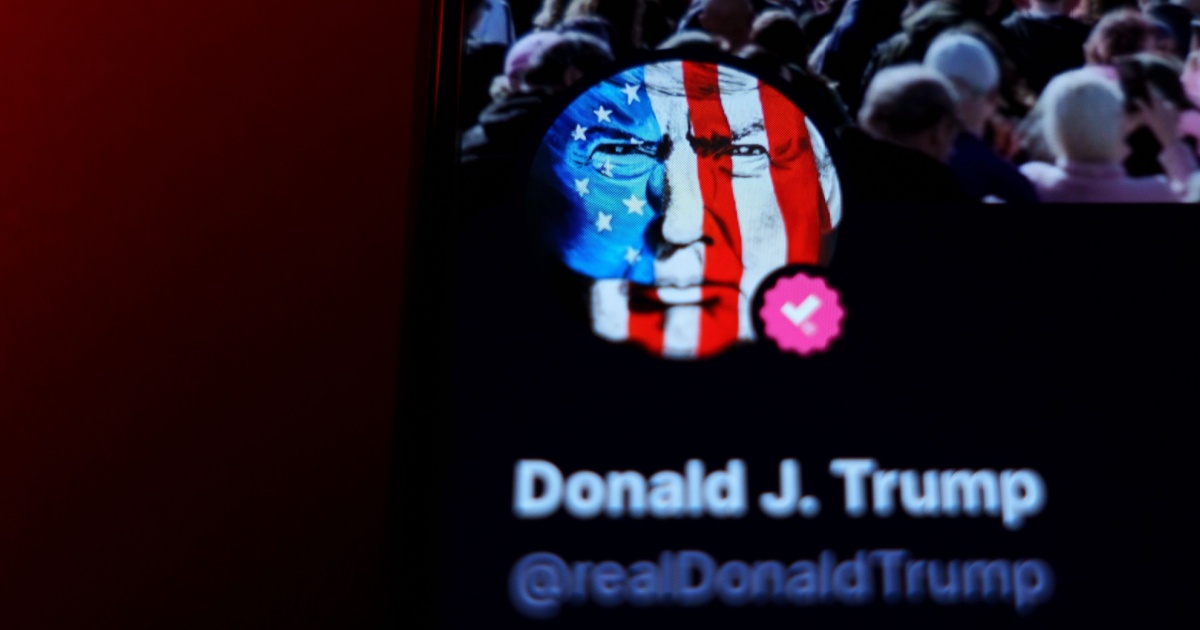

Most Americans were asleep when their president decided it was time to weigh in on a three-month war. Just after 1 a.m., a Trump Truth Social message landed on millions of phones, telling the country to “sit back and relax.” For a lot of people, it was the opposite of relaxing.
This has become a recognizable pattern in the Trump era. The president fires off posts at hours when most of the country is deep in sleep, and by morning the content is driving cable news conversations, sparking op-eds, and leaving people asking the same uncomfortable question: is this normal? This particular message, though, wasn’t just odd for its timing. It arrived against the backdrop of an active, bloody, and deeply confusing conflict in Iran – one the administration once promised would last only days.
What makes this specific post worth examining isn’t the late hour. It’s what the message said, what it contradicted, and what it suggests about how the most consequential foreign policy crisis of 2026 is actually being managed.
The 1 AM Trump Truth Social Message That Stopped the Scroll
President Trump took to his Truth Social platform at 1:02 a.m. EDT Monday to both criticize and reassure critics of his handling of efforts to extend the Iran war ceasefire. The message was striking in both its breezy confidence and its political sharpness. He wrote that Iran “really wants to make a deal, and it will be a good one for the U.S.A.,” while complaining that unnamed political opponents were making it harder to negotiate – accusing “Dumocrats” and “seemingly unpatriotic Republicans” of “chirping” at him and demanding he move faster or slower or change course. “Just sit back and relax,” he told the country. “It will all work out well in the end – It always does!”
To supporters, this reads as confidence. To critics, it reads as a president managing one of the most volatile military conflicts in recent American history via late-night social media, while asking the public to look away and trust the process.
Trump’s comments came after U.S. strikes on Iranian sites and Iran’s response targeting a U.S. base. The reassurance wasn’t arriving in a vacuum. Strikes were still happening. People were still dying. And the ceasefire, technically still in place, was being tested every few hours.
How the Iran War Actually Started
To understand why the 1 a.m. post rattled so many people, you need the context behind it.
On February 28, 2026, the United States and Israel launched large-scale strikes on Iran, marking the start of the current war. The attacks included the assassination of Iran’s Supreme Leader Ali Khamenei, as well as key negotiation figure Ali Larijani. The campaign did not come from nowhere. In June 2025, the International Atomic Energy Agency declared Iran was violating its nonproliferation commitments and was two weeks away from achieving weapons-grade uranium enrichment, and the next day Israeli Prime Minister Benjamin Netanyahu launched a wide-ranging military operation against Tehran.
In late February 2026, the United States and Israel launched coordinated strikes on Iran after Trump declared nuclear negotiations a failure. The war that the administration once implied would be wrapped up quickly has now stretched into its third month, with no clean end in sight. On April 7, 2026, Iran and the United States announced a temporary two-week ceasefire – but that ceasefire has been fragile at best. The U.S. military launched “self-defense strikes” targeting Iranian radar sites and command and control sites for drones over the weekend.
Much like the Trump administration, Iranian authorities have acknowledged progress in negotiations toward a peace agreement with the U.S., while also continuing to issue military threats they say will be carried out if no deal is reached.
A Pattern of Contradictions, Told Through Posts
The 1 a.m. message fits a well-documented pattern – not just of late-night posting, but of statements that directly contradict earlier ones.
The Trump administration has offered conflicting public reports on the war since the U.S. and Israel began the bombing campaign on February 28. The president initially said that Iran’s military capabilities were wiped out, only for official government assessments to emerge that Iran was digging out its arsenal.
Then came the Fox News interview. Trump offered a strikingly different account of Iran’s military standing, telling Fox News that the United States had “sort of left it alone.” Speaking on “My View with Lara Trump,” he said: “Their Navy is totally gone, 100 percent. Their Air Force is totally gone, 100 percent. Their military, we’ve sort of left it alone – because we think that their military is somewhat moderate.” This is a notable reversal. The framing shifted from total destruction to a deliberate, strategic restraint, and the two accounts are difficult to reconcile.
The earlier stages of the conflict showed similarly dramatic swings. On March 6, Trump posted that “There will be no deal with Iran except UNCONDITIONAL SURRENDER.” The very next day, March 7, he posted: “Iran, which is being beat to HELL, has apologized and surrendered to its Middle East neighbors.” The war was over, apparently, until it wasn’t.
The president posted that a peace deal with Iran would be announced “shortly” and that a deal was “largely negotiated” – then, less than 24 hours later, walked it back. The phrase “largely negotiated” became “not even fully negotiated yet.”
Trump ended a meeting in the White House Situation Room without announcing his final decision on whether to approve a deal to pause the war, an administration official told CNBC. Trump had earlier said on Truth Social that he would be making his “final determination” during that meeting.
For Americans trying to follow events from the outside, this creates genuine confusion about what is true and what the current status of the conflict actually is.
The Deal on the Table – and What It Requires
Behind the late-night posts, there are real negotiations. The Iranians have agreed in principle to a deal that would include the disposal of highly enriched uranium, a senior administration official said. A finalized agreement would also include Iran reopening the Strait of Hormuz in exchange for the U.S. lifting its naval blockade of the waterway.
Iran “must agree” to never have a nuclear weapon, and the Strait of Hormuz must be “immediately open” to unrestricted shipping traffic, Trump demanded on Truth Social. Iran has pushed back on some of these framing points. Iranian state news outlet Fars said Trump’s post “raised issues that contradict the provisions of the agreement’s text.”
Trump has also added an apparent demand that any peace deal should require more countries to extend full diplomatic recognition to Israel. “It should be mandatory that all of these Countries, at a minimum, simultaneously, sign onto the Abraham Accords,” he wrote on social media. The Abraham Accords, first signed in 2020 during Trump’s first term, normalized relations between Israel, Bahrain and the United Arab Emirates.
Trump’s new demands were described as an unrealistic distraction by some experts on the region.
Read More: Trump’s Refrigerant Rule Won’t Fix Grocery Prices. Here’s What’s Really Going On
The Bigger Concern: Sleep, Health, and the Presidency
The substance of the Monday post matters. So does the pattern surrounding it.
According to data compiled by Roll Call’s Factba.se database, Trump made 6,563 Truth Social posts over a 12-month period – something new every 80 minutes and 5 seconds. In December 2025, Trump made 158 posts in a single late-night stretch, at a rate of nearly one post per minute, according to an Axios analysis using Roll Call data. His press secretary, Karoline Leavitt, confirmed at a White House briefing that any Truth Social post “should be taken as the policy of the Trump administration” and that “when you see it on Truth Social, you know it’s directly from President Trump.”
The president ended a stream of posts at 2:45 a.m., before returning less than five hours later at 7:33 a.m. with another blast. The nocturnal posting pattern has drawn comment from inside the administration as well. Vice President JD Vance, who worked late into the night on Iran ceasefire talks during his trip abroad, admitted at a university event that “I was up very late last night talking about that” – a candid acknowledgment of the round-the-clock pace of the administration’s crisis management.
The health consequences of disrupted sleep in older adults are well-established. A study from investigators at Brigham and Women’s Hospital found that the risk of dementia was double among participants who reported getting less than five hours of sleep compared to those who reported seven to eight hours per night. That research was observational, meaning it identified an association rather than proving direct causation – but the pattern it described has been replicated across multiple studies.
The erratic posting schedule follows a string of public appearances in which the president appeared to struggle to stay awake, renewing concerns over the health of the oldest person ever elected to the presidency. CNN medical analyst Dr. Jonathan Reiner, who previously served as cardiologist to Vice President Dick Cheney, wrote on X that “when a patient tells me that they can’t stay awake in meetings, we do formal sleep testing to look for sleep apnea,” adding that “the president continues to struggle with daytime somnolence.” Reiner, a professor of medicine and surgery at The George Washington University, made clear he had not personally examined Trump, but framed his concerns around a pattern of publicly documented incidents.
The White House has confirmed that the president is responsible for managing his own Truth Social account. Press Secretary Karoline Leavitt told reporters at a briefing that any post “should be taken as the policy of the Trump administration” and that “when you see it on Truth Social, you know it’s directly from President Trump. That’s the beauty of this president and his transparency.” That transparency has a double edge. It means every post, whatever the hour, carries the full weight of the presidency.
The Bottom Line
A 1 a.m. post about a Middle Eastern war has people worried, and the concern reaches beyond geopolitics. The Strait of Hormuz, which Iran closed after the February strikes, is one of the most important shipping corridors in the world. The ripple effects of prolonged conflict – fuel prices, supply chains, economic instability – reach far beyond the battlefield and into everyday life.
What’s harder to measure, but just as real, is the psychological cost of watching a high-stakes crisis unfold through contradictory social media posts at all hours of the night. When the official word on whether a deal is “largely negotiated” or “not even fully negotiated yet” changes within 24 hours, and when the president’s account of Iran’s military shifts between interviews, skepticism becomes the only rational response. The war continues, the negotiations continue, and the posts – at whatever hour – keep coming. For anyone trying to stay informed, the most useful thing you can do is track developments across multiple credible outlets and resist treating any single Truth Social post as the final word on where things stand.
AI Disclaimer: This article was created with the assistance of AI tools and reviewed by a human editor.
Read More: Donald Trump Says New Drug Has ‘Brought People Back to Life’ in Bizarre Announcement