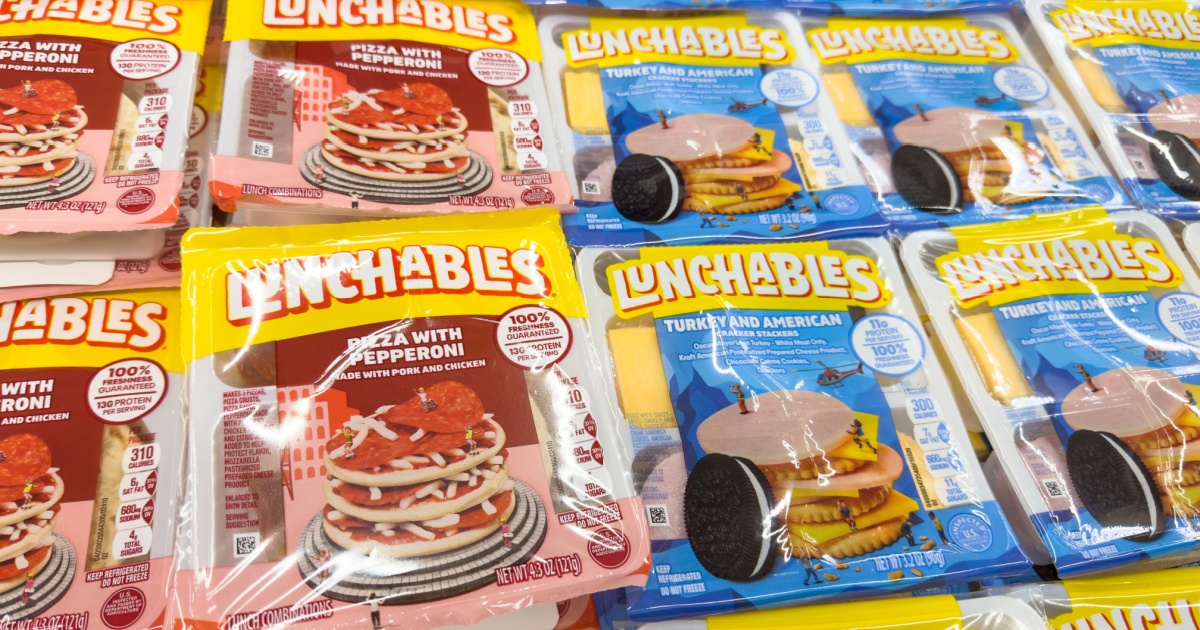

The Lunchables that millions of American children ate for lunch were engineered using the same science Philip Morris applied to making cigarettes. Not similar science. Not inspired-by science. The same researchers, the same labs, and in at least one case, the literal same industrial extraction process moved from one product line to the other.
Those documents form the basis of a major new study published in June 2026 in the American Journal of Public Health, led by Laura Schmidt, PhD, a professor of Medicine at the University of California, San Francisco. The research traces in precise detail how Philip Morris transferred cigarette technology, flavor science, and behavioral research directly into its food division during the two decades it controlled some of America’s most recognizable food brands. The findings reframe what tobacco and ultra-processed foods have in common – not as a philosophical comparison, but as a documented corporate history.
The paper draws on records that were produced as part of tobacco litigation and are now archived in the UCSF Industry Documents Library, a digital archive containing millions of documents obtained from industries that influence public health. For decades, the public had no way of knowing these records existed.
How Philip Morris Became America’s Biggest Food Company
When Philip Morris acquired General Foods in 1985, it inherited Lunchables while it was still in development. According to a Philip Morris SEC filing, the price tag for that acquisition was $5.6 billion. The company then added Kraft for $12.9 billion in 1988, creating the largest food company in North America in the process.
Philip Morris wasn’t alone. R.J. Reynolds Industries agreed to buy Nabisco Brands in a $4.9 billion deal – also in 1985 – putting Oreos, Ritz crackers, and dozens of other household staples under the ownership of a company whose primary expertise was cigarettes. Within a single year, two of the world’s largest tobacco companies had purchased their way into controlling a vast share of what Americans ate.
Philip Morris acquired and merged Kraft General Foods to increase revenues by sharing product design knowledge and proprietary research and development between tobacco and food. The strategy was based on optimizing for “technical synergies” across the tobacco and food divisions. In 1988, Philip Morris formalized this approach by establishing a Technical Synergies Committee designed to increase effectiveness and reduce costs across tobacco, alcohol, and food divisions, with roughly 2,840 engineers and scientists working globally – about one-third on tobacco and the rest on food and beverages.
Shelf-stable packaging and other innovations, like technologies to manage how flavor sensations are experienced, could be used to make both tobacco and food products, allowing for quicker scale-up at lower costs. The documents show it happening in specific, traceable ways.
The Brain Science Behind the Lunchbox
Lunchables – brightly packaged “grab-‘n-go” meals that contain food in separate compartments – were designed to appeal to the child’s desire for play and independence, while relieving parents’ guilt by including familiar ingredients like Oscar Mayer processed meat and Kraft cheese. Corporate memos show the product was engineered to give children a sense of “control over their lunch.” Every element – the compartments, the familiar brands, the bright packaging – was deliberate, with children’s psychology as the explicit design target.
That psychological precision drew directly from tobacco research. Company product designers used psychological research on consumers to understand their unconscious wants and needs. When Philip Morris food designers ran into a technical problem with Low-Fat Lunchables, they didn’t call a nutritionist. They called a scientist who had been doing research on cigarettes.
A cross-division effort brought Philip Morris brain-and-senses researcher Frank Gullotta, PhD, who had been conducting research in Germany on how the brain perceives nicotine and flavor at Philip Morris’s INBIFO institute, into collaboration with Kraft’s laboratory. Kraft’s fat-reduction team viewed him as “an absolutely key resource,” and electronic nose sensors and brain-wave monitoring tools from his lab were later used at Kraft to study how fat affects taste perception.
When food designers needed to increase the palatability of artificial fats used to create Low-Fat Lunchables, Philip Morris provided tobacco experts in the neuroscience of nicotine and flavors who used electroencephalography (EEG) – a technology that measures electrical activity in the brain – to study how children’s and consumers’ brains responded to flavors. It was the same kind of deep sensory optimization Philip Morris had refined for cigarettes.
The Same Technology, Two Products – The Tobacco Ultra-Processed Foods Connection
The most concrete example of direct tobacco-to-food technology transfer involves a single industrial process applied across three different products. According to the UCSF press release, a pressurized CO2 extraction process first used to decaffeinate Maxwell House coffee was adapted to pull nicotine from tobacco for a low-nicotine cigarette, then applied to food to strip fat from processed meats and cheeses for Low-Fat Lunchables.
The parallel with cigarette marketing was direct: low-nicotine for health-conscious smokers; low-fat for health-conscious parents. In 1995, Philip Morris introduced Low-Fat Lunchables. At first glance, the product appeared to address nutritional concerns – but researchers found strong similarities between this approach and earlier cigarette marketing strategies. Just as “light” cigarettes were sold as a safer choice without meaningfully reducing harm, low-fat Lunchables offered parents a healthier-seeming option built on the same ultra-processed foundation. The flavor additives and industrial ingredients that defined the original product remained. Only the fat changed, removed using a process borrowed directly from tobacco manufacturing.
As Schmidt put it following the study’s publication: “They used cigarette science to design these food products. Science on how the brain processes flavors and what motivates consumers at the deepest levels. They used it to design ultra-processed foods. In fact, it’s the processing and flavor additives that distinguish ultra-processed foods from minimally processed foods. And that’s cigarette technology.”
What Ultra-Processed Foods Are Actually Doing to Kids
These foods came to dominate the U.S. food supply, contributing to epidemics of childhood obesity and metabolic diseases such as type 2 diabetes and fatty liver. Today, they make up nearly two-thirds of the calories consumed by U.S. children, and clinical trials show they lead to overeating and weight gain.
A 2025 comprehensive review published in Obesity Pillars broke down the numbers further. UPF intake has dramatically increased during early childhood, with toddlers and school-aged children obtaining 47% and 59.4% of their daily calories, respectively, from UPFs. For school-age children specifically, that means more than half of every calorie they consume comes from foods that are industrially engineered for palatability rather than nutrition.
Higher consumption is linked to pediatric obesity, cardiometabolic risks such as insulin resistance and metabolic dysfunction-associated steatotic liver disease (a form of fatty liver increasingly seen in children), mental health concerns, and gut microbiome disruption. Early-life exposure to UPFs can establish unhealthy dietary patterns that persist into adulthood, raising the risk of chronic disease.
The damage isn’t limited to childhood. Research published in 2026 in Alzheimer’s & Dementia: Diagnosis, Assessment & Disease Monitoring found that UPF consumption is linked to over 30 adverse health outcomes, including dementia risk factors in older adults. A separate 2026 analysis reported by PsyPost found that older adults who consume high amounts of ultra-processed foods face a greater risk of developing dementia. The foods engineered in Philip Morris’s laboratories in the 1980s and 1990s are now associated with cognitive decline at the other end of life.
If you’re thinking about limiting ultra-processed snacks in your household, a practical guide to the healthiest packaged options can help you identify which products carry the least risk when whole-food alternatives aren’t on hand.
A Legacy That Outlasted the Tobacco Companies
Facing lawsuits and regulatory pressures, tobacco companies largely divested their food holdings by 2007 to focus on their core cigarette business. But the ultra-processed food industry kept growing. The formulations, the flavor technologies, the psychological design principles, and the business model that tobacco companies introduced into food manufacturing didn’t disappear when the parent companies sold their brands. They became the industry standard.
The study’s findings are specific to Lunchables and Philip Morris Companies between 1985 and 2007 and may not generalize to other ultra-processed food brands or manufacturers. The research is an analytic essay based on internal documents, not a controlled trial, and it doesn’t directly quantify specific health outcomes caused by Lunchables. It does establish a documented chain of causation showing how cigarette science entered the food supply.
A 2026 survey of 2,000 U.S. adults found that more than 60% agreed that ultra-processed foods are addictive and major causes of obesity, Type 2 diabetes and heart disease. Conducted by researchers at Cornell University, the survey found that this concern crosses party lines: respondents across political affiliations broadly supported public policies to reduce UPF consumption, pointing to an unusual bipartisan consensus. Respondents perceived the health risks as less serious than cigarettes but roughly equivalent to alcohol and worse than fast food or cannabis.
Read More: Why Ultra-Processed Foods Aren’t Always as Unhealthy as You Think
What to Do Now
The tobacco – ultra-processed foods connection is not a warning about what might happen. It’s a documented account of what has already been done. The industrial methods, the flavor optimization, the psychological targeting of children – these aren’t hypothetical industry practices. They were outlined in internal memos, executed by named researchers, and are now part of a publicly accessible archive of 19 million industry documents.
For parents, the most direct action isn’t total avoidance – that’s neither realistic nor necessary. A more practical approach starts with the ingredient list. Ultra-processed foods are defined largely by what’s in them: industrial additives, flavor compounds, emulsifiers, and stabilizers that have no home-kitchen equivalent. If a child’s school lunch contains a long list of ingredients with names that wouldn’t appear on a cooking show, that’s a signal worth acting on. The American Academy of Pediatrics recommends that children aged two and over consume fewer than 25 grams of added sugar per day – roughly six teaspoons. Many individual ultra-processed snacks exceed that in a single serving.
The strategies Philip Morris developed helped normalize highly processed, hyper-palatable foods throughout the U.S. and global food supply and influenced broader industry practices that continue today. Americans broadly believe ultra-processed foods pose a major threat to public health and support stronger government oversight – more than 60% of respondents in the Cornell survey believe these foods are addictive and major contributors to obesity, type 2 diabetes, and heart disease. That level of public support, combined with newly declassified corporate evidence, creates the conditions for policy change. The scientific and public groundwork is now in place. Whether lawmakers act on it is the question that remains open.
AI Disclaimer: This article was created with the assistance of AI tools and reviewed by a human editor.
Read More: There is no ‘safe’ level of smoking: Smoking just a few cigarettes a week can kill you