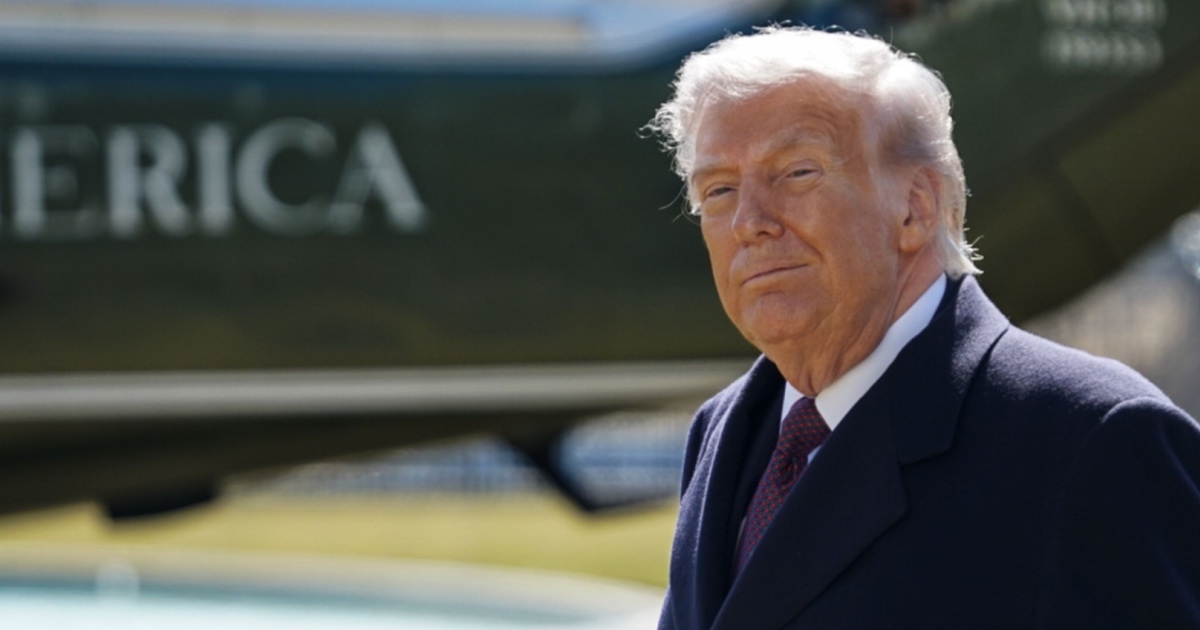

A thumbs-up photograph taken at the G7 summit in Evian-les-Bains, France, set off a fresh wave of public concern about President Donald Trump’s health. Trump, now 80, sported a crescent-shaped mark on his left hand as he did a thumbs-up during a working session with other world leaders. The mark drew immediate attention online because Trump’s left hand had previously been the one not under scrutiny – it was his right hand that had spent most of the past year concealed under layers of beige makeup.
Even the president’s left hand, which had not displayed the chronic bruising of his right, appeared to show discoloration and broken skin. His typically unblemished left hand bore a dark purple bruise, haphazardly covered with the same beige makeup. Days later, a photo taken as Trump hosted NATO Secretary General Mark Rutte in the Oval Office showed the president’s chronically bruised right hand slathered in a greasy layer of makeup, with the beige coating appearing stiff and rubbery as it settled into the creases of his skin.
The marks and the makeup have become a recurring feature of Trump’s public appearances throughout 2026. Trump, who turns 80 years old in June, is the oldest person to take the oath of office. He has faced increasing scrutiny over his health, particularly as he has appeared in public with bruised or bandaged hands and marks on his skin. The White House has fielded repeated questions about the visible discoloration, offering a shifting set of explanations that have themselves become a story.
What the White House Has Said About the Trump Hand Mark
The makeup is used to cover bruising on the back of his hand, which the White House has given contradictory explanations for, including claims that the injury is caused by too-frequent handshakes, a high dose of “big aspirin,” and that Trump bumped that specific spot on tables. The handshake explanation has attracted particular skepticism from observers. The handshake explanation appears harder to square with the bruise on Trump’s left hand, which he is not known to use for handshakes.
Trump’s physician, Navy Capt. Sean Barbabella, told the Wall Street Journal in a statement that the president takes 325 milligrams of aspirin a day for “cardiac prevention.” The White House said the bruises were “consistent with minor soft tissue irritation from frequent handshaking and the use of aspirin, which is taken as part of a standard cardiovascular prevention regimen.” That explanation tracks with Trump’s own account. In January, Trump addressed the health issue directly and told the Wall Street Journal he regretted getting a CT scan because of the speculation that followed, and attributed the bruising on his hand to taking too much aspirin.
According to FactCheck.org, Trump takes 325 milligrams of daily aspirin – one standard over-the-counter pill – which is four times higher than the recommended 81-milligram low-dose aspirin used for cardiovascular disease prevention. He has been doing so for 25 years, despite his doctors suggesting a lower level. For context, according to the Mayo Clinic, low doses of aspirin – about 75 to 100 milligrams, but most commonly 81 mg – can help prevent heart attack or stroke.
Trump spotted with unusual new mark on hand https://t.co/CISfQF0gzK
— Daily Mail US (@Daily_MailUS) June 16, 2026
What Aspirin Actually Does to Aging Skin
The aspirin explanation is medically credible, but it doesn’t tell the whole story. At the biological level, aspirin blocks the cyclooxygenase-1 enzyme, preventing the formation of thromboxane A2 – a chemical signal platelets need to clump together and seal a broken blood vessel. Without that signal, even a minor knock to the skin can produce a visible bruise that a person without the medication would never develop.
Dr. Levin, speaking with NPR, noted these side effects are common and not alarming: “This shows it’s working. As you get in your late 70s and 80s, you get a lot of thinning of the skin, so it’s more delicate. You’ll have patients come in, and they don’t remember bumping against a table or a chair, and they have bruises all over their arms.” Dr. Lee, commenting in a separate NPR report, noted: “We don’t often routinely recommend it anymore unless you have risk factors for stroke or heart disease. And it definitely does cause bruising.” The bruising risk is further compounded by age.
According to a peer-reviewed study on skin fragility, the initial signs of skin fragility emerge around 60 years of age and become well-established around 70 to 90 years. The mechanism is a progressive breakdown in the skin’s structural architecture. Aging causes thinning of the epidermis and dermis layers, decreased collagen and elastin production, and reduced vascularity – all of which leave blood vessels closer to the surface and more vulnerable to minor pressure or contact.
The clinical name for age-related bruising on the backs of the hands is actinic purpura (also called senile purpura or solar purpura). It happens when years of sun exposure thin the connective tissue that normally cushions and supports small blood vessels in the skin. Minor trauma can rupture those vessels, and the blood spreads under the skin with no significant impact required. According to Cleveland Clinic data, about 12% of people over age 50 and up to 30% of people over age 75 experience this type of bruising – numbers that make Trump’s condition, taken in isolation, biologically unremarkable for a man of 80.
Dermatoporosis – the medical term for chronic skin fragility in older adults – is characterized by atrophic (thinned and weakened) skin, solar purpura, and white scars that form where the skin has lost resilience entirely. The hands and forearms, which receive the most cumulative sun exposure over a lifetime, are the most common sites.
The Chronic Venous Insufficiency Diagnosis
The bruising on Trump’s hands is not the only physical finding that has drawn public attention. In July, Trump was diagnosed with chronic venous insufficiency, a condition in which damaged veins prevent blood from flowing properly. The White House said in a memo that despite the diagnosis, Trump’s cardiovascular health remained “excellent.”
Chronic venous insufficiency develops when the valves inside leg veins – which normally function as one-way gates, pushing blood upward against gravity – become weak or damaged, causing blood to pool in the lower legs. The result is swelling in the ankles and lower legs, a symptom that has also been visible in press photographs of Trump throughout his second term. The condition affects about 1 in 20 adults and typically affects individuals over the age of 50.
Dr. Lee also noted in the same NPR report that the swelling in Trump’s legs and the White House’s stated reason – chronic venous insufficiency – warrants further investigation. “Fortunately, chronic venous insufficiency in itself is not that dangerous,” Lee said. “It causes some swelling in your legs, particularly, but it could be a sign of other things going on.”
The bruising and the venous insufficiency diagnosis are connected. When blood pools in the lower extremities due to poor venous return, the increased pressure can make capillaries throughout the body more fragile. Combined with high-dose aspirin and age-related skin thinning, the cumulative effect on blood vessel integrity is significant. You can read more about how common medications affect the skin and vascular system over time in our guide to why bruising happens more easily as you age.
The Hospital Visits and the Medical Picture
The visit to Walter Reed National Military Medical Center will be Trump’s third in 13 months – a frequency that’s raised concerns about his health. Visits to Walter Reed are often reserved for annual physicals, advanced imaging appointments, and serious illness.
On May 26, 2026, the president spent three hours at Walter Reed, his third recent visit to the hospital. Trump was reportedly seen by double the number of doctors he typically saw during his first term, and the White House’s memo does not explain why Trump had two CT scans in just six months – something that typically occurs when there are concerning findings.
For a president of Trump’s age, a complete physical would be expected to include advanced heart testing, screening for cancer, and cognitive assessment. Barbabella stated that “President Trump’s medical evaluations and laboratory results continue to show excellent metabolic health, and have revealed his cardiovascular health puts him 14 years younger than his age,” adding that “the President remains in exceptional health and perfectly suited to execute his duties as Commander in Chief.”
Trump took to Truth Social to comment on his health following the publication of the Wall Street Journal interview, saying White House doctors had deemed him to be in “PERFECT HEALTH.” The White House has not addressed the specific mark that appeared on his left hand at the G7.
Read More: Interview With Trump Sparks Fresh Mental Health Concerns After Making Odd Joke
What This Means for You
Trump’s situation offers an unusually visible illustration of what aging skin and vascular changes actually look like in an octogenarian who takes blood-thinning medication long-term. The combination involved – daily aspirin at 325mg, age-related skin thinning, chronic venous insufficiency, and years of cumulative sun exposure on the hands – creates a near-perfect set of conditions for persistent visible bruising. None of those factors is unique to the president.
According to the Cleveland Clinic, if you experience frequent or unexplained bruising, your provider may order tests to rule out possible causes, including blood tests to check for clotting conditions and vitamin deficiencies. Several nutrient deficiencies can cause random bruising, including vitamin C, vitamin K, and iron – conditions that are common and correctable once identified.
If you or someone you love is over 60, takes aspirin or other blood thinners, and is noticing persistent bruising or marks on the backs of the hands, the practical next step is a conversation with a doctor – not as a cause for alarm, but to understand which factors are at play and whether any adjustments to medication dose or sun protection habits are warranted. Since 2022, the U.S. Preventive Services Task Force has concluded that initiating aspirin use for the primary prevention of cardiovascular events in adults 60 years or older has no net benefit. That guidance applies regardless of whether you’ve been taking it for two years or, like Trump, for twenty-five.
Disclaimer: The author is not a licensed medical professional. The information provided is for general informational and educational purposes only and is based on research from publicly available, reputable sources. It is not intended to constitute, and should not be relied upon as, medical advice, diagnosis, or treatment. Always consult a licensed physician or other qualified healthcare provider regarding any medical condition, symptoms, or medications. Do not disregard, avoid, or delay seeking professional medical advice or treatment because of information contained herein.
AI Disclaimer: This article was created with the assistance of AI tools and reviewed by a human editor.
Read More: As Legal Feud Ends, Mary Trump’s Earlier Warning About Donald Trump Is Back in Focus