As Legal Feud Ends, Mary Trump’s Earlier Warning About Donald Trump Is Back in Focus
Donald Trump sued his own niece for $100 million over a leak that a court called “blatant” – and then, five years later, settled for undisclosed terms rather than sit for a deposition. The lawsuit is over. The warning it was supposed to silence is louder than ever.
Mary Trump, a clinical psychologist and the daughter of Donald’s older brother Fred Trump Jr., spent the last several months making the case in public that her uncle is in serious decline. The legal peace announced on June 17, 2026 has done nothing to change that. If anything, she has accelerated her commentary as the case wound to a close, drawing on family history, behavioral observation, and her own professional training to argue that what the country is watching unfold is not a political rough patch but something more permanent.
The settlement itself closed one of the more unusual chapters in presidential litigation. President Donald Trump settled a $100 million lawsuit against his niece over accusations that she leaked information to The New York Times for an investigation into his finances. Both parties confirmed the resolution in a joint filing docketed Tuesday, and the terms of the settlement remain undisclosed. A dismissal would be with prejudice, meaning the president could not sue again.
A Lawsuit Born from a Pulitzer
The case was first filed in 2021 and centered on a 2018 New York Times investigation about the president’s finances, which reported that Fred Trump had given his son at least $413 million over the years, including through tax-avoidance schemes. Mary Trump was accused of improperly providing records to the Times for the article. The 2018 investigation scrutinized Trump’s longstanding claims of being a self-made billionaire by disclosing how he dodged taxes and received hundreds of millions of dollars from his father throughout his lifetime. At the time, the paper attributed the tax records to a confidential source.
Court records filed by Trump’s lawyers noted that Mary Trump revealed details about the disclosure in her 2020 book, “Too Much and Never Enough: How My Family Created the World’s Most Dangerous Man.” That book became a bestseller and effectively confirmed her role as the source. The lawsuit was partially dismissed in 2023, with claims against the newspaper and reporters being dropped. However, in 2024, a New York court allowed the claims against Mary Trump to proceed and held that there was a “substantial” basis for Donald Trump’s claim against his niece to move forward.
In May 2024, a state appeals court found a “substantial” legal basis for Donald Trump’s confidentiality claim, but said he might deserve only “nominal damages” rather than the $100 million he sought. That gap between the original demand and what the court indicated was recoverable likely pushed the case toward settlement rather than trial. The settlement came after Mary Trump claimed to have issues getting her uncle to sit for a deposition, effectively stalling the case. Her lawyers accused the president of simply dragging his feet to prolong the case, and as of the latest status conference on May 19, the deposition still had not occurred.
The 2018 investigation that started all of this won the Pulitzer Prize, awarded to reporters at the New York Times who documented how Trump received hundreds of millions of dollars from his father throughout his lifetime. The Pulitzer Board’s citation described it as an “exhaustive 18-month investigation” that debunked Trump’s claims of self-made wealth. That reporting exists permanently in the public record, independent of anything the lawsuit could have undone.
The Mary Trump Warning That Outlasted the Case
While the legal proceedings ground slowly forward, Mary Trump spent 2025 and the first half of 2026 making a different and more urgent argument. Writing in her Substack newsletter in late December 2025, she drew a picture of an administration losing its grip. She wrote that while the United States is “on the precipice of something awful,” the country can pull itself back. Her prognosis for her uncle was bleaker: “Donald, on the other hand, is on a slippery slope down which he will continue to slide. Putting on the brakes would require his recognizing his limitations; deferring to experts; admitting his mistakes; and changing course. Donald is exactly who he’s always been; he’s incapable of change and that may finally be working to our advantage.”
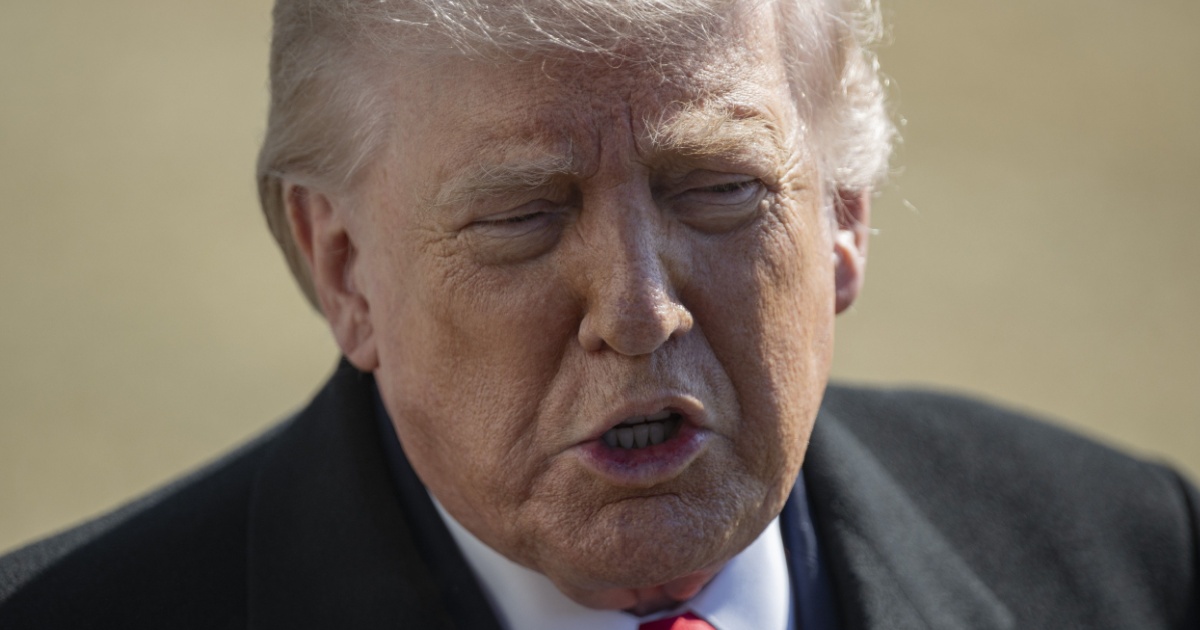
By early 2026, she had moved from political commentary to medical concern. Speaking with The Daily Beast podcast, Mary Trump said the president shows “serious and obvious cognitive decline” after repeated annual cognitive assessments, and cited his “inability to control the narrative, his understanding on some level that a lot of things are out of his control,” and that he’s losing control over his body.
She also noted Trump’s “longstanding, undiagnosed, untreated psychiatric disorders that he had the first time he got into the Oval Office.” The difference now, she argued, is that those pre-existing conditions are compounding with age. She told CNN: “We’re dealing with physical issues that the White House tries to cover over. But this is somebody who for decades now has had serious, undiagnosed and untreated psychiatric disorders, which are only going to worsen, especially given the pressure he’s under and given the cognitive and physical declines.”
Family History and a Familiar Pattern
Mary Trump’s concern is not abstract. Her grandfather, Fred Trump, who was also Donald Trump’s father, developed Alzheimer’s disease in his 80s and eventually died at age 93 in 1998. As a clinical psychologist, she noted that her grandfather began showing symptoms of dementia around the same age that Donald is now. “Obviously, you don’t need to be a neurologist or medical doctor of any kind to know that there’s a very significant genetic component to Alzheimer’s. My grandfather did have Alzheimer’s,” she said. “In fact, he had it for many years and the signs started showing up when he was in his late 70s and Donald as we know is 79.”
Mary also described a “deer in the headlights look” in her uncle that gives the impression he doesn’t always know what’s going on, which she described as “very alarming.” She is not alone in raising these observations. On April 30, 2026, Senators Sheldon Whitehouse and Jack Reed of Rhode Island entered a statement into the Congressional Record by 36 physicians, including neurologists, psychiatrists, and specialists in cognitive disorders from Harvard, Tufts, Columbia, and George Washington University. These doctors warned of President Trump’s “rapidly worsening, reality-untethered, increasingly dangerous decline,” called him “mentally unfit,” and said he must be removed “with the greatest urgency.”
The White House has consistently pushed back. Its physician, Navy Captain Sean P. Barbabella, declared Trump in “excellent health” after a May 2026 physical at Walter Reed National Military Medical Center. The same report documented a 14-pound weight gain over the past year and recommended increased physical activity and continued weight loss. Dr. Jonathan Reiner, a cardiologist at George Washington University who served as cardiologist to former Vice President Dick Cheney, raised seven specific questions about Barbabella’s report publicly, leading with why Trump had received another coronary artery CT scan just months after a previous one – a repeat interval that Reiner noted was unusual unless physicians were tracking a specific concern from the initial scan.
Trump himself has repeatedly touted passing the Montreal Cognitive Assessment as proof of his mental fitness. The Montreal Cognitive Assessment is not an IQ test but a screening designed to detect early signs of Alzheimer’s or dementia. Scoring well on it confirms an absence of severe impairment; it does not measure executive function, long-term memory, or the kind of complex decision-making the presidency demands.
Approval Ratings and the Political Fallout
Whatever one makes of the health debate, the political numbers have moved decisively. Mary Trump, speaking on CNN’s OutFront, said she had noticed the 79-year-old’s cognitive health “rapidly getting worse” in recent months. That commentary coincides with a sustained collapse in approval. The Congressional Record statement by more than three dozen physicians warning about Trump’s “rapidly worsening, reality-untethered, increasingly dangerous decline” landed during a period when public opinion was already shifting sharply.
A Reuters-Ipsos poll from February 2026 found 61 percent of Americans agree that Trump has become erratic with age. Worse for Trump, 30 percent of Republicans now agreed with the same statement. By April 2026, Pew Research Center data showed his job approval rating had fallen to 34%, the lowest mark of his second term. Trump’s approval rating and support levels carry significant implications for Republicans ahead of the midterms, as they find themselves defending seats in the House of Representatives and Senate.
Trump’s own party has described the dynamic as an “insidious” situation, with Republican prospects in competitive races increasingly tied to a president whose approval is eroding in both parties. According to Brookings Institution analysis, GOP midterm prospects have darkened in step with falling approval numbers. Historical patterns suggest Republicans could lose 28 seats and thus lose control of the House in the 2026 midterms, according to Britannica’s 2026 election analysis.
President Trump settled the lawsuit the same day that his legal team accused his niece of engaging “in an insidious plot” with the Times, now resolving in a joint court filing with no public terms. The economy has further compounded his political vulnerabilities. According to Newsweek’s polling tracker, just 22 percent of Americans now believe Trump’s policies will reduce inflation, down from 41 percent after his reelection.
The lawsuit against Mary Trump is over. The conversation she has been driving is not. Two separate threads, one legal and one clinical, ran in parallel for five years. The legal one ended quietly in a Manhattan court with no disclosed terms and no deposition. The clinical one is, by her own account and by the assessment of dozens of physicians, getting louder.
These issues, she said, make it harder for the president to regain his equilibrium, and she doubts that he can. She added that it has become increasingly difficult for his “sycophantic enablers” to pretend that everything is fine. The family history she points to is documented and verifiable. Her grandfather Fred Trump Sr. was diagnosed with “mild senile dementia” in 1991 and showed documented memory decline years before that. Donald Trump is now 79, roughly the same age at which his father’s symptoms first became apparent. A brief cognitive screening cannot answer whether that family pattern is predictive for the current president. Only a full neuropsychological workup, conducted independently, could begin to do that, and no such assessment has been made public.
Mary Trump’s case rests on three things she can speak to directly: a clinical psychology credential, a family history she witnessed firsthand, and behavioral patterns she says mirror what she watched her grandfather go through before his Alzheimer’s diagnosis became undeniable. She wrote that the president’s problems have accumulated because “the solution to them has become more complicated.” The settlement filed June 17 closes one chapter of that story. By her own account, the larger one is still being written.
Disclaimer: The information provided here is for educational and informational purposes only and is not a substitute for professional psychological, psychiatric, or mental health advice, diagnosis, or treatment. Always seek the guidance of a licensed mental health professional, therapist, psychologist, or psychiatrist with any questions or concerns about your emotional well-being or mental health conditions. Never ignore professional advice or delay seeking support because of something you have read here.
AI Disclaimer: This article was created with the assistance of AI tools and reviewed by a human editor.