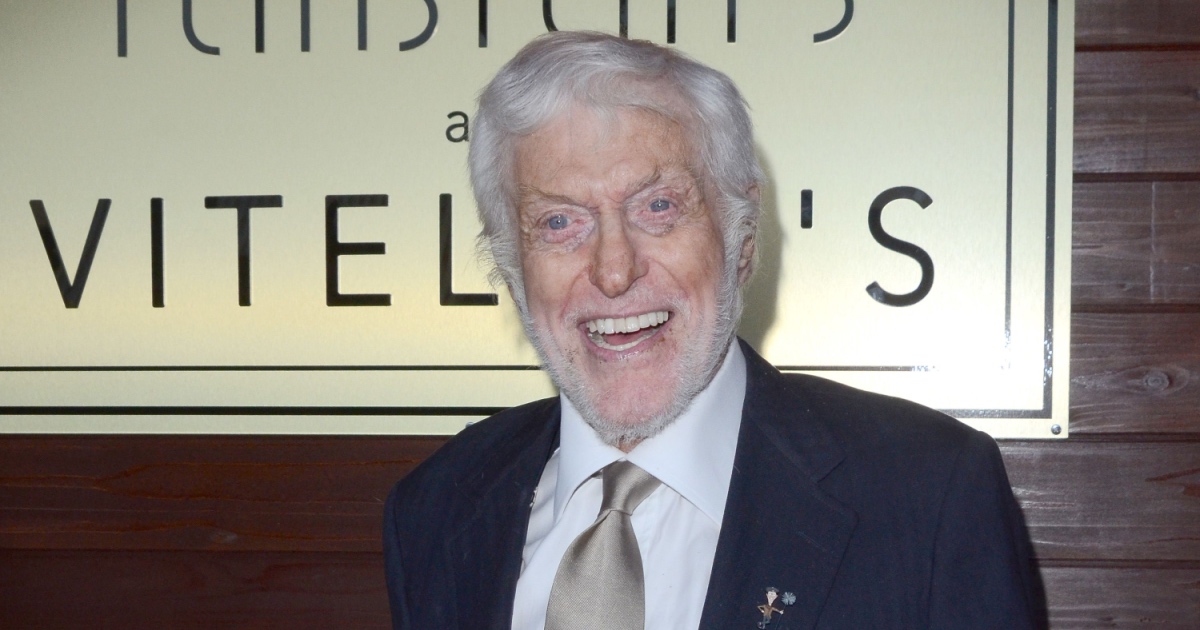

Dick Van Dyke celebrated his 100th birthday on December 13, 2025, and when asked what he did right to get there, his first instinct was to deflect. “People say, ‘What did you do right?’ and I say, ‘Don’t ask.'” Then, in typical Van Dyke fashion, he got honest. The answer he gave was not a supplement protocol or a strict diet. It was two things he spent his entire life avoiding – and science has since built a substantial case for why that avoidance matters.
Van Dyke’s theory about his own longevity centers on emotion, not biology. He told People that anger is “the one thing that eats up a person’s insides – and hate,” adding that he “never really was able to work up a feeling of hate” and that, while there were people he disapproved of, he “never really was able to do a white-heat kind of hate.” He also reflected on his own father, who was “constantly upset” about things in his life and died at age 74. Van Dyke drew a quiet but pointed line between those two lives. The contrast wasn’t lost on researchers who study exactly this connection.
There’s a broader picture here, too. Van Dyke’s longevity tips aren’t just about what he avoided – they’re about what he chose to hold onto. His wife, his body, his optimism. Each one tracks with a growing body of research on what actually moves the needle on how long we live. For a man who has outlived the average American male life expectancy by more than 24 years, the pattern is hard to ignore.
The Science Behind Avoiding Anger – Longevity Tips Dick Van Dyke Lives By
Anger isn’t just unpleasant in the moment. Chronic stress and anger are linked to a higher risk of cardiovascular conditions, including heart disease, stroke, and type 2 diabetes. Equinox Health noted in 2025 that people who show high hostility are more likely to experience heart attacks and develop coronary artery disease. The mechanism goes deeper than cardiovascular stress, though.
At the cellular level, the connection between stress and lifespan comes down to telomeres – the protective caps at the ends of our DNA. In healthy cells, telomeres stay long and intact, but they naturally wear down as we age. When they become too short, cells struggle to repair and renew themselves. Research suggests chronic stress speeds up this telomere shortening, meaning unmanaged anger may literally age us faster. A 2022 study published in PMC confirmed that chronic psychosocial stress may accelerate biological aging through both DNA damage and telomere shortening.
The chronic stress side of this equation carries its own weight on life expectancy. A 2020 study covered by Science Daily found that heavy stress shortened life expectancy by approximately 2.3 years in women and 2.4 years in men. Meanwhile, data from Gallup’s 2025 World Emotional Health report found that negative daily emotions correspond directly with lower life expectancy at birth in the populations where those emotions are most prevalent. Van Dyke’s lifelong sidestep of chronic anger, viewed through this evidence, starts to look less like a personality trait and more like an inadvertent health strategy.
Optimism – the flip side of hostility – helps suppress the stress hormone cortisol, according to Stanford Lifestyle Medicine. Elevated cortisol over long periods does real damage: a 2019 study in PMC found that excess glucocorticoid (the class of hormones cortisol belongs to) impairs memory, cognitive function, and the body’s ability to recover from stress. Van Dyke’s natural tilt toward the positive wasn’t just good mood management – it was a form of neurological protection.
The data on optimism and lifespan is striking. A study published in PNAS found that optimists live 11 to 15 percent longer on average than pessimists, with significantly greater odds of reaching exceptional longevity. A 2022 Harvard Gazette report found that the most optimistic women lived approximately 4.4 years longer than the least optimistic. Van Dyke has described himself as someone who gets up on the right side of the bed every morning. That, too, may be doing more work than it appears.
The Role of Love and Connection
The second pillar Van Dyke credits is his wife, Arlene Silver. He credited Silver and their “ongoing romance” as “the most important reason I have not withered away into a hermetic grouch.” Writing about her in his book, he said: “Arlene is half my age, and she makes me feel somewhere between two-thirds and three-quarters my age, which is still saying a lot. Every day she finds a new way to keep me up and moving, bright and hopeful and needed.”
Despite their 46-year age gap, the couple married in 2012. His wife keeps him active every day – singing, dancing, and constantly moving. Filmmaker Steve Boettcher, director of the 2025 documentary Dick Van Dyke: 100th Celebration, described Arlene as “a key force” in keeping Van Dyke so vibrant. That observation aligns closely with what researchers have found about romantic partnership and biological aging.
A 2020 study published in PMC found that being in a romantic relationship was associated with slower biological aging – representing a difference of approximately 2.9 biological years. A 2025 study in Genology found that married individuals consistently showed the highest longevity compared to other relationship statuses. The Harvard Study of Adult Development, which tracked 724 men across more than 85 years, reached a similar conclusion: close relationships, more than money or fame, keep people happy throughout their lives, protect from life’s discontents, and are better predictors of long and happy lives than social class, IQ, or even genes.
Dr. Robert Waldinger, director of that Harvard study, put it plainly: “Strong social relationships are the most consistent predictor of a long life. People who are more socially connected to family, to friends, to community, are happier, healthier, and live longer.”
The consequences of not having those connections are measurable in the other direction. A 2025 study in Eurpean Psychology found that social isolation increases all-cause mortality risk by 35 percent in older adults. According to a 2025 WHO statement, loneliness is estimated to contribute to more than 871,000 deaths annually – roughly 100 deaths every hour. Van Dyke himself acknowledged this dimension of his own life, noting that “every single one of my dearest lifelong friends is gone,” and describing how lonely that feels. His marriage, clearly, functions as a counterweight to that loss.
Why Keeping the Body Moving Matters
Van Dyke’s third consistent habit is physical movement. Even at 100, he goes to the gym three days a week with his wife, and says his gym routine has helped spare him from the ailments many elderly people encounter. On his off days from the gym, he practices yoga and stretches. He also does water aerobics and walks on a treadmill. His doctors, he has said, are amazed that he can still touch his toes.
The research behind this habit is among the most robust in all of longevity science. A 2025 analysis from Pledge to Fitness found that consistently active adults have a 30 to 40 percent lower risk of dying from any cause compared to inactive individuals. Regular exercise improves cardiovascular efficiency, stabilizes metabolism, and protects cognitive health, according to Research for Life. These aren’t marginal effects – they represent some of the largest reductions in all-cause mortality that any single behavior can produce.
Van Dyke doesn’t treat the gym like medicine, though. He dances to the machines. He encourages embracing a youthful approach, saying: “You can tap into play to make practically anything more fun – a strained family visit, a boring car ride, a dreaded chore.” That orientation toward joy, embedded in movement, maps onto what centenarian communities around the world have long practiced. Exercise done alongside others, done with some pleasure, sticks in ways that grim obligation doesn’t.
Read More: 10 Behaviors Adults Over 50 Should Stop for Better Wellbeing
What This Means for You
Van Dyke’s blueprint for reaching 100 is simpler and cheaper than anything you’ll find in a supplement aisle. Avoid sustained anger. Protect your close relationships. Keep moving. Each of those behaviors now has substantial research backing, from telomere biology to cardiovascular medicine to the Harvard Study of Adult Development. None of them require a gym membership you won’t use or a diet that’s impossible to maintain.
The anger piece deserves special attention because it’s the one most people underestimate. Anger feels like a response to circumstances, not a lifestyle choice – but the body doesn’t distinguish between the two. Chronically elevated cortisol damages cognition, shortens telomeres, and raises cardiovascular risk regardless of whether the anger feels justified. Breathing slowly, redirecting attention, and refusing to let hostility become a default setting are not soft self-help tips. At the physiological level, they’re closer to cardiac protection.
Van Dyke also offers a quiet reminder about what really sustains people in the final decades of life. Not achieving more, not optimizing harder – but having someone to watch Jeopardy! reruns with. On his 100th birthday, his wife Arlene told People his entire wish was to stay in his room watching Jeopardy! reruns with her. For a man who has starred in some of the most beloved films in cinema history, that’s the plan he chose. The research on relationships suggests he chose exactly right.
Disclaimer: This information is not intended to be a substitute for professional medical advice, diagnosis or treatment and is for information only. Always seek the advice of your physician or another qualified health provider with any questions about your medical condition and/or current medication. Do not disregard professional medical advice or delay seeking advice or treatment because of something you have read here.
AI Disclaimer: This article was created with the assistance of AI tools and reviewed by a human editor.
Read More: Avoid These 5 Diseases by 60, and You May Live to 100