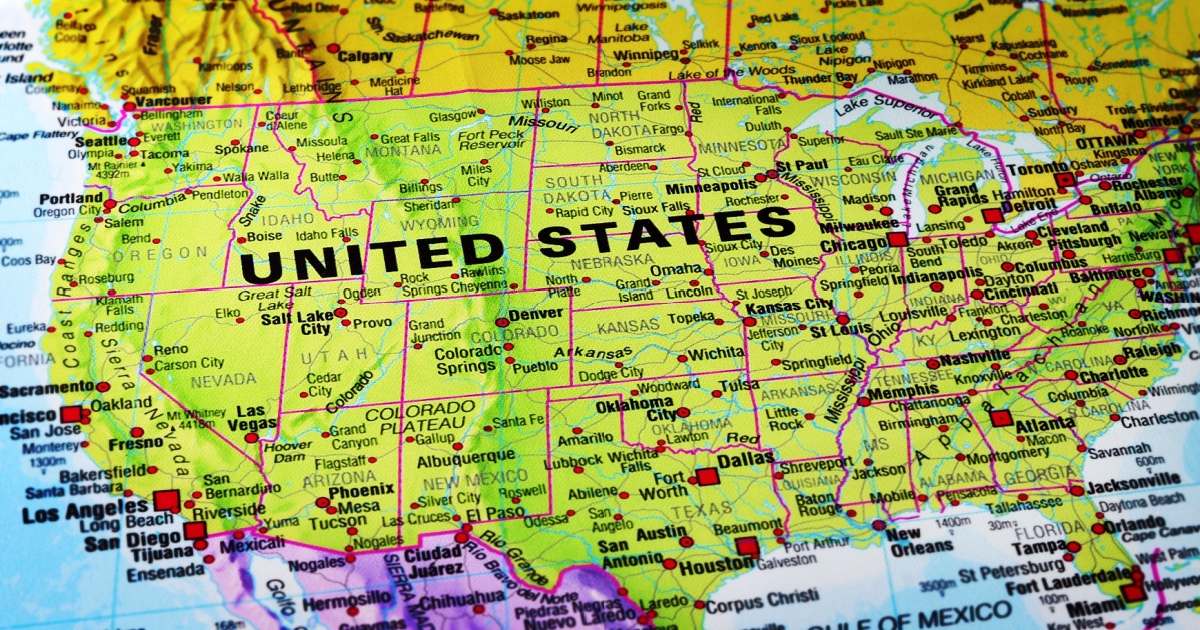

Tennessee scored 64 out of a maximum 290 points on CNBC’s 2026 Quality of Life index – the lowest mark of any state in the country. That places it below nine other states, all of which scored between 78 and 103 out of 290. The number alone is stark. What makes it harder to dismiss is that the very same state ranked ninth overall in the same study for business competitiveness, suggesting the factors dragging down its livability have little to do with its economy and everything to do with how everyday residents actually experience life on the ground.
CNBC’s annual America’s Top States for Business study, now in its 20th year, grades every state across 10 categories of competitiveness. For 2026, the network elevated the weight assigned to Quality of Life. That category – which factors in crime rates, air quality, healthcare access, worker protections, and civil rights laws – now accounts for 11.6% of a state’s overall score, up from roughly 10% the previous year. The shift reflects a business reality: as more companies insist employees return to the office, finding places where people will actually want to live has become an increasingly important factor in where businesses decide to locate.
To determine each state’s Quality of Life score, CNBC’s methodology rated all 50 states on livability factors including per capita crime rates, environmental quality, and healthcare, as well as the availability and affordability of childcare, worker protections including wage policies and paid leave, the inclusiveness of state laws – covering anti-discrimination protections and voting rights – and reproductive rights. The resulting list of the worst states to live identifies a set of persistent, measurable failures that affect residents daily. Here is what the data shows, state by state.
The 10 Worst States to Live in for 2026
1. Tennessee – Quality of Life Score: 64/290 (Grade: F)
Tennessee ranked as the worst state in America, posting a Quality of Life score of just 64 out of 290 points. The score reflects problems across multiple categories simultaneously.
On public safety, the state’s record is among the most serious in the nation. According to USAFacts, Tennessee ranked third among states for violent crime rates, recording 592 offenses per 100,000 people in 2024. That figure is 65% above the national average. The national violent crime rate fell to 359.1 per 100,000 residents in 2024, the lowest since 1969, according to FBI data reported by WSMV – making Tennessee’s figure all the more pronounced.
The drug overdose picture is equally severe. USAFacts data shows that for every 100,000 people in Tennessee, 34.6 died of drug overdose in 2024, the fifth highest rate in the nation. Fentanyl and other synthetic opioids were involved in 67% of total overdose deaths in the state in 2024, according to CNBC’s 2026 rankings.
CNBC also cited state laws restricting transgender people’s bathroom access, limits on local anti-discrimination ordinances, and Governor Bill Lee’s designation of June 2026 as “Nuclear Family Month” as contributing to low inclusiveness scores.
2. Texas – Quality of Life Score: 78/290 (Grade: F)
For several years running, Texas has been unable to escape being ranked one of the worst states to live in – it was ranked the worst in 2023 and 2024, rising to second-worst in 2025. In 2026, it holds that second spot.
Texas scored 78 out of 290 points despite continuing to attract more workers than any other state. It has the nation’s highest rate of uninsured residents at 16.7% and ranks last for primary care physicians per capita, even as the state continues to draw a large share of new residents. The uninsured figure is confirmed by independent data: the U.S. Census Bureau released 2024 data showing that 21.6% of Texas adults ages 19 – 64 and 13.6% of Texas children did not have health coverage, with the state’s overall uninsured rate of 16.7% being the highest in the nation, representing 5.1 million uninsured residents.
Texas also saw the largest increase of any state in the percentage of residents with multiple chronic conditions, rising from 8.3% in 2023 to 10.3% in 2024, according to America’s Health Rankings. The violent crime rate – 431.8 offenses per 100,000 residents in 2024 – sits 20% above the national average.
3. Indiana – Quality of Life Score: 82/290 (Grade: D – )
Indiana’s ranking may surprise those who associate the Midwest with stability and affordable living. Indiana scored 82 out of 290 points, ranking last nationally for childcare availability, with only 779 licensed facilities serving nearly 7 million residents. Available childcare consumes roughly 15% of median household income for dual-income families in the state.
Indiana’s violent crime rate was 313 offenses per 100,000 people in 2024, placing it 27th among states – not among the highest nationally, but the childcare desert and worker protection gaps are what drag Indiana’s overall quality of life score into the bottom tier.
4. Louisiana – Quality of Life Score: 89/290 (Grade: D – )
Louisiana matched Georgia’s score of 89 out of 290, driven by the nation’s fifth-highest violent crime rate, a strict abortion ban written into its state constitution, and recent policy changes eliminating affirmative action requirements from its civil service hiring code.
Louisiana’s violent crime rate was 519.8 offenses per 100,000 people in 2024, the fifth highest nationally. Louisiana ranks last in economic performance – a measure that includes income growth, employment trends, and overall fiscal stability – and also scores near the bottom in education and health outcomes. The state has a long history of ranking poorly on public safety, with some of the highest murder and violent crime rates in the US over the decades.
5. Georgia – Quality of Life Score: 89/290 (Grade: D – )
Georgia scored 89 out of 290 points, with CNBC citing limited protections for LGBTQ+ residents and minimal worker organizing rights. The state recorded a violent crime rate of 340.3 offenses per 100,000 residents in 2024 – below the worst offenders but still meaningfully elevated. The inclusiveness and worker protection deficits are Georgia’s primary drivers of a low quality of life score, placing it in a statistical tie with Louisiana despite a very different public safety profile.
6. Utah – Quality of Life Score: 95/290 (Grade: F)
Utah presents one of the more counterintuitive entries. The state routinely appears on “best places to live” lists for its outdoor recreation and low unemployment – yet its workers face some of the sharpest gaps between what they earn and what life actually costs.
Utah’s state minimum wage of $7.25 an hour covers just 16.5% of the cost of living for a family of four, according to Oxfam America’s Best States to Work index. That wage has not changed since 2009, even as costs have risen sharply. A single adult in Utah needs to earn approximately $24.71 per hour to meet basic living expenses, according to the MIT Living Wage Calculator – more than three times the current minimum.
Utah has just 513 licensed childcare centers in a state with 3.5 million people, according to Child Care Aware of America. Utah also ranks 47th nationally for primary care providers and faces elevated ozone levels that affect air quality, according to CNBC’s 2026 rankings.
7. Missouri – Quality of Life Score: 98/290 (Grade: D – )
With 462 violent offenses per 100,000 residents in 2024, according to FBI crime statistics cited by CNBC, Missouri is among America’s most violent states. Missouri also ranked in the top 10 nationally for firearm deaths in 2024, and the state’s gun death rate remains well above the national average.
In response, Governor Mike Kehoe signed a broad crime bill in 2026 that includes tougher sentencing guidelines, greater ability to charge juveniles as adults, and new offenses related to cyberstalking and drone misuse.
8. Alabama – Quality of Life Score: 99/290 (Grade: D – )
Alabama ranks dead last for mental health providers per capita, even though nearly a quarter of residents have been told by a health professional that they have a depressive disorder.
Alabama also ranks at the bottom for worker protections, meeting only two of the 16 measures that Oxfam America considers critical – mandating equal pay by gender and race, and restricting access to salary history. Workers in the state lack other basic protections including mandatory paid sick leave and protections against sexual harassment. Alabama is one of five states with no public accommodation law protecting non-disabled people against discrimination, according to the National Conference of State Legislatures.
Read More: States Seeing the Biggest Outflow of Residents
9. Oklahoma – Quality of Life Score: 103/290 (Grade: D – )
Oklahoma imposes one of America’s strictest bans on abortion, even though a 2025 working paper by the National Bureau of Economic Research found that abortion bans increase net migration outflows, particularly among single adults. The state ranked 40th for worker protections, according to Oxfam America’s Best States to Work index, which noted that Oklahoma’s $7.25 minimum wage covers only about 19% of the cost of living for a family of four, and that state law prohibits municipalities from setting their minimum wages higher. A ballot measure put to voters to approve a minimum wage increase failed in June 2026.
Oklahoma’s violent crime rate reached 442.7 offenses per 100,000 residents in 2024 – nearly 24% above the national average. Oklahoma also faces a high premature death rate and one of the lowest rates of adults meeting federal physical activity guidelines, while suicide deaths have climbed 27% since 2010.
10. Arkansas – Quality of Life Score: 103/290 (Grade: D – )
Arkansas recorded a violent crime rate of 579.4 offenses per 100,000 people in 2024, the fourth highest nationally. Despite being named a most-improved state overall in CNBC’s 2026 rankings, nearly 19% of Arkansas households lack the resources to put adequate food on the table – placing the state dead last nationally for food insecurity, according to the United Health Foundation.
Arkansas also carries one of the highest violent crime rates in the nation and among the weakest protections against discrimination. Arkansas’s homicide rate has increased 47% over the last decade, rising from 7.6 to 11.2 deaths per 100,000 people.
What the Rankings Reveal About Broader Trends
Several patterns run across all 10 of these worst states to live in. Worker protections are weak in almost every case – minimum wages remain stuck at the federal floor of $7.25 in multiple states, including Utah, Oklahoma, and Tennessee, a level that hasn’t changed since 2009. Childcare access is critically limited in Indiana and Utah. Healthcare access – measured by uninsured rates, provider availability, and mental health infrastructure – is deficient across much of the South. And violent crime rates in the bottom tier states run significantly above the national benchmark.
FBI 2024 data reported the national violent crime rate at 359.1 per 100,000 – the lowest since 1969 – with murder down 14.9% year over year. That national improvement makes the elevated rates in states like Tennessee (592), Arkansas (579.4), and Louisiana (519.8) stand out even more sharply by comparison.
CNBC included quality of life in its business rankings because states use living conditions as a tool to attract businesses and workers. As Larry Gigerich, managing executive director of Ginovus in Indianapolis and chairman of the Site Selectors Guild, told CNBC: “Investing in quality of place is the top thing you can do for talent attraction and retention.” The implication for the states at the bottom of this list is direct: poor quality of life isn’t just a social problem – it’s an economic liability.
What This Means for You
The 10 worst states to live in for 2026 share overlapping deficiencies rather than a single defining failure. Tennessee’s rock-bottom score of 64 out of 290 reflects a simultaneous collapse across crime, drug deaths, and civil rights protections – not a single outlier metric dragging down an otherwise strong record. Texas continues to pay a heavy price for its refusal to expand Medicaid, with a 16.7% uninsured rate that affects millions of working-age adults and children. Indiana’s childcare crisis – 779 licensed centers for 7 million people – presents a direct barrier to workforce participation, particularly for women. Utah’s minimum wage has been frozen for 17 years while the actual cost of living has climbed well above it. Alabama ranks last nationally for mental health providers despite having one of the highest rates of diagnosed depression in the country.
For residents weighing relocation decisions, these rankings offer a concrete starting point. Crime statistics, healthcare access, childcare availability, and worker protections are measurable, publicly documented, and updated annually. They are the factors that shape daily life in ways that neither low taxes nor business-friendly policy can fully offset. The 10 states named here have the data – and the 2026 rankings – as a clear signal of where specific investments in livability are most urgently needed.
Disclaimer: This information is not intended to be a substitute for professional financial advice, investment advice, tax advice, or legal advice, and is provided for informational purposes only. Always seek the guidance of a qualified financial advisor, accountant, or other licensed professional regarding your personal financial situation or investment decisions. Do not make financial, investment, or tax decisions based solely on information presented here. Past performance is not indicative of future results, and all investments carry risk, including the potential loss of principal.
AI Disclaimer: This article was created with the assistance of AI tools and reviewed by a human editor.
Read More: These 10 States Pay Retirees the Biggest Social Security Checks