

Researchers at the University of Cambridge achieved switching currents about a million times lower than conventional oxide-based devices – and they did it with a material already used in everyday computer chips. The device is smaller than a human hair’s width, and its implications for the AI industry’s most stubborn problem are far larger than its size suggests.
The problem it addresses is electricity. Every AI query, every image generated, every large language model run in the background pulls power from a global infrastructure that is growing faster than almost any other sector on Earth. The hardware running that infrastructure has evolved so rapidly that buildings constructed just two or three years ago are already struggling to keep up, physically unable to host the newest generation of processors. The AI data centers breakthrough coming out of Cambridge in 2026 arrives at exactly the moment the industry most needs it.
The researchers developed a form of hafnium oxide that acts as a highly stable, low-energy “memristor” – a component designed to mimic the efficient way neurons are connected in the brain. The results were published in the journal Science Advances in March 2026. Understanding why that matters requires a quick look at how catastrophically inefficient current AI hardware actually is, and how fast the reckoning is approaching.
The Energy Bill No One Can Ignore

Global electricity consumption from data centers is projected to double, reaching around 945 terawatt-hours by 2030, representing just under 3% of total global electricity consumption. According to the International Energy Agency, data centers were already responsible for about 1.5%, or 415 terawatt-hours, of the world’s total yearly electricity consumption in 2024. That figure is set to more than double in six years, driven almost entirely by AI workloads.
U.S. data centers alone consumed 183 terawatt-hours in 2024 – more than 4% of the country’s total electricity consumption, roughly equivalent to the annual electricity demand of the entire nation of Pakistan. The scale compounds when you consider individual facilities. A typical AI-focused hyperscaler annually consumes as much electricity as 100,000 households. The largest ones currently under construction are expected to use twenty times that amount.
The five companies most responsible for building this infrastructure are spending accordingly. Electricity demand from data centers has grown by 12% per year in the last five years, and the capital pouring in from Amazon, Microsoft, Google, Meta, and Oracle reflects that trajectory – those five hyperscalers collectively committed more than $660 billion in 2026 capital expenditures, primarily for AI infrastructure, according to Manufacturing Dive. The question isn’t whether this growth is happening. It’s whether the grid – and the planet – can absorb it.
Why Current AI Hardware Is the Problem
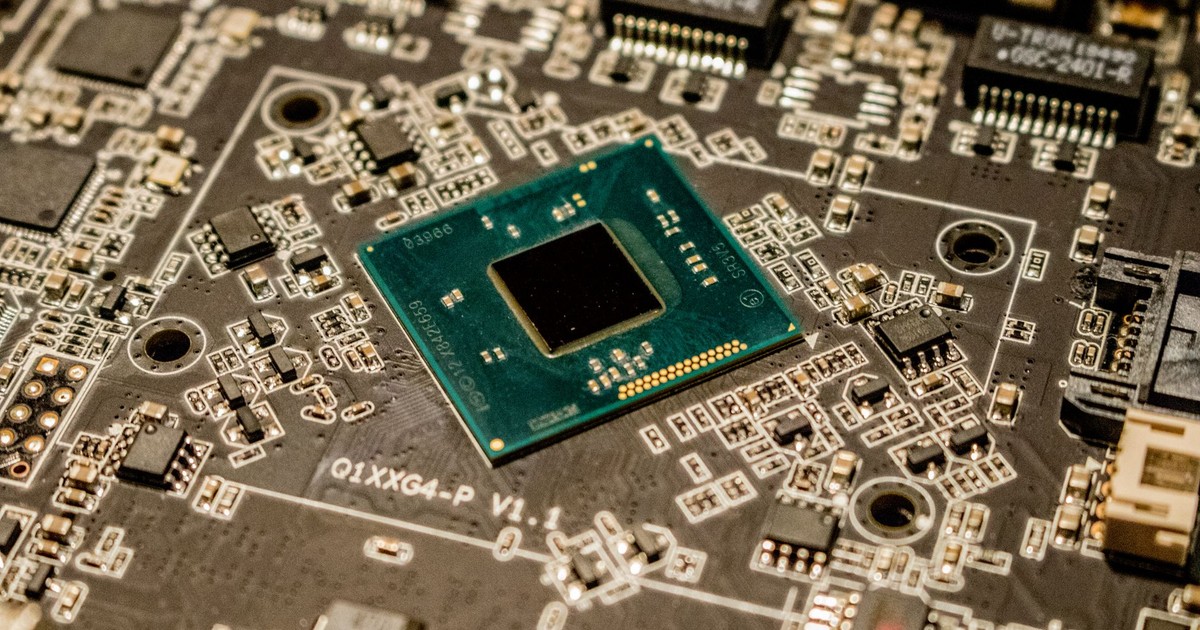
Current AI systems rely on conventional computer chips that shuttle data back and forth between memory and processing units. This constant movement consumes large amounts of electricity, and global demand is exploding as AI adoption expands across industries. This architectural design choice – keeping memory and processing in separate physical locations – is known as the “von Neumann bottleneck,” and it was manageable when processors were slower and workloads were lighter. AI has made it untenable.
Training a single large language model consumes staggering amounts of power. According to research from the University of Michigan, training GPT-3 just once consumed approximately 1,287 megawatt-hours of electricity – enough to supply an average U.S. household for 120 years, or roughly equivalent to the annual energy use of 120 American homes. Modern models are considerably larger. Each new generation of AI chips demands more power, more cooling, and more physical space, and it demands all of it faster than anyone predicted.
Memristors are two-terminal devices that can store and process data in the same physical location, eliminating the energy-intensive data shuttling between separate memory and processing units in conventional computer architectures. That single design shift – memory and processing in the same place – is the architectural change that makes the Cambridge device so significant. It doesn’t just run more efficiently. It discards the fundamental design flaw at the root of the problem.
The Obsolescence Crisis Already Underway
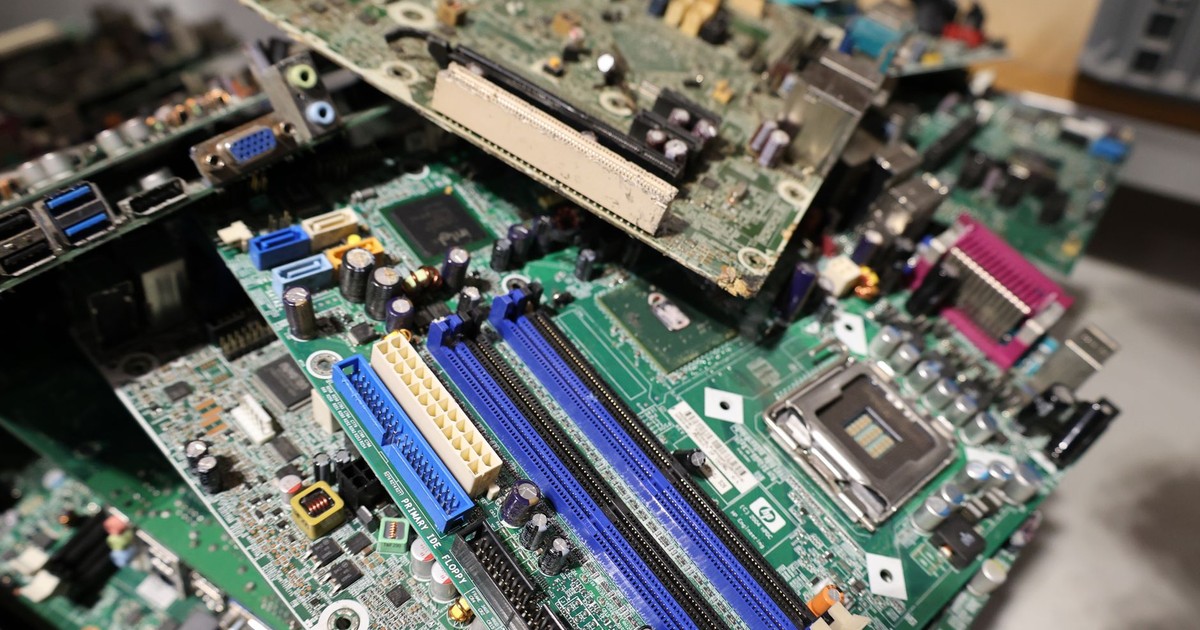
Before looking at what the Cambridge AI data centers breakthrough could replace, it’s worth understanding what it would replace. Data centers built as recently as 2023 and 2024 are already becoming physically obsolete – not economically outdated, but structurally incompatible with the hardware they were designed to house.
The culprit is NVIDIA’s Blackwell GPU architecture, which ended the era of air-cooled data centers. NVIDIA’s own documentation shows that the GB200 NVL72 rack draws approximately 120 kilowatts of power, compared to 7.6 to 10 kilowatts for a standard server rack. A building designed for the old standard simply can’t handle that thermal load. Blackwell requires Direct Liquid Cooling, where cold water is pumped directly onto silicon chips via micro-channel cold plates – a system that cannot be retrofitted into older air-cooled facilities.
The financial consequence of this mismatch is significant. Hardware refresh cycles for AI infrastructure have compressed from five to seven years down to roughly 18 to 36 months. Investors who financed buildings to last a decade are watching their assets age out in less than two years. An entirely different computing architecture – one that consumes far less power and generates far less heat – wouldn’t just save energy. It would end this cycle of structural obsolescence.
What the Cambridge Memristor Actually Does

The device at the center of the AI data centers breakthrough is a memristor (memory resistor) – a component that can both store information and process it in the same location. The team was led by Dr. Babak Bakhit from Cambridge’s Department of Materials Science and Metallurgy, and the paper was published in Science Advances in March 2026. The headline finding is that the device operates at switching currents roughly a million times lower than conventional oxide-based devices.
Earlier memristors existed but were unreliable. Most existing memristors operated by forming tiny conductive filaments inside metal oxide materials. These filaments tended to behave unpredictably and often required high voltages, which limited their practicality for large-scale computing. The Cambridge team solved this by engineering the material differently. They engineered a hafnium-based thin film that switches states through a more controlled mechanism. By adding strontium and titanium and using a two-step growth process, they created small electronic gates, known as “p-n junctions,” at the interfaces between layers. Instead of relying on filaments forming and breaking, the device changes its resistance by adjusting the energy barrier at these interfaces, allowing for smoother and more reliable switching.
The memristors produced hundreds of distinct, stable conductance levels – a key requirement for analog in-memory computing. Laboratory tests showed the devices could reliably endure tens of thousands of switching cycles. The paper also notes a retention window exceeding 100,000 seconds under laboratory conditions, though extending that duration will remain an engineering priority before production deployment. The switching performance and energy reduction figures already represent a fundamental change in what’s possible.
The Brain as the Better Blueprint

The reason the Cambridge approach is so promising goes beyond the specific material. It reflects a broader rethinking of how AI hardware should be designed – one modeled on biology rather than silicon convention. The human brain performs extraordinary cognitive tasks while consuming only approximately 20 watts of power, a figure that makes even the most efficient conventional AI chip look wasteful by comparison. A neuromorphic chip – one that mimics how the brain processes information – operates on fundamentally different principles.
Neuromorphic computing offers a different approach: instead of separating memory and processing, it combines both in one place, similar to how the brain works. Research from Cambridge and peers in the field suggests this architecture could cut energy use by as much as 70% while also allowing systems to learn and adapt more naturally. A key reason for the efficiency gain is how neuromorphic chips handle idle time. Conventional chips consume power continuously. Neuromorphic chips only consume power when processing spikes – not during idle periods – which dramatically lowers average energy draw across a workload.
Intel has already demonstrated the concept at scale. According to Intel’s newsroom, its Hala Point neuromorphic system, deployed at Sandia National Laboratories, contains 1.15 billion neurons and achieves efficiency exceeding 15 trillion 8-bit operations per second per watt – rivaling and exceeding levels achieved by GPU and CPU architectures running equivalent workloads. The Cambridge memristor offers a path to embedding this kind of neuromorphic design directly into materials already compatible with semiconductor manufacturing processes.
How Far Away Is a Real-World Impact?

The Cambridge memristor is currently a laboratory device. Fabrication requires temperatures of around 700°C, which creates compatibility challenges with standard chip manufacturing lines. Dr. Bakhit has said the team is actively working to lower that temperature threshold, describing it as “the main challenge in our device fabrication process” and adding that putting these devices onto a chip “would be a major step forward.” The retention performance and high-temperature fabrication requirement are engineering hurdles, not fundamental barriers.
The market trajectory suggests the industry is ready to absorb solutions fast. According to a 2024 MarketsandMarkets analysis, the neuromorphic computing market is projected to grow from $28.5 million in 2024 to $1.32 billion by 2030, at a compound annual growth rate of nearly 90%. That growth rate reflects both the scale of the energy problem and the urgency of finding hardware that can grow with AI demand without compounding the grid strain already drawing regulatory attention across the US, Europe, and Asia.
From 2024 to 2030, data center electricity consumption is growing by around 15% per year – more than four times faster than the growth of total electricity consumption from all other sectors combined. No amount of renewable energy procurement fully resolves that trajectory if the underlying hardware keeps demanding more power per computation. A shift to neuromorphic architecture changes the denominator. That’s what makes the Cambridge AI data centers breakthrough more than an academic milestone.
Read More: Baba Vanga’s 2026 Predictions Are Terrifying People Around the World
The Hardware Reckoning That’s Already Here

The energy demands of AI aren’t an abstract concern for policymakers. They feed directly into electricity prices, grid reliability, and the carbon cost of every AI product consumers use daily – from search engines to medical diagnostics to the apps on your phone. Every major economy that hosts significant data center infrastructure is now grappling with a grid that wasn’t designed to grow this fast. The IEA projects data center electricity use will more than double by 2030, adding roughly 530 terawatt-hours of additional annual demand to grids that are simultaneously trying to absorb electric vehicles, heat pumps, and industrial electrification.
The Cambridge memristor won’t reach commercial chips this year or next. But the publication of its findings in Science Advances in March 2026 marks the moment a credible, materials-level solution entered the scientific record – one built on a compound already embedded in the semiconductor industry. Hafnium oxide is already used in standard transistor gate insulators, meaning the path from laboratory to fabrication line is shorter than it would be for an exotic new material. When the remaining engineering challenges are resolved, the chips that follow could fundamentally change what it costs – in energy, in infrastructure, and in environmental impact – to run the AI systems that now underpin daily life. The version of AI that exists in ten years will be shaped in large part by whether hardware like this scales. The Cambridge team has given the industry a credible reason to believe it can.
AI Disclaimer: This article was created with the assistance of AI tools and reviewed by a human editor.
Read More: Elon Musk’s Data Center Is Poisoning a Neighborhood — and the DOJ Is Helping