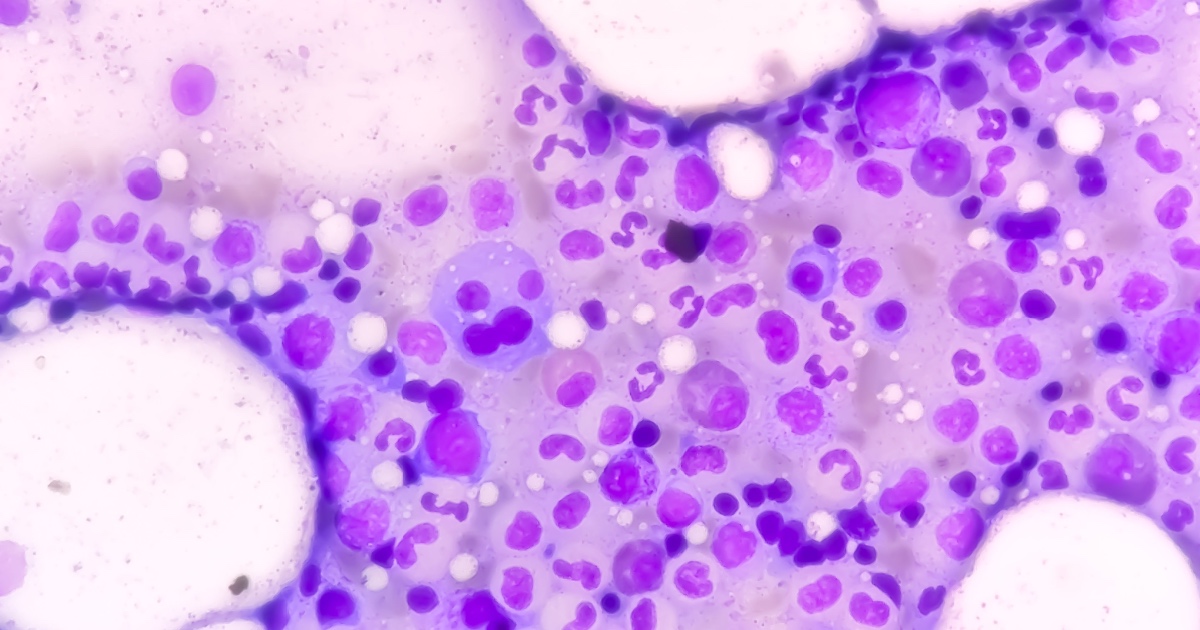

A patient whose back pain turned out to be multiple myeloma waited, on average, six months before getting a correct diagnosis. According to the International Myeloma Foundation, the average patient sees a primary care provider three times with warning signs before myeloma is even considered – and for African American and Latino American patients, that delay stretches three to six months longer, often because of barriers to accessing primary care.
Multiple myeloma early detection has taken on an entirely new dimension in 2026, not because of a screening breakthrough, but because of a fundamental rethink of what “high risk” actually means in an era of far more powerful treatment. The revision comes out of a multicenter study that tracked 310 patients treated with today’s best-available therapies – and the results have prompted oncologists to redraw the line that defines a patient’s most dangerous window.
A shift in how doctors classify the most dangerous form of the disease is changing what happens after diagnosis. A study published in July 2026 in Cancer, a peer-reviewed journal of the American Cancer Society, found that the old 18-month benchmark for identifying high-risk patients no longer fits modern treatment – and the new threshold is nearly twice as long.
What Multiple Myeloma Actually Does to the Body
Multiple myeloma is a cancer of plasma cells in bone marrow – plasma cells being the white blood cells responsible for producing antibodies that fight off bacteria and viruses. In myeloma, those plasma cells develop errors and build up in the bone marrow, crowding out the healthy cells that the body depends on for normal immune defense and blood production.
The disease announces itself in surprisingly ordinary ways. Multiple myeloma doesn’t always cause symptoms, but when it does, symptoms can include bone pain and weakness, infections, and low blood counts. Bone damage is particularly common: bone disease is the most common symptom associated with myeloma, affecting more than 80% of patients at some point during the course of their illness. The pain often settles in the back, ribs, or hips, and is regularly misread as arthritis, a sports injury, or the normal ache of aging.
Beyond bone pain, myeloma can hinder the bone marrow’s ability to produce red blood cells, leading to anemia – symptoms of which include fatigue, weakness, and shortness of breath. The kidneys take a hit too. The malignant plasma cells produce large amounts of a specific protein that can damage the kidneys, sometimes progressing to kidney failure before anyone connects the dots to cancer. When early symptoms do occur, they are often vague and can resemble common health issues such as arthritis, Lyme disease, or back, hip, and leg injuries – which is precisely why so many diagnoses are delayed.
Most people who notice symptoms are older, and in the United States the average age of diagnosis is 69 years old. That’s why physicians use a combination of blood tests, urine tests, bone marrow biopsies, and imaging to diagnose myeloma rather than relying on a single test.
The Old Definition of “High Risk” No Longer Fits
Multiple myeloma is the second most common hematologic malignancy – a blood cancer – and for decades, oncologists divided patients into risk categories partly based on how quickly the disease came back after treatment. Functional high-risk multiple myeloma was historically defined as progression within 18 months of starting therapy, with expected subsequent overall survival of less than two years.
That 18-month benchmark was established when treatment options were far weaker than they are today. Modern myeloma treatments have extended median overall survival for newly diagnosed patients to over 10 years – a figure that would have seemed implausible to oncologists working with older drug combinations a generation ago. When treatments become dramatically more effective, the criteria for measuring failure must be updated alongside them.
The 2026 Study That Changed the Benchmark for Multiple Myeloma Early Detection
To update the definition of functional high-risk multiple myeloma in the current era of combination therapy, investigators from the University of Alabama at Birmingham and the CoMMiT consortium analyzed information on 310 patients with newly diagnosed multiple myeloma who received this therapy and were followed for a median of 3.5 years.
The treatment these patients received represents the current gold standard. According to the study published in Cancer, a relapse within 36 months of upfront quadruplet therapy and autologous stem cell transplantation (ASCT) – rather than the historical 18-month benchmark – most accurately identifies patients with functional high-risk multiple myeloma. The analysis included 310 patients with newly diagnosed multiple myeloma who received quadruplet induction therapy followed by ASCT, after a median follow-up of 41.8 months and 66 progression events.
That quadruplet regimen is a significant step up from what previous generations of patients received. It includes an anti-CD38 antibody, a proteasome inhibitor, an immunomodulatory agent, and dexamethasone. Each component has a distinct job. Anti-CD38 antibodies such as daratumumab target a molecule highly expressed on myeloma cells, binding to the cancer cells and triggering the immune system to destroy them. Proteasome inhibitors block protein breakdown inside cancer cells and trigger cell death. Immunomodulatory drugs, including lenalidomide and pomalidomide, have been central to improving survival across multiple lines of myeloma treatment.
After chemotherapy induction, most patients also received autologous stem cell transplantation – a procedure considered standard care for eligible myeloma patients, in which the patient receives their own previously harvested stem cells to rebuild the blood system following high-dose chemotherapy. Using the patient’s own cells, rather than a donor’s, eliminates the risk of graft-versus-host disease, a serious complication in which transplanted immune cells attack the recipient’s body.
Why 36 Months Is the New Line
The researchers evaluated several definitions of functional high-risk disease based on progression occurring within 12, 18, 24, or 36 months after treatment initiation. Their analysis found that progression within 36 months most accurately identified patients whose survival after relapse remained approximately two years or less despite current frontline therapy.
Cancer progression within 36 months of combination therapy identified patients with overall survival of less than two years from the onset of second-line therapy. The older 18-month cutoff captured only a slice of that high-risk group – missing patients who relapsed later but still faced very poor outcomes given how effective the initial treatment had been.
This “FHR36” patient population corresponds to 16.4% of all treated patients – roughly one in six people receiving today’s best upfront myeloma treatment. The findings suggest that a revised definition could help doctors identify vulnerable patients earlier, improve the design of clinical trials, and guide treatment decisions for patients whose cancer returns despite aggressive therapy.
Dr. Gayathri Ravi, the study’s lead author and an assistant professor in the Division of Hematology and Oncology at the University of Alabama at Birmingham, put the finding plainly. “We identify that, with modern therapy, myeloma relapsing within 36 months can be considered as having functional high-risk disease,” she said following the publication. Senior author Dr. Luciano J. Costa, also of the UAB Division of Hematology and Oncology, added that “the findings will help physicians choose therapies for this important minority of patients who have disease progression in the first three years of diagnosis.”
What Comes Next for High-Risk Patients
Reclassifying who counts as functional high-risk matters because it directly shapes which salvage therapies patients receive – and how quickly. The study found a stark difference in outcomes depending on whether patients who relapsed early received a newer class of immunotherapy.
Patients who received T-cell redirecting therapies – a newer form of immunotherapy that helps the body’s immune cells recognize and attack cancer – experienced substantially better outcomes than those receiving other treatments. In the study, those who received T-cell redirecting therapies after relapse achieved a 91% response rate, compared with 47% among patients receiving other treatments.
T-cell redirecting therapies include two broad approaches. CAR-T cell therapy involves extracting a patient’s own T-cells, genetically engineering them in a laboratory to recognize myeloma cells, and reinfusing them. Bispecific antibodies work differently – they are manufactured proteins that bind simultaneously to a T-cell and a myeloma cell, physically bringing them together to trigger an immune attack. Two BCMA-targeting CAR-T products have received expanded FDA approvals for use in earlier lines of therapy: idecabtagene vicleucel was approved in April 2024 for patients after two or more prior lines of therapy, and ciltacabtagene autoleucel was approved for patients after at least one prior line of therapy. Two bispecific antibodies, teclistamab and elranatamab, are approved for patients who have received four or more prior lines of treatment – with sequencing decisions becoming increasingly nuanced.
The investigators recommended that future clinical trials incorporate the 3-year benchmark when identifying high-risk populations. “These patients should be prioritized for treatments engaging the patient’s immune system with CAR T-cell therapy or bispecific antibodies, resulting in improved responses and durable cancer control,” Dr. Ravi stated.
That recommendation carries practical weight for clinical trial design. If trials continue to use the 18-month threshold to define their high-risk populations, they will enroll fewer patients than they should, making it harder to test whether new drugs actually help the people who need them most.
Read More: 40+ Weird Signs That Lead To a Cancer Diagnosis
What This Means for You
For patients currently living with a myeloma diagnosis, the most immediate takeaway from this research is to ask your oncologist where you stand relative to the new 36-month benchmark. If your cancer returned within three years of starting quadruplet therapy plus a stem cell transplant, you now meet the updated definition of functional high-risk disease – and the clinical evidence supports prioritizing immune-engaging therapies, specifically CAR-T or bispecific antibodies, as your next step.
For people who haven’t been diagnosed but are experiencing persistent, unexplained back pain, fatigue that doesn’t resolve with rest, or frequent infections, the message is simpler and more urgent: ask your doctor for a blood protein test. In some people, multiple myeloma is first discovered during routine blood tests that show unusually high protein levels – long before symptoms become severe. A serum protein electrophoresis test, which your primary care physician can order, screens for the abnormal proteins myeloma cells produce. Catching the disease earlier doesn’t just improve the chances of surviving it – it changes which patients are candidates for the most effective treatments available. With median overall survival now surpassing a decade for newly diagnosed patients, earlier entry into treatment has never mattered more.
Disclaimer: This information is not intended to be a substitute for professional medical advice, diagnosis, or treatment and is for information only. Always seek the advice of your physician or another qualified health provider with any questions about your medical condition and/or current medication. Do not disregard professional medical advice or delay seeking advice or treatment because of something you have read here.
AI Disclaimer: This article was created with the assistance of AI tools and reviewed by a human editor.
Read More: He Lost His Taste for Beer — It Turned Out to Be Blood Cancer