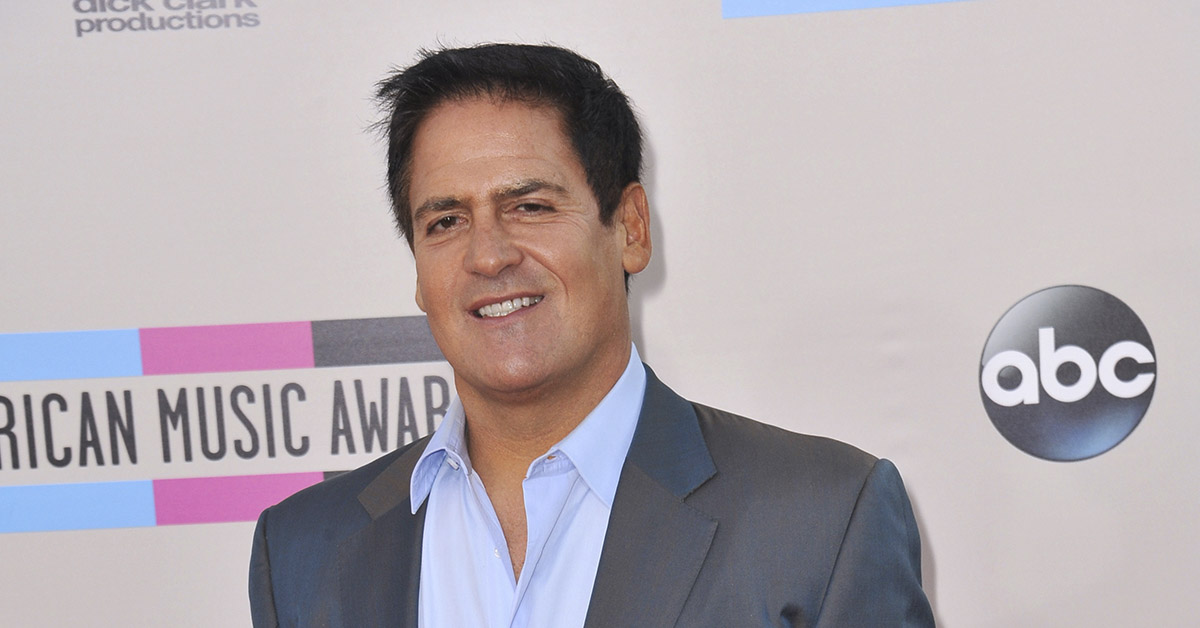

Mark Cuban is most famous for the bold bets: buying the Dallas Mavericks for $285 million, turning Broadcast.com into a dot-com era fortune, and spending years on television funding startup founders on Shark Tank. His latest proposal has nothing to do with any of that – and it cuts to the heart of a crisis that affects every American adult, working or retired.
Mark Cuban has argued publicly that automation could reduce the payroll taxes that fund programs like Social Security, and his proposed solution would charge a flat fee for each hour an AI system or robot performs work – “a straight amount per hour of use, per robot or cobot.” The logic is straightforward: Social Security runs on paychecks. When a robot replaces a worker, that paycheck disappears, and so does the tax revenue attached to it. Under the current funding model, machines contribute nothing to the programs they are quietly hollowing out.
The proposal would direct that money toward Social Security, and Cuban has even suggested the conversation could eventually shift from “tax the rich” to “tax the AI.” It’s a framing that would have sounded like science fiction a decade ago. Now, with the trust fund running out and the workforce being reshaped faster than any policy can track, it’s a real debate.
The Hole in Mark Cuban’s Social Security Plan Starts With the Numbers
Social Security paid out about $1.6 trillion in benefits in 2025 while collecting about $1.3 trillion in payroll taxes, with the difference drawn from the trust fund, which has been covering the gap for over a decade. That gap isn’t closing on its own.
The 2026 Trustees Report projects the retirement trust fund will be exhausted in 2032, at which point ongoing payroll taxes would cover only about 78% of scheduled benefits – a roughly 22% cut for everyone collecting. That’s six years away. According to the Congressional Research Service, Social Security in 2026 covers approximately 186 million workers and provides monthly benefits to over 71 million people.
The worker-to-beneficiary ratio is the central problem. According to the Bipartisan Policy Center, in 1960 there were five workers paying Social Security taxes per retiree beneficiary, but that ratio has now dropped to 2.9-to-1 – and it will keep falling. Fewer workers supporting more retirees is the structural fault line that no benefit adjustment or administrative tweak can paper over.
The Committee for a Responsible Federal Budget has calculated that lawmakers could restore long-term solvency with the equivalent of a 34% payroll tax increase or a 25% reduction in total benefits if they acted today. Both options are politically toxic. Neither has moved meaningfully through Congress. The depletion date, meanwhile, moved in the wrong direction: a 2025 analysis from the Center for Retirement Research at Boston College noted that the projected depletion date for the OASI trust fund moved from 2033 to 2032 in the most recent update.
What Cuban Actually Sees That Others Don’t
Payroll tax revenue is built on one assumption: that people are doing the work. If automation grows faster than current projections assume, that revenue could fall more quickly, leaving the trust fund with less time before it runs short. The current actuarial forecasts are built on employment-level assumptions made before the latest wave of generative AI began displacing white-collar work at meaningful scale.
Cuban has pressed policymakers to prepare for the consequences of automation before reacting to them after the fact, repeatedly highlighting that profits from this shift tend to flow to executives, capital owners, and shareholders, while the broader workforce gets left behind. As he wrote publicly, “Every country will face the prospect of national instability if the economics get out of whack, which is far more expensive than … taxes on your robots.”
Under Cuban’s proposal, the tax would primarily target large commercial AI providers running massive language models, with open-source projects and smaller locally operated systems excluded from the scope. A separate but related proposal he floated focused on AI tokens specifically: Cuban called for a federal tax on AI tokens at less than 50 cents per every one million processed, which he argued would raise billions annually while pushing large model operators toward more efficient systems.
He projected that the levy would initially raise about $10 billion per year – a figure that would likely increase as AI usage spreads across industries – with the money potentially directed toward reducing federal debt or helping workers displaced by automation.
Cuban isn’t alone in this direction. A Senate report led by Bernie Sanders backed a similar approach, recommending an automation tax on large corporations to help replace lost payroll tax revenue and support displaced workers. The October 2025 report warned that AI could eliminate close to 100 million U.S. jobs within a decade.
The Access Crisis Happening Right Now
While the trust fund debate plays out over years, the Social Security Administration is dealing with an immediate staffing collapse that’s already affecting people trying to access their benefits today.
Between January and November of 2025, the SSA reduced its headcount by 6,645 employees, a decrease of more than 11% from the end of the previous federal fiscal year. The cuts weren’t evenly distributed. The SSA reversed a controversial phone support policy in late March 2025 after public backlash, but staffing cuts and office closures have still created real access challenges – SSA staffing dropped from 57,000 to around 50,000 employees in that period.
The field-level damage is significant. According to the American Progress analysis, in 33 states the SSA had at least 10% less staff in fiscal year 2025 than in fiscal year 2024, with Wyoming losing 19% of its Social Security staff, and Missouri and Wisconsin each losing 14%. Some individual field offices lost 25% of their staff or more, and a number of rural offices closed entirely due to the lack of personnel.
The outcome is stark: by January 2026, the SSA had fewer employees than at any point since 1967, according to Fortune, with six of its 10 regional offices closed. The agency is aiming to cut field office visits by 50% for fiscal year 2026 compared to the previous year, resulting in a drop of more than 15 million visits annually.
An American Progress survey of SSA employees found that 70% reported service speed had declined over the past year, while 65% said service quality had also declined.
The people who most depend on in-person access are those with no alternative – elderly beneficiaries without internet access, rural residents hours from the nearest open office, people with disabilities that make online navigation genuinely difficult. Cuban called the phone support cuts “a back door way to cut SS benefits” – and the data on access barriers backs that characterization up, even if the mechanism is administrative rather than legislative.
The stakes aren’t abstract. The Center on Budget and Policy Priorities found that without Social Security, 23.5 million more Americans would fall below the poverty line – more than any other program in the country keeps above it. A 22% automatic benefit cut in 2032 doesn’t just mean smaller checks. For millions of retirees, it means choosing between medication and groceries.
Read More: 3 Retirement Rules the US Government Just Changed
What to Do Now
Cuban’s robot tax proposal may or may not ever reach a congressional vote. The idea has already drawn criticism from parts of the technology industry, including Palmer Luckey, founder of defense firm Anduril Industries, who warned that taxing AI use could hurt American companies while giving foreign competitors an advantage. That’s a legitimate concern, and there’s no legislative timeline that makes the proposal imminent.
The automation threat Cuban describes – AI-driven job displacement eroding the payroll tax base – is accelerating. Social Security’s funding model was designed around human payroll. AI-driven automation doesn’t pay payroll taxes. If current trends continue, the program’s revenue base will erode at the same time the beneficiary rolls are swelling. The 2032 depletion date was calculated before this year’s pace of AI adoption was factored in.
For anyone within 15 years of retirement, the practical steps are the same regardless of what Congress does or doesn’t do. Check your projected Social Security benefit at ssa.gov at ages 62, 67, and 70 – the spread between those three numbers is one of the most important variables in your retirement plan. According to Charles Schwab’s retirement planning guidance, waiting beyond full retirement age increases your benefit by about 8% per year until age 70. A two-year delay translates to a permanent 16% increase in monthly income, which matters enormously if benefits are later cut across the board.
The One Big Beautiful Bill Act created a $6,000 deduction for seniors 65 and older, but the GovFacts analysis notes that this senior deduction directly reduces the revenue that flows into Social Security – meaning a provision sold as helping retirees is simultaneously trimming the program’s funding base. The 2026 COLA adjustment came in at 2.8%, which helps, but it doesn’t close a structural gap measured in hundreds of billions of dollars.
Cuban’s broader point is that the robots are already here, already working, and already not contributing to the programs that working people built over decades. Whether the fix is an hourly robot tax, an AI token levy, higher payroll tax caps, or a combination of all three – someone has to pay for the gap. The only question is who.
Disclaimer: This information is not intended to be a substitute for professional financial advice, investment advice, tax advice, or legal advice, and is provided for informational purposes only. Always seek the guidance of a qualified financial advisor, accountant, or other licensed professional regarding your personal financial situation or investment decisions. Do not make financial, investment, or tax decisions based solely on information presented here. Past performance is not indicative of future results, and all investments carry risk, including the potential loss of principal.
AI Disclaimer: This article was created with the assistance of AI tools and reviewed by a human editor.