
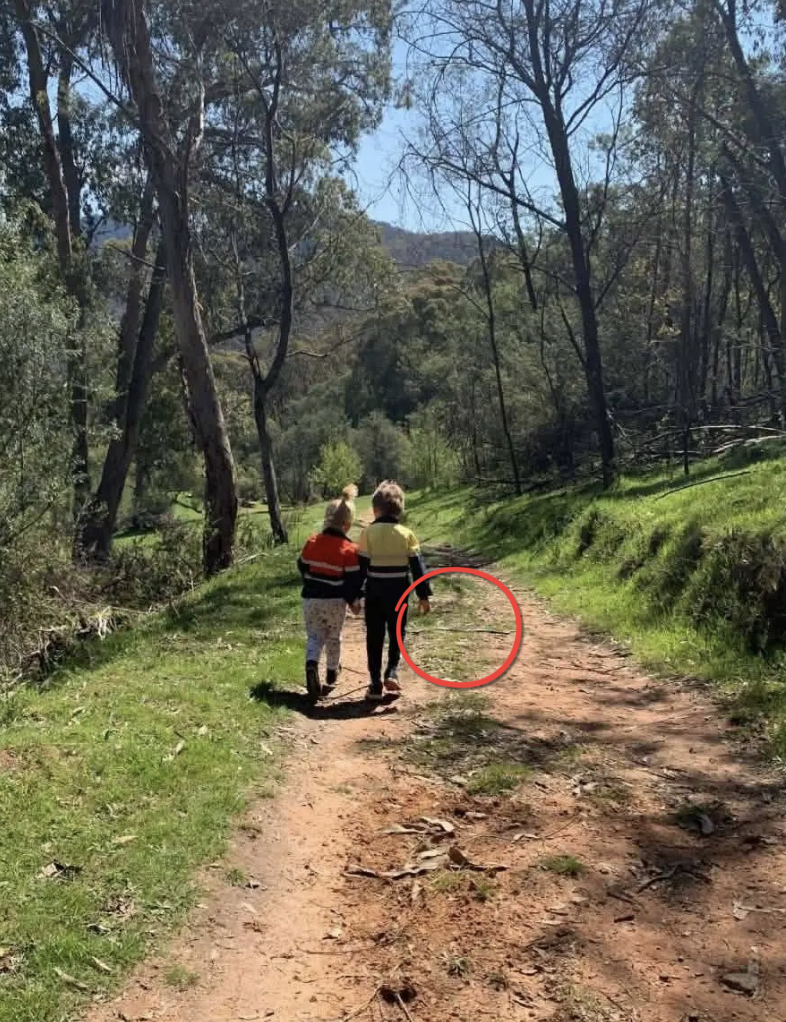
A woman named Alanna snapped what she thought was a sweet moment on a summer outing along a dirt track near the Mitta Mitta River in Victoria, Australia. Two children, hand in hand, skipping down the path in golden light. She didn’t notice anything wrong when she took the shot. Nobody did. It was only later, scrolling back through the photos at home, that the hidden details in the image stopped her cold.
The snake was right there. Centimetres from her son’s foot. Coiled in the dirt, blending almost perfectly into the tan-coloured ground, watching the children pass.
The photo has circulated online since 2019, but it surfaced again recently and sent fresh waves of horror through social media. People who’d never heard of the eastern brown snake were about to get a quick and unsettling education. Those who had heard of it reacted with the kind of dread that comes from knowing exactly what that animal is capable of.
What Was Hiding in the Photo
The image was taken by the children’s mother on a road in the town of Eskdale, close to the Mitta Mitta River in Victoria. The snake was largely camouflaged by the dirt track, and she only noticed it while looking back at the photos from their outing.
The image was uploaded to social media by veteran handler Barry Goldsmith, who runs a local business called Snake Catcher Victoria. Goldsmith had received it from the children’s grandfather, and he saw an opportunity to make a point about how Australians misunderstand the reptiles they share their country with.
Writing on Facebook, Goldsmith noted that no one saw the large eastern brown snake until they looked at the pictures later. “The snake saw them coming and watched as they unknowingly skipped past,” he wrote. “Really goes to show snakes are not aggressive and just need respect.”
The problem, as Goldsmith sees it, is the instinct people have to confront or kill a snake when they encounter one. That’s exactly when things go wrong.
The Eastern Brown Snake: What the Venom Actually Does
The children in that photo were centimetres from one of the most dangerous animals in Australia. The eastern brown snake is the second most venomous land snake in the world, ranking behind only the inland taipan.
The eastern brown snake is responsible for approximately 60% of snakebite deaths in Australia. That figure reflects not just how toxic the venom is, but how often these snakes come into contact with people. They are widespread across eastern Australia, thriving in farmland, suburban edges, and riverbanks alike.
The venom contains neurotoxins, cardiotoxins, and blood coagulants. The Australian Museum notes that the venom also contains nephrotoxins, meaning both the heart and kidneys are at risk in a serious envenomation.
If left untreated, a bite can cause progressive paralysis and excessive bleeding. The venom can also trigger cardiac arrest. One of the most dangerous aspects of the eastern brown snake’s bite is how easy it is to miss – the initial bite is generally painless and difficult to detect, meaning a person can be envenomated without realising it.
The eastern brown snake’s LD50 value is approximately 0.053 mg/kg, and a single bite injects an average of 5–10 mg of venom — far exceeding the lethal dose for humans.
Why Most Bites Happen in the First Place
The children in Alanna’s photograph were never in danger from the snake’s intent. They walked past it. It watched them go. Snakes are not naturally aggressive and actively avoid human confrontation – stories of snakes chasing people are more likely cases where a snake was attempting to retreat in the same direction as the person.
The real risk kicks in when humans intervene. Most bites occur when a person attempts to kill or handle a snake without training. Wildlife authorities consistently give the same advice: leave it alone and back away slowly.
Barry Goldsmith has stated that the reptiles are not aggressive and not out to hurt people. He also noted that at any given time in Australia, you’re rarely more than a kilometre from a snake. That proximity isn’t new, and the response that keeps people safe is awareness, not aggression.
Goldsmith’s advice when you spot one: stop, observe the snake, and give it room. He has never seen a snake chase after a human in his career handling more than 10,000 of them.
If a Bite Does Happen
Even with the best intentions, accidents happen. Children especially may not see a snake in time, just as Alanna’s kids didn’t. Knowing how to respond in the first moments can be the difference between survival and a fatal outcome.
The Pressure Immobilisation Technique is the recommended first aid for all Australian venomous snake bites, including eastern brown snakes. It works by slowing the spread of venom through the lymphatic system. Apply a roller bandage over the bite site, then use a second roller bandage starting just above the fingers or toes and working up the limb. The bandage should be firm, not a loose wrap.
Do not wash the bite area, as venom left on the skin helps identify the snake. Do not apply a tourniquet, do not cut the wound, and do not try to suck the venom out. These actions can cause additional harm and waste critical time.
Do not try to catch or kill the snake. A photo from a safe distance is enough for medical staff to identify the species and administer the right antivenom. Call emergency services immediately and keep the person still and calm while waiting for help to arrive.
The eastern brown has effective antivenom available in Australian hospitals. The goal of first aid is simply to slow the spread of venom long enough to get there.
Staying Safe in Snake Country
Alanna’s photograph went viral not because of the snake’s behavior, but because of the proximity none of them knew about. The snake didn’t chase the children. It didn’t strike. It watched them pass and stayed exactly where it was – the normal behaviour of an eastern brown snake when humans move through its space without threatening it.
The practical lesson isn’t to fear the bush or keep children off dirt paths. Stay observant in snake country, particularly near watercourses and during warmer months when snakes are most active. Wear sturdy footwear on trails, watch where you step, and if you see a snake, give it room to leave on its own terms. Knowing the Pressure Immobilisation Technique before you need it is worth more than any amount of after-the-fact panic. You can learn it through a certified first aid course, and the Australian government’s healthdirect resource on snake bites has a clear step-by-step guide.
The children skipped past. They got home safe. The snake moved on. The animal did exactly what eastern brown snakes do when left alone.
Disclaimer: This information is not intended to be a substitute for professional medical advice, diagnosis, or treatment and is for information only. Always seek the advice of your physician or another qualified health provider with any questions about your medical condition and/or current medication. Do not disregard professional medical advice or delay seeking advice or treatment because of something you have read here.
AI Disclaimer: This article was created with the assistance of AI tools and reviewed by a human editor.
Read More: 8 Scents That Snakes Hate. Put Them Around Your House to Keep Snakes Away