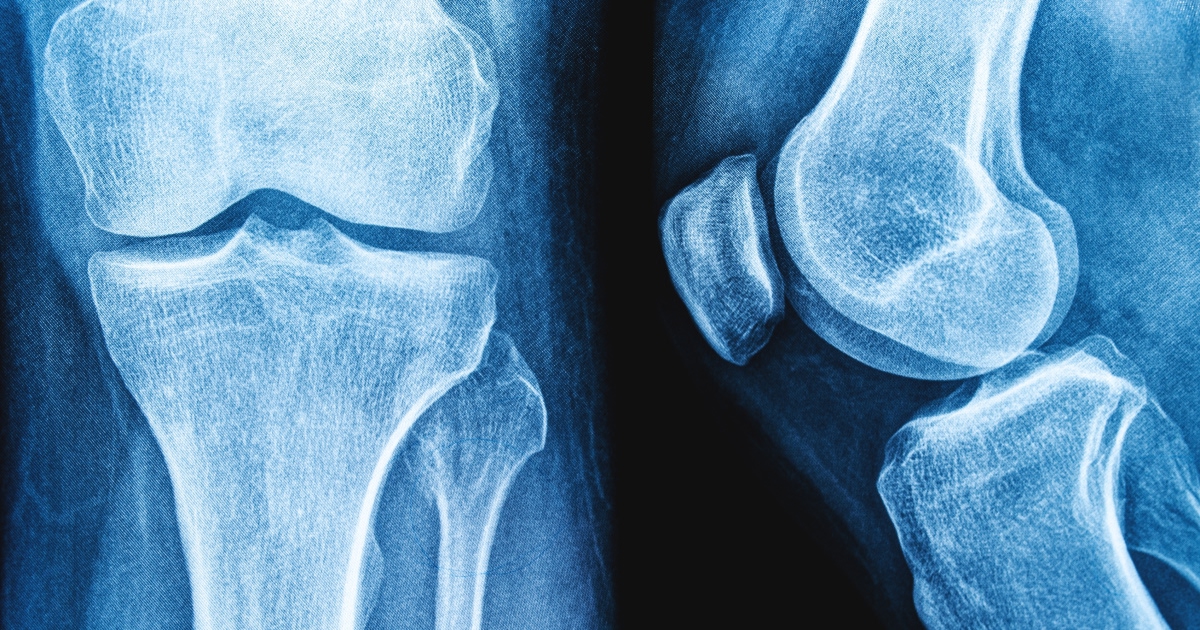

For millions of people with osteoarthritis, the basic problem has long seemed irreversible. Once the cartilage cushioning a joint breaks down, the body has very little ability to replace it. Treatments can reduce pain and inflammation, and severely damaged joints can eventually be replaced, but regrowing the lost cartilage itself has remained out of reach.
That’s a major limitation for a condition that affects approximately 32.5 million U.S. adults and places an enormous burden on patients and the healthcare system, with osteoarthritis-related costs estimated at more than $132 billion annually. For decades, cartilage has been viewed as one of those tissues the body simply isn’t very good at rebuilding, particularly as we get older.
But researchers at Stanford Medicine may have uncovered an important reason why that regenerative ability fades with age.
Their work centers on an enzyme called 15-PGDH (15-hydroxyprostaglandin dehydrogenase). Stanford researchers have classified it as a “gerozyme,” a type of enzyme that becomes more abundant with age and contributes to declining tissue function. When the researchers compared cartilage from young and old mice, they found levels of 15-PGDH had approximately doubled in the older animals.
What happened when they interfered with that enzyme was far more interesting.
In animal experiments, blocking 15-PGDH appeared to restore some of cartilage’s ability to regenerate, including in joints already damaged by osteoarthritis. Researchers also saw encouraging effects in human cartilage tissue studied in the laboratory, suggesting the mechanism may not be limited to mice.
That doesn’t mean scientists have found a way to regrow human joints or a cure for osteoarthritis. But the findings challenge a long-standing assumption about cartilage: perhaps its inability to repair itself with age isn’t simply an unavoidable consequence of wear and tear. Instead, there may be a biological brake on regeneration that scientists can target.
The Stanford discovery: a switch hidden in plain sight
An injection that blocks the activity of 15-PGDH reversed naturally occurring cartilage loss in the knee joints of old mice, and also prevented the development of arthritis after knee injuries that mirror ACL tears. The study, led by Nidhi Bhutani, Associate Professor of Orthopaedic Surgery at Stanford University, and Helen Blau, director of the Baxter Laboratory for Stem Cell Biology, was published in the journal Science in November 2025.
In tests on young, injured mice, the inhibitor protected against injury-induced osteoarthritis. When researchers induced the equivalent of an anterior cruciate ligament injury and applied the treatment, osteoarthritis did not develop as would normally be expected. The inhibitor was delivered twice weekly for four weeks following injury.
The mechanism behind the recovery surprised the researchers. In previous studies of 15-PGDH inhibition in tissues such as muscle, bone, and blood, regeneration has involved the proliferation and specialization of stem or progenitor cells. But cartilage appeared to respond differently.
The Science study found that cartilage regeneration occurred through changes in gene expression in pre-existing chondrocytes, the adult cells responsible for producing and maintaining cartilage, rather than through the proliferation of stem or progenitor cells. Suppressing 15-PGDH shifted these existing cells toward gene-expression patterns associated with healthier, more youthful cartilage.
“The mechanism is quite striking and really shifted our perspective about how tissue regeneration can occur,” Bhutani said. “It’s clear that a large pool of already existing cells in cartilage are changing their gene expression patterns. And by targeting these cells for regeneration, we may have an opportunity to have a bigger overall impact clinically.”
What happened when human tissue was tested
The Stanford team tested the 15-PGDH inhibitor on human cartilage removed from people undergoing total knee replacement surgery for osteoarthritis. After one week of treatment with the inhibitor, the tissue showed fewer cartilage-degrading cells and lower activity of genes linked to cartilage breakdown. The samples also began generating new articular cartilage.
For people who want to understand how lifestyle and nutrition connect to joint health while these therapies advance, foods that affect joint inflammation offer practical context alongside the emerging clinical research.
Knee replacement surgery is typically performed only when a joint has deteriorated beyond the point of less invasive treatment. The human cartilage samples that responded to the inhibitor were already severely compromised, raising the possibility that cartilage damaged by aging or osteoarthritis could one day be repaired with a local injection or an oral medication.
The broader race: ARPA-H’s $190 million NITRO program
The Stanford finding is one part of a coordinated federal push to end osteoarthritis as a progressive, irreversible disease. The Advanced Research Projects Agency for Health (ARPA-H), an agency within the U.S. Department of Health and Human Services, launched the NITRO program – Novel Innovations for Tissue Regeneration in Osteoarthritis – allocating over $190 million across multiple research teams. Within two years, NITRO teams had regenerated both cartilage and bone in osteoarthritic animal models.
The program works across three technical areas: targeted bone regeneration, targeted cartilage regeneration, and total knee implants composed of living human tissue.
One of the most advanced teams under NITRO is based at the University of Colorado Boulder. Their approach includes a single regenerative injection to a joint and a biomaterial repair kit that recruits the body’s own cells to patch holes in damaged cartilage. ARPA-H announced that the multidisciplinary team will advance to the next phase of the up to $33.5 million project, with CU Boulder’s lead drug candidate reversing osteoarthritis in animal studies within 4 – 8 weeks. The research has been spun into a company called Renovare Therapeutics, formed in 2026 in Boulder, Colorado, to advance these therapies toward human clinical trials.
“In two years, we were able to go from a moonshot idea to developing these therapies to demonstrating that they reverse osteoarthritis in animals,” said Stephanie Bryant, Professor of Chemical and Biological Engineering at the University of Colorado Boulder. “Our goal is not just to treat pain and halt progression, but to end this disease.”
The Columbia University team within NITRO has taken a different approach. Their contribution is a 3D-printed, biodegradable knee scaffold seeded with stem cells that dissolves progressively as the body regrows its own cartilage and bone around it – using the implant as a temporary structure that disappears once tissue has regenerated.
Read More: Skeletons Say Osteoarthritis Isn’t About Aging, It’s About Activity
Semaglutide’s unexpected role in joint protection
Alongside the experimental therapies working through preclinical trials, a drug already prescribed to tens of millions of people appears to have a direct effect on joint cartilage. Semaglutide, the active compound in Ozempic and Wegovy, affects the metabolism of chondrocytes – the cells that synthesize and maintain healthy cartilage. A study published in Cell Metabolism in March 2026 found this effect operates independently of the drug’s well-known role in weight management.
The study included a pair-feeding control group that consumed the same amount as semaglutide-treated mice. Even with comparable weight changes, the pair-feeding group did not receive the same cartilage protection, pointing to a direct effect on joint tissue that does not depend on weight loss.
In mice and humans with obesity and osteoarthritis, semaglutide treatment reduced pain and decreased cartilage degeneration. Mice also had fewer bone spurs and less severe lesions in their joint membranes. The evidence is preliminary and further research is needed to establish how these findings apply in broader clinical populations.
Millions of patients already take semaglutide for weight management or type 2 diabetes. That creates an unusual opportunity: data on joint outcomes could emerge from existing clinical cohorts faster than a purpose-built trial would allow.
What to do with this information
No drug can currently slow down or reverse osteoarthritis, and the primary treatments remain pain control and surgical joint replacement. The 15-PGDH inhibitor is not yet approved, and the ARPA-H NITRO therapies remain in preclinical and early clinical stages. None of these are options a doctor can prescribe today.
The research finding that existing chondrocytes can recover function when 15-PGDH is blocked reshapes the scientific understanding of cartilage loss as necessarily permanent. Both systemic and local inhibition of 15-PGDH with a small molecule inhibitor led to regeneration of articular cartilage and reduction in osteoarthritis-associated pain in research settings – though human clinical trials have not yet begun.
For anyone currently managing osteoarthritis or watching for early signs of joint deterioration, the semaglutide data is worth raising with a physician, particularly if metabolic conditions like obesity or type 2 diabetes are already part of the clinical picture. That evidence is still accumulating, and a prescribing physician familiar with the drug’s safety profile is best placed to weigh those considerations.
Disclaimer: This information is not intended to be a substitute for professional medical advice, diagnosis, or treatment and is for information only. Always seek the advice of your physician or another qualified health provider with any questions about your medical condition and/or current medication. Do not disregard professional medical advice or delay seeking advice or treatment because of something you have read here.
AI Disclaimer: This article was created with the assistance of AI tools and reviewed by a human editor.
Read More: New Study Suggests Semaglutide Could Reverse Osteoarthritis Damage