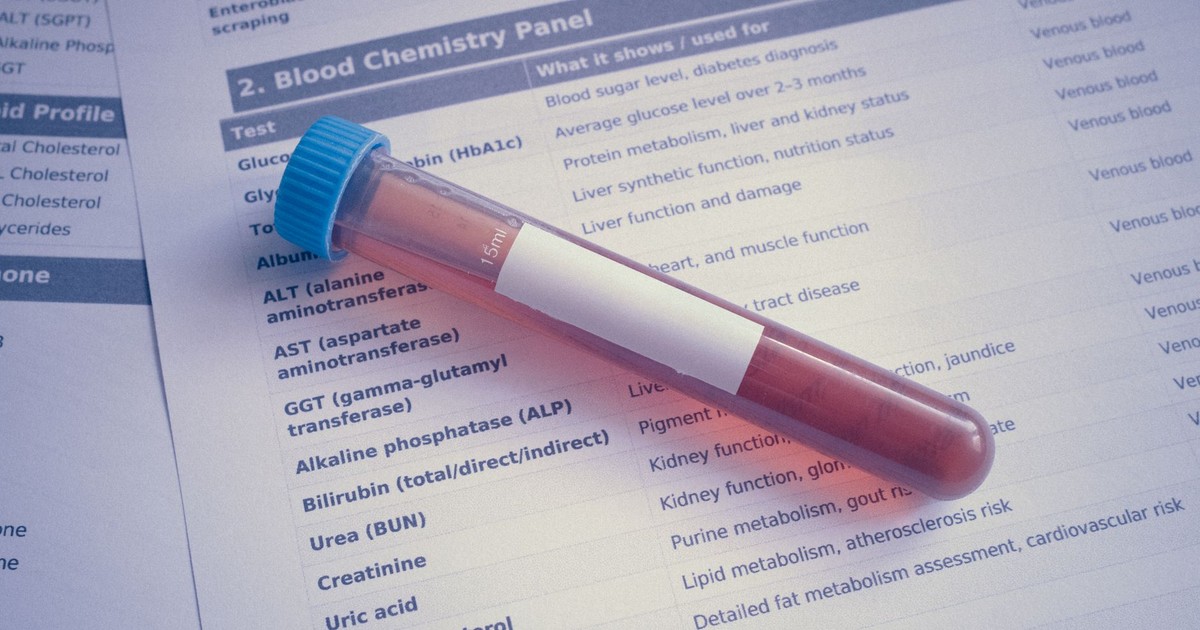

Most of us think of a blood test as a simple snapshot of our health. A few vials can tell doctors about blood sugar, cholesterol, kidney function, and other important markers. But what if there are signs of a health problem hiding in that same blood that routine tests aren’t designed to detect?
That’s the question behind a new study from researchers at the University of Toledo. Their findings point to an unusual clue: the way red blood cells behave may change when the liver is under stress.
The discovery centers on something called bile acids, substances made by the liver that normally play an important role in digestion. When they build up in the wrong place or reach unusually high levels, however, they can affect other parts of the body, including the red blood cells circulating through our bloodstream.
In a 2026 study published in the American Journal of Physiology–Gastrointestinal and Liver Physiology, researchers found that red blood cells exposed to high concentrations of bile acids became harder to break apart. That unexpected change could potentially provide a new way of detecting liver stress earlier than some of the signs we typically associate with liver problems.
The idea is still in its early stages, and larger studies will be needed to determine whether this approach can eventually become a useful clinical test. But the researchers’ findings raise an intriguing possibility: could a tiny amount of blood reveal signs of liver stress before more obvious problems appear?
To understand how that might work, it helps to look at what bile acids do, what happens when they build up, and why red blood cells may provide an unexpected window into liver health.
What Bile Acids Are and Why They Belong in the Gut, Not the Blood
Bile acids are compounds produced by the liver that aid in digestion and absorption of fat-soluble vitamins. After synthesis from cholesterol, they travel into the intestine, assist in breaking down dietary fats, and are absorbed and returned to the liver through the portal circulation – a tightly controlled recycling loop that keeps these compounds out of the general bloodstream.
When liver function is impaired or bile flow becomes blocked, bile acids accumulate in the blood in a condition known as cholemia. This can arise from a wide range of underlying causes: fatty liver disease, blocked bile ducts, drug-induced liver injury, autoimmune conditions such as primary biliary cholangitis, or alcohol-related liver damage.
Early elevations of bile acids in the blood can remain clinically invisible, producing no symptoms. This is precisely the window in which earlier detection would be most valuable, and it is precisely the window that current standard tests do not reliably capture.
The Gap in Standard Liver Testing
A standard blood panel measures cholesterol, bilirubin, and triglycerides, but not bile acids. Clinicians do order liver enzyme panels – alanine aminotransferase and aspartate aminotransferase are the most common – and those markers are useful for detecting active liver cell injury. They measure damage that has already occurred. Bile acids can rise before enzyme levels shift meaningfully, creating a detection gap during the period when intervention is most likely to alter disease trajectory.
Elevated bile acids are among the earliest biological signs that liver function may be impaired. According to Labcorp’s clinical reference data, bile acid levels may be altered even when other liver function tests are normal, giving them potential value as sensitive early indicators of hepatic dysfunction.
Dr. Matam Vijay-Kumar, a professor of physiology and pharmacology at the University of Toledo’s College of Medicine and Life Sciences, has described bile acids as “a very neglected analyte in the clinics,” and his lab set out to determine whether there was a simpler, faster, and cheaper method to detect elevated levels than the specialized laboratory assays currently required.
An Unexpected Finding in Red Blood Cells
Rather than measuring bile acids in the blood directly, the research team examined how bile acid exposure changed the physical behavior of red blood cells – cells that have no obvious connection to liver function but circulate through a blood environment that bile acids directly alter.
Red blood cells from mice with elevated bile acids were significantly more resistant to rupturing than cells from healthy mice with normal bile acid levels. Red blood cell membranes are designed to be flexible, allowing cells to squeeze through capillaries narrower than the cell itself. High levels of a disruptive chemical compound would logically weaken those membranes. Instead, they became stiffer and more resistant to osmotic stress – the type of pressure used in laboratory tests to measure membrane fragility.
The finding held across multiple genetic mouse models of spontaneous cholemia. Blood samples from 23 patients with cholestatic liver disease treated at the University of Toledo Medical Center showed the same pattern when compared with samples from 23 age- and sex-matched individuals without signs of liver disease. The elevated resistance to rupture appeared consistently in the patient group and not in the healthy controls.
The Membrane Mechanism
Elevated bile acid exposure alters red blood cell membrane composition. The cells accumulate more cholesterol while losing phospholipid – the flexible fat molecule that normally keeps the membrane pliable. A membrane with a higher ratio of rigid cholesterol to flexible phospholipid becomes stiffer, and stiffer membranes resist osmotic rupture more effectively than healthy ones. This compositional shift appears to be a measurable downstream consequence of elevated circulating bile acids, detectable without directly assaying bile acid concentration.
How the Proposed Screening Test Would Work
The proposed liver stress blood test exploits this membrane change by measuring osmotic resistance directly. About four microliters of blood would be added to a solution, with a result potentially available in 10 to 20 minutes. Vijay-Kumar described being able to identify people with high bile acids with 100 percent accuracy in their sample – a finding that requires validation in far larger populations before it can serve as a clinical benchmark.
The method is currently patent-pending. The UToledo Technology Transfer Office has filed a patent application titled “Rapid Screening for Elevated Bile Acids Using Whole Blood,” application number 18844313, for the diagnostic concept underlying the test.
Existing bile acid assays require specialized reagents, trained laboratory technicians, and processing time that limits their use in routine annual checkups. A whole-blood osmotic resistance test, if validated, could potentially be run alongside a standard metabolic panel during a single blood draw, adding negligible time and cost.
The researchers stress that the test would be a screening tool rather than a diagnostic instrument. An abnormal result would indicate that elevated bile acids are likely present and that further investigation of the liver and biliary system is warranted. A positive screen opens a clinical conversation; it does not establish a cause or a diagnosis.
Cholestasis, Pregnancy, and the Stakes of Early Detection
The researchers also highlighted elevated bile acid detection during pregnancy as a priority application. Intrahepatic cholestasis of pregnancy (ICP) is, according to a 2022 review in Diagnostics, the most common reversible liver disorder linked to pregnancy, characterized by elevated bile acids in blood serum and an increased risk of adverse perinatal outcomes.
A 2025 retrospective study published in Diagnostics found that patients with severe ICP – defined as bile acid levels at or above 100 micromoles per liter – experienced significantly worse perinatal outcomes, including elevated rates of spontaneous preterm birth, meconium-stained amniotic fluid, and neonatal intensive care unit admission.
ICP can be present – and bile acids elevated – before the characteristic symptom of skin itching becomes severe enough to prompt medical evaluation. A rapid screening method capable of flagging elevated bile acids at a routine prenatal visit could give clinicians earlier information about which pregnancies need closer biochemical monitoring. An overview of ICP research published in 2024 confirmed that bile acid thresholds associated with the risk of stillbirth and spontaneous preterm birth can be used to identify at-risk pregnancies, but only if those levels are being measured.
The UToledo team identifies the pregnant population as one of the most urgent potential applications because the consequences of delayed diagnosis are concentrated in a short window and involve two patients rather than one.
What the Evidence Can and Cannot Yet Support
The 23-patient human study is a proof-of-concept finding, not a validation study. A sample of that size can establish that a biological relationship exists and that a measurement approach is technically feasible. It cannot establish sensitivity, specificity, false positive rates, or the optimal threshold for flagging a result as abnormal – all of which are necessary before any diagnostic tool enters clinical practice.
People with other conditions that alter red blood cell membrane composition – certain anemias, sepsis, or metabolic disorders – could theoretically produce false positives. Future studies will need to determine whether osmotic resistance changes are specific enough to bile acid elevation to avoid misidentifying patients with unrelated conditions.
The existing research also does not yet answer whether detecting elevated bile acids earlier leads to meaningfully better outcomes. For some causes of elevated bile acids – such as ICP, where delivery timing is guided by bile acid levels – early detection has a clear management implication. For others, such as early non-alcoholic fatty liver disease, the treatment pathway after detection is less clearly defined.
Researchers will also need to assess whether the osmotic resistance test performs consistently across different demographic groups, disease stages, and concurrent medications, all of which can independently affect red blood cell biology.
For readers interested in the broader context of liver health monitoring, understanding early symptoms of liver disease remains an important complement to any biomarker-based screening approach.
Read More: Diabetes Drug Could Help Repair Damage in Fatty Liver Disease
Key Takeaways
The University of Toledo research demonstrates that the physical behavior of red blood cells changes in a measurable and consistent way when bile acids accumulate in the blood. That change – increased membrane rigidity driven by a shift in the cholesterol-to-phospholipid ratio – can be detected with a small amount of whole blood and a short incubation period. If confirmed at scale, it could provide clinicians with a liver stress blood test capable of flagging hepatic dysfunction before conventional liver markers become abnormal.
The test is designed to add a low-cost early warning layer to the routine annual blood draw, not to replace existing liver panels. The test described in this research is not yet commercially available, and larger validation studies are needed before it can be used clinically. Patients with risk factors for fatty liver disease, medications with hepatotoxic potential, or a family history of cholestatic liver conditions may wish to discuss bile acid monitoring with their physician.
Disclaimer: This information is not intended to be a substitute for professional medical advice, diagnosis, or treatment and is for information only. Always seek the advice of your physician or another qualified health provider with any questions about your medical condition and/or current medication. Do not disregard professional medical advice or delay seeking advice or treatment because of something you have read here.
AI Disclaimer: This article was created with the assistance of AI tools and reviewed by a human editor.