
Losing 20 or 30 pounds is usually treated as the headline. If two people start at a similar weight and lose roughly the same percentage of it, it seems reasonable to assume they should walk away with similar improvements in their health. But the number on the scale only tells us how much weight was lost. It doesn’t tell us whether the way that weight was lost matters too.
That question was at the heart of a controlled clinical trial published August 27, 2026, in Cell Metabolism. Researchers at Washington University School of Medicine in St. Louis studied adults with obesity, prediabetes, and excess fat in the liver, putting them on three different diets designed to produce similar amounts of weight loss. After four to five months, all three groups had lost about 10% of their starting body weight.
On the scale, then, the diets looked remarkably similar. Inside the body, they didn’t.
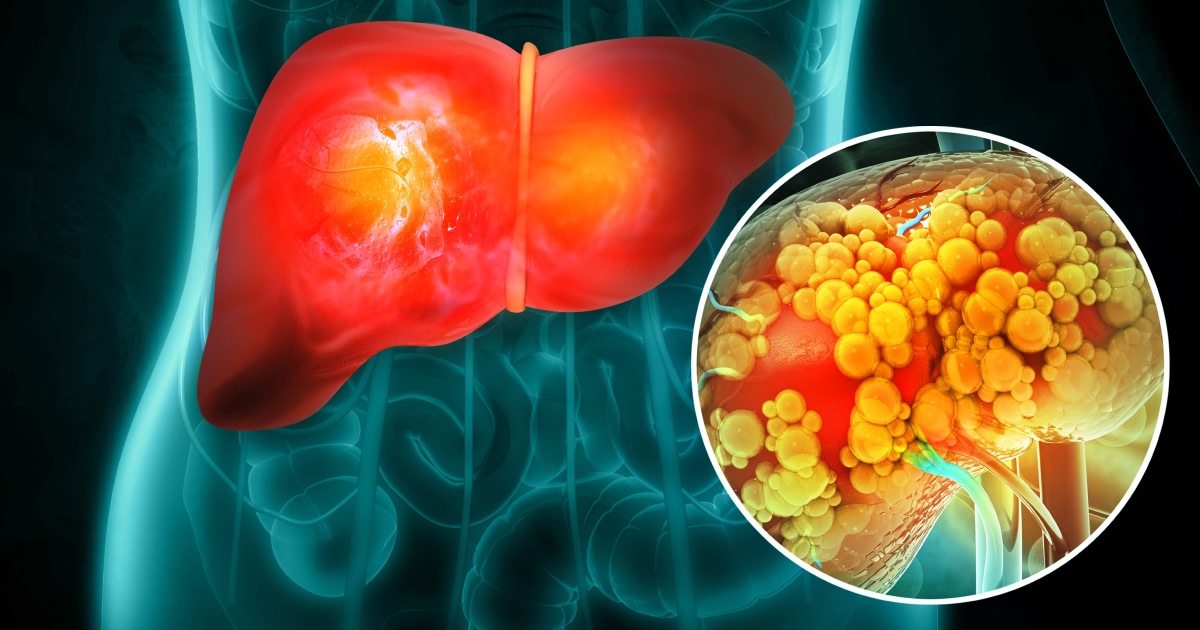
The differences became particularly apparent in the liver, where researchers found that diet composition influenced some metabolic improvements independently of weight loss. That’s especially relevant for people with metabolic dysfunction-associated steatotic liver disease (MASLD), a condition characterized by excess liver fat that affects an estimated 38% of adults worldwide.
The trial was led by Dr. Max Petersen, MD, PhD, alongside senior investigator Dr. Samuel Klein. Rather than simply asking which diet helped people lose weight, their research tackled a more interesting question: when the weight loss is held roughly equal, does what you eat still matter?
What the Keto Diet Actually Did to the Liver
All three groups lost about 10% of their body weight, but the ketogenic diet reduced liver fat by 67%, compared with 45% for both the Mediterranean and plant-forward diets. A 22-percentage-point gap in fat clearance from the liver, achieved at the same body weight, points to a mechanism the calorie deficit alone does not explain.
The ketogenic group also experienced a two- to threefold greater improvement in hepatic insulin sensitivity compared with the other groups. Insulin sensitivity in the liver – how well liver cells respond to insulin’s signal to stop producing glucose – is central to both fatty liver disease and type 2 diabetes. When that signal breaks down, the liver continues producing glucose after meals, driving blood sugar higher and encouraging more fat storage. The ketogenic diet addressed this at a level neither the Mediterranean nor the plant-forward diet matched.
Researchers provided all food directly to participants – prepared meals, snacks, and weekly dietitian check-ins. Most dietary trials rely on self-reported food intake, which introduces significant variability. Because the food itself was controlled here, the macronutrient differences between groups were real and sustained, not estimated.
How the Three Diets Compared in Composition
The ketogenic diet supplied just 4% of calories from carbohydrates and 73% from fat. The Mediterranean diet provided 50% of calories from carbohydrates and 35% from fat. The plant-forward diet provided 70% of calories from carbohydrates and 15% from fat. These were not subtle adjustments to the same baseline – they represented fundamentally different metabolic inputs.
Forty-two participants completed the study, with nine women and five men in each group and a mean age of 43 years. At baseline, average BMI was 38.9. After four to five months of controlled eating followed by three to four weeks of weight maintenance before final testing, metabolic differences between groups were measured directly.
The Prediabetes Finding
Approximately 50% of participants in the ketogenic group no longer met the criteria for prediabetes after the intervention, compared with 29% in the Mediterranean group and 7% in the plant-forward group. Prediabetes reversal in half the participants of one diet group, versus fewer than one in ten in another, represents a clinically consequential difference.
Prediabetes is the stage at which intervention carries the most potential. Once metabolic damage from type 2 diabetes becomes entrenched, reversal becomes substantially harder. Research has linked MASLD closely with type 2 diabetes, with each condition worsening the other. A diet that addresses both simultaneously – at equal levels of weight loss – offers a meaningfully different therapeutic option.
The ketogenic group also showed greater reductions in fasting blood glucose, fasting insulin levels, and glycated hemoglobin (HbA1c), which reflects average blood sugar over the preceding two to three months. These improvements were consistent across multiple independent measures of glucose metabolism.
The Cholesterol Surprise
Clinicians have long been cautious about recommending the ketogenic diet to patients with obesity because of concerns about saturated fat. The conventional assumption is that a diet deriving nearly three-quarters of its calories from fat should worsen blood cholesterol. The Washington University trial challenged that assumption directly.
Despite the ketogenic diet’s high saturated fat content, participants in that group did not experience increases in blood cholesterol compared to the other diet groups. Muscle insulin sensitivity – how well skeletal muscle responds to insulin – improved by roughly 50% in all three groups, a gain the researchers attributed to weight loss itself rather than diet composition. The liver, by contrast, responded differently depending on what participants ate.
For people or clinicians concerned about saturated fat, this finding does not fully resolve the question. The study ran for four to five months, and whether cholesterol profiles remain stable at one year or longer on a high-fat diet is still unknown. Within the trial window, however, the anticipated lipid consequences did not occur.
Who This Research Is For – and Who It Isn’t
Dr. Petersen was direct about the limits of the findings. The diet studied was extremely restrictive, capping carbohydrates at just 4% of total calories. Modest low-carbohydrate diets – the kind most people follow when they describe themselves as “doing keto” – may not produce the same liver-specific effects. The results speak to a very controlled, very strict intervention.
The study participants also shared a specific metabolic profile: obesity, prediabetes, and fatty liver disease simultaneously. Petersen told ScienceAlert: “We were very interested to see that several aspects of liver health improved most on the ketogenic diet. If just one aspect of liver health had improved, it wouldn’t have been as compelling.” The convergence of multiple liver markers all moving in the same direction strengthened the case – but it is a case built on a defined patient group, not the general population.
Rather than studying average adults who want to lose weight, the researchers focused on people with a cluster of overlapping metabolic problems for whom diet choice carries the highest stakes. For them, carbohydrate restriction appears to deliver meaningful liver benefits that calorie restriction alone doesn’t fully explain. You can read more about the mechanics of fatty liver disease and why early intervention matters at fatty liver disease causes and treatment.
The broader clinical context is also shifting. As Dr. Klein noted, the question of whether diet composition matters independently of weight loss has new relevance now that GLP-1 medications are widely prescribed for obesity. “Whether diet composition itself has benefits beyond weight loss alone is not known,” he said. With GLP-1 drugs helping large numbers of people lose significant weight, knowing whether the food eaten alongside that pharmacotherapy makes a difference becomes an increasingly practical question.
Read More: Diabetes Drug Could Help Repair Damage in Fatty Liver Disease
What to Do With This Information
The ketogenic diet is not suitable for everyone. Strict adherence to under 5% of calories from carbohydrates is demanding, and many people who attempt it do not sustain it long term. No serious adverse events occurred in this trial, which is reassuring, but the study duration was four to five months – not years.
What the trial establishes, with unusually rigorous methodology, is that among adults with obesity, prediabetes, and fatty liver disease, the ketogenic diet produced greater liver fat reduction, greater hepatic insulin sensitivity, and substantially higher rates of prediabetes reversal than either the Mediterranean or plant-forward diet at the same body weight lost. Those outcomes were consistent across multiple measures in a controlled feeding study where researchers confirmed what participants actually ate.
If you fall into this category, the practical conversation is with a physician or registered dietitian who can assess whether strict carbohydrate restriction is appropriate for your health profile, how to maintain adequate nutrition on a high-fat diet, and whether cholesterol should be monitored closely. As Dr. Petersen put it: “We now have very effective pharmacotherapy for achieving significant weight loss. But in addition, our study shows that the specific composition of the diet can give you added benefits.” For people whose liver is already under metabolic pressure, those added benefits may be worth discussing with a clinician.
Disclaimer: This information is not intended to be a substitute for professional medical advice, diagnosis, or treatment and is for information only. Always seek the advice of your physician or another qualified health provider with any questions about your medical condition and/or current medication. Do not disregard professional medical advice or delay seeking advice or treatment because of something you have read here.
AI Disclaimer: This article was created with the assistance of AI tools and reviewed by a human editor.