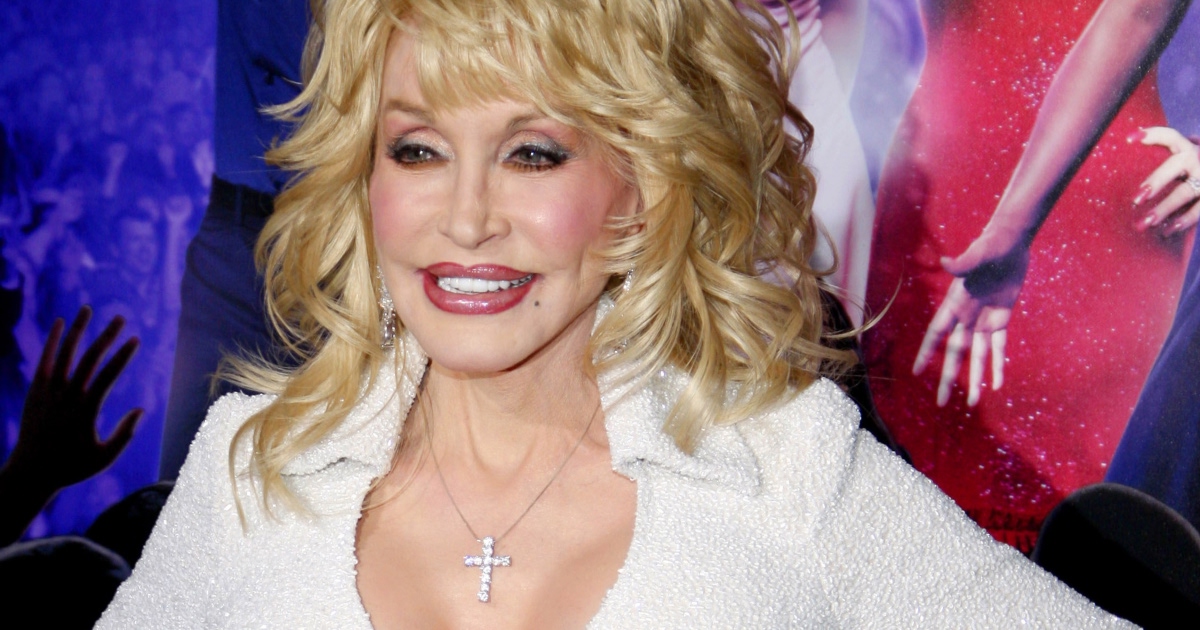

Two months before her death, Dolly Parton stepped out into the Tennessee heat wearing exactly what fans would have expected: rhinestones, fringe, and a pair of towering high heels.
It was June 24, and hundreds of people had gathered in Cornersville, Tennessee, for the grand opening of Dolly’s Tennessean Travel Stop. Parton surprised the crowd, cut the ceremonial ribbon with rhinestone-covered scissors, and joked about rival travel-stop chain Buc-ee’s.
“I couldn’t leave it to beavers,” she quipped.
There were signs that the 80-year-old superstar wasn’t quite moving like she once had. Those around her appeared attentive as she made her way through the event, and some who were there would later remember that she moved slowly. But there was little about the occasion that felt like a farewell.
She smiled. She joked. She worked the crowd. And, of course, she wore the heels.
At the time, fans knew Parton had been dealing with health problems that had already forced her to postpone major appearances. What they didn’t know was how little time she had left.
On August 25, just two months after that afternoon in Cornersville, Dolly Parton died at 80.
Looking back now, photographs and video from that June afternoon carry a very different weight. What seemed like another characteristically Dolly appearance would become the last time she ever greeted fans at a public event.
What the Crowd Remembered About That Day
The June event was a rare public outing for a superstar who had been staying largely out of view.
Parton showcased the humor that had always been synonymous with her, joking about competing chain Buc-ee’s, whose mascot is a beaver. “I couldn’t leave it to beavers,” she told the crowd. She talked up her business partnership with the newly remodeled truck stop and found her own way to mark the occasion at an I-65 rest stop.
People who later reviewed images and footage noticed the slower steps, the team members standing close beside her, and the careful attention from those around her.
They also noticed the heels.
Dolly Parton in towering stilettos had been one of the most familiar images of her entire career. Seeing her navigate the event carefully while still dressed in her signature style captured something essential about the image she had cultivated for decades.
None of that amounts to a medical observation. Nobody at the event was in a position to know how Parton was feeling or what was happening with her health. She was opening a truck stop, making jokes about beavers, and wearing rhinestones in the Tennessee heat.
The travel stop itself was designed to reflect her spirit, with chandeliers made partly from rhinestones that had fallen off her outfits, a laundromat for truckers named the Wishy-Washy after the Nashville location where Parton met Carl Dean, and lighting inspired by her top 10 songs.
Located about an hour south of Nashville off I-65, the stop was built to give travelers a place to eat, rest, and feel welcome on the road.
A Year of Health Challenges and Canceled Plans
Parton had spoken openly about the emotional toll of losing her husband Carl Dean, who died on March 3, 2025, after nearly 60 years of marriage. She described putting her own health on the back burner while tending to him and then struggling to find her footing afterward.
In late September 2025, Parton postponed her Las Vegas residency, citing “health challenges.” She had been scheduled to perform at The Colosseum at Caesars Palace for “Dolly: Live in Las Vegas” in December 2025, with the dates moved to September 2026.
Writing to fans, she said, “As many of you know, I have been dealing with some health challenges, and my doctors tell me that I must have a few procedures.”
She was candid about what was happening physically, at least in part. In a statement, she disclosed she had been dealing with recurring kidney stones for several years and that both her immune and digestive systems had gotten “all outta whack.” Her doctors, she said, were working on rebuilding and strengthening those systems.
She described feeling “a little ‘swimmy’ headed” from her treatments and said she couldn’t responsibly meet the demands of a live performance.
About 1 in 10 people will experience a kidney stone at some point in their lifetime. While many pass without lasting problems, kidney stones can sometimes lead to complications, including urinary obstruction and infection.
After losing her husband, Parton was also open about how grief had compounded everything.
At the opening of Dollywood’s 2026 season in March, Parton delivered a candid health update, telling fans she had been “worn down and worn out” while grieving.
“I just kind of got worn down and worn out, grieving over Carl and a lot of other little things going on,” she said. “I just got myself kind of where I needed to build myself back up spiritually, emotionally and physically. But all is good. It didn’t slow me down.”
Research has found that bereavement can be accompanied by measurable physiological changes, including changes involving inflammation and immune function, although the effects vary considerably between individuals.
In September 2025, Parton had also been unable to attend the announcement of Dollywood’s new NightFlight Expedition ride in person, sending her best wishes via video instead. Later, she missed the ride’s opening event after her doctor advised her to stay in Nashville because of continued health issues.
She had been expected to appear in person but joined the celebration virtually.
“I’m still in Nashville, and I’m sorry about that,” she told the crowd during a video appearance.
Read More: Dolly Parton Dies at 80: What She Revealed About Her Health Before Her Death
The Las Vegas Residency That Never Happened
By May 2026, it was clear the Las Vegas shows would not happen at all.
Parton announced she was canceling the planned residency, which had already been postponed once. She framed the news carefully, telling fans there was “good news and a little bad news” and that she was “responding really well to meds and treatments.”
The bad news, she acknowledged, was that she wasn’t yet physically ready to perform at the level she expected from herself.
“I don’t think God is through with me,” she had told fans the previous October. “And I ain’t done working.”
She had posted those words from backstage at the Grand Ole Opry, still showing up and still making her presence felt even as her public schedule contracted around her.
Read More: Dolly Parton’s Funeral Plans Are Far More Private Than You’d Expect
Her Death at 80
Parton died on August 25, 2026, at age 80. Subsequent reporting said she died following a “brief battle with cancer,” although the type of cancer was not publicly disclosed. Parton had not publicly announced a cancer diagnosis before her death.
Her sister Stella later shared another glimpse into Parton’s final days. According to Stella, Dolly told her that if there was no hope for her own recovery, she would still allow her medical team to try experimental treatments if what they learned might eventually help someone else.
Over the course of her career, Parton sold more than 100 million records, won 11 Grammy Awards, and became one of the most recognizable figures in American popular culture.
But her final public appearance didn’t happen on a massive concert stage.
One Last Appearance
The people gathered in Cornersville that June afternoon had no reason to believe they were watching Dolly Parton make her final public appearance.
There was no farewell speech. No grand retrospective. No indication that the ribbon cutting would eventually become part of the story of her final months.
Instead, there was Dolly.
She joked about beavers. She welcomed travelers to a truck stop carrying her name. She stood in the Tennessee heat in blue-and-pink fringe, cut a ribbon with rhinestone-covered scissors, and greeted the crowd in the unmistakable style she had spent decades making her own.
In retrospect, there were details people could interpret differently. Parton had already acknowledged significant health problems, and her public schedule had become increasingly limited. Those around her appeared careful as she moved through the event.
But hindsight can make ordinary moments look like signs.
Nobody in that crowd knew what Parton had not yet publicly revealed about her health, and photographs from a single afternoon cannot tell us what she was experiencing medically.
What they can preserve is the moment itself.
Two months later, Parton was gone, transforming that little ribbon-cutting ceremony off Interstate 65 into something nobody there could have anticipated.
Her final public appearance wasn’t at an awards show or during some carefully planned goodbye.
It was at a Tennessee travel stop, surrounded by fans, wearing rhinestones and high heels and making people laugh.
For Dolly Parton, perhaps there could hardly have been a more fitting way to leave the stage.
AI Disclaimer: This article was created with the assistance of AI tools and reviewed by a human editor.
Read More: Dolly Parton Didn’t Like Working Out, but She Loved ‘Rejoicing Exercises’