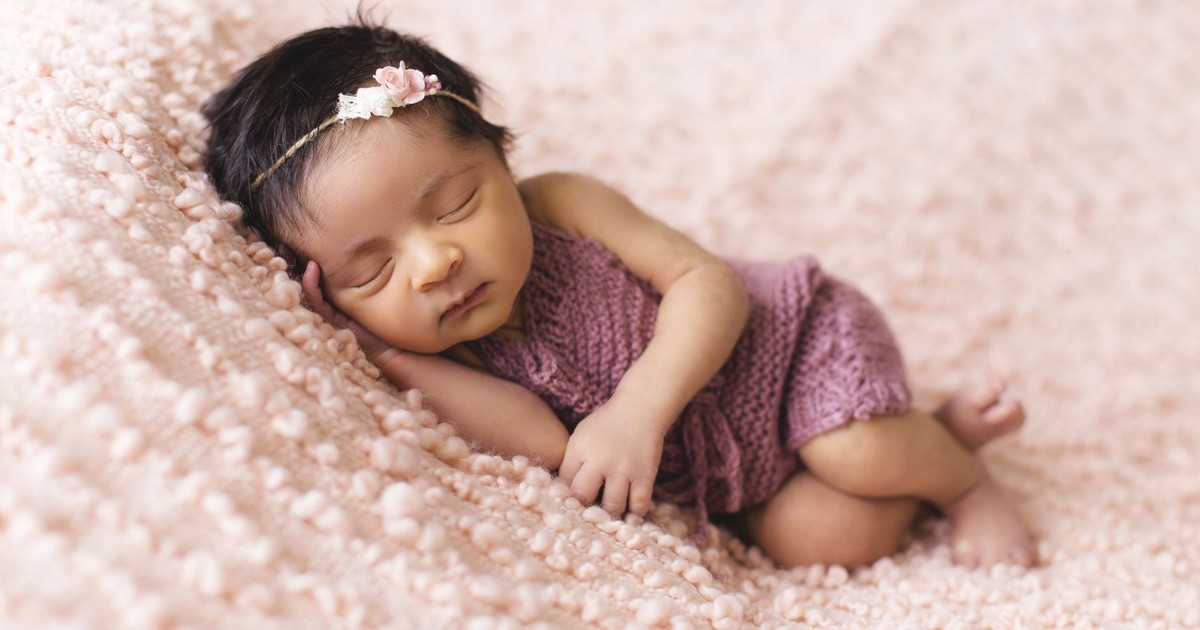

Some baby names seem permanently attached to the decade that made them famous.
Jennifer reached the top of the American baby name charts in 1972, when more than 63,000 newborn girls received the name. Brittany, Ashley, and Tiffany would eventually experience similar cycles, surging in popularity before becoming closely associated with particular generations.
Sophia has done something different.
It entered the American top 10 in 2006, reached No. 1 in 2011, and held the top spot for three consecutive years. More than a decade after its peak, it still hasn’t gone away. In 2025, Sophia remained one of the five most popular names for newborn girls in the United States.
That’s an unusually long run near the top of a baby-name chart, especially at a time when parents are choosing from a wider variety of names than they once did.
So why hasn’t Sophia started to sound dated?
Part of the answer may lie in the name itself. Sophia comes from the ancient Greek word for “wisdom,” a meaning that has survived for thousands of years. The name has crossed languages, cultures, religions, and generations while remaining remarkably recognizable.
And long before thousands of modern parents were choosing Sophia for their daughters, its meaning was important enough to help name one of the most famous buildings in the world.

A Name That Built Monuments
Long before it appeared on any Social Security Administration list, the concept of Sophia was considered significant enough to name one of the most ambitious buildings in human history. The Hagia Sophia in Istanbul, meaning “Holy Wisdom” or “Divine Wisdom” in Greek, was built as an Eastern Orthodox church between 532 and 537 CE under the Byzantine emperor Justinian I. For nearly a thousand years it was the largest cathedral in the world, until the completion of Seville Cathedral in the early sixteenth century. Few names can claim to have had a cathedral dedicated to their meaning for fifteen centuries.
The name also carried real historical weight as a personal name across European royalty and aristocracy, appearing among German, Russian, and British royal families across multiple centuries. That kind of sustained association across elite circles tends to keep names from feeling disposable – it is harder to relegate a name to a single generation when it has been recycled across dozens of them.
The Data Behind the Staying Power
Claims about Sophia’s worldwide rarity have occasionally circulated online. The actual data points firmly in the other direction. The SSA’s official 2026 release confirmed that Sophia ranked fifth among US girls’ names in 2025. The full SSA database allows users to track name popularity going back to 1880.
Sophia reached its peak rank of No. 1 in 2011 and held that position through 2013, according to Social Security Administration data compiled by MomLovesBest. Even as naming culture has fragmented considerably – with today’s top names accounting for a far smaller share of total births than the dominant names of mid-century – Sophia has held the top five.
A name that peaked in 2011–2013 and remains inside the top five is settling into the same permanent tier that Elizabeth and Katherine occupy. Sophia has been given to newborn girls every year across nearly 150 years of American naming history, through wars, recessions, naming revolutions, and the rise and fall of hundreds of competitor names.
In 2025, two of the top-ten spots were held by different spellings of the same underlying name. The SSA counts each spelling variation separately, meaning Sophia and Sofia are ranked independently based on the exact spelling filed on the Social Security card. Nameberry data shows Sophia ranked No. 1 in Germany and No. 5 in the US and Austria. In 2025, roughly one in every 190 girls born in the US was named Sofia – the alternative spelling alone. Parents choosing Sophia are choosing the same name as parents in Berlin and Vienna.
Why Sophia Travels So Well
Sophia’s roots in the ancient Greek noun sophía predate the borders of modern nations. Because the name never belonged to any single language community, it was absorbed into Latin, Italian, German, Spanish, Russian, and Arabic-influenced naming traditions, each culture adapting it slightly without losing the core. The result is a set of variants – including Sofia, Sophie, Sofie, Sofiya, and Zsófia – that all remain recognizably the same name across dozens of linguistic contexts.
Mixed-heritage families choosing a name that works across countries and languages find Sophia requires almost no adaptation. A child named Sophia can move between cultures without the name becoming unrecognizable or difficult to pronounce. According to MomLovesBest, Sophia is easy to spell and easy to say in most languages, and ends in the soft “a” sound that has dominated American girls’ names since the 2000s.
The contemporary naming environment favors shorter names, “-a” endings for girls, classic revivals for boys, and a steadily flattening distribution in which no single name dominates the way names did mid-century. Sophia sits at the intersection of every one of those trends. It ends in an open vowel and contains the soft consonants S and a liquid final “a” that give it a melodic, unhurried feel. Linguistic research indicates that soft consonants like L, M, N, and S, paired with open vowel sounds, are generally considered more pleasant to hear – a pattern that helps explain why certain names persist across generations while sharper-sounding names cycle in and out more quickly.
The Age-Proof Name
Sophia has almost no age ceiling. It works on a toddler, a teenager, a college student, and a sixty-year-old. The formal version is professional enough for any context. The diminutive Sophie carries warmth without being infantilizing. Sofia adds a cosmopolitan quality.
Sophia has not dated its bearers the way Jennifer or Brittany dated theirs. A 2015 survey of 49 countries, reported by MercoPress, found that Sophia or its variants topped the naming charts in nine of them, a level of global penetration no genuinely rare name could achieve.
Read More: How to Protect Your Baby from Positional Asphyxia in the Car Seat
The Numbers Are Not Going Away
Some viral content claims that Sophia is rare, that only a handful of girls receive the name each year, making it an unusual choice. According to the Social Security Administration, Sophia entered the US top ten in 2006 and held rank 1 for three consecutive years from 2011 to 2013. It ranked fifth in 2025. Sophia’s popularity extends far beyond the US. Live Science reported in 2015 that Sophia, Sofia, or a local variation was the most popular girls’ name in nine of 49 countries examined.
Why Sophia Hasn’t Gone Away
Sophia isn’t rare. In fact, the numbers show almost the opposite.
But its staying power may be more interesting than its popularity.
The name has ancient Greek roots, has appeared across centuries of European history, works in numerous languages, and carries a meaning that hasn’t needed much reinterpretation: wisdom.
It has also managed something relatively few modern baby names do. Sophia reached the very top of the American charts without becoming trapped there in time.
More than a decade after its No. 1 run ended, parents are still choosing it often enough to keep it among the country’s most popular girls’ names. Variations such as Sofia and Sophie extend its reach even further around the world.
Eventually, Sophia will almost certainly fall further down the rankings. Baby-name trends always change.
But after thousands of years of use and nearly two decades near the top of the modern American charts, it seems unlikely that Sophia is going anywhere.
And that may be the real reason the name has endured: Sophia can be popular without feeling like it belongs to only one generation.
AI Disclaimer: This article was created with the assistance of AI tools and reviewed by a human editor.
Read More: The Heartwarming Video of a Baby with Down Syndrome has Taken the Internet by Storm