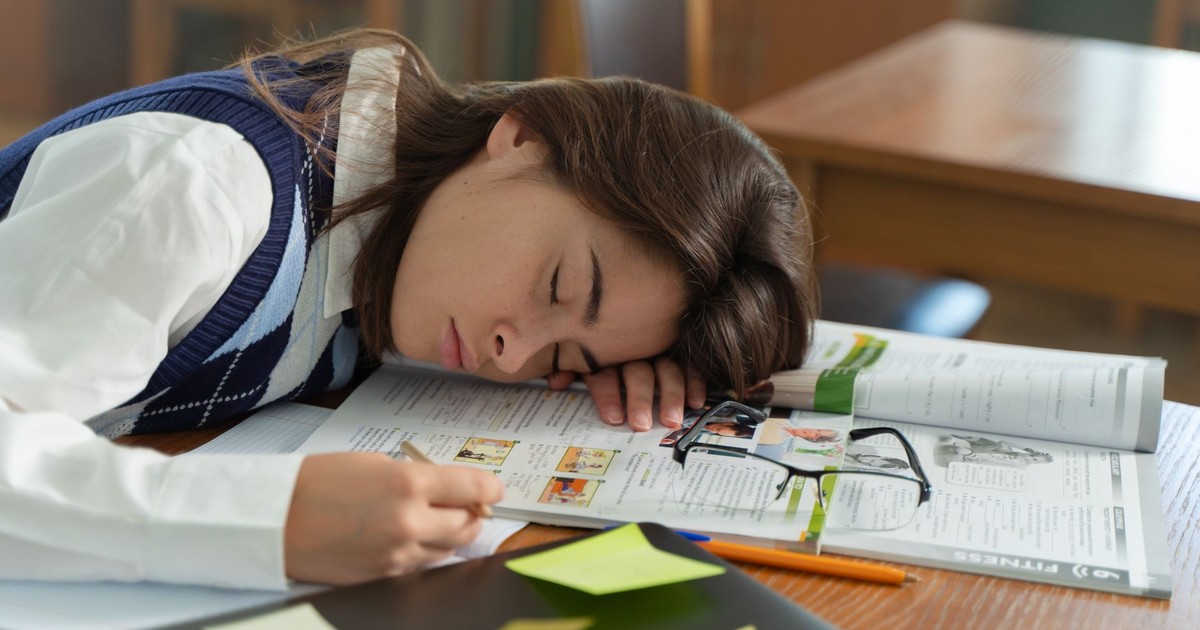

Offering a college student $5 a night just to sleep seven hours sounds like an experiment designed to fail. A 2026 randomized field trial at the University of Pittsburgh tested exactly that premise – and found it worked. Students who received nightly payments slept on average 19 more minutes per school night and earned measurably higher grades, with the effects traceable through official university transcripts.
The study enrolled more than 1,100 undergraduates, all equipped with Fitbit trackers to measure sleep objectively rather than relying on self-report. Before any intervention, the average student slept 6.6 hours a night. Participants were randomly assigned to receive personalized bedtime reminders, morning feedback, and small cash rewards of about $5 per night for meeting a seven-hour sleep goal, verified through the Fitbit trackers. The control group received the reminders and feedback only – no money. The gap in outcomes between the two groups was significant, precise, and directly traceable to sleep alone.
The study was led by Osea Giuntella, an Associate Professor of Economics at the University of Pittsburgh, alongside co-authors Silvia Saccardo of Carnegie Mellon University and Sally Sadoff of UC San Diego. Published in the Journal of Political Economy, it provides the first causal evidence that improving sleep can directly boost academic performance. Previous research had found a link between sleep and grades but could not determine whether better sleep was actually the cause. By randomly assigning students to the incentive group, the researchers could rule out confounding factors that affect observational studies.
The Sleep Crisis on Campus
Among adolescents and young adults, roughly two-thirds routinely fall short of getting seven hours of sleep a night – the minimum recommended by health authorities. The Pittsburgh cohort reflected that reality precisely.
Only 43% of participants met the recommended minimum of seven hours on weeknights, and more than 85% failed to get seven hours on at least one school night each week. Bedtimes were similarly late: about half of students went to bed after 1 a.m. on average, and one in four went to bed after 2 a.m.
The self-perception gap compounded the problem. Two-thirds of students reported usually getting seven hours, while tracker data showed only about one-third actually hit that threshold on even three nights out of five. Nearly all – 94% – said their ideal sleep was longer than what they were actually getting. The willingness was there. The follow-through was not.
This pattern extends well beyond campus. About 30% of American adults sleep less than seven hours per night, according to CDC data. The disparity across demographic groups signals that sleep deprivation is shaped by structural conditions including work schedules, economic stress, and housing stability – not simply lifestyle preference.
What the Money Actually Bought
The GPA gains from the sleep incentive were modest in absolute terms but large relative to what comparable interventions typically achieve. Students in the incentive group improved their average course performance by 0.075 – 0.089 grade points during the intervention semester, with effects persisting into the following semester.
The intervention increased the share of nights with seven or more hours of sleep by 26%, amounting to about 19 additional minutes of weeknight sleep. Students weren’t sleeping an extra two hours – they were closing the laptop roughly 19 minutes earlier, and the academic return on that marginal change was visible in their official university transcripts.
“Our results show that helping students sleep more – and sleep better – can boost academic performance just as effectively as traditional academic interventions, but at a fraction of the cost,” Giuntella said, per the University of Pittsburgh announcement.
The Timing Problem
When the reward was delivered mattered substantially. Paying students the money as a lump sum at the end of the semester produced meaningfully smaller sleep improvements than immediate, nightly payment did. Students who knew they would receive their payment the next morning were more responsive than those who faced a semester-long wait for the same total amount. This aligns with behavioral economics research showing that delayed rewards are heavily discounted in decision-making.
Bedtime reminders and morning feedback alone – without the financial reward – produced only marginal sleep gains. Wearable verification also prevented gaming the system and provided accurate data for the research team, which was necessary precisely because students had poor insight into their own sleep patterns.
Freshmen Show the Strongest Gains
The effects were not uniformly distributed across the student body. First-year students responded most strongly to the intervention. Their routines are least entrenched, their schedules most chaotic, and their exposure to the structural conditions of campus life – late assignment deadlines, social pressure, novel freedom – most acute.
A sleep intervention deployed specifically during the first semester of freshman year may yield disproportionate returns compared to the same program offered to upperclassmen with more established habits.
Persistence and Fade-Out
Some of the change in sleep habits persisted for up to a month after the end of the incentive, suggesting the payments helped students form habits that partially outlasted the financial prompt. Students who had received nightly payments were still sleeping about eight minutes longer per night for the three to four weeks following the study period.
The GPA effects, however, did fade. Grades remained elevated in the following semester, but two semesters after the intervention, the academic benefit was no longer detectable. A four-week financial incentive is not a permanent solution to a structural problem – it can initiate a behavioral shift, but the environment students return to works against sustaining it over time.
The study demonstrates that sleep can be increased through well-timed behavioral nudges and that the GPA gains are real and immediate. It does not demonstrate that a one-time, short-term incentive permanently alters student trajectories.
The Broader Health Stakes
Sleeping fewer than seven hours per night is associated with increased risk for obesity, diabetes, high blood pressure, coronary heart disease, stroke, frequent mental distress, and all-cause mortality, according to Cleveland Clinic health data.
A study published in the journal Sleep added another dimension: sleep regularity was a stronger predictor of all-cause mortality than sleep duration alone. College students who stay up until 2 a.m. on some nights and midnight on others are not just accumulating a sleep deficit – they are exposing themselves to the compounding risks of circadian disruption (disruption to the body’s internal 24-hour clock) even on nights when total sleep hours are adequate.
A 2019 study in Nature Human Behaviour found that insufficient sleep reduces prosocial behaviors including voter participation, charitable giving, and civic engagement – effects that extend the consequences of campus sleep deprivation beyond the individual and into the functioning of communities.
For readers concerned about their own sleep health, a related pattern has been documented around nighttime drink habits and their effect on sleep quality – a variable that is far more within individual control than university scheduling policies.
Read More: Just Minutes More Sleep and Exercise Linked to Lower Heart Risk
Institutional Implications
The Pittsburgh study raises a pointed question for university administrators: why is sleep not treated as an academic resource? Universities invest heavily in tutoring centers, mental health services, and advising programs. Few structure their operational decisions – assignment deadlines, class scheduling, exam timing – around the evidence that inadequate sleep directly impairs the academic function those programs are designed to support.
“What excites me most is that these are relatively simple interventions that could be adapted and tested in many different settings,” Giuntella said. “Not only universities, but potentially schools and workplaces as well.” The intervention’s low cost relative to its academic return makes it a candidate for wider adoption – but only if institutions are willing to treat sleep as a legitimate lever for student performance rather than a personal lifestyle variable outside their purview.
Late-evening assignment deadlines and 8 a.m. lectures are structural features of campus life that universities actively control. Changing either requires administrative will, not new funding. Pushing final submission deadlines earlier in the evening or scheduling demanding courses later in the morning could shift sleep behavior at scale without requiring any financial incentive at all.
Key Takeaways
The University of Pittsburgh’s 2026 randomized trial found that a nightly cash incentive of roughly $5 increased adequate sleep nights by 26% and produced GPA gains of 0.075 – 0.089 grade points within a single semester. The benefits were largest among first-year students, habit changes lasted up to one month after the incentives ended, and immediate nightly rewards outperformed delayed lump-sum payments in their effect on sleep behavior.
The academic case for sleep is now causally established, not merely correlational. The Pittsburgh intervention produced measurable academic gains for about $5 a night. The actionable figure for individual students is 19 minutes – the amount of earlier sleep onset that produced those gains. That is the difference between closing the laptop at 11:41 p.m. versus midnight.
Disclaimer: This information is not intended to be a substitute for professional medical advice, diagnosis, or treatment and is for information only. Always seek the advice of your physician or another qualified health provider with any questions about your medical condition and/or current medication. Do not disregard professional medical advice or delay seeking advice or treatment because of something you have read here.
AI Disclaimer: This article was created with the assistance of AI tools and reviewed by a human editor.
Read More: A Child’s Brain Develops Faster With Exposure to Music Education