
A common pantry staple sold across six states has been recalled after testing found something that shouldn’t be in cinnamon at all: elevated levels of lead.
On September 24, 2026, Galil Importing Corp. announced a voluntary recall of Lior Cinnamon Ground Seasoning after a sample collected by the Maryland Department of Health tested positive for elevated lead levels. The affected 90-gram containers had been distributed to stores in New York, New Jersey, Pennsylvania, Texas, Florida, and Illinois between November 2025 and September 2026.
According to the FDA recall announcement, no illnesses have been reported. But lead exposure can be difficult to recognize because it often causes no immediate symptoms, and repeated exposure can be particularly harmful to young children.
The recall is also the latest in a broader series of concerns surrounding lead contamination in ground cinnamon, which has prompted increased federal and state testing since the massive WanaBana applesauce recall in 2023.
Is Your Jar Part of the Cinnamon Lead Recall?
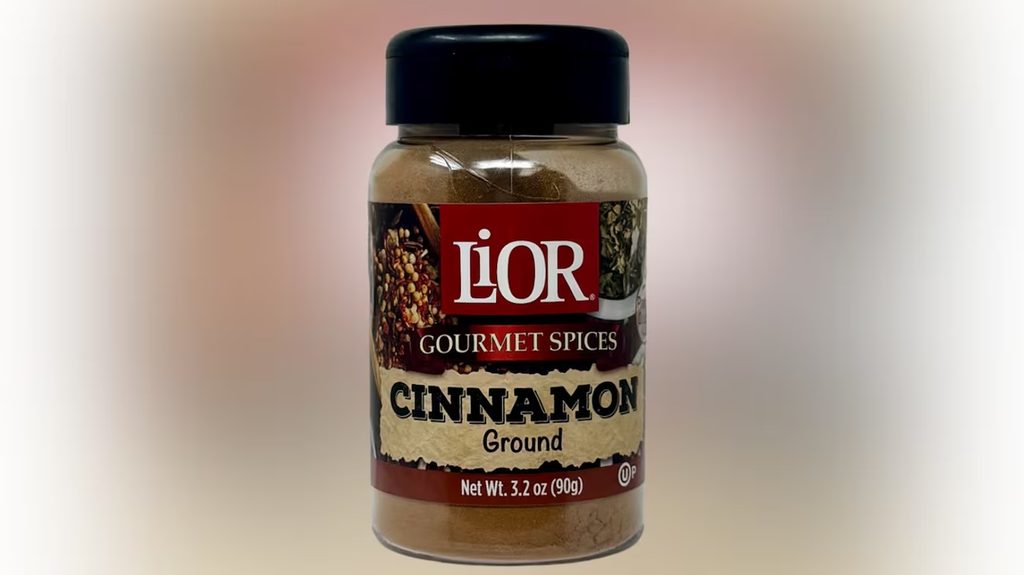
The affected product is Lior Cinnamon Ground Seasoning, packaged in 90 g transparent plastic containers, carrying UPC 794711005484. The lot code GAP11304 can be found on the side of the container under the ingredient line. The brand name alone is not sufficient to determine whether you have the recalled product – only the specific UPC and lot code confirm it.
The product was distributed to retail stores, grocery stores, delis, and supermarkets in New York, New Jersey, Pennsylvania, Texas, Florida, and Illinois between November 18, 2025, and September 7, 2026. If you purchased Lior ground cinnamon in any of those states during that period, check the container immediately.
If the UPC and lot code match, the FDA’s guidance is unambiguous. Consumers should not use the recalled cinnamon and should throw it away or return it for a refund. Consumers with questions can contact Galil Importing Corp directly at 1-516-496-7400, Monday through Friday, 9 a.m. to 5 p.m. Eastern Time.
What Lead in Cinnamon Actually Does to the Body
Prolonged exposure to lead – across weeks to months – is what drives the FDA’s concern. Repeated consumption by young children, whose nervous systems are still developing, carries the greatest risk of permanent damage to the central nervous system, which can result in learning disorders, developmental defects, and other long-term health problems. Children under six are at heightened risk because their bodies are rapidly developing and more susceptible to absorbing lead when exposed.
Most people have no obvious immediate symptoms of lead exposure. Blood lead level testing is the only reliable way to detect exposure, which is why the FDA recommends contacting a healthcare provider if you suspect someone has consumed the recalled product over an extended period. Do not wait for symptoms to decide whether to act.
How Lead Gets Into Ground Cinnamon
Cinnamon comes from the dried bark of cinnamon trees. Lead contamination can occur when trees are cultivated in lead-contaminated soil, or through adulteration during processing – where lead compounds are added to alter a product’s appearance or weight. The recall of Lior cinnamon involves a supplier investigation that is still underway, so the precise source of contamination in this case has not been publicly identified.
The WanaBana cinnamon applesauce recall in October 2023 set off a wave of federal testing. One sample of cinnamon used as an ingredient in the recalled WanaBana apple cinnamon fruit puree contained lead levels more than 2,000 times higher than proposed safety limits.
The FDA Has Been Watching Cinnamon Since 2024
On March 6, 2024, the FDA issued a public health alert advising consumers not to buy or eat certain ground cinnamon products because samples were found to contain elevated levels of lead. That initial alert covered six brands, most sold at discount retailers like Dollar Tree and Family Dollar. The agency’s testing program was part of its follow-up to the WanaBana outbreak.
State testing programs have driven much of the subsequent discovery – laboratories in Maryland, New York, Missouri, and elsewhere have continuously sampled retail products, and the Lior recall is a direct result of that ongoing surveillance.
Ground cinnamon has a long shelf life, and a jar purchased during the distribution window may still be in a pantry months later. A jar used repeatedly over many months, added in small amounts to foods eaten by young children, is precisely the repeated, low-level exposure scenario the FDA’s warning is designed to address.
Read More: Avoid Excess Cinnamon If You’re Taking These Medications
What to Do Right Now
If you have Lior ground cinnamon in your pantry, check the label. The recalled product carries UPC 794711005484 and lot code GAP11304, found on the side of the container beneath the ingredient line. Consumers should not use the affected cinnamon and should either discard it or return it for a refund.
No illnesses have been reported in connection with the recall, but that’s not necessarily reassuring when it comes to lead. Exposure can occur without obvious symptoms, particularly when small amounts are consumed repeatedly over time. Anyone concerned about possible exposure can speak with a healthcare professional about whether blood lead testing is appropriate, especially when a young child may have regularly consumed the recalled product.
The bigger story extends beyond a single jar or brand. Since the WanaBana investigation drew attention to lead-contaminated cinnamon in 2023, regulators have repeatedly identified elevated lead levels in other ground cinnamon products. This latest recall is another reminder that contamination can be invisible, odorless, and impossible for consumers to detect on their own, making testing and food-safety surveillance particularly important.
Disclaimer: The author is not a licensed medical professional. The information provided is for general informational and educational purposes only and is based on research from publicly available, reputable sources. It is not intended to constitute, and should not be relied upon as, medical advice, diagnosis, or treatment. Always consult a licensed physician or other qualified healthcare provider regarding any medical condition, symptoms, or medications. Do not disregard, avoid, or delay seeking professional medical advice or treatment because of information contained herein.
AI Disclaimer: This article was created with the assistance of AI tools and reviewed by a human editor.
Read More: Can Honey and Cinnamon Really Heal? Science vs. Hype