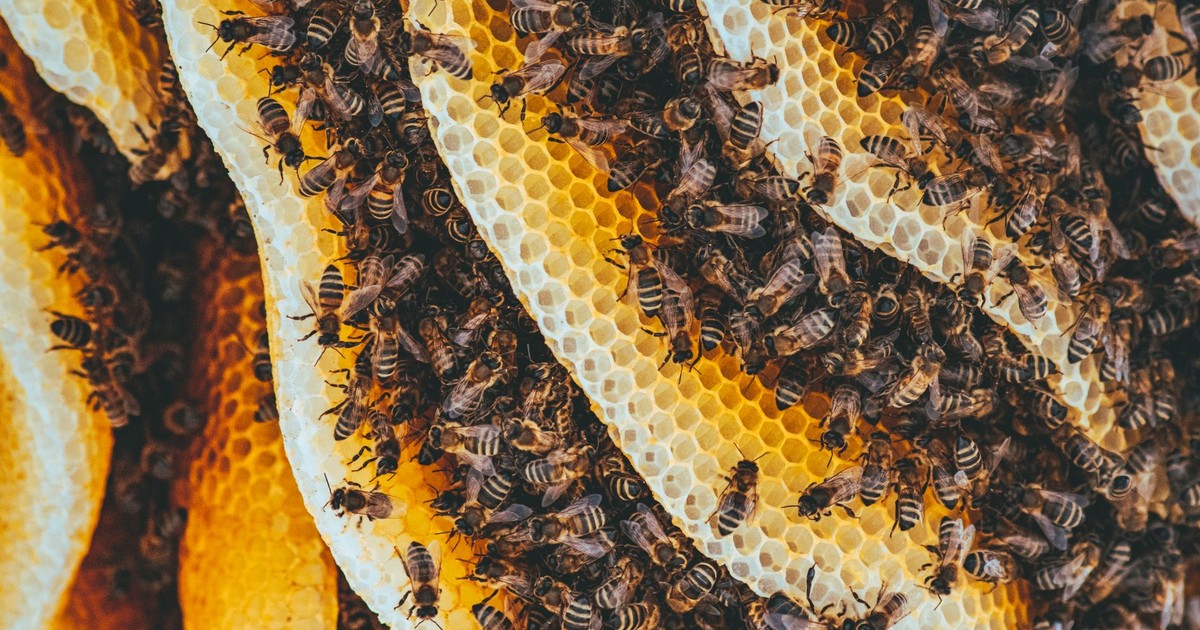

More than half a billion bees were reported dead across four Brazilian states during a devastating three-month period between late 2018 and early 2019. Investigations at the time pointed toward pesticide exposure, including the insecticide fipronil, as an important contributor.
Seven years later, researchers are still finding the chemical in Brazilian apiaries.
A 2026 study published in Environmental Science and Pollution Research detected fipronil in honey collected from conventional apiaries in Paraná, Brazil. Researchers then tested the insecticide separately under laboratory conditions and found that exposure significantly reduced the survival of Africanized honeybees.
The findings don’t mean Brazil is experiencing another die-off on the scale reported in 2019. Nor do they establish that fipronil was responsible for every bee lost during the earlier event. What they do show is that an insecticide known to be highly toxic to bees is still making its way into some Brazilian hives.
More Than 500 Million Bees Were Reported Dead
Between December 2018 and February 2019, beekeepers reported finding more than 500 million dead bees across the Brazilian states of Rio Grande do Sul, Santa Catarina, São Paulo and Mato Grosso do Sul.
An investigation by Agência Pública and Repórter Brasil, subsequently reported by Mongabay, linked many of the deaths to pesticide exposure. Laboratory analyses implicated pesticides containing fipronil and neonicotinoids.
The 500 million figure should be understood for what it was: a tally based on reported losses from beekeepers rather than a controlled national survey. It also couldn’t account for wild bees, which aren’t monitored like managed colonies.
Still, the scale of the reported losses drew international attention to the potential effects of agricultural pesticides on Brazil’s pollinators.
Fipronil was one of the chemicals at the center of that concern.
What Is Fipronil?
Fipronil is a broad-spectrum insecticide used to control insect pests in agriculture and other settings. It works by interfering with the insect nervous system.
That makes it useful against agricultural pests, but it can also affect non-target insects such as bees when they’re exposed.
Concern about those effects isn’t new. Fipronil has been studied for years for its potential effects on pollinators, and Brazil’s environmental regulator is currently reassessing agricultural uses of the chemical.
In February 2026, Brazil’s environmental agency, Ibama, reported that the first phase of its environmental risk assessment identified indications of risk to bees and other pollinating insects for most agricultural uses assessed. The regulatory review is continuing.
That context makes the findings from a new study in Paraná particularly relevant.
Researchers Found Fipronil in Honey
For the 2026 study published in Environmental Science and Pollution Research, researchers collected honey from conventional and agroecological apiaries in Paraná and analyzed the samples for fipronil.
Honey from four conventional apiaries contained fipronil at concentrations above the maximum residue limit cited by the researchers, while the samples from agroecological apiaries had no detectable contamination.
That’s an important finding, but the study was relatively limited in scope. It doesn’t establish that honey from conventional farms throughout Brazil contains fipronil, nor does the absence of detectable fipronil in the agroecological samples prove that all honey produced using those practices will be free of pesticide residues.
Instead, the samples show that bees in at least some agricultural areas of Paraná encounter fipronil in their environment and bring traces of that exposure back to their hives.
The Researchers Also Tested What Fipronil Does to Bees
Finding a chemical in honey establishes exposure. It doesn’t, by itself, establish what that exposure does to the bees.
So the researchers conducted a separate series of laboratory experiments.
Africanized honeybees were exposed to fipronil through ingestion, direct topical exposure and indirect contact. Ingestion was the most toxic route tested, and prolonged exposure significantly reduced bee survival.
Under some experimental conditions, mortality approached 100% after 120 hours. The researchers did not, however, find significant effects on several other measures they examined, including locomotion, flight resumption and acetylcholinesterase activity.
Those experiments demonstrate that fipronil can be highly toxic to these bees under controlled conditions.
They do not show that the honey samples collected in Paraná caused widespread colony deaths in the field. The field residue testing and laboratory toxicity experiments answer related but different questions.
The 2019 Die-Off and the 2026 Study Aren’t the Same Event
That distinction matters.
The enormous losses reported in 2018 and 2019 were based on beekeeper reports across several Brazilian states. Investigations implicated pesticide exposure, including fipronil and neonicotinoids, in many of the deaths.
The 2026 research isn’t documenting another half-billion dead bees.
Instead, it provides newer evidence that fipronil exposure remains relevant to Brazilian beekeeping. Researchers found the insecticide in honey from several conventional apiaries and demonstrated separately that it can substantially reduce honeybee survival under laboratory conditions.
Other research suggests pesticide residues in Brazilian bees and hive products aren’t limited to this one study. A recent systematic review examining 434 samples across 15 Brazilian studies found that more than one-third contained at least one pesticide residue.
Together, those findings point to an ongoing exposure issue without requiring the conclusion that Brazil is currently experiencing another mass die-off.
Why Losing Bees Matters Beyond Honey
Honey is one of the most visible products bees give us, but pollination is far more important to food production.
Animal pollination contributes to the production of many fruits, vegetables, nuts, seeds and other crops. The authors of the 2026 study note estimates suggesting pollination contributes to roughly 35% of global food production, although crops vary enormously in how dependent they are on animal pollinators.
That last distinction is important. Not every crop disappears without bees, and some crops are only partially dependent on insect pollination. But declines in pollinators can reduce yields or quality for many crops and can have broader consequences for ecosystems.
Brazil is particularly important in this conversation because it is both an agricultural powerhouse and home to an enormous diversity of native pollinators.
And managed honeybees represent only part of the picture.
Native Bees May Respond Differently
Brazil is home to hundreds of native bee species, including stingless bees that may not respond to pesticides in exactly the same way as the Africanized honeybees commonly kept by beekeepers.
That means toxicity measurements from Apis mellifera can’t automatically be assumed to represent every pollinator species.
It also makes monitoring more difficult. Managed colonies can produce obvious records when thousands or millions of bees suddenly die. Wild pollinators don’t come with beekeepers counting losses outside their hives.
This is one reason researchers continue studying how individual pesticides and combinations of agricultural chemicals affect different pollinator species.
Read More: Bees Absolutely Love Cannabis and It Could Help Restore Their Populations
What About the Honey?
Finding pesticide residue in honey understandably raises another question: Is the honey dangerous for people to eat?
The 2026 study wasn’t designed to answer that question.
Its laboratory experiments examined toxicity to bees, not humans. The fact that a concentration can harm an insect cannot simply be translated into an equivalent human-health risk.
The honey findings are therefore most useful as evidence of environmental exposure. Bees forage across the surrounding landscape, collecting nectar and pollen before returning to their colonies. Detecting fipronil in hive products provides researchers with one way of seeing what those bees are encountering outside the hive.
The study’s agroecological samples are interesting for the same reason. None had detectable fipronil, whereas contamination was found in several conventional apiaries. But with a limited number of sampling sites, the finding should be investigated more broadly before drawing conclusions about honey produced under either farming system.
Seven Years Later, the Concern Hasn’t Disappeared
The story that began with reports of more than half a billion dead bees in Brazil didn’t end in 2019.
The new Paraná research doesn’t prove another mass die-off is underway, and it doesn’t establish fipronil as the sole explanation for Brazil’s previous bee losses. What it provides is something narrower, but still important: evidence that fipronil is continuing to reach some Brazilian apiaries and that the chemical can be highly toxic to honeybees under controlled conditions.
Brazilian regulators are also still examining the issue. Ibama’s ongoing reassessment has identified indications of risks to pollinators for many agricultural uses of fipronil, with further evaluation underway.
For researchers, beekeepers and regulators, the question now isn’t whether fipronil can harm bees. There is substantial evidence that it can.
The harder question is how often bees are encountering it in real agricultural landscapes, what those exposures mean for managed and wild pollinators, and which measures can reduce those risks without overstating what individual studies have shown.
AI Disclaimer: This article was created with the assistance of AI tools and reviewed by a human editor.
Read More: Bees Can Fly Higher Than Mount Everest