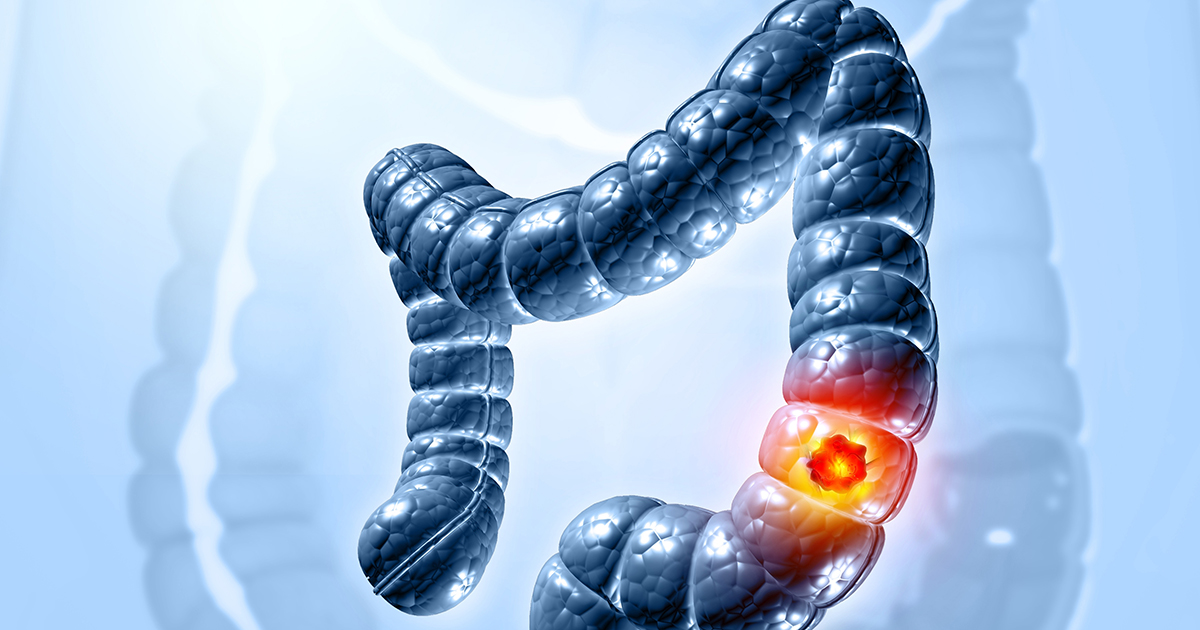

Colorectal cancer is the second leading cause of cancer death in the world. Doctors fight it with chemo, radiation, and drugs built to kill tumor cells. But cancer cells often learn to resist these drugs. A 2024 review in Frontiers in Cell and Developmental Biology found that resistance is behind about 90% of chemo failures. Now a team in South Korea is trying a new idea. What if, instead of killing cancer cells, you could turn them back into normal cells?
The team is led by Professor Kwang-Hyun Cho at KAIST, a science and tech university in South Korea. They studied the moment when normal cells start to turn into cancer cells. In that moment, they found a hidden “switch” in the cell’s genes. Flipping it can turn colon cancer cells back toward normal cells. The method does not add foreign molecules or rewrite DNA.
The team found that just before a tumor forms, cells pass through an unstable stage. During this stage, normal cells and cancer cells live side by side. The team built a computer model to find what pushes cells one way or the other. Then they tested in the lab whether flipping that switch could undo the change. The results were published in January 2025 in the journal Advanced Science. These are early lab results. They have not been tested in patients.
Why does this research target colorectal cancer?
Colorectal cancer is the third most common cancer in the world. It is also the second leading cause of cancer death. In 2024, there were an estimated 2 million new cases and 918,000 deaths. Those numbers are going up. A study led by American Cancer Society researchers looked at 50 countries and territories. Colorectal cancer in younger adults is rising in 27 of them. In 14 countries, including the United States, rates are rising in young adults while staying flat in people 50 and older.
Treatment usually means surgery when possible, chemo when the cancer has spread, and targeted drugs for certain gene changes. The problem is that cancer cells adapt. Resistance causes about 90% of chemo failures. It also causes more than 50% of failures with targeted drugs and immune therapy. Cancer cells resist in many ways. They can change the tissue around them, change the spot a drug attacks, or rewire how their genes work. Each time doctors attack a tumor, the cells that survive are harder to kill. The KAIST approach tries to avoid this problem.
How Normal Cells Become Cancer Cells, and Why the Change Matters
The KAIST team caught cells right before they become cancer for good. To see why that helps, it’s useful to know how cancer grows.
Cancer doesn’t switch on overnight. Research published in 2025 shows that colon cancer builds up through gene mutations one after another, in genes called APC, KRAS/NRAS, PIK3CA, BRAF, and TP53. Each one pushes the cell further toward growing out of control. The cell also stops listening to normal signals and hides from the immune system. Some changes are in the DNA itself. Others are “epigenetic,” which means they change how genes are turned on or off without changing the DNA. Epigenetic changes can be undone. That is a big part of why the KAIST team’s idea can work.
The team found that cells pass through an unstable “in-between” stage just before they turn into cancer. In this stage, normal cells and cancer cells exist together. The team used computer tools to study this stage and look for a switch that could reverse the process. The key point is timing. There is a short window before the cancer locks in. If scientists can see what the genes are doing in that window, they may be able to step in.
Building the REVERT Framework
Read More: Is Cancer Reversible? New Treatment May Transform Cancer Cells into Healthy Ones
Finding a short, unstable stage in living tissue is hard. The team had to watch single cells as they changed. They also had to build a computer model of the genes that control those cells. Then they had to test which changes could flip the switch back.
To do this, they used a method called single-cell RNA sequencing. It measures gene activity in each cell one by one, instead of averaging across a whole tissue sample. That makes rare cells easy to spot, like the ones that are not fully normal and not fully cancer.
The team called their computer model REVERT (REVERse Transition). They used it on gene data from tiny lab-grown tumors and normal tissue taken from colon cancer patients. The model ran virtual tests to find which “transcription factors” to target. Transcription factors are proteins that turn genes on or off. Targeting the ones that control the change to cancer is more precise than just trying to stop growth.
The model pointed to two transcription factors, MYC and YY1, as key players. These two are hard to target with drugs. So the team looked at what they control and found USP7, a more practical target. USP7 is an enzyme. It helps keep many proteins stable, including ones involved in cell growth and survival. Cancer researchers already knew it played a role in colon cancer. What’s new is the idea that it works as a switch that can reverse cancer.
USP7: The Switch That Tells Cancer Cells to Stand Down
The Advanced Science study names USP7 as a good target for turning colon cancer cells back. Here is the idea. MYC and YY1 push cells toward cancer during the in-between stage. USP7 sits below both of them. So blocking USP7 should weaken the cancer state and let normal cell programs take over again.
The team tested this with a drug compound called P22077, which blocks USP7. In lab-grown colon cancer tumors, the tumors grew much more slowly. The cells also showed changes that looked more like normal cells.
In tiny tumors grown from patient tissue, blocking USP7 cut tumor growth by a lot. It also brought back some features of normal colon tissue. The treated tumors started to look less like cancer and more like a healthy colon lining. Lab tests on cells and studies in animals confirmed that the cancer cells moved back toward a normal state.
This is different from how cancer drugs are usually tested. The goal was not to count how many cells died. It was to see whether the cells that lived had changed back toward normal. The team confirmed this by controlling USP7, a gene shared by the transcription factors they found.
Why Lab-Grown Mini Tumors Change What These Results Mean
Older studies on reversing cancer often used cells grown flat on plastic dishes. That setup is very different from how cancer acts in the body. The KAIST-led team went beyond that. Still, the team stressed that this is early research in cells and lab-grown tissue. It must be tested in people before it can be used to treat patients.
The team used “organoids.” These are tiny 3D models of organs grown from a patient’s own tissue. They keep much of the makeup of the real tumor. The team grew matched pairs from each patient: one from the tumor and one from nearby healthy colon tissue. Gene data from these pairs showed the unstable stage where normal and cancer cells live together.
Because the pairs came from the same patient, the team could compare which genes were active in each. They could see what needed to change and check that blocking USP7 moved cells the right way. A team at Seoul National University worked on the study and provided the organoids from colon cancer patients.
This study adds to other research on USP7 as a drug target. A study published in Stem Cell Reports in 2023 found that removing USP7 in cancer cells and organoids blocked a growth signal called WNT. This happened only in cells with a faulty APC gene. That suggested USP7 may be a target that hits tumors more than healthy cells. The KAIST study goes a step further. It suggests USP7 can change what kind of cell a cancer cell is, not just slow its signals.
What This Could Mean for Cancer Research
Most cancer treatments try to wipe out every cancer cell. The team says this is the root problem, because the cells that survive can become resistant. Doctors have dealt with this for decades. Treatments that kill cancer cells also leave behind the toughest ones. Those cells are harder to kill the next time. This happens in almost every type of cancer.
The KAIST approach could break that cycle. If a cancer cell is changed back instead of killed, there are no tough survivors left to grow resistant. The team says this approach could also cause fewer side effects and lower the chance the cancer comes back.
This study looked at colon cancer, but the same idea could apply to other cancers. REVERT is a general computer method. The team used it on colon cancer because there was plenty of single-cell gene data for it. The same method could map the in-between stage in other cancers with similar data. USP7 may not be the switch in other cancers, since each cancer has its own gene drivers. But the method for finding the switch could carry over.
Professor Cho said: “We have discovered a molecular switch that can revert the fate of cancer cells back to a normal state by capturing the moment of critical transition right before normal cells are changed into an irreversible cancerous state.” The study was published in Advanced Science on January 22, 2025. The National Research Foundation of Korea funded it.
What Researchers Still Need to Show
There is a lot this research has not shown yet. The team itself said the work is at an early stage in cells and organoids. It must be tested in people before it can treat patients. There are several gaps between these lab results and a treatment.
Organoids are better than flat cell cultures, but they are not full human tumors. They have no blood vessels, no immune cells, and none of the tissue that surrounds a real tumor. Those things shape how tumors grow and respond to drugs. KAIST said animal studies were part of its testing. But results in animals don’t always hold up in humans. Many cancer treatments that worked in mice failed in human trials.
There is also a safety question. USP7 is not found only in cancer cells. It does jobs in healthy cells too. Any drug that blocks USP7 would need to work on tumors without harming healthy cells. The 2023 Stem Cell Reports paper also pointed to another study with the opposite finding. That study found USP7 actually holds back the WNT growth signal by keeping a protein called AXIN stable. That raised doubts about using USP7 blockers for colon cancer patients with a faulty APC gene. These mixed results show the science is not settled. Any USP7 drug will need careful testing for both wanted and unwanted effects.
Scientists have found a switch that can reverse the change from normal cell to cancer cell, at least in the lab. In colon cancer cells, it brought back normal cell features. That may one day lead to treatments that reverse cancer. For now, it is a new direction for research, not a treatment.
Key Takeaways
Here is what the KAIST study adds. First, it shows that the change from normal cell to cancer cell is not always a one-way door, at least while it is happening. There is a short, unstable window when it can be stopped and reversed. Second, the REVERT tool gives scientists a way to find that window and the switches inside it, using real patient tissue. Third, USP7 has now been tested in organoids grown from patients. That moves the idea from a computer prediction to a lab result.
For people with colon cancer or at higher risk, there is no new treatment from this yet. What it offers is a new way to think about cancer care that doesn’t rely only on killing cells. Colon cancer in younger adults is rising in countries like the United States. Current treatments are still limited by resistance and side effects. Turning cancer cells back instead of destroying them could open new options. But there is still a long road from a lab organoid to a treatment doctors can offer.
Disclaimer: This information is not intended to be a substitute for professional medical advice, diagnosis, or treatment and is for information only. Always seek the advice of your physician or another qualified health provider with any questions about your medical condition and/or current medication. Do not disregard professional medical advice or delay seeking advice or treatment because of something you have read here.
AI Disclaimer: This article was created with the assistance of AI tools and reviewed by a human editor.