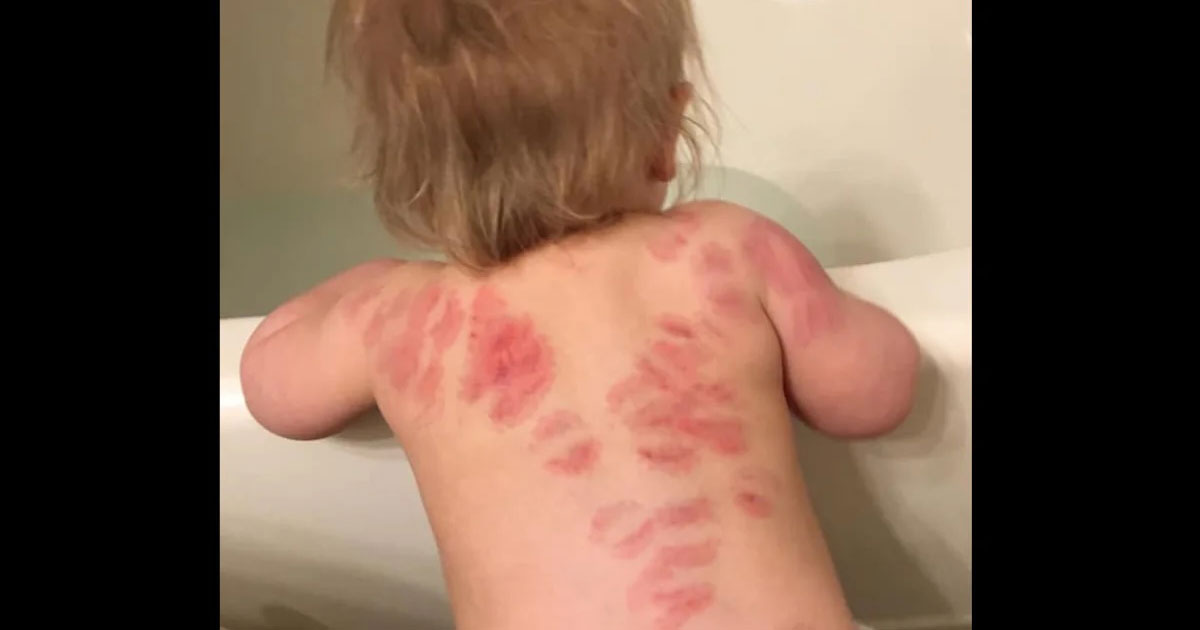

Alice Martin picked up her 15-month-old daughter, Rosalyn, from a Tucson, Arizona, daycare on February 26, 2019. The little girl was fussier than usual. At bath time, Martin found out why. Bite marks covered her back, arms and shoulders.
Martin said Rosalyn was bitten more than 25 times by another child at Creative Beginnings Preschool. She said no one at the daycare told her about it. Rosalyn had been going there for only five days, according to FOX 10 Phoenix.
“I was taking off her onesie after dinner to give her a bath, they were just there. It was horrible,” Martin told KVOA.
Tucson police took a report that same day and said the bites looked like they came from another child. A woman at the daycare called the claims unsubstantiated. Martin shared her story on Facebook, where it was shared more than 10,000 times.
How common is biting at daycare?
Read More: Pinworms In Children. What They Are And Why They Cause Nighttime Itching
Very common. Between a third and a half of toddlers in daycare are bitten by another child, according to the American Psychological Association. Toddlers bite more than babies or preschoolers do, a Canadian Paediatric Society statement in Paediatrics & Child Health notes.
Biting is a normal phase for kids under 3. Toddlers bite when they are teething, frustrated, tired or want attention. They do not yet have the words to say how they feel. Biting peaks between 13 and 24 months. At 15 months, Rosalyn was right in that window.
Still, 25 bites is far from normal. Martin asked a simple question: how could a child be bitten that many times without an adult stepping in?
What do daycares have to tell parents?
In Arizona, licensed childcare centers must tell parents right away about any accident or injury. A written report has to follow within 24 hours, under Arizona Department of Health Services (ADHS) rules. Martin said she got neither a call nor a report.
State rules also say staff must watch the children and respond when a child is upset. Childcare workers in Arizona are also mandatory reporters under state law (ARS 13-3620). That means they must report any suspected abuse or neglect.
Programs accredited by the National Association for the Education of Young Children (NAEYC) have their own rules. They must report injuries or lapses in supervision within 72 hours. Good centers write up every bite and tell both families.
When is a bite a medical concern?
Most toddler bites do not break the skin. With simple care, the chance of infection is very low, the Canadian Paediatric Society says. Bites that break the skin carry more risk.
If your child comes home with bite marks:
- Wash the area with soap and water.
- Watch for redness, swelling or warmth over the next day or two.
- Call your child’s doctor if the skin is broken. The doctor can check whether treatment is needed.
What should you ask a daycare before you enroll?
Ask to see the center’s biting policy in writing. It should say how staff step in, how bites are written up and when parents get a call. If there is no policy, that is a red flag.
Ask how many staff members work in the toddler room. Then look up the center’s record. In Arizona, ADHS has a public database of licensed providers and their inspection history. Most states have one.
Biting usually fades by about age 3 as kids learn to talk and handle their feelings. No toddler room can promise it will never happen. What you can expect is that staff step in fast and tell you the same day.
Editor’s note: This story was first reported in 2019. After its investigation, the Arizona Department of Health Services said the biting complaint “lacked sufficient evidence to be substantiated,” KVOA reported. The agency did cite Creative Beginnings five other times, mostly for having too few or unqualified staff. Records showed those problems were later fixed. Martin said she had contacted a lawyer.
Disclaimer: The author is not a licensed medical professional. The information provided is for general informational and educational purposes only and is based on research from publicly available, reputable sources. It is not intended to constitute, and should not be relied upon as, medical advice, diagnosis, or treatment. Always consult a licensed physician or other qualified healthcare provider regarding any medical condition, symptoms, or medications. Do not disregard, avoid, or delay seeking professional medical advice or treatment because of information contained herein.
AI Disclaimer: This article was created with the assistance of AI tools and reviewed by a human editor.