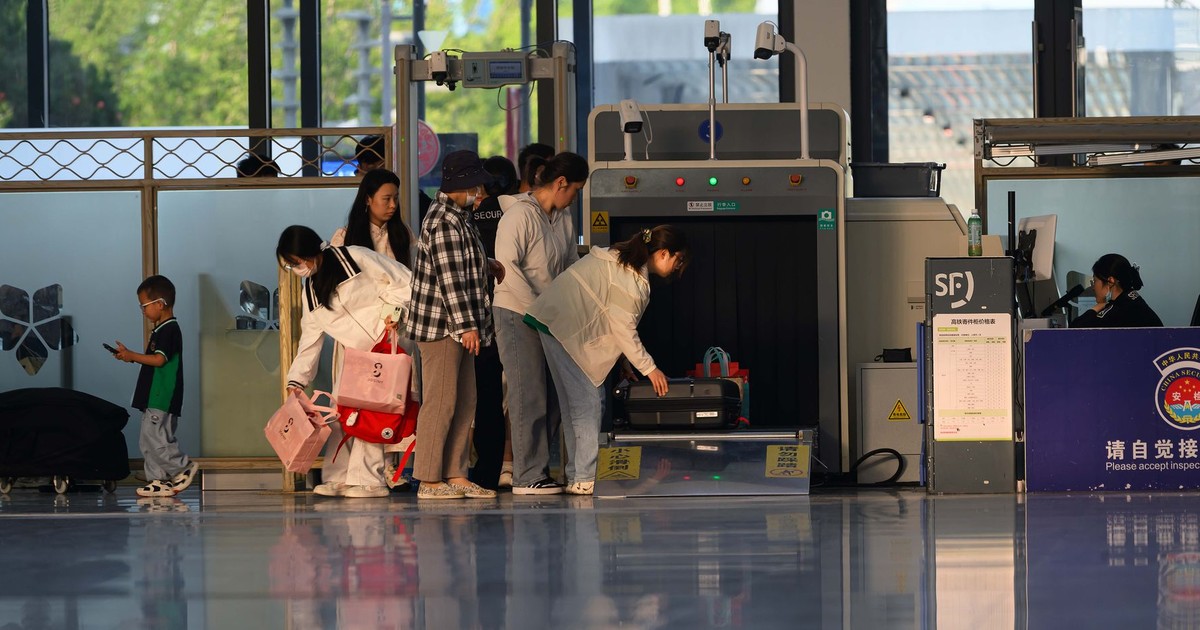

A pillowcase doesn’t usually move on its own. That’s the detail that stopped TSA Officer Benjamin Andrade-Carillo. He was doing a routine checked-bag inspection at Ontario International Airport in Southern California. He had picked it up expecting fabric. What he felt instead made him put the bag down and reach for his radio.
The discovery at Ontario International came to light publicly in November 2026. It was unusual even by TSA standards. Andrade-Carillo had spent two years screening bags. He had seen odd finds before, including a passenger at a San Diego airport who tried to bring live lobsters through as carry-on luggage. Two live snakes hidden inside a checked bag was something else. During a routine screening, the X-ray first looked like rope. It turned out to be two live snakes concealed inside a pillowcase.
The moment of realization landed hard. Andrade-Carillo later described it directly: “When I realized the item in my hand was alive, I told myself, ‘I need to escalate this immediately.'” He called in Supervisory TSA Officer Suggey Flores. The situation moved quickly from there.
What did the X-ray miss?
According to CBS Los Angeles, X-ray images showed what appeared to be rope. It turned out to be two live snakes hidden in a pillowcase. Organic material coiled inside soft fabric can be hard for automated screening to identify clearly. This bag needed a physical inspection.
When Flores arrived, she felt the pillowcase tense up. Then it started moving. As CBS Los Angeles noted, Flores said, “I have held snakes before, so I wasn’t too spooked.” She added she was “more impressed, because it’s not something you see every day.” Flores then told ONT TSA Manager Francisco “Frank” Calderon. He confirmed that live snakes were inside the bag.
Why did the species matter?
After the discovery, TSA’s published account says screening in the immediate area was paused because of safety concerns. Airport police were notified, as was the passenger’s airline. The key concern in those first minutes was simple. Nobody knew what kind of snakes they were dealing with.
Flores put it plainly. “Safety was a concern because we didn’t know what kind of snakes they were,” she said. “They could have been venomous.” According to the University of California’s Integrated Pest Management Program, the rattlesnake is California’s only native venomous snake. Nine species are found in various parts of the state.
NBC Los Angeles later reported that officials determined one of the snakes was a rattlesnake. That finding matches TSA’s own published account of the incident. TSA also identifies one of the snakes as a rattlesnake. Officer Flores’s comments made clear the officers did not know the species at the time.
Read More: Flying in 2025? Be Prepared for These Key TSA Rule Changes
How was the situation resolved?
Airport police took possession of the bag and brought it to the airline ticketing area. The passenger removed the snakes. He handed them to a family member who was not traveling. TSA rescreened the checked bag and cleared it for travel. The passenger was allowed to fly without the snakes.
According to CBS Los Angeles, which cited the Los Angeles TSA Coordination Center, the passenger said the snakes were pets. He said he had traveled with them before on another airline. He appears to have believed that packing his pets in a pillowcase was a reasonable travel plan. A previous trip may have gone unchallenged. According to TSA’s account, no one was injured. Overall screening was not disrupted.
What is checked-bag screening really like?
TSA officers handle an enormous number of bags every day. They make fast judgments about a wide range of objects. Many of those objects don’t fit the usual list of banned items. Most checked bags pass through automated screening. They never need a physical search. When a bag does get a manual inspection, what an officer finds can be a surprise.
Andrade-Carillo put that reality in plain terms. “In my two years of service, I had not found anything like this,” he said. He cited the lobster incident as a comparison. The lobsters, at least, were in a carry-on. His message to travelers was direct: “We ask the traveling public to be mindful of what they bring in their bags, because if we don’t know what it is, we will find out.”
What should you do before you fly with a pet?
TSA advises travelers to contact their airline before they arrive at the airport. Ask about the carrier’s rules for traveling with pets, including reptiles. That’s the official guidance, and it applies in a literal way. TSA’s job is security screening, not pet travel planning. Whether a snake, a lizard, or any other reptile can legally fly depends on a few things. Those include the airline’s pet policy, the destination’s import rules, and, in some cases, the species itself.
Before you book a ticket, contact the airline directly. Confirm that it allows pets on board. For reptiles specifically, most major U.S. airlines do not allow snakes in the cabin or as checked baggage. Some carriers may accept them through cargo divisions with the right paperwork. A bag that cleared one airline’s check-in desk may be a different matter at another airline.
The clearest lesson from Ontario International is simple. Contact your airline before you arrive at the airport with any animal, reptile or otherwise. A phone call takes five minutes. The passenger in this story had to leave his pets behind.
Disclaimer: The author is not a licensed medical professional. The information provided is for general informational and educational purposes only and is based on research from publicly available, reputable sources. It is not intended to constitute, and should not be relied upon as, medical advice, diagnosis, or treatment. Always consult a licensed physician or other qualified healthcare provider regarding any medical condition, symptoms, or medications. Do not disregard, avoid, or delay seeking professional medical advice or treatment because of information contained herein.
AI Disclaimer: This article was created with the assistance of AI tools and reviewed by a human editor.