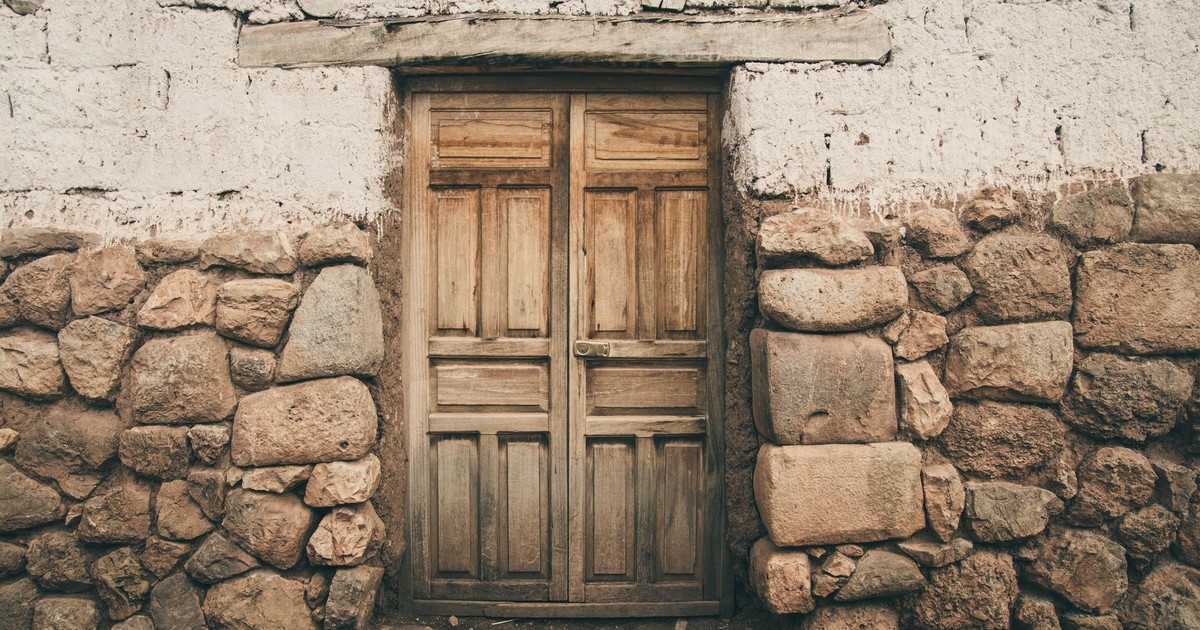

An elderly woman in Colți, a small village in southeastern Romania, found a heavy reddish stone along a stream bank and took it home. For decades, it sat propped against a door. The region around Colți had long been known for amber, and odd-looking stones were common enough in the river sediment. She had no reason to treat it as anything special. The chunk wedged against her door weighed 3.5 kilograms, or 7.7 pounds. Its value, it would later turn out, has been reported at around €1 million.
According to Science Alert, it ranks as the largest piece of rumanite ever found. It is also one of the biggest intact amber nuggets discovered anywhere in the world. The woman passed away in 1991, roughly two years after Romania’s communist dictatorship collapsed in 1989. She never learned what she had been living with.
After her death, a relative inherited the home and took a closer look at the curious doorstop. Its deep reddish-brown color and density suggested it was more than a river pebble. The relative’s hunch proved correct. He sold the piece to the Romanian state, which classed it as a national treasure. The nugget has been housed at the Buzău County Museum since 2022. Director Daniel Costache confirmed the story to the Spanish newspaper El País. He described its scientific significance as extraordinary.
What is rumanite, exactly?
Most people know the pale golden amber used in jewelry. That kind is found in abundance along the Baltic coast. Rumanite is the amber found in Romania. It is a distinct variety prized for its deep, reddish hues. Those dark tones, ranging from red through brown to near-black, set it apart immediately from the lighter Baltic material.
Geologist Oscar Helm gave the variety its distinct name. He drew it from Romania’s Buzău River sandstone deposits, where the material is concentrated. People have collected Romanian amber along the Buzău River in southeastern Romania for over a century. Colți is the only place in Romania where amber was ever commercially extracted. The mines closed in 1948. The village is home to Romania’s only amber museum, which opened on June 14, 1980.
Amber is fossilized tree resin. It has special scientific value because tiny organisms can be trapped inside it. Those include insects, spiders, spores, and pollen, which are otherwise rarely preserved in the fossil record. They can be captured in three dimensions and almost undamaged in the hardened resin. Romanian amber deposits are known to contain fossil remains of arachnids, beetles, flies, crustaceans, and even animal hair. It is an ancient biological record locked inside semi-precious stone.
Read More: What Americans Really Don’t Want to Inherit From Dead Relatives
How old is the nugget, and who authenticated it?
After the Romanian state acquired the nugget, it handed the specimen to specialists at the Museum of History in Kraków, Poland. Researchers there confirmed the amber was genuine. They dated it to between 38.5 and 70 million years old. At the lower end of that estimate, the stone would predate the mass extinction that ended the age of non-avian dinosaurs 66 million years ago.
Reporting on the find has put the amber’s estimated value at about €1 million. That figure reflects both its unusual size and its rarity as the largest piece of rumanite ever recorded. It should be read as a sign of rarity and historical significance, not a fixed market price. Amber of this nature is not commonly sold. There is no standard appraisal method for a specimen without precedent.
On August 28, 2024, the World Records Academy formally recognized the nugget as the “World’s Largest Rumanite Amber Nugget.” Costache told reporters the piece’s value was essentially incalculable. He said it was a find of significance both to science and to Romania’s cultural heritage.
What is the amber history of this village?
Colți sits in Buzău County, in the foothills of the Carpathian Mountains. Its sandstone layers along the Buzău River have been yielding amber for generations. The nearby Strâmba mine was once a major source of amber before the communist regime shuttered it, citing poor profitability. When the mine closed, formal extraction ended. But the stone kept turning up in riverbeds, fields, and stream banks, as it had for centuries.
The Colți Amber Museum still holds remarkable pieces, including amber weighing over 1.5 kilograms and an earring with a piece of amber preserving an ant. For the residents of Colți, amber has always been part of ordinary life. People wear it as jewelry, find it in their gardens, and pick it up from streams. The woman whose doorstop turned out to be a national treasure was doing nothing unusual by keeping a reddish stone she’d found by the water.
Thieves once targeted the residence and took gold jewelry. They completely ignored the heavy stone resting by the entryway. The nugget sat in plain sight, in a home, by a door, for decades. Everyone who passed it left it unremarked upon.
Why are large amber nuggets so rare?
Finding amber requires the right conditions. There must have been ancient forests and tree species that produced resin in quantity. There must also have been sediment layers that preserved organic material over millions of years rather than breaking it down. Finding a large, intact piece is rarer still. Most amber is recovered in small fragments, worn smooth and broken by time and water. A nugget weighing 3.5 kilograms, still largely intact, needed a massive original resin flow. Burial conditions had to be ideal. The stone’s path through erosion also had to be gentle enough to leave it whole.
Inclusions in amber can preserve organisms’ organs, tissues, and cells in high detail. Researchers describe these as exceptionally preserved fossils. The Buzău specimens have already yielded significant biological data. That is why the Romanian state moved to acquire and protect the nugget rather than let it circulate privately.
What is the gap between perceived and actual value?
The woman in Colți didn’t misidentify her doorstop out of ignorance. She lived in a region where amber was common. The stone had no obvious monetary context in her daily life, and she had no reason to seek an expert opinion. The relative who inherited the home looked more carefully and asked questions she never had occasion to ask. She herself never learned the stone’s value.
Owners of inherited objects can often arrange a consultation with a gemologist or a natural history museum at low cost. That includes stones, minerals, old jewelry, or pieces picked up from land a family has worked for generations. Romania’s most valuable piece of rumanite amber was authenticated by the Museum of History in Kraków at the state’s request. Many institutions offer identification services or can direct people to specialists.
Editor’s note: The headline describes an elderly woman who used a $1 million amber nugget as a doorstop. She died in 1991 and never learned what the stone was worth. A relative later sold it to the Romanian state. The €1 million figure comes from reporting on the find, not a formal sale price, and the nugget is now held by the Buzău County Museum.
Disclaimer: The author is not a licensed medical professional. The information provided is for general informational and educational purposes only and is based on research from publicly available, reputable sources. It is not intended to constitute, and should not be relied upon as, medical advice, diagnosis, or treatment. Always consult a licensed physician or other qualified healthcare provider regarding any medical condition, symptoms, or medications. Do not disregard, avoid, or delay seeking professional medical advice or treatment because of information contained herein.
AI Disclaimer: This article was created with the assistance of AI tools and reviewed by a human editor.