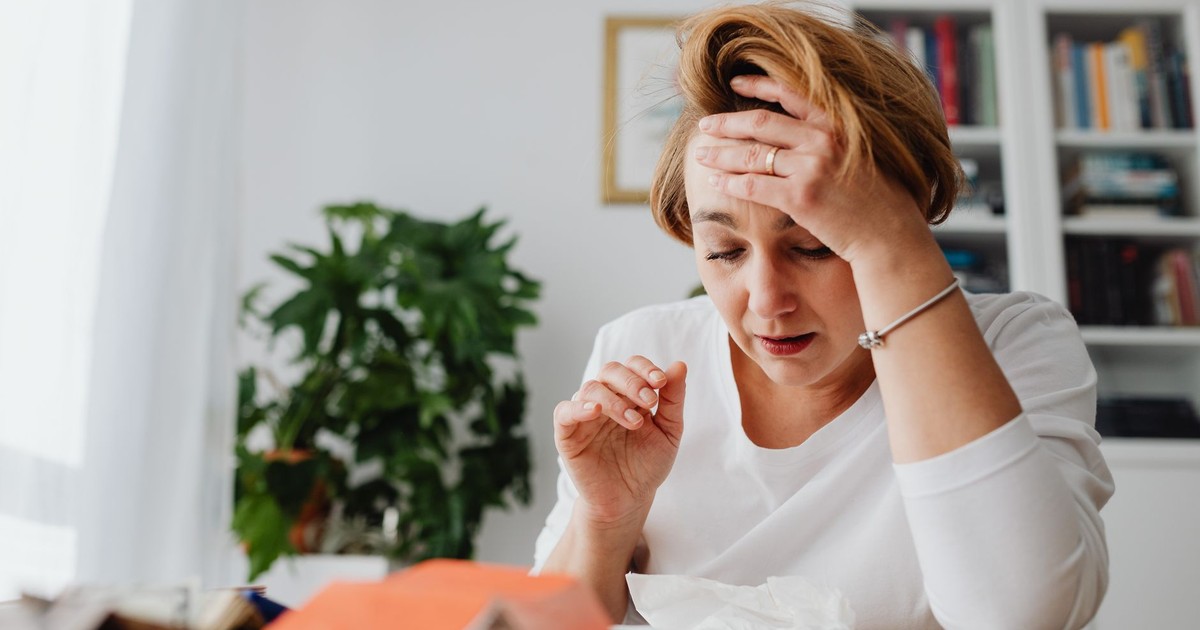

One morning, Melani Sanders, 45, brushed her teeth, pulled on a sports bra from her teenage years, and drove straight to Whole Foods in a mild panic. The bra had no support. Her socks did not match. She had run out of ashwagandha, a supplement she uses for stress and mood, and she needed more. By the time she reached the parking lot, something shifted. She pulled out her phone, hit record, and started talking into the camera. She was tired. She did not care what she looked like. And she had a hunch that someone else out there might feel exactly the same way.
She was right. Within weeks, millions of women had seen the video. Within three months, the We Do Not Care Club had grown to more than 4 million members across Instagram, TikTok, and Facebook. The movement now has a handbook and a sold-out nine-city tour. And it all started in a parking lot.
Melani opens every “meeting,” her to-camera Reels posted as @justbeingmelani, with the same line: “We do not care anymore because, well, we are tired.” From there she reads daily announcements submitted by members. We do not care if our snoring keeps you awake, we didn’t hear a thing. We do not care if we have a few stray hairs on our lip or chin, we can’t see them yet, and neither can you. The tone is deadpan. The content is deeply, specifically real. And for a huge number of women, it is the first time they have felt seen in this stage of life.
What symptoms were they never warned about?
According to a 2025 CDC data brief, nearly one in two women ages 40 to 60 reported menopausal symptoms in the past 12 months. And yet, as Melani noted in an interview with Woman’s World, the conversation around what those symptoms actually feel like has been almost nonexistent. “What has surprised me most is that nobody was talking about it,” she said.
Hot flashes and night sweats are the most commonly reported. Clinicians call these vasomotor symptoms. They affect about 60% to 80% of women during the transition, according to the University of Utah Health. Thinking changes are also common and underreported. A 2026 study published in Nature found that cognitive symptoms, including memory changes and attention difficulties, were significantly elevated in perimenopausal and postmenopausal participants.
Mood changes are another largely unspoken piece of the picture. About 40% of women experience mood symptoms similar to PMS during perimenopause, according to Harvard Health. Mood swings and anxiety affect over 70% of women across the perimenopausal transition, according to Dr. Mary Claire Haver. Sleep is another casualty. Melani has spoken candidly about her own insomnia: “If I’m sleeping, do not wake me up, because once I am up, I am up.” The Sleep Foundation confirms that insomnia is common during perimenopause. The risk of sleep disorders rises significantly during this phase.
Perimenopause is the transitional phase before the final period. It typically begins in the mid-to-late 40s and lasts about four years on average, according to the Office on Women’s Health. It can last up to 10 years for some women. Menopause itself is officially defined as 12 consecutive months without a menstrual period. The average age in the United States is 52, according to the National Institute on Aging. Symptoms related to menopause can last two to eight years.
Read More: 8 Surprising Things You Didn’t Know About Menopause
How did a parking lot video become a movement?
The story of the We Do Not Care Club is, at its core, a story about exhaustion reaching its limit. Melani had been a content creator for years and had produced viral videos before. But the parking lot video was different. “At that moment, in that car, I was just tired,” she said. She was “a little confused” by the response, because while she’d had viral content before, she said, “this was just something different.”
What she had captured, almost by accident, was a feeling that millions of women in perimenopause and menopause had no language for and no community around. Margie Lachman, a psychology professor at Brandeis University, told the Boston Globe that the We Do Not Care Club went viral for two reasons. Sanders found a catchy way to describe how millions of women feel. The club also makes women feel like they are part of something.
A 2025 study published in Women’s Health Reports found that women who use social media to share their menopause experiences are taking control of their own stories. They are also helping to counter the stigma that has long surrounded this phase of life. Research also indicates that women turn to online communities for peer support and education. They also use those spaces to express dissatisfaction with the healthcare they receive around menopause.
Melani’s club fills that gap without pretending to be a clinical resource. The announcements are funny. The delivery is dry. But underneath the humor is validation. The fatigue, the brain fog, the sleeplessness, and the emotional overwhelm are real. They are shared. And they are not something to push through alone.
What does she mean by “we are all one”?
In the Woman’s World interview, Melani said the response to the club has reshaped how she thinks about women in midlife. “It has made me realize that women are so much more alike than different,” she said. “Going through perimenopause, menopause and postmenopause – and dealing with all the ups and downs at this stage of our lives – we’re all very similar and can relate to each other in so many ways. I think we’re at a point within the WDNC where we finally feel seen. Simply laughing together makes everything easier, helps us feel supported and shows us we’re not alone.”
The reach of that message has extended far beyond the women who first found her in a parking lot video. Actress Ashley Judd publicly declared herself a member of the We Do Not Care movement in a July 2025 Instagram video, crediting Sanders as its founder, according to Today. In her caption, Judd called menopause “human biology.” She described the club’s potential as a space for women to let go of “stupid, controlling norms” about the female body.
The growth has not come without its own weight. Melani has spoken honestly about the moment the scale of what she started began to sink in. “I ran. I ran because I got scared,” she said. The idea that so many women could relate to her, specifically at this phase of life, was overwhelming at first. But her perspective shifted when she realized the community wasn’t something she had to carry alone. “My sisters standing behind me are actually beside me and they are in this with me,” she said. “So the weight of that is not heavy at all anymore.”
Does menopause symptom relief start with being heard?
Clinical tools for menopause symptom relief exist. They include hormone therapy, lifestyle changes, and medical support. But many women first hit a social barrier rather than a medical one. For years, menopause has been something women managed quietly. They often did so without the open peer support that has surrounded other major health transitions.
The 2026 Nature study confirmed that cognitive symptoms, including memory changes and attention difficulties, were significantly elevated in perimenopausal and postmenopausal women. That finding backs up what many women have been reporting for years without having the data to point to. When women can name what they’re experiencing, share it without shame, and hear others say “me too,” the psychological load lightens. Community support is not a substitute for medical care. For many women, though, it lowers the barrier to seeking it.
Melani’s daily announcements normalize symptoms that many women have been told are exaggerated or inevitable. The reading glasses stacked on her head, her shirt, and her face are not a prop. “My eyesight has transformed from 20/20 to I don’t even know what negative number it is,” she said. The insomnia she describes, waking up and simply not being able to go back to sleep, is shared by a substantial portion of her 4 million members. The mood swings, the brain fog, the feeling of being at capacity: research confirms these experiences are widespread. The WDNC has helped bring them into the open.
What does this mean for you?
If you’re in perimenopause or menopause and have been quietly cataloguing symptoms you’re not sure how to name, the numbers suggest you’re far from alone. The range of symptoms is wide. It can include hot flashes, night sweats, disrupted sleep, mood shifts, and cognitive changes. No two women move through it in exactly the same way. Between 15% and 50% of women experience anxiety during perimenopause and postmenopause. Sleep disruption, brain fog, and mood changes affect substantial proportions of women across the transition.
What Melani has built points to something practical. Naming your experience out loud, to other people who get it, can make it easier to take the next step. That step might be booking the appointment, asking about treatment options, or simply stopping the performance of feeling fine. If you haven’t already talked to your doctor specifically about perimenopause and your symptom pattern, that conversation is worth having. Ask directly about both hormonal and non-hormonal options. You don’t have to present in a tidy, minimized way. We do not care anymore. And that, it turns out, is a very good place to start. This is not a reason to start, stop, or change any treatment on your own. Talk with your doctor about what is right for you. This article is not an endorsement of any supplement.
Editor’s note: The headline uses the word “EXCLUSIVE.” The interview quotes in this story come from Melani Sanders’ interview with Woman’s World, not from an exclusive interview with The Hearty Soul.
Disclaimer: The author is not a licensed medical professional. The information provided is for general informational and educational purposes only and is based on research from publicly available, reputable sources. It is not intended to constitute, and should not be relied upon as, medical advice, diagnosis, or treatment. Always consult a licensed physician or other qualified healthcare provider regarding any medical condition, symptoms, or medications. Do not disregard, avoid, or delay seeking professional medical advice or treatment because of information contained herein.
AI Disclaimer: This article was created with the assistance of AI tools and reviewed by a human editor.