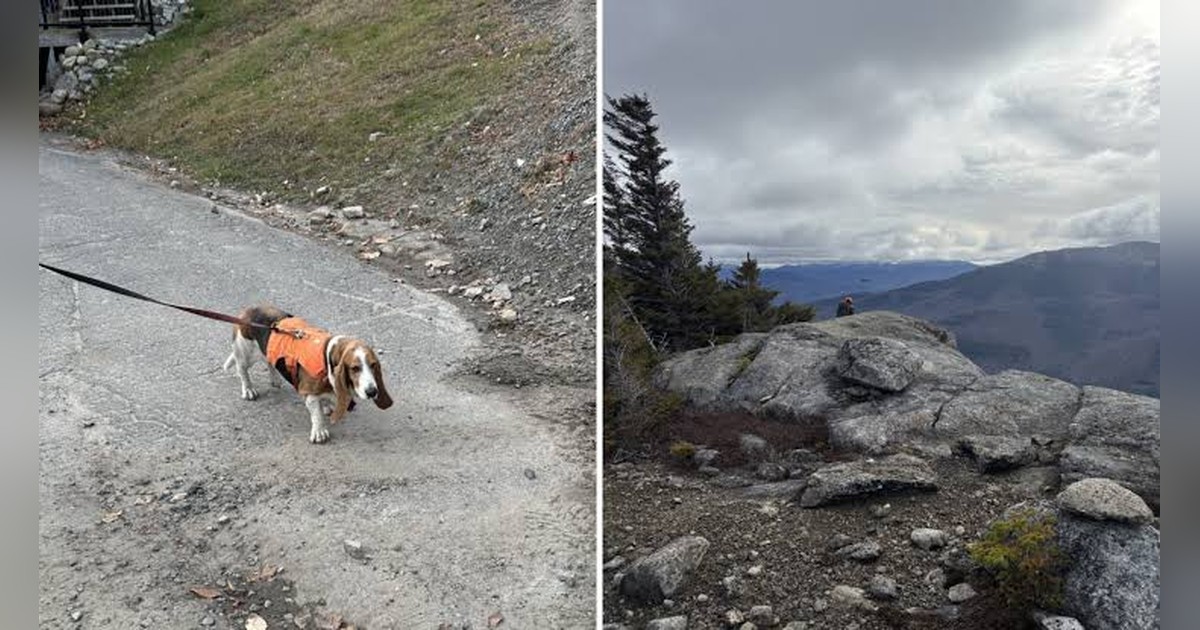

A basset hound named Becky may have saved her owner’s life on a freezing Adirondack night. She walked into a mountain lodge alone. Lodge staff recognized her because her owner had gone missing before. That recognition set off a search. It pulled a 69-year-old man with dementia out of the wilderness.
On November 12, Becky arrived at the Whiteface Mountain Lodge in Wilmington, New York. Staff knew the dog because her owner has dementia and had gone missing before. They called the New York State Police. The police then asked Department of Environmental Conservation (DEC) Forest Rangers for help with the search.
How the Search Unfolded
Becky arrived at the lodge at about 9 p.m. on November 12. According to ABC7 New York and the DEC, Four Rangers and New York State Police searched with a drone and a bloodhound. The search later grew to 14 Rangers, four state police members, and New York State Police Aviation.
Overnight temperatures made the search more urgent. Lead Ranger Charlie Foutch said it was about 25 to 30 degrees Fahrenheit through the night. That is well below freezing.
At 10 a.m. on November 13, a hunter searching just ahead of the group heard someone fall and scream. He found the missing man off to the side of a trail, in open woods. Minutes later, Ranger Sabo arrived. The 69-year-old was not wearing shoes or gloves. The DEC said he was suffering from severe frostbite. Popular Science reported that he was still alert and talking.
Read More: Two Subtle Signs of Dementia You Should Look Out for at Home
“We’re always looking for live people. That’s our goal is to find a live person,” Foutch said. “And a lot of people are really tough. This gentleman didn’t have shoes on when we found him in the morning or mittens or gloves, so he had been out there for some period of time at night. And he still did okay. Sometimes if you keep moving in that situation, you generate enough heat to do okay.”
The man was off the trail, and he had severe frostbite. Ranger Sabo decided a hoist was the safest and fastest way to get him out. Ranger Martin lifted him by cable to a helicopter. New York State Police Pilot Engel then flew them to a hospital. The DEC said the rescue was clear at 11:50 a.m.
Becky’s Role: What the Lead Ranger Said
“I think if the dog had not shown up at Whiteface, that gentleman definitely would have had a different outcome,” Foutch said. “It definitely would have been much harder to find him. He may not have survived the rest of the day and probably not another night. The dog definitely contributed to him being saved so quickly.”
Rangers found him after a night in below-freezing weather, with no shoes or gloves. Foutch said he had been outside for some period of time at night. Officials have not said how long he was missing, or when he lost his shoes.
Lodge staff recognized Becky because her owner had gone missing before. That prior knowledge prompted the call to police. Neighbors and local staff who know a person has dementia can call for help much sooner than a stranger would.
Dementia and Wandering: Why It Happens and What to Watch For
This rescue ended well. The risk behind it is common. According to the Alzheimer’s Association, six in 10 people living with dementia will wander at least once. Many do so more than once. Wandering can happen at any stage of the disease. The risk may rise as the disease progresses.
The Alzheimer’s Association also warns that time matters. Its staying safe guide reports a serious risk. If a person who wanders is not found within 24 hours, up to half may suffer serious injury or death.
Caregivers should watch for warning signs. A person may be at risk if they start coming home later than usual from a walk or drive. They may forget how to get to familiar places. They may become restless and start pacing. They may also ask to go home over and over, even when they are already at home.
Caregiver Safety Steps That Can Help Prevent a Crisis
The Alzheimer’s Association says GPS and location-sharing tools can help keep people with dementia safe. Wearable GPS trackers are one option. These include watches, shoe inserts, and other devices. The group says no tracking system is 100% accurate, and it should be used with other safety steps.
A medical ID bracelet or other ID tag is another layer of protection. The Alzheimer’s Association lists a medical ID bracelet as an identification item families can have ready.
The Alzheimer’s Association also says families should make a plan before a wandering incident happens. Once someone has wandered once, many people do it again. The group suggests enrolling the person in a wandering response service.
Tell neighbors, friends, and family to call if they see the person wandering or lost. They should also call if the person is dressed the wrong way for the weather. Keep a recent close-up photo on hand to give to police if needed.
What to Do If Someone With Dementia Goes Missing
The Alzheimer’s Association says to start looking right away. If the person is not found within 15 minutes, call 911 and file a missing person report. Tell the authorities that the person has dementia.
Begin the search close to where the person disappeared. Many people who wander are found within 1.5 miles of that spot. When you look, consider whether the person is right- or left-handed. Wandering often follows the direction of the dominant hand.
On Whiteface Mountain, the rescue involved Rangers, state police aviation, a bloodhound, a drone, and a hunter. The chain started because a basset hound showed up alone at a lodge, and the people there knew her.
If your family is managing a dementia diagnosis, talk with the person’s doctor about safety planning. Ask about a wandering response service. Wearable GPS trackers are another option, including watches, shoe inserts and more. Tell the neighbors.
Disclaimer: The author is not a licensed medical professional. The information provided is for general informational and educational purposes only and is based on research from publicly available, reputable sources. It is not intended to constitute, and should not be relied upon as, medical advice, diagnosis, or treatment. Always consult a licensed physician or other qualified healthcare provider regarding any medical condition, symptoms, or medications. Do not disregard, avoid, or delay seeking professional medical advice or treatment because of information contained herein.
AI Disclaimer: This article was created with the assistance of AI tools and reviewed by a human editor.