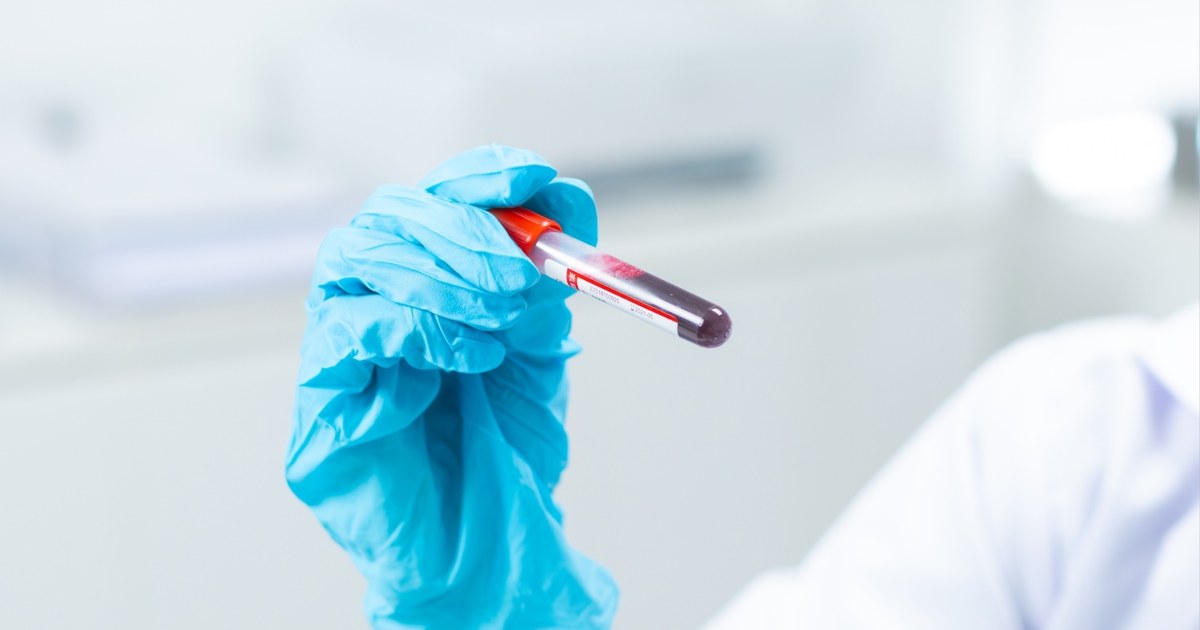

Researchers have used a blood protein to detect signs of advanced CTE in former football players. The blood was drawn while the players were still alive. The disease was later confirmed after death. CTE stands for chronic traumatic encephalopathy. It is a brain disease that gets worse over time. The findings are early, and larger studies need to confirm them first. If they hold up, they could one day help doctors monitor people who have spent years taking hits to the head. That includes the father, brother, or son in your family who played contact sports.
Right now, CTE can only be confirmed through a brain examination after death. People with symptoms like memory loss, mood swings, and trouble thinking have no way to know what caused them. There is no test to show whether repeated head impacts are to blame. Two studies in the Journal of the American Medical Association were published in November 2026. They offer the clearest sign yet that a blood test could one day fill that gap.
The studies focus on a protein piece called eMTBR-tau. Its full name is endogenously cleaved microtubule-binding region tau. The Washington University team also refers to it as eMTBR-tau243. It is a marker of misfolded tau proteins that clump together in the brain. Levels of this fragment in the blood appear to track how severe a person’s CTE is. Researchers measured that signal from blood samples collected while participants were still alive.
Why CTE Has Been So Hard to Detect in Life
CTE is a brain disease that gets worse over time. It is linked to repeated blows to the head. Former contact sports athletes are most often affected. The disease causes tau protein to build up abnormally in the brain, damaging nerve cells over years or decades. Symptoms can include depression, aggression, memory problems, and dementia. Those symptoms overlap with many other conditions, which makes clinical diagnosis unreliable.
Right now, CTE can only be found and confirmed through autopsy. Researchers have not had a blood marker that works in a living person.
The scale of the problem in professional football alone is striking. A Boston University study published in October 2026 looked at NFL players who died between 2008 and 2023. It estimated that nearly 75% of all those players had signs of the disease. That figure includes an adjustment for selection bias. Among the 387 deceased NFL players whose brains were donated and studied, 362, or 94%, had some degree of CTE neuropathology. Families of players who had cognitive symptoms were more likely to donate a brain. So the 94% figure overstates the rate in all former players. After that adjustment, the estimate for all players who died in that period was about 74.5%.
Read More: New Alzheimer’s Blood Test Predicts Risk Up to a Decade Before Symptoms Appear
Boston University Study: 21 Players, One Promising Signal
Boston University and Banner Health published a study on November 19, 2026, in JAMA. It looked at 21 former football players. They had blood drawn while alive and later donated their brains to the BU CTE Center. Michael Alosco, codirector of clinical research at the BU CTE Center, led the study.
Of the 21 participants, 18 had CTE at autopsy and three did not. Of those with CTE, 16 had high-stage disease and two had low-stage disease. Five also had Alzheimer’s disease.
Researchers measured blood plasma levels of eMTBR-tau. This protein fragment is linked to tau tangles in the brain. Blood levels of eMTBR-tau were much higher in people with high-stage CTE. They were lower in those with low-stage or no CTE.
The team also tested p-tau217. This is a blood marker linked to Alzheimer’s disease changes. That marker was elevated only in participants who had Alzheimer’s disease. Alosco said the combination of eMTBR-tau and p-tau217 might help detect CTE during life and tell it apart from Alzheimer’s disease. That idea still needs more testing.
Alosco called the initial findings “a game changer.” He said the work is still in a “discovery phase.” If the finding is validated, he said, a biomarker that can accurately detect CTE could open the door to diagnosis while people are still living. It could also open a new phase of research, including clinical trials. The findings must first be checked in larger autopsy studies. Only then could the test move toward clinical trials or FDA review. “We aren’t there yet,” he said.
The study’s limits deserve clear attention. Twenty-one participants is a very small sample. Alosco called this the gold-standard design for identifying a biomarker, because it pairs data collected in life with a donated brain. Even so, he said it takes years, even decades, to collect large samples of this kind. The results need to be repeated in much larger groups. Until then, this test is not ready for clinical use.
Washington University Study: Larger Sample, Important Caveats
Researchers at Washington University School of Medicine in St. Louis published a related study in JAMA on November 13, 2026. That study looked at 229 people from several biorepositories. The team first tested the marker in samples from more than 80 people with autopsy-confirmed brain diseases, plus healthy volunteers. They then tested blood from 11 people whose CTE was confirmed at autopsy.
The Washington University study found that eMTBR-tau243 could tell advanced CTE from healthy people with high accuracy in those autopsy-confirmed samples. But the same test could not reliably identify early-stage CTE. Levels of eMTBR-tau243 in CTE were also much lower than in Alzheimer’s disease.
The researchers noted that this biomarker alone cannot tell CTE and Alzheimer’s apart. According to WashU’s Chihiro Sato, “This is not going to be a standalone biomarker.” She said it might point to CTE if someone has a history of repeated head injury, tests negative for Alzheimer’s, and this biomarker comes up. Larger studies are needed before it can be used in the clinic for this purpose. WashU has licensed the measurement technology to C2N Diagnostics. The test has not been validated for diagnosing CTE.
The two November studies point in the same direction. Both are open about how much more research is still needed. Neither test is available to patients. Neither finding has been replicated at scale.
What the Alzheimer’s Connection Means for Women’s Brain Health
Women over 45 should know how CTE and Alzheimer’s disease can overlap. This applies even if you have never played contact sports. eMTBR-tau is a marker of tau tangles in the brain. These are the same type of protein clumps known to form in Alzheimer’s disease.
For women’s brain health, the finding matters because the same blood marker is being studied in both conditions. It does not mean doctors can order a CTE test today. It does mean researchers are looking for a simpler way to detect tau changes in life, instead of waiting for an autopsy.
The BU study also illustrates how this research gets built. Matt Hasselbeck is a former NFL quarterback. In 2020, he pledged to donate his brain to Boston University for CTE research. His father, Don Hasselbeck, a former New England Patriots player, made the same brain donation commitment before passing away in 2025. The younger Hasselbeck is now an ambassador for the BU DIAGNOSE CTE Research Project. It recruits men over 50 who played college or professional tackle football. They get in-depth medical and brain testing.
The project aims to study people during life and, when they have pledged a donation, to learn from the brain after death. Studies like the November 19 BU publication depend on that kind of data. Every person who enrolls adds to a sample that is still too small to draw firm conclusions from.
What This Means for You Right Now
A CTE blood test is not available. The findings published this month represent early-stage biomarker research. Both studies call for larger tests before this science can move toward use in clinics.
Does a family member have memory gaps, personality shifts, or trouble focusing? Did they play contact sports for many years? Talk to a neurologist. Look for a doctor who focuses on brain injury or brain diseases that get worse over time. Tell the doctor about their playing history. Ask whether they qualify for any research studies. This includes those run by the BU DIAGNOSE CTE Research Project.
For your own brain health, the same risk-reduction steps still apply. Keep blood pressure and blood sugar in check. Stay active. Protect your head from future hits. Get enough sleep. None of those are as simple as a blood test. But all of them have more evidence behind them right now than any new biomarker does.
The research published this month is among the first of its kind. It shows a blood marker can track CTE severity in people who gave blood while they were still alive. That finding and a test your doctor can order are still far apart. But researchers now have a signal worth following.
Disclaimer: The author is not a licensed medical professional. The information provided is for general informational and educational purposes only and is based on research from publicly available, reputable sources. It is not intended to constitute, and should not be relied upon as, medical advice, diagnosis, or treatment. Always consult a licensed physician or other qualified healthcare provider regarding any medical condition, symptoms, or medications. Do not disregard, avoid, or delay seeking professional medical advice or treatment because of information contained herein.
AI Disclaimer: This article was created with the assistance of AI tools and reviewed by a human editor.