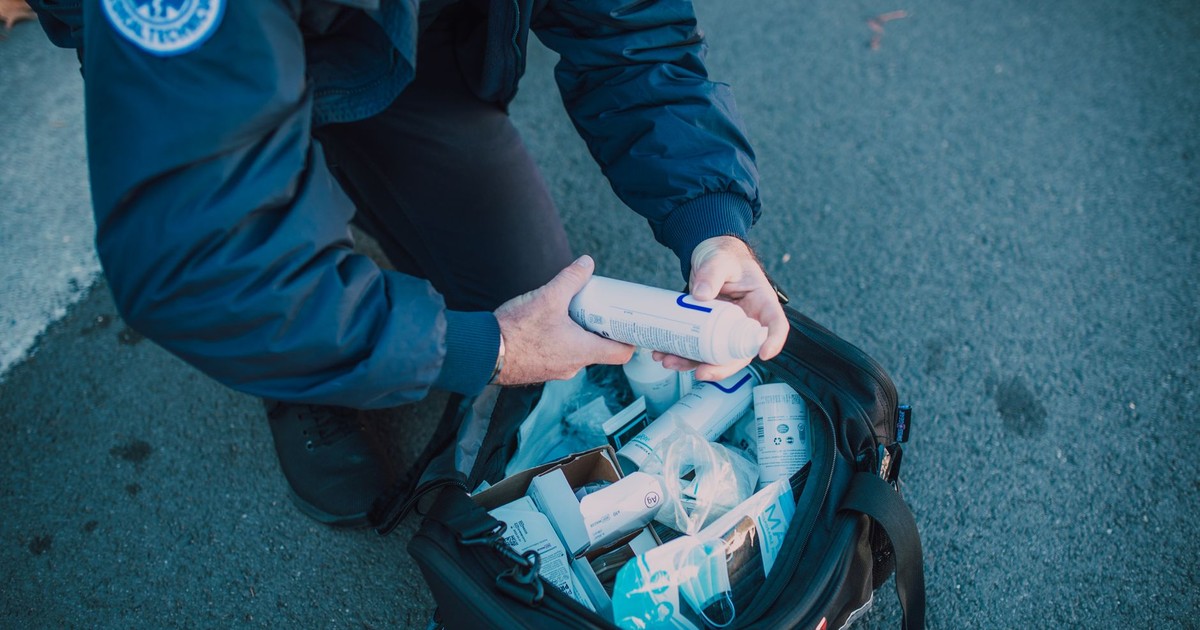

About half of all Americans take a prescription medicine every day. This comes from Ready.gov’s Build a Kit guidance. An emergency can make it hard to refill a prescription or find an open pharmacy. Ready.gov says to keep daily meds in your emergency kit for that reason.
Building an emergency supply kit is routine preparedness. Prescription medicines belong in it right alongside food and water. A household should be ready to survive on its own for several days after an emergency. Medication is part of that plan.
What Goes Into an Emergency Supply Kit.
Ready.gov recommends one gallon of water per person per day for several days. This covers both drinking and sanitation. Food should be at least a several-day supply of non-perishable items. Those two basics are the foundation.
Put a battery-powered or hand crank radio in your kit. Also include a NOAA Weather Radio with tone alert. A flashlight and extra batteries handle basic lighting when the power is out. A first aid kit covers the minor injuries that often come with sudden disruptions.
A whistle can signal for help. A dust mask helps filter contaminated air. Plastic sheeting, scissors, and duct tape are included for sheltering in place. Include a manual can opener for food. Local maps and a cell phone with chargers and a backup battery round out the basic kit. A wrench or pliers can help you turn off utilities if needed.
Prescription Medicines in Your Emergency Supply Kit.
Ready.gov lists daily meds as something to include in your kit. It notes that refilling a prescription during an emergency can be difficult. The guidance says to organize and protect prescriptions, over-the-counter drugs, and vitamins. Make this part of your emergency prep.
Read More: Warning Issued to People Taking Daily Heart Medications
You may not be home when an emergency strikes. Ready.gov suggests keeping a medicine kit at home, at work, and in your car. Ready.gov also lists non-daily meds as part of a full kit. These include pain relievers, anti-diarrhea medicine, antacids, and laxatives. Prescription eyeglasses and contact lens solution belong in your kit if you need them. If you have an infant, include formula, bottles, diapers, wipes, and diaper rash cream. Pack pet food and extra water if you have a pet. Keep copies of important papers, such as insurance papers, ID, and bank records. Put them in a dry bag, or save them on a phone. Ready.gov also lists a sleeping bag or warm blanket on its kit list. Add a full change of clothes suited to your climate and a pair of sturdy shoes. Store matches in a waterproof container. Add feminine supplies and personal hygiene items based on your own needs.
The written list matters as much as the pills themselves. Ready.gov’s Tips for Medications card says to keep a written list of all your prescriptions. That list should include the diagnosis, dosage, and how often to take each medicine. It should also include medical supply needs and any allergies. If you end up at an unfamiliar drugstore or urgent care in another city, that list helps. You can get care fast.
Some medicines need to stay cold. If you take one, keep a cooler and chemical ice packs in your medicine kit. Use a cooler with chemical ice packs. Do not rely on a refrigerator that may lose power.
Keeping extra non-prescription drugs is also part of being ready with your medicines. Ready.gov lists pain relievers, anti-diarrhea medicine, antacids, and laxatives as good additions. Minor illnesses do not stop during disasters.
How US Emergency Refill Rules Work.
Your state’s drugstore laws affect what you can do if you run out of medicine. This applies during a declared emergency. The rules vary more than most people realize.
Many states let pharmacists refill a regular medicine a little early. This can happen when they cannot reach your prescriber. Some states have extra rules that apply only during a governor-declared emergency. The details differ by state, so check your state’s rules rather than assuming you’re covered.
When a president declares a major disaster or emergency, federal rules can also change. An HHS declaration can change how people get medicines during a public health emergency. Your pharmacist is the fastest way to get a straight answer on what applies to your meds.
Controlled substances require extra planning. Federal law does not allow refills on Schedule II drugs. These include certain strong pain medicines and stimulants. Each fill requires a new prescription. Talk to your prescriber now about their emergency plan. That way you are not sorting it out during a crisis.
People with Disabilities and Chronic Conditions.
For people with ongoing health conditions, running out of medicine during a disaster can be serious. Ready.gov’s page for people with disabilities notes a key risk. After a disaster, there may be no access to a clinic or a drugstore. It urges people to plan for daily health needs ahead of time. It also asks you to know what to do if those needs become hard to meet. Or if they become impossible to meet.
In emergency planning, disability includes many different conditions. These include both visible and invisible ones. People who take medicine every day have the most to gain from planning ahead. The same Ready.gov page says to include daily meds in an emergency kit. This is part of an emergency plan for people with disabilities.
An Adequate Supply, Not Stockpiling.
Duncan Reid is a pharmacist at UK online pharmacy Pharmacy2U. Reid said that for people with long-term conditions, running out of medicine can cause serious health problems. Order repeat prescriptions before you run out.
Reid also urged people to buy only what they will actually use. Over-ordering meds can create shortages for other patients.
Steps You Can Take Now.
Talk to your pharmacist or doctor about how to build a small emergency supply of your daily meds. They can advise on how much to keep on hand.
Write down your prescription list today. Include the drug name, diagnosis, dose, frequency, and any allergies. Store it somewhere accessible in your kit. Don’t rely only on your phone. It may have no charge or signal when you need it most. If any of your medicines need to stay cold, keep a cooler ready. Keep chemical ice packs ready too.
Keep a supply at home, one at work, and a small kit in your car. A disaster doesn’t wait for you to be in the most convenient location. Your emergency kit should also include water, food, and a first aid kit. Add a battery-powered radio and a flashlight. Prescription medicines are easy to forget. They feel more personal than a gallon of water. That is exactly why they need to be on the list.
Editor’s note: This article covers routine emergency prep guidance from Ready.gov, not a new US alert or drug shortage. The title’s word ‘Warning’ comes from a UK news story that led to this piece. The actual advice is standard kit-building guidance that applies all year.
Disclaimer: The author is not a licensed medical professional. The information provided is for general informational and educational purposes only and is based on research from publicly available, reputable sources. It is not intended to constitute, and should not be relied upon as, medical advice, diagnosis, or treatment. Always consult a licensed physician or other qualified healthcare provider regarding any medical condition, symptoms, or medications. Do not disregard, avoid, or delay seeking professional medical advice or treatment because of information contained herein.
AI Disclaimer: This article was created with the assistance of AI tools and reviewed by a human editor.