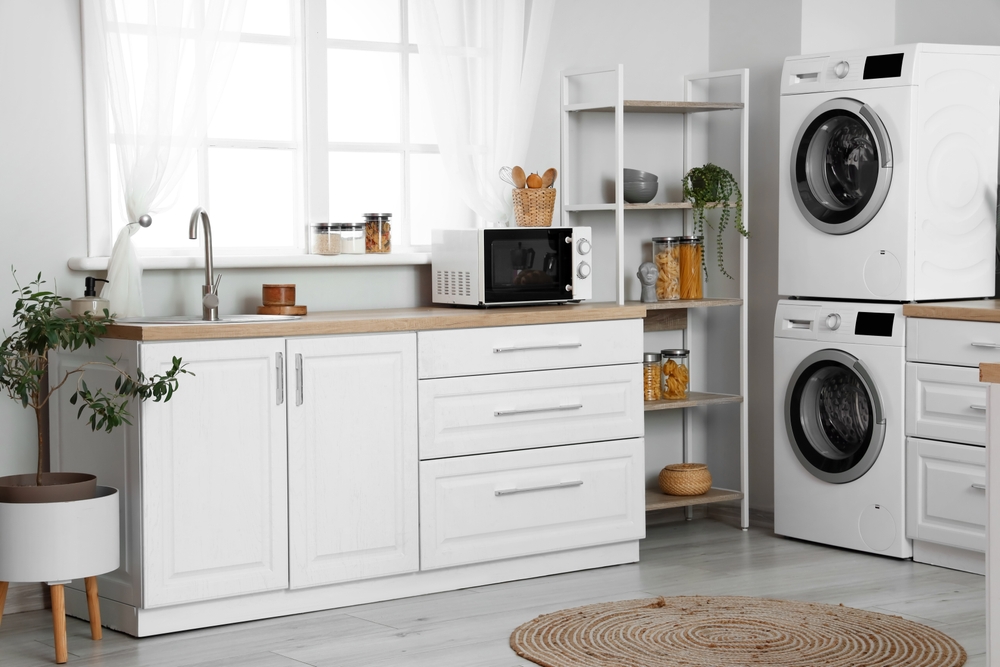

On the morning of July 10, 2018, Lindsey and Alan McIver lived in Conifer, Colorado. They rescued their 3-year-old daughter, Khloe, from their front-load washing machine. It was running and full of water. The drum was tumbling and filling with water while Khloe was locked inside. If you have a front-loader at home and young children, this story carries a direct warning.
Lindsey and Allan McIver were woken early on the morning of July 10 by their 4-year-old son, who ran into their bedroom in tears.
A Brand-New Machine, a Hidden Danger
Buried in the machine’s manual was a child lock feature they didn’t yet know to use.
Alan ran to the basement laundry room. “I could tell she was screaming, but the machine’s airtight,” Alan McIver recalled. “I yanked on the door. I pulled so hard I moved the machine from the wall, but it’s locked. You can’t get it opened.”
Alan managed to stop the machine and pull Khloe out. She came away with only minor scrapes and bruises. “I pulled her outside of it and got the best hug in the world from her,” Alan said. “She was out and was crying, but safe.”
Why Front-Load Washers Are Especially Risky
Front-loading washing machines sit low to the ground. That makes them easy for toddlers to reach. The door opens outward at child height. The glass window lets children see the clothes spinning inside. Water makes the whole thing fascinating to a small child. Easy access, a clear view, and water together create a real danger for young children.
The door seals tight when shut. That is what can turn a scary situation into a deadly one. Once a cycle starts and the door locks, a child inside has no way to signal for help. Parents standing a few feet away may hear nothing at all.
Read More: Four Tragically Die in Crash After Tesla’s Electric Doors Reportedly Left Them Trapped Inside
Consumer Reports spoke with Ben Hoffman, M.D. He is a pediatrician. He chairs the American Academy of Pediatrics’ Council on Injury, Violence and Poison Prevention. He explained why toddlers are drawn to appliances like washers. Children between ages 1 and 4 are driven to explore the world around them. “They’re curiosity machines, and by nature, impulsive,” Hoffman said. Water is a particular draw. They watch clothes tumbling behind the glass and their curiosity takes over.
“We can’t hazard-proof kids,” Hoffman said, “so we need to be as careful as we can in identifying hazards and protecting them.”
This Wasn’t an Isolated Incident
Khloe’s survival depended entirely on her brother alerting her parents in time. About a year after the McIver incident, a 3-year-old boy in Orlando, Florida, was not so fortunate. He had been playing with a younger sibling. Then he climbed into the family’s front-loading washing machine. At some point the door closed. He died on August 4, 2019, of what police believed was lack of oxygen.
The Consumer Product Safety Commission, or CPSC, said it knew of three deaths. All involved children 5 and younger. All were linked to washing machines since 2014. Two of those deaths involved front-loaders, while the type of washer in the third case was not confirmed. The type of washer in the third case was not confirmed.
The CPSC also estimated about 3,000 emergency room injuries in children 5 and younger. All involved washing machines over the same period. That number shows how often young children interact with appliances in ways that go wrong. This can happen even when no one dies.
Washing Machine Child Safety: What Parents Can Do Right Now
After Khloe’s rescue, Lindsey McIver shared the story on Facebook. The post received more than 230,000 shares and over 100,000 likes.
The McIvers made two changes right away. They secured the machine’s door with a physical child safety lock. They also turned on the built-in child lock feature in the washing machine’s electronic settings. LG made the family’s washer. The company responded by asking all customers to use that setting. It also asked them to call customer support if they needed help.
Consumer Reports safety guidance lists several steps that work together to protect children. The most effective is keeping children out of the laundry room entirely. If you have young children at home, keep the door closed. Some laundry areas are in open basements or hallways without a door. In those cases, a gate or latch can act as a backup barrier.
Controlling who can get into the laundry room helps. Turning on the child lock on the machine itself adds another layer of protection. Check the manual or call the maker’s support line. That is the fastest way to confirm the child lock is on.
Ben Hoffman, M.D., quoted in Consumer Reports, said children aged 1 to 4 are naturally curious and impulsive. Any caregiver watching young children should keep the laundry room door shut at all times. That conversation needs to happen before the first time someone else watches your child at your home.
If you’re setting up a new front-loader, read the safety section of the manual before you run the first load. The McIvers hadn’t had a chance to get that far, and their new machine had the child lock feature waiting to be turned on.
What the McIvers Want Other Parents to Know
Lindsey McIver shared the story on Facebook in a post that received more than 230,000 shares and more than 100,000 likes.
“We really hope all parents out there evaluate the dangers in their house, and look at the situation and where potential dangers exist,” Alan McIver said.
Steps to Take Today
Check your front-load washing machine’s manual or the manufacturer’s website for the child lock setting and turn it on. If your washer and dryer are in a separate room, close the door and lock it.
Talk to everyone who cares for your child about the appliance. Caregivers should know to keep the laundry room door shut and to treat the washer as off-limits for young children. One short conversation closes that gap.
If you’re not sure whether your machine has a child lock feature, call the manufacturer directly. LG’s customer support, for example, can walk you through the settings over the phone. Most major front-loader brands offer similar support.
Disclaimer: The author is not a licensed medical professional. The information provided is for general informational and educational purposes only and is based on research from publicly available, reputable sources. It is not intended to constitute, and should not be relied upon as, medical advice, diagnosis, or treatment. Always consult a licensed physician or other qualified healthcare provider regarding any medical condition, symptoms, or medications. Do not disregard, avoid, or delay seeking professional medical advice or treatment because of information contained herein.
AI Disclaimer: This article was created with the assistance of AI tools and reviewed by a human editor.