
Millions of children and adults with ADHD take stimulant medications such as Ritalin and Adderall. For many, the effect can be striking: staying on task becomes easier, distractions become more manageable, and school or work can feel considerably less difficult.
The medications clearly work for many people. But scientists may have been mistaken about why.
For decades, the prevailing explanation was fairly intuitive. ADHD affects attention, so stimulant medications were thought to improve symptoms largely by acting on the brain networks responsible for attention and focus.
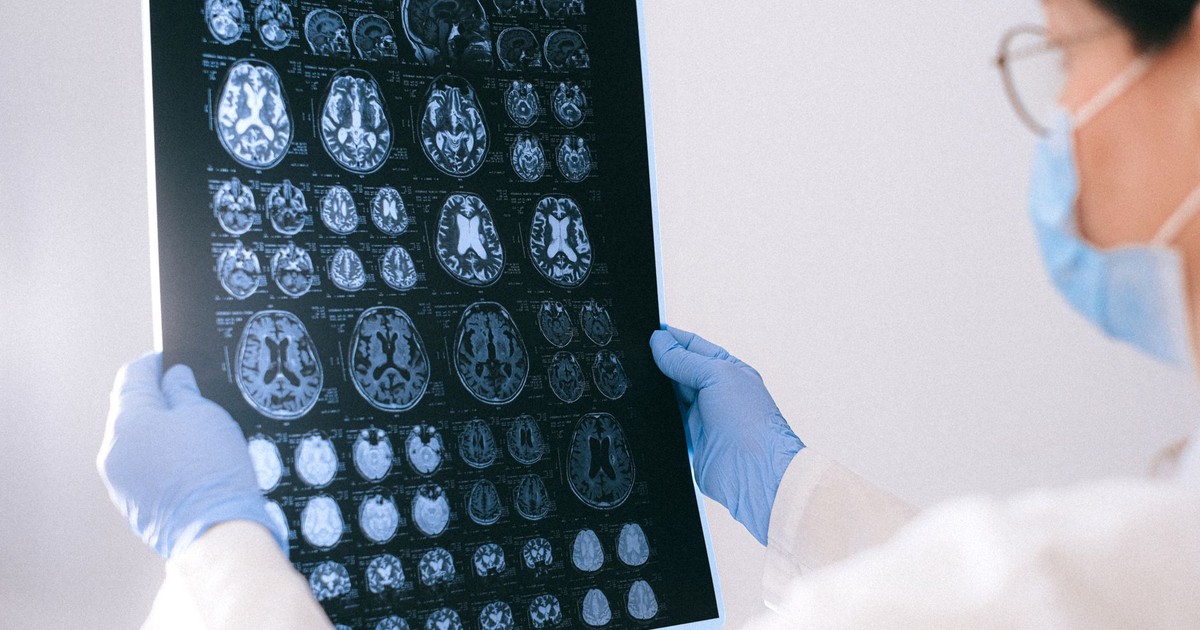
When researchers at Washington University School of Medicine in St. Louis examined brain scans from thousands of children, however, that’s not where the strongest effects appeared.
Instead, the medications seemed to act primarily on systems involved in wakefulness, motivation, and reward.
Then researchers noticed something even more surprising.
The brain patterns associated with taking a stimulant bore similarities to what happens when someone is adequately rested. In people who were sleep-deprived, stimulants appeared to counter some of the brain and cognitive changes associated with insufficient sleep.
That doesn’t mean ADHD is simply a sleep problem, nor does it mean sleep can replace medication. Instead, the findings suggest that medications we’ve used for decades may improve attention through a different route than scientists once assumed.
And that could change how researchers think about what these drugs are actually doing inside the brain.
A dataset large enough to be convincing
The scientists analyzed data from the NIH’s Adolescent Brain Cognitive Development (ABCD) Study, the largest long-term study of brain development and child health in the United States, focusing on nearly 5,800 children ages 8 to 11 who completed functional MRI brain scans at rest. Of these, 337 children – 73% of whom were boys – took a stimulant medication the morning of their scans. Functional MRI measures brain activity by detecting changes in blood flow, giving researchers a real-time map of which regions are communicating with each other while a person is at rest.
The majority of children who took a stimulant on the morning of their scan had some form of ADHD diagnosis or clinical indication. That mix mattered: it allowed the researchers to compare stimulant effects across children with and without the diagnosis, and to ask whether the medication did the same thing in both groups.
The study, led by Benjamin Kay, MD, PhD, and Nico U. Dosenbach, MD, PhD of Washington University School of Medicine, validated its findings in a controlled drug trial with a small group of healthy adults given methylphenidate in a precision imaging setting. The convergence of findings across two very different datasets – thousands of children observed naturalistically, and adults in a controlled experiment – gave the team confidence they were looking at a real and consistent effect.
How ADHD medication works: not where researchers expected
The brain region the team expected to see activated was the dorsal attention network – a system anchored in the intraparietal sulcus and frontal eye fields that coordinates deliberate, top-down attention. This is the network most closely associated with the cognitive difficulties that define ADHD, and it’s where most prior theories placed the action of stimulant drugs. Instead, the changes appeared in the salience network – which governs what the brain decides is worth paying attention to – and in parietal memory networks tied to dopamine-mediated reward learning, the system that makes certain tasks feel worth the effort.
The molecular action of stimulants is not newly discovered. Stimulant medications increase dopamine and norepinephrine in the brain. A 2025 paper in PNAS confirmed that methylphenidate boosts synaptic concentrations of dopamine and noradrenaline by blocking their reuptake transporters – preventing the brain from reabsorbing those chemicals too quickly, leaving more of them available at the synapse. What the new Cell study addresses is the downstream question: once those neurotransmitters flood the system, which brain networks do they actually change?
The imaging data points primarily to systems governing wakefulness and motivation, not classical attention circuitry. The findings suggest that prescription stimulants enhance performance by making individuals with ADHD more alert and interested in tasks, rather than directly improving their ability to sustain focus.
The sleep connection – and what it doesn’t mean
When researchers compared the brain connectivity patterns produced by stimulant medication to patterns associated with sleep, a parallel emerged. The brain activity signatures produced by stimulants closely resembled those associated with adequate rest, and taking a stimulant appeared to reverse the cognitive and neurological signatures of sleep deprivation. As Dosenbach noted, when participants hadn’t slept enough but took a stimulant, “the brain signature of insufficient sleep was erased, as were the associated behavioral and cognitive decrements.”
The study does not suggest that ADHD is a sleep problem in disguise, or that better sleep habits could replace medication for children who genuinely need it. The finding is about mechanism, not substitution. The researchers note that stimulants could have a restorative effect by activating the brain’s waste-clearing system during wakefulness, but it’s equally possible they might cause lasting damage if used to cover up chronic sleep deficits – a significant caution, and a reason the researchers flagged long-term stimulant effects as a priority for future study.
The researchers’ hypothesis is that stimulants may help people with ADHD stay awake enough, engaged enough, and motivated enough to complete tasks – and that the resulting increase in task engagement is what produces the attention improvements families and teachers observe. Sustained attention, on this account, is less a direct effect of the medication and more a byproduct of the brain being in a better-aroused, more motivated state. In the dataset, fewer than half of the children were reportedly getting the recommended amount of nightly sleep – about 48%, according to the study.
Who benefits – and who doesn’t
Children without ADHD who got adequate sleep saw no improvement in grades, test scores, or reaction times from stimulants. The cognitive gains – the improved school performance that parents and teachers most care about – appeared specifically in children with ADHD and in children who were sleep-deprived.
Peter Manza, a neuroscientist at the University of Maryland School of Medicine who was not involved in the research, told NPR the findings support a “mindset shift about what stimulants are doing for people.” His own work, he noted, suggests that stimulants boost motivation in kids with ADHD – making tasks feel more interesting and worth finishing rather than sharpening the attentional machinery directly.
This matters especially given how widely these medications are prescribed. According to the CDC, an estimated 7 million U.S. children ages 3 – 17 currently have an ADHD diagnosis – roughly 11.7% of all children in that age range. Among those with a current diagnosis, CDC data from 2022 found that approximately 53.6% received ADHD medication. Understanding precisely what those medications are doing in the brain shapes how clinicians target treatment, monitor outcomes, and counsel families about what to expect.
Research published in The Journal of Neuroscience found that amphetamines improved the motivation to invest effort in people with ADHD, essentially restoring effort sensitivity to levels comparable to those without the condition. That finding, from a 2023 controlled trial, aligns with what the new Cell study found in brain imaging – stimulants appear to raise the motivational floor, making effort feel more worthwhile and tasks more tolerable rather than directly strengthening the machinery of focused attention.
For parents managing a child’s ADHD treatment, this distinction can reframe the conversation with their prescribing physician. If the medication is primarily working through arousal and motivation systems, then factors that affect those systems – including sleep quality, daily structure, and task engagement – become relevant considerations alongside pharmacological treatment.
Read More: ADHD Medication and Heart Risk: What Millions of Adults Need to Know
What this study changes
The significance of this research isn’t that scientists suddenly discovered ADHD medications work. Decades of clinical evidence have already established that stimulants can reduce ADHD symptoms for many people.
What’s changing is our understanding of how those improvements may happen.
Rather than primarily strengthening the brain’s attention networks, the new findings suggest stimulants may make the brain more awake, motivated, and responsive to rewards. Better attention may then follow because tasks become easier to engage with and effort feels more worthwhile.
The sleep findings add another intriguing piece. Stimulants produced brain patterns resembling aspects of adequate rest and countered some effects associated with sleep deprivation. But that shouldn’t be interpreted to mean ADHD is caused by poor sleep or that getting more sleep can replace appropriate ADHD treatment.
There are still questions to answer. The large childhood dataset was observational, while the controlled portion of the research involved a much smaller group of adults. Researchers also want to understand what repeated stimulant use means for these systems over the long term.
For people currently taking ADHD medication, the findings aren’t a reason to change treatment. They are a reason for scientists to look differently at a treatment that has been used for more than half a century.
We already knew stimulants could help people with ADHD focus. We’re now getting a much clearer picture of what the brain may be doing first to make that focus possible.
Disclaimer: This information is not intended to be a substitute for professional medical advice, diagnosis, or treatment and is for information only. Always seek the advice of your physician or another qualified health provider with any questions about your medical condition and/or current medication. Do not disregard professional medical advice or delay seeking advice or treatment because of something you have read here.
AI Disclaimer: This article was created with the assistance of AI tools and reviewed by a human editor.
Read More: ADHD Medication and Heart Risk: What Millions of Adults Need to Know