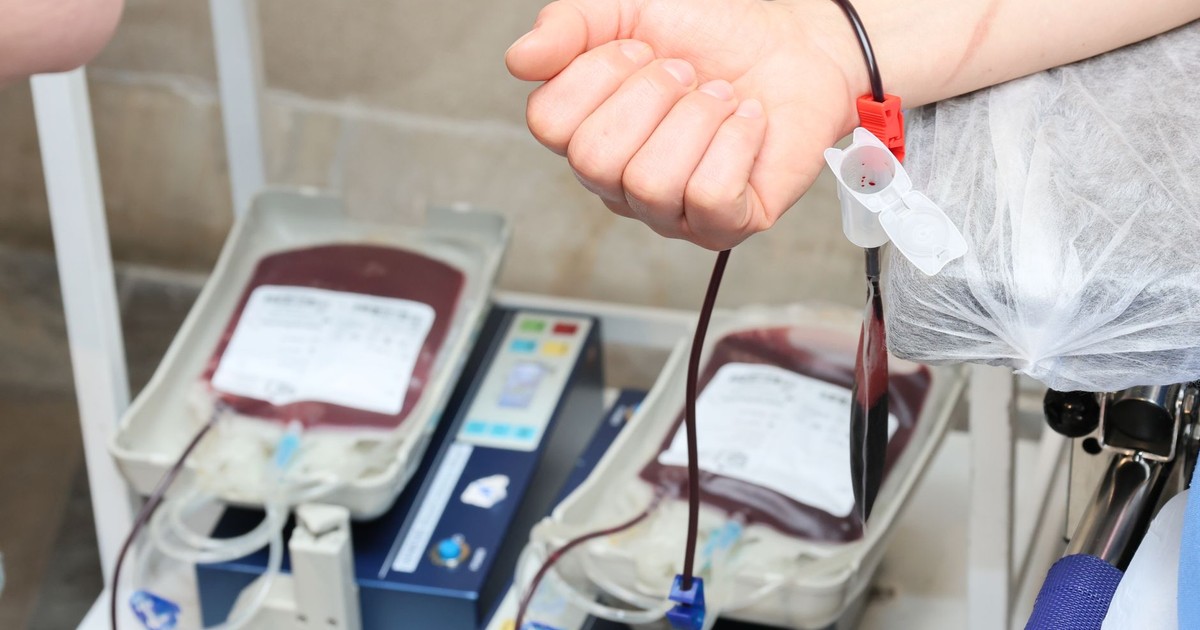

Blood transfusions are among the most carefully screened procedures in modern medicine. Donated blood is tested for known threats, including infectious diseases that can pass from one person to another. But what if something potentially harmful could travel in blood without being a virus, bacterium, or anything conventional screening is designed to find?
That’s the unsettling question researchers are now investigating after several studies raised the possibility that certain abnormal proteins associated with diseases of the brain could potentially be transferred from one person to another.
One of the most intriguing clues came from Scandinavia. In 2023, researchers examined health records involving more than one million blood transfusion recipients in Sweden and Denmark. They noticed an unusual pattern: people who had received blood from donors who later experienced repeated bleeding in the brain were more likely to eventually experience similar bleeding themselves.
The donors weren’t known to have the condition when they gave blood, making the association particularly difficult to explain. The study couldn’t establish what, if anything, had passed between donor and recipient. But it added to a much bigger question scientists have been wrestling with: can the abnormal proteins involved in some neurological diseases travel through donated blood and trigger problems many years later?
In August 2026, researchers from University College London and University College London Hospitals took a closer look at the evidence. In a review and opinion piece in The Lancet, they examined concerns about amyloid-beta, the protein best known for accumulating in the brains of people with Alzheimer’s disease.
Amyloid-beta is also involved in cerebral amyloid angiopathy (CAA), a condition in which the protein accumulates in the walls of blood vessels in the brain and can eventually contribute to bleeding.
This does not mean Alzheimer’s disease has been shown to spread through blood transfusions. Researchers haven’t established that, and the potential risk remains uncertain. Instead, a series of unusual findings has raised a question important enough that scientists argue it now deserves much closer investigation.
And if the possibility proves real, it could change how researchers think about both neurological disease and the long-term safety of donated blood.
What the Scandinavian study revealed about Alzheimer’s transmission through blood
The Scandinavian study found that recipients of blood from donors who later developed multiple brain bleeds – a marker of CAA – had a higher risk of brain bleeds themselves. The scale of the research, covering over one million patients, gives it unusual statistical weight. Epidemiological studies of this size do not prove causation, and the Lancet authors are careful to say so. The findings raise questions about the possible transmission of amyloid-beta and CAA through blood transfusion, but do not establish it.
The team’s proposed explanation is specific. According to the Lancet review, the most biologically plausible interpretation is that the blood donors carried early-stage, invisible seeds of amyloid-beta – protein fragments that had not yet caused disease in the donor – and that those seeds were transferred to recipients during the transfusion. The recipients’ brains then, over years or decades, allowed those seeds to develop into full CAA pathology, eventually causing brain bleeds.
CAA and Alzheimer’s disease are related but distinct conditions. Both involve amyloid-beta, but CAA is not Alzheimer’s. Evidence that amyloid-beta may be transmitted via blood in the context of CAA raises the question of whether it could do the same in the context of Alzheimer’s. If amyloid-beta were transmitted via blood transfusions, how significant any resulting risk might be remains unknown.
How amyloid-beta behaves like a prion
Alzheimer’s disease involves abnormally folded proteins that spread through the brain in a manner strikingly similar to how prions behave. Prions are infectious misfolded proteins most associated with variant Creutzfeldt-Jakob disease (vCJD), the human form of mad cow disease. A prion touches a healthy, normal protein and converts it into an abnormal copy of itself, propagating through neural tissue.
Research published in PLOS Pathogens has shown that misfolded proteins involved in neurodegenerative diseases share common structural features and self-propagation mechanisms similar to prions. Amyloid-beta does not transmit between people through casual contact or normal social interaction – the researchers are emphatic on this point. Professor John Collinge, Director of the UCL Institute of Prion Diseases, stated: “There is no suggestion whatsoever that Alzheimer’s disease can be transmitted between individuals during activities of daily life or routine medical care.” The concern is narrowly focused on specific medical procedures in which biological material from one person enters another.
The human evidence: growth hormone and dura mater
The case for human transmission of amyloid-beta does not rest on the Scandinavian blood study alone. A critical chain of evidence runs back more than a decade, and the most compelling links involve routine medical care.
Iatrogenic (medically acquired) CAA was first described in living patients by a team at UCL, in people who developed brain bleeds caused by CAA at an unusually young age, having had childhood procedures using transplants of cadaveric dura mater – the tough protective tissue surrounding the brain and spinal cord – three or four decades earlier. Cases of iatrogenic CAA have since been reported by centers around the world, and the UK discontinued the use of cadaveric dura mater in neurosurgery in 1992 due to transmission concerns.
The growth hormone cases are equally striking. Between the 1950s and 1980s, children with growth deficiencies were treated with human growth hormone extracted from the pituitary glands of deceased donors. The process, before synthetic growth hormone was developed, pooled material from thousands of cadavers. Some batches were contaminated with prions, causing iCJD in recipients years later. Research published in Nature Medicine reported cases of iatrogenic Alzheimer’s disease in recipients of cadaveric pituitary-derived human growth hormone, developing decades after childhood treatment. The growth hormone program was stopped in the UK in 1985.
A 2015 study provided the first real-world evidence that amyloid pathology might be transferable between humans through medical procedures; subsequent research in 2016 found additional evidence. The 2015 study examined brain tissue from people who had died of iCJD after receiving contaminated growth hormone and found unexpected amyloid-beta deposits – the kind associated with Alzheimer’s – alongside the prion damage. Those individuals had not carried genetic mutations associated with Alzheimer’s, suggesting the treatment had seeded the pathology.
What the Lancet authors are actually asking for
The August 2026 Lancet review, led by UCL and UCLH researchers, examines the possibility that blood transfusions may inadvertently transmit harmful brain proteins and asks whether additional safety measures are warranted as a precaution while further research is conducted. The authors are not claiming blood transfusions are dangerous. They argue that the question has moved past the point where it can be deferred.
Current evidence does not establish that the risk of acquiring a transmissible form of amyloid through blood transfusion is significant, and no one should reconsider or forego a blood transfusion based on these findings. Blood transfusions save many lives worldwide every year.
The practical proposals in the review are measured. They call for large-scale epidemiological studies modeled on the Scandinavian design to examine whether recipients of blood from donors who later developed Alzheimer’s show elevated risk over long follow-up periods. They also propose developing blood biomarker screening – using the same type of blood tests now being trialed for Alzheimer’s diagnosis – to identify donors who may be carrying amyloid-beta seeds before they enter the blood supply. Finally, they suggest closer monitoring of patients who receive repeat transfusions, since cumulative exposure would logically compound any theoretical risk.
Even if amyloid-beta has been transferred through transfusions in some cases, there is no current evidence that this leads to Alzheimer’s disease in recipients.
The infected blood inquiry: a warning from history
Professor Collinge and his colleagues anchor their urgency explicitly in the UK’s contaminated blood scandal. The UK Infected Blood Inquiry, whose final report was published in May 2024, found that NHS treatment resulted in nearly 30,000 people being infected with HIV and hepatitis C through blood and blood products in the 1970s, 1980s, and 1990s – described as the worst treatment disaster in the history of the NHS.
The scandal involved HIV and hepatitis C, not amyloid-beta. The mechanism of harm – a pathological agent in the blood supply, undetected until the damage was done – is the scenario Collinge’s team is urging medicine not to repeat. Professor Collinge stated: “The Infected Blood Inquiry provides a cautionary tale in waiting for absolute certainty before making decisions on patient safety.” Blood transfusions save lives every day and remain one of the most essential tools in modern medicine. Researchers argue that deferring action until evidence is overwhelming risks repeating a pattern medicine has already paid for dearly.
For anyone wanting to understand their personal Alzheimer’s risk more broadly, modifiable risk factors including sleep, diet, and exercise remain among the most evidence-supported levers available – independent of any transmission question.
What Alzheimer’s disease is – and why transmission matters
Most people who develop Alzheimer’s will do so for reasons unrelated to blood transfusions. Sporadic Alzheimer’s disease, which represents the vast majority of cases, typically occurs in people over 65 and is shaped by a combination of age, genetics, and lifestyle. According to research published in a 2023 review, sporadic AD accounts for around 95% of all cases, while familial Alzheimer’s – caused by mutations in the APP, PSEN1, or PSEN2 genes – makes up just 1 to 5% and tends to appear before age 65. A 2026 scoping review in the Journal of Neurology, Neurosurgery and Psychiatry on iatrogenic CAA noted a demonstrated risk of amyloid pathology transmission through amyloid-containing tissues.
Age remains the dominant risk factor. According to data from the UW Alzheimer’s Disease Research Center, 1 in 10 people over 65 will develop Alzheimer’s symptoms. The APOE ε4 gene variant – the strongest known genetic risk factor for late-onset Alzheimer’s – does not guarantee the disease, but substantially raises the odds. For most people, Alzheimer’s remains a disease of aging biology. The transmission question is a specific, narrow concern about specific medical contexts – not a reason to fear blood donation or transfusion.
Blood transfusions continue to save millions of lives across the world each year. For anyone who needs one, the risk of not having a transfusion far outweighs any theoretical risk of acquiring Alzheimer’s pathology through the procedure.
What this means for you
The science on Alzheimer’s transmission through blood is early-stage and the known risks remain theoretical rather than established. No regulatory body has moved to change transfusion protocols. Researchers are no longer treating the question as too speculative to pursue. The Lancet review represents a formal call for the same kind of large, long-term surveillance studies that led to the discovery of other blood-borne transmission risks – before those risks became emergencies.
Dr. Susan Kohlhaas, Executive Director of Research and Partnerships at Alzheimer’s Research UK, said the review “identify an important gap in our knowledge” about whether amyloid-beta transmission through blood products poses a meaningful risk. Even if amyloid-beta has been transferred, there is no current evidence suggesting this could lead to Alzheimer’s disease in recipients.
If you receive regular blood transfusions, there is no evidence-based action to take right now beyond continuing to work with your medical team. Stopping or refusing transfusions based on this research would be clinically dangerous for anyone who needs them. Blood biomarker tests for Alzheimer’s, already being developed for diagnostic use, may eventually double as a screening tool for the blood supply – but whether that happens will depend on the studies Collinge’s team is pushing for.
Disclaimer: This information is not intended to be a substitute for professional medical advice, diagnosis, or treatment and is for information only. Always seek the advice of your physician or another qualified health provider with any questions about your medical condition and/or current medication. Do not disregard professional medical advice or delay seeking advice or treatment because of something you have read here.
AI Disclaimer: This article was created with the assistance of AI tools and reviewed by a human editor.