
Most of us run a quick mental checklist before leaving the house. Stove off. Lights out. Door locked. But there’s a step most people skip entirely, and it’s one that costs American households real money and carries genuine risk. Somewhere in your kitchen, bathroom, or bedroom right now, there’s almost certainly an appliance sitting plugged in, “off,” and quietly doing something it shouldn’t be.
The thing is, “off” doesn’t always mean off. Many appliances continue drawing power the moment you plug them in, whether you’re actively using them or not. Others hold onto heat long after you’ve set them down. And some have the kind of simple on/off switches that can fail just often enough to matter. None of this is widely talked about, which is exactly why the list below might surprise you.
There are two reasons to care about this: money and safety. Often the same appliance checks both boxes. Here are nine that deserve your attention every single time you finish using them.
1. Space Heaters
Space heaters are convenient and effective, but they carry a fire risk that few people fully appreciate. According to the National Fire Protection Association, space heaters are responsible for 43% of home heating fires and 85% of associated deaths. Read that second figure again. A portable heater you bought to warm one room accounts for the overwhelming majority of deaths from all home heating equipment combined.
U.S. fire departments responded to an annual estimated average of 38,881 home heating equipment fires from 2019 to 2023, resulting in 432 civilian deaths, 1,352 injuries, and $1.1 billion in property damage. The design of space heaters is partly to blame. Many space heaters do not have automatic shut-off features, leading to a buildup of heat that can cause fires. Leaving one plugged in while you’re in another room, or worse, while you sleep, keeps live electrical current flowing through a high-wattage heating coil with no one watching.
The rule here is simple: turn portable heaters off when leaving the room or going to sleep. And don’t just switch them off. Unplug them. Keeping a space heater plugged into the wall means the connection stays live, and a power surge or internal fault can do the rest.
2. Toasters
The humble toaster is one of the most overlooked fire hazards in any kitchen. The mechanism is basic: a heating coil gets very hot, toasts the bread, and a simple spring switch should pop it up and cut the heat. The word “should” is doing a lot of work in that sentence.
A particularly dangerous situation develops when toasters remain energized despite the cooking cycle ending, a silent threat that can go undetected until flames appear. On top of that, crumbs and food particles collect at the base of toasters, creating a highly combustible foundation, and when exposed to the intense heat of nearby elements, this debris can quickly ignite and spread. In 2022, U.S. fire departments responded to an estimated 2,900 home fires involving toasters or toaster ovens.
Unplugging your toaster after every use removes the risk entirely. No current, no heat, no problem. While you’re at it, empty and clean the crumb tray after every two to three uses, as accumulated food particles represent a primary fire hazard.
3. Toaster Ovens
Toaster ovens share the same fire risks as pop-up toasters but add a few more of their own. They radiate significantly more heat, they cook for longer cycles, and they’re large enough to be within reach of nearby paper towels, curtains, or cabinet edges. The idea that flipping the off switch makes them safe is exactly the kind of assumption that gets people into trouble.
Whether it has a timer and standby settings or not, most small appliances like toaster ovens are using energy even when you don’t have them turned on. This makes them one of the more significant energy drains on your counter, not just a fire concern. Just like their smaller pop-up cousins, their switches can fail, and they carry dry food debris that ignites easily.
The practical fix is the same one that applies to the toaster: pull the plug after every use. Don’t rely on the switch. If your toaster oven has been in service for many years, consider whether the seals, switches, and internal components have been checked recently. An aging model with worn components is where the real risk lies.
4. Irons
A clothes iron gets hot enough to press and reshape fabric. That same heat, left unattended on a fabric surface or left plugged in near flammable material, can easily start a fire. Many irons now include auto shut-off features, but not all of them do, and those that do rely on sensors that can degrade over time.
The real danger with irons isn’t dramatic, it’s mundane. You finish ironing a shirt, set the iron down, get distracted by a phone call, and walk away. The iron may be set to high, still plugged in, and sitting close to something it shouldn’t be near. The best way to protect against a power surge is to unplug everything from the electrical outlet, and this especially applies to heat-producing appliances.
Get into the habit of unplugging your iron immediately when you’re done. Don’t leave it to cool down while still connected. Set it upright on a heat-resistant surface, unplug it, and walk away. That sequence, in that order, every time.
5. Hair Dryers, Curling Irons, and Straighteners
Bathroom hair tools are consistently among the appliances the U.S. Consumer Product Safety Commission warns consumers about. In 2026 alone, the CPSC issued warnings and recalls across multiple hair dryer and curling iron brands for electrocution and shock hazards. Hair dryers that lack an integrated immersion protection device can cause death or serious injury due to electrocution and shock hazards.
Even well-functioning tools carry risk when left plugged in. Curling irons and straighteners maintain extremely high surface temperatures, and their cords experience significant wear from repeated bending, pulling, and heat exposure. A frayed cord that stays plugged in is an active hazard. The CPSC has stated that small appliances like hair dryers and curling irons should never be left plugged in, especially in homes with young children.
Bathrooms are the worst possible room for a plugged-in electrical appliance. Water and electricity don’t mix, and children are unpredictable around both. Make unplugging your hair tools part of your morning routine, right before you leave the bathroom. It takes two seconds and removes a risk that has no upside.
6. Air Fryers
Air fryers have become a kitchen staple, and for good reason: they’re fast, energy-efficient during use, and produce genuinely good results. But most people treat them like countertop décor between uses, leaving them plugged in around the clock.
Energy vampires are any electronics or appliances that continue to draw power even when they appear to be off. Air fryers with digital displays, timers, and preset functions fall squarely into this category. The display needs power to stay on, and the internal components remain live as long as the plug is in the wall. According to the Department of Energy, standby power accounts for 5% to 10% of residential electricity and can cost up to $100 a year for the average household. Your air fryer is one of many contributors to that total.
Beyond energy waste, air fryers cook at high temperatures and generate grease residue inside. Residual heat combined with accumulated grease and a live electrical connection is a combination worth avoiding. Unplug the air fryer after it cools, and wipe it down regularly.
7. Portable Air Conditioners
Portable air conditioners are a seasonal item for many households, used in the warmest months to cool a single room. Unlike window units or central systems, they sit on the floor, have flexible exhaust hoses, and get moved around. All of that handling puts stress on the cord and plug.
These units draw significant wattage when running, but even in standby mode, many models with digital controls, remote receivers, and LED displays maintain a continuous power draw. The Department of Energy reports that standby power accounts for 5% to 10% of residential energy use. A portable AC that sits plugged in all summer, even when not running, is quietly running up your bill.
If you’re not going to use it for days at a time, whether you’re away from home or the weather has cooled, unplug it. Check the cord and plug at the start of each season for wear or damage. And if the unit is more than a decade old, consider whether its internal components are still in good condition. Old wiring inside aging appliances is one of the more common causes of electrical fires.
8. Coffee Makers
Coffee makers feel harmless. They sit on the counter, you press a button, you get coffee. But many modern models, with their clocks, timers, keep-warm plates, and programmable settings, are never truly off when plugged in. Kitchen and household appliances with digital displays or electronic controls also contribute to standby power use, and coffee makers with clocks and timers draw some power continuously.
If your coffee maker has a warming plate that stays on after brewing, that’s not just phantom load, it’s active heat applied to a carafe that may be sitting near a dish towel or a paper grocery bag. Fire safety guidelines recommend only using one heat-producing appliance, such as a coffeemaker, plugged into a receptacle outlet at a time. Plugging multiple heat-generating devices into the same outlet significantly raises the risk of overloading the circuit.
Unplug your coffee maker after your morning brew. If you rely on a timer to have coffee waiting for you in the morning, plug it in the night before and unplug it once you’re done. It’s a minor adjustment that pays dividends in both safety and energy savings.
Read More: These 5 Hacks Will Lower Your Energy Bills
9. Electric Kettles and Slow Cookers
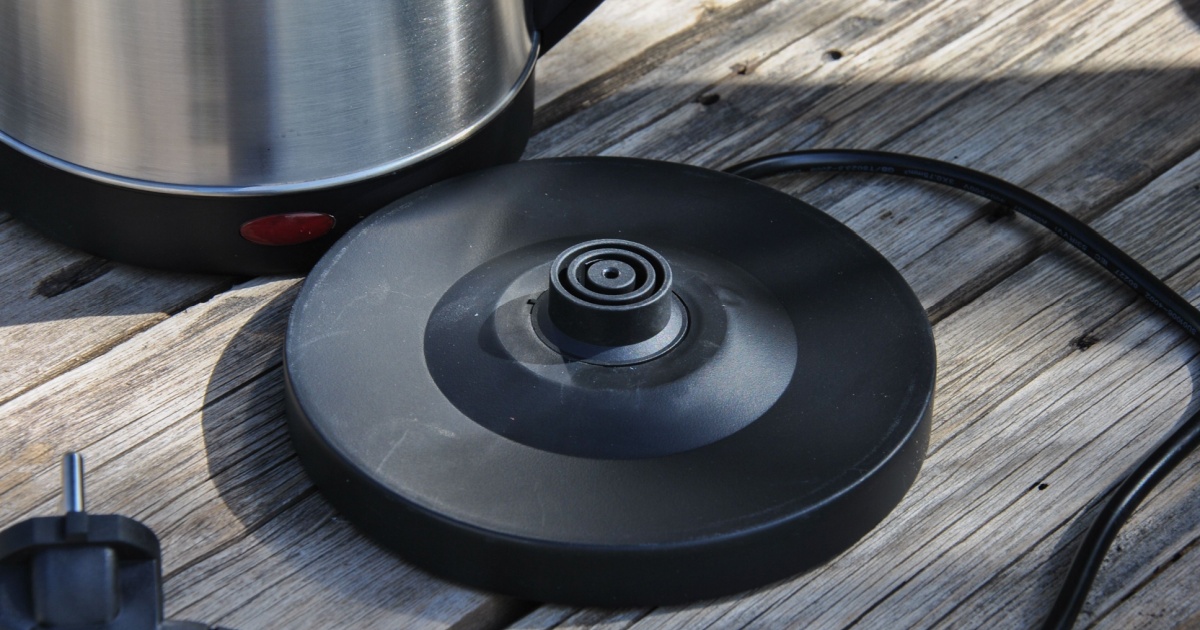
Electric kettles heat water fast, then sit idle on the counter for the rest of the day. Many people never unplug them at all. Slow cookers present a slightly different picture: they’re used for long cooking sessions, and their cords endure hours of heat every time they’re in use. Both share the same issue when it comes to being left plugged in: they’re heat-generating appliances whose switches and internal components can fail.
Turning off an appliance is not the same as cutting its power, and appliances drain electricity when in standby mode, which can quickly add up. A slow cooker with a cracked cord or a weakened heating element that stays plugged in when not in use is a preventable hazard. Electric kettles with lime scale buildup on their heating elements also run hotter than they should, and that extra heat has to go somewhere.
According to the Lawrence Berkeley National Laboratory, a typical American home has many products constantly drawing power, with standby loads adding up to 5% to 10% of residential electricity use. Most households don’t realize the kettle and the slow cooker are two of them, even on days when neither gets used. Pulling the plug takes a moment. Leaving these appliances connected costs you money and keeps a potential failure point live.
What to Do Now
The through line in this list isn’t complexity. It’s habit. According to the Natural Resources Defense Council, Americans spend roughly $165 to $440 annually on vampire energy alone. That’s before you factor in the fire risk that comes with leaving heat-producing appliances connected to a live current indefinitely.
You don’t need to overhaul your home or buy expensive gear. Start by identifying which of these nine appliances you currently leave plugged in all the time. Pick the two you use most often and make unplugging them a non-negotiable part of your routine when you’re done. Then add the others one by one until it becomes second nature.
If you find it difficult to reach behind counters or furniture, a smart power strip can cut electricity to multiple appliances at once without requiring you to constantly plug and unplug each one individually. For appliances like space heaters, irons, and hair tools, however, there’s no substitute for physically removing the plug from the wall. Those are the ones where the stakes are highest, and where the habit matters most. A few seconds at the end of each use is a small price to pay for both a lower energy bill and a safer home.
AI Disclaimer: This article was created with the assistance of AI tools and reviewed by a human editor.
Read More: 3 Appliances You Should Never Plug Into GFCI Outlets