

The United Kingdom, with its long and complex history, is home to countless antiques that have been passed down from generation to generation. Just because something is old, it doesn’t mean that it is valuable, though, and many people have been disappointed to learn that their great-grandmother’s trinket is not really worth much. However, there are occasions where something turns out to be even more valuable than ever expected. Take, for example, a gold almanac that was originally presented by a guest in an Antiques Roadshow episode filmed in Edinburgh.
The Story of the Gold Almanac
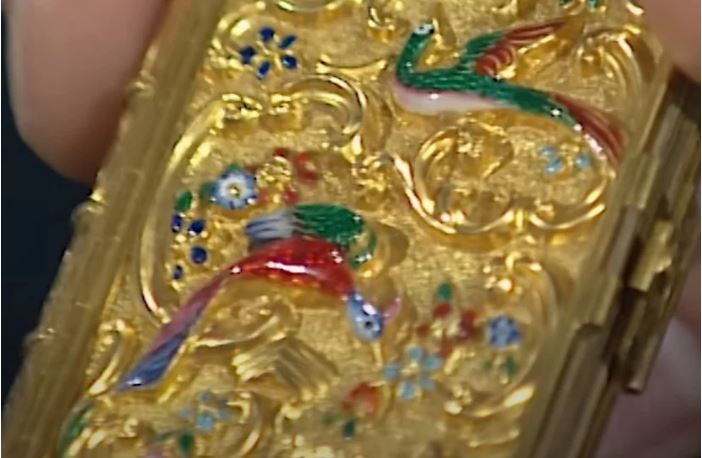
If you have ever seen it before, The Antiques Roadshow is a reality television show broadcast by the BBC. In the show, appraisers of antiques travel around the United Kingdom, informing locals about the value and history of their antiques. The show is very popular and has been airing since 1979. In one of the episodes, which was recorded in Edinburgh, a gust brought in something quite unique: a tiny gold almanac made in 1840. Originally belonging to his maternal great-grandmother, the gold almanac had been passed down through the generations, eventually ending up in the possession of his mother. When she passed, her antique collection was split among the members of her family.
Many of the family members chose items that they considered more practical, while the guest found himself somewhat fascinated by the tiny artifact. What made the gold almanac even more interesting was that it marked the beginning of the reign of Queen Victoria. The piece has been well looked after by each generation it passed through and is still in great condition after almost 180 years. The outside of the gold almanac is adorned with the image of two birds flying among flowers and golden patterns. Inside the almanac, we find an engraving of the city, the names of influential Londoners, and even the phases of the moon and sun.
An Object of Virtue

While the gold almanac originates from the Victorian era, its style harks back to an even older period. The Antique Roadshow’s appraiser noted that the almanac’s design shares many similarities with the styles of the 1700s. Known as the “18th-century revival” style, it was particularly popular during the reign of Queen Victoria. According to the appraiser, the gold almanac is classified as an “object of virtue”. These objects were typically impractical yet finely decorated, serving only to be admired by those who witnessed their exceptional beauty and craftsmanship.
What makes the almanac even more fascinating is the fact that they aren’t sure who the original owner was, though the guest thinks it may have belonged to his great-great-grandmother. When the episode was filmed in 2005, the appraiser valued the gold almanac somewhere between £5,000 and £7,000, which is a significant amount for such a tiny object. Who knows how much it could be worth today, 26 years later!
How to Know if Your Antique is Valuable

How do you know if one of the items you bought or inherited has actual value, or if it is just a cheap trinket? Surely there must be a few ways to tell other than waiting for the Antiques Roadshow to appear in your town. Well, as it turns out, there are several ways you can check whether your antique is valuable or not. The first thing to do is try to establish the antique’s provenance. This typically involves trying to find out how long it has been in your family, where it was originally made or bought, and the price that was paid for it. The history of an object often adds to its appeal and value.
The next thing to look for is a signature, logo, or maker’s mark. When it comes to copying popular brands, not much has changed over the centuries. If something proves to be popular and expensive, you can be sure there will be cheaper knock-offs available on the market soon after. The easiest way to determine if you have the real deal is to look for the maker’s mark or any sort of patent. While these marks are mostly found on antique dishware, pottery, glass, and silver, they were also often added to furniture and other objects carved from wood. Another aspect to consider is the condition of the object.
The Bottom Line

Many people find that their item could potentially be valuable and get their hopes up when they find out how much other people have sold theirs for. However, unless yours is in a similar condition, you may only get a fraction of what you anticipated. If you suspect that a painting you have in your possession may be old, you can check by turning it around. If the canvas is secured with nails, it was probably made before 1930, as staples were more commonly used after that date.
Read More: Lost Bible Chapter Revealed After 1,500 Years Using UV Technology