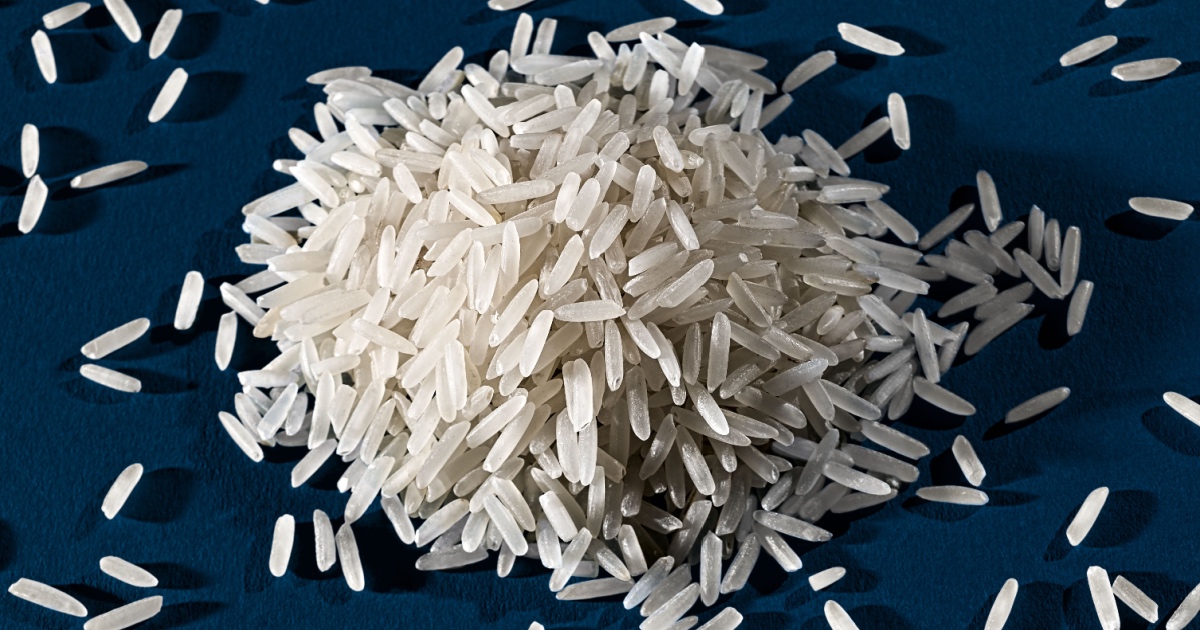

Seventeen of the 52 rice products tested by Consumer Reports averaged 100 parts per billion (ppb) or more of inorganic arsenic – the same threshold the FDA uses as a safety ceiling for infant rice cereal. The broader finding was more stark: arsenic in rice showed up in every single product sampled, across every category, at every price point.
Consumer Reports tested 52 products purchased from ordinary store shelves, ran two to three samples of each through a specialized laboratory, and found not just arsenic but a full suite of heavy metals in the grain. The investigation covered white, brown, basmati, jasmine, arborio, and sushi rice, plus microwavable pouches and seasoned side dishes – the full range of what Americans actually buy and cook each week.
The organization is now formally calling on the FDA to set arsenic limits across the entire rice category, not just one corner of it.
What the Testing Actually Found
Detectable levels of arsenic, cadmium, and mercury turned up in all 142 rice samples analyzed, with lead found in 66 of them. The contamination wasn’t marginal. According to Consumer Reports, 42 percent of the products contained average inorganic arsenic concentrations high enough that consuming one serving per day, over time, could significantly increase the risk of skin and bladder cancers and type 2 diabetes.
Inorganic arsenic is the more dangerous form of the metal. Unlike the organic arsenic found naturally in seafood and some plants, inorganic arsenic is a known carcinogen associated with skin cancer, bladder cancer, type 2 diabetes, and cardiovascular effects. The American Cancer Society notes that both the EPA and the International Agency for Research on Cancer classify inorganic arsenic as a known human carcinogen, with sufficient evidence linking it to lung, bladder, kidney, skin, and liver cancers.
Basmati and sushi rice recorded the lowest average inorganic arsenic concentrations at 55 ppb and 57 ppb, respectively, while arborio came in at 64 ppb, jasmine at 87 ppb, and long- and short-grain rice, alongside parboiled rice, both averaged 101 ppb.
At the high end of individual products, some of the biggest sources of inorganic arsenic included Ben’s Original Long Grain and Wild Rice at 167 ppb, Mahatma Jasmine Brown Thai Fragrant Whole Rice at 155 ppb, and Goya Organics Long Grain Brown Rice at 150 ppb. Royal Basmati Rice tested at the lowest level among all products sampled, at 32 ppb.
The Brown vs. White Divide
Brown rice consistently registers higher concentrations than white because inorganic arsenic accumulates in the grain’s outer bran layer – the same layer that provides the fiber, B vitamins, and additional minerals that make brown rice nutritionally denser. Brown rice averaged 113 ppb compared to 72 ppb for white rice in this round of testing.
Although those averages were modestly lower than the levels Consumer Reports found in its 2014 testing, the organization noted the differences were not wide enough to indicate a meaningful market-wide decline in arsenic concentrations. The arsenic problem in the American rice supply hasn’t improved in any meaningful way in over a decade.
Why Rice Absorbs So Much
Rice picks up 10 times more arsenic than other crops grown in similar soil, according to Consumer Reports’ findings. Growing rice in flooded fields creates low-oxygen (anaerobic) soil conditions that make arsenic in the ground far more chemically available for plant uptake. Wheat, oats, and quinoa, grown in drained soils, don’t face the same absorption dynamics.
Arsenic itself originates from multiple sources – naturally occurring deposits in bedrock and soil, runoff from legacy pesticide use on cotton fields (particularly in the American South), and industrial contamination. Rice grown in regions with historically heavy agricultural chemical use tends to accumulate more of it, which is part of why origin matters when choosing a variety.
The Regulatory Gap Consumer Reports Wants Closed
The US currently has no enforceable federal limit for inorganic arsenic in most rice products. The only regulatory benchmark that exists applies to one narrow category: infant rice cereal. While there are no federal arsenic limits for rice generally, the FDA has set an action level of 100 ppb for inorganic arsenic in infant rice cereals specifically.
The FDA proposed that 100 ppb limit in 2016 via a formal press announcement, and there is evidence that setting even a guideline-level standard produced results. Data from 2018 showed that 76 percent of infant rice cereal samples were at or below the 100 ppb level, compared with just 47 percent in 2014 and 36 percent in the 2011-2013 testing window. The standard reduced industry arsenic levels in that one category substantially, even though it’s classified as an “action level” rather than a legally enforceable limit.
Consumer Reports, on the basis of this new testing, argues that there is no safe level of inorganic arsenic and that the FDA should set limits for all rice products – not just infant cereals. The organization formally asked the FDA about its plans. The agency did not respond.
For anyone following food safety advocacy, this is familiar territory. The arsenic-in-rice issue has been documented since at least 2012, when Consumer Reports first published testing data on the subject. More than a decade later, the regulatory picture for adult rice consumers remains unchanged.
What the Industry Has – and Hasn’t – Said
Consumer Reports reached out to rice companies whose products showed inorganic arsenic at 100 ppb or more, asking whether they test for heavy metals. Lundberg, a California-based brand, responded in detail – four of the five Lundberg products tested came in below 100 ppb. The fifth, Lundberg Organic Cilantro Lime Rice, was slightly above that threshold for inorganic arsenic and also contained more than 0.5 micrograms of lead. Consumer Reports traced the excess arsenic and lead in that product primarily to its spice mix, not the rice itself. Lundberg said it tests its rice for heavy metals annually, using a third-party laboratory, as grain arrives from the fields.
Most other companies didn’t respond to Consumer Reports’ inquiries at all.
Health Risks: Who Bears the Highest Burden
Children and infants face the steepest risks from arsenic in rice. Researchers at the University of Delaware have found that heavy metals including cadmium, lead, mercury, and arsenic can delay brain development in babies and young children. Because infants and toddlers eat more food relative to their body weight than adults do, and because their diets are often less varied, the dose they receive per kilogram of body weight is proportionally higher.
A 2025 independent investigation by Healthy Babies Bright Futures – a nonprofit focused on reducing toxic chemical exposures in early life – found arsenic in 100 percent of 145 rice samples purchased nationwide. That finding, from a separate testing program, arrives at the same conclusion as Consumer Reports: there are no arsenic-free options on supermarket shelves.
For adults, the risk is a function of how much rice they eat and how often. Consumer Reports calculated safe serving limits for each of the 52 products based on EPA risk assessment methodology, factoring in both cancer risk and standard adult body weight. The calculations showed wide variation: someone eating one of the lowest-arsenic products daily would be in a different risk category entirely from someone eating a high-arsenic parboiled or long-grain variety every day.
The Climate Variable: Arsenic Levels Are Likely to Increase
The existing contamination data reflects today’s climate conditions. A 2025 study published in The Lancet Planetary Health, conducted by researchers at Columbia University’s Mailman School of Public Health in collaboration with the Chinese Academy of Sciences and Johns Hopkins Bloomberg School of Public Health, found that the problem will worsen as the planet warms. The research determined that simultaneous increases in CO2 and temperature produce a synergistic rise in inorganic arsenic in rice grain, likely driven by changes in soil biogeochemistry, and that modeled consumption under those conditions projects increases in lifetime cancer and health risks for multiple Asian countries by 2050.
China is expected to face the highest projected impact, with roughly 13.4 million additional cancer cases tied to arsenic in rice. Lewis Ziska, PhD, associate professor of Environmental Health Sciences at Columbia’s Mailman School and a co-author of the study, said the results suggest the increase in arsenic levels could significantly elevate the incidence of heart disease, diabetes, and other non-cancer health effects, and that as rice is a dietary staple in many parts of the world, these changes could lead to a substantial rise in the global burden of cancer, cardiovascular disease, and other arsenic-related conditions.
The mechanism isn’t a mystery. Flooded rice fields already create conditions that maximize arsenic absorption. Warmer temperatures lower the redox potential of waterlogged soil – essentially making it more chemically reducing, which releases more arsenic into the water the rice roots are drawing from. Higher CO2 appears to amplify that process rather than counteract it.
Practical Steps to Reduce Your Exposure
Consumer Reports didn’t only identify the problem – it also tested cooking methods. One cooking technique in particular can remove roughly half the arsenic before the rice reaches your plate. The parboiling method works as follows: bring the rice to a boil in excess water, cook for five minutes, drain completely, then add fresh water and finish cooking. The CR testing found this parboiling-and-absorption method reduced inorganic arsenic content in short- and long-grain brown and white rice by 50 to 58 percent.
Choosing the right rice type matters as much as how you cook it. Basmati rice averaged 55 ppb and sushi rice averaged 57 ppb of inorganic arsenic – well below the 101 ppb average for long-grain and parboiled varieties. Overall, white rice averaged 72 ppb versus 113 ppb for brown rice – lower than the 2014 averages of 82 ppb and 146 ppb, respectively, though the improvement is not statistically significant enough to represent a market-wide change.
Origin also carries weight. White basmati from California, India, and Pakistan, along with white sushi rice, tend to have lower arsenic levels among all rice options tested. These regions either have naturally lower-arsenic soil profiles or cultivation practices that reduce uptake.
Seasoned rice side dishes and boxed rice mixes are a separate concern. Consumer Reports found that some of these products – including Ben’s Original Long Grain and Wild Rice – carried the highest arsenic readings in the entire dataset. The spice and flavor mixes added to these products can be independent sources of lead and other heavy metals, as the Lundberg cilantro lime product demonstrated.
For those who want to diversify away from rice, Consumer Reports notes that quinoa and oats test lower in arsenic. Research from the University of Delaware on heavy metals in food also points to the importance of dietary variety as a practical exposure-reduction strategy, particularly for young children and pregnant women, who face the greatest developmental risk from chronic low-level arsenic exposure.
Read More: How to Cook Rice to Lower Arsenic Levels
What Needs to Happen Next
Consumer Reports’ central demand is regulatory: the FDA must establish inorganic arsenic limits across the full range of rice products sold in the US, not just the infant cereal subcategory. The precedent for doing so already exists. When the FDA set the 100 ppb action level for infant rice cereal, the share of products exceeding that level dropped from 64 percent in 2011-2013 to just 24 percent by 2018. A standard that covers adult rice products would almost certainly produce a similar effect on the broader market.
As of the publication of Consumer Reports’ 2026 testing, no such standard exists, and the FDA did not respond to the organization’s questions about its plans to create one. The FDA’s arsenic-in-food page acknowledges ongoing monitoring efforts, but the gap between the infant cereal action level and the rest of the rice supply remains open.
Key Takeaways
The Consumer Reports investigation lands a specific, actionable set of findings. Inorganic arsenic is in all rice, levels haven’t materially declined in over a decade, 42 percent of products tested carry concentrations high enough to raise cancer and diabetes risk with daily consumption, and no federal standard currently limits arsenic in rice sold to adults.
For consumers, the most protective moves are: choose white basmati or sushi rice from California, India, or Pakistan; cook rice using the parboiling-and-drain method, which cuts inorganic arsenic by 50 to 58 percent; limit rice-heavy seasoned side dishes, which carry the highest contamination readings; and rotate in alternative grains like quinoa and oats, which test considerably lower for arsenic. For parents of infants and toddlers, the exposures are proportionally larger – the case for variety, lower-arsenic varieties, and cooking method changes is even stronger.
The regulatory argument Consumer Reports is pressing has a proven track record. The infant cereal limit worked. Expanding it across the full rice category is, at this point, less a matter of scientific uncertainty than of regulatory will.
Disclaimer: This information is not intended to be a substitute for professional medical advice, diagnosis, or treatment and is for information only. Always seek the advice of your physician or another qualified health provider with any questions about your medical condition and/or current medication. Do not disregard professional medical advice or delay seeking advice or treatment because of something you have read here.
AI Disclaimer: This article was created with the assistance of AI tools and reviewed by a human editor.
Read More: The Recession‑Proof Pantry List You Didn’t Know You Needed (Hint: Think Lentils, Rice & Beans)