Company Behind ‘De-Extinction’ Efforts Hatches Chicks Using Artificial Eggs, Hints at Future Revival of Lost Species Like the Dodo
Something quietly extraordinary happened on May 19, 2026. In a lab in Dallas, Texas, 26 baby chicks broke free from their shells and took their first wobbly steps into the world. That alone sounds unremarkable. Billions of chicks hatch every year. But these ones were different in a way that stops you mid-sentence: not a single one of them hatched from a biological egg.
They grew from early embryo to full chick inside a 3D-printed artificial structure. No hen needed. No natural shell. Just engineering, biology, and a breakthrough that researchers have been chasing for decades.
The company behind it, Colossal Biosciences, is no stranger to audacious announcements. Last year, it made global headlines by producing genetically engineered wolf pups designed to resemble the long-extinct dire wolf. But the artificial egg story is different in character. This is not about tweaking genes to mimic an ancient animal. It’s about solving one of the most stubborn engineering problems in all of biology, and in doing so, cracking open a path to something that once seemed firmly in the realm of science fiction: bringing back birds that have been gone for centuries.
What Colossal Actually Built
Twenty-six baby chickens, ranging from a few days to several months old, were born from a 3D-printed lattice structure designed to mimic an eggshell. The structure is not a crude container. Colossal’s team engineered a lattice shell architecture incorporating a novel bioengineered silicone-based membrane that matches the oxygen transfer capacity of a natural eggshell under normal atmospheric conditions. That last part matters enormously.
Prior shell-less culture systems, first attempted in the 1980s, required large volumes of pure oxygen that cause DNA damage, limit scalability, and are incompatible with standard commercial incubators. In other words, the old approach to growing bird embryos outside a shell was messy, hazardous to the developing animal, and practically impossible to scale up. For decades, researchers experimented with a variety of containers, including glass vessels, plastic wrap, and plastic cups, but those systems required high amounts of supplemental oxygen, and the hatching rates “have not been very good,” according to Mike McGrew, an embryologist at the University of Edinburgh and a scientific advisor for Colossal Biosciences.
Colossal’s solution was to stop fighting nature and instead replicate it. The artificial egg uses a lattice structure combined with a silicone-based membrane that allows oxygen to move efficiently across the surface while operating under normal atmospheric conditions, meaning embryos can grow in the same 21 percent oxygen humans breathe every day.
The process itself involves carefully transferring fertilized egg contents into the artificial shell early in development. Researchers transferred chicken embryos, egg yolks, and egg whites to the artificial shells within 36 to 40 hours after they were laid. Colossal scientists then poured the fertilized eggs into the artificial system and placed them in an incubator, adding calcium (which is normally absorbed from the eggshell) and imaging the embryos’ development and growth in real time. A chick hatches around 18 days after embryo transfer to the artificial egg, according to Colossal’s press release.
One practical benefit almost as striking as the hatching itself: the result is largely transparent, meaning scientists can, for the first time, actually watch a bird build itself in real time.
The Real Target: A Bird That’s Been Gone for 600 Years
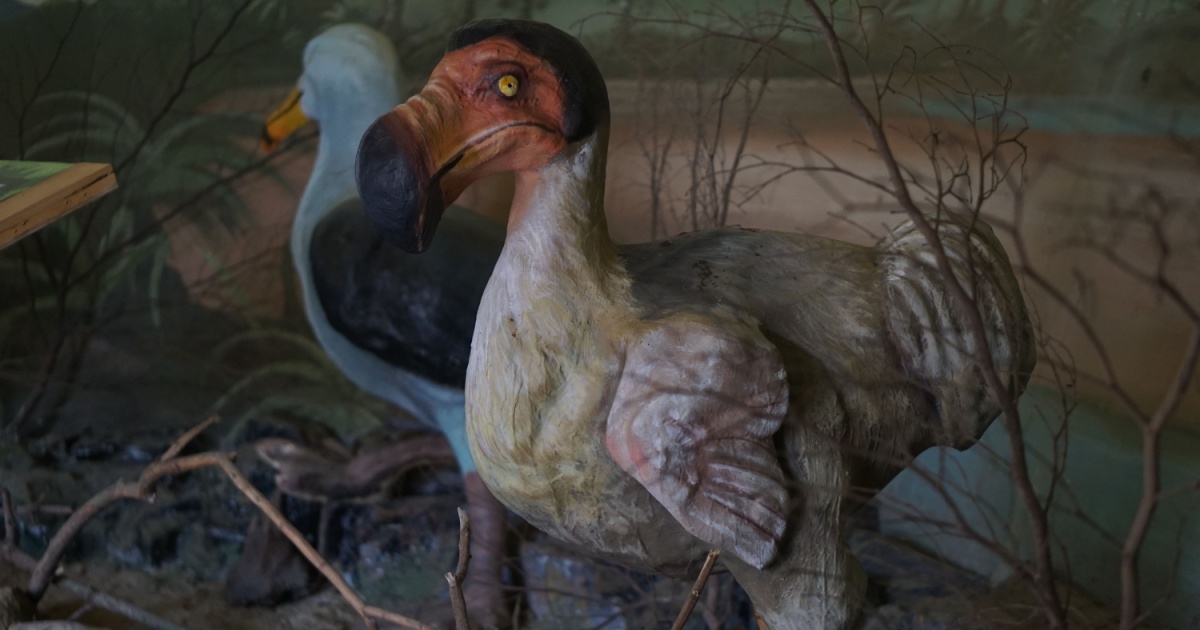
The chickens are practice. The real goal are extinct species like the Dodo and the South Island giant moa. The Moa is an enormous flightless bird that once roamed New Zealand and was hunted to extinction by humans roughly 600 years ago. The company announced in 2025 that it intended to de-extinct the 12-foot-tall, 500-pound flightless bird. The species once thrived across New Zealand until human beings hunted it to extinction some 600 years ago.
The moa presents a problem that no amount of gene editing alone can solve. You can reconstruct its genome. You can identify the edits needed to nudge a living bird species toward moa-like traits. But then what? As Trevor Snyder, a bioengineer at Colossal Biosciences, explained: “There’s no bird on Earth today that could grow a moa embryo inside of one of their eggs. So we have to come up with artificial eggs to be able to support those embryos. But to understand all the things that the egg needs to do, we’re starting with chicken eggs.”
The scale difference is staggering. A South Island Giant Moa egg is estimated to have been approximately 80 times the volume of a chicken egg and roughly eight times the volume of an emu egg, placing it entirely beyond the capacity of any living avian surrogate. A surrogate emu could lay an egg that, for a time, would be big enough to accommodate a tiny moa embryo, but as the chick continued to grow, it would be far too large for the shell. The strategy would then be to carefully crack open the shell and transfer the contents to an artificial egg like the ones that produced the chickens, but 80 times larger.
The 3D-printed lattice shell is designed for transition to injection molding for low-cost, high-volume production, and additional size-scaled versions are already under development. Ben Lamm, Colossal’s co-founder and CEO, has been candid about the timeline. When asked when a moa could hatch, Lamm said: “We have not set a date publicly. But I think it’s the mid 2030s.” Before that, Colossal must practice with other species of small birds, then scale up to a large emu, and finally to the moa.
Why Birds Have Lagged Behind in Reproductive Science
To appreciate why this matters beyond the moa, some context helps. Mammalian reproduction technology has come a long way. IVF, embryo transfer, surrogate pregnancy, and cryopreservation have transformed both human fertility medicine and animal conservation over recent decades. Avian reproduction research has long struggled to match those advances. Mammalian reproduction technologies such as IVF, embryo transfer, and surrogate pregnancy transformed research and agriculture decades ago.
Birds are harder to work with because their development happens entirely outside the mother’s body from the moment of laying. That makes it tricky to intervene without destroying the embryo. As Dr. Beth Shapiro, Colossal’s Chief Science Officer, put it in the company’s official announcement: “The avian reproductive toolkit has lagged behind mammalian systems for decades because birds present unique developmental challenges. The artificial egg changes that.”
Matt James, Colossal’s Chief Animal Officer, also noted that the artificial egg “allows us to rescue compromised embryos, build genetic rescue platforms, and utilize donor and biobanked material in ways that weren’t previously possible.”
You can find out more about the broader scope of species loss driving some of this urgency by reading about animals we’ve lost to extinction.
Conservation Implications Beyond De-Extinction
The artificial egg’s significance is not limited to resurrecting long-gone species. Across North America, three-fourths of bird species are currently in decline, according to a sweeping study published in 2025. The 2025 U.S. State of the Birds report revealed continued widespread declines across all mainland and marine habitats, with 229 species requiring urgent conservation action. The report came five years after the landmark 2019 study that documented the loss of 3 billion birds in North America over 50 years, with more than one-third of U.S. bird species now of high or moderate conservation concern.
Against that backdrop, a scalable platform for incubating bird embryos outside a biological egg has obvious value. Critically endangered birds are often too rare to breed reliably through conventional means. Their eggs are precious, fragile, and sometimes impossible to incubate successfully. Such de-extinction technologies may actually make the most immediate sense when applied to currently endangered species, where scientists could preserve sperm and egg cells from living members to attempt to bring more back.
The artificial shell can be adjusted for different species, from small songbirds to eggs much larger than those produced by modern birds, and researchers are already testing larger versions designed for species beyond the size limits of existing surrogates. The company is also developing self-hatching systems and robotic embryo transfer tools, upgrades that could reduce handling errors and improve consistency during development.
The Skeptics Have a Point
Not everyone is ready to celebrate. The announcement landed with mixed reviews from the scientific community, and some of the criticisms deserve a fair hearing.
Colossal’s assertion of having created the “first-ever shell-less incubation system” has raised hackles among scientists who’ve been working on the technology for years. “Clearly an overstatement,” says Katsuya Obara, at the University of Tsukuba in Japan, who in 2024 hatched chickens from beneath transparent plastic film.
Scientists confirm that Colossal has designed an artificial eggshell with a membrane that allows the right amount of oxygen to get in, just like a real egg. But other components of a real egg, such as the temporary organs that form to nourish and stabilize the growing chick and remove waste, were not included. Calling it a fully “artificial egg” is therefore generous. An “artificial eggshell,” as MIT Technology Review noted in its coverage, would be a more accurate description.
Colossal has also not shared what proportion of the transferred chicken eggs successfully hatched, and it has not published a preprint or peer-reviewed paper on the achievement, nor does it plan to. For now, it’s difficult for outside researchers to evaluate the process and outcomes. Paul Mozdziak, a biologist at North Carolina State University who is not involved with the company, summed it up plainly: “It could be really important, it could be fantabulous. Without data, it’s really impossible to judge what the true impact is.”
The deeper question about what happens if the moa project actually succeeds is one that bioethicists are already asking. Even if Colossal succeeds in creating a tall bird similar to the moa, some scientists are concerned about what happens after, including how it would survive in a landscape that looks nothing like the past. “The big challenge is, what environment is this animal going to live in?” said Arthur Caplan, a bioethicist at New York University’s Grossman School of Medicine.
Environments have changed dramatically since many species went extinct. Even if recreated, it remains unclear whether they would survive, or whether they might destabilize current ecosystems. Supporters argue that carefully managed reintroductions could restore ecological balance. Critics warn that ecosystems are complex and unintended consequences are likely.
This is not a new problem, either. Colossal’s 2025 dire wolf announcement drew similar scrutiny, with many scientists pointing out that the three modified gray wolf pups shared only cosmetic traits with the ancient predator, not its full genetic identity or ecological context. If you want more background on how that controversy unfolded, this breakdown covers it in detail.
The hatching of 26 chicks from artificial eggs is genuinely impressive science. The silicone-membrane lattice that allows atmospheric oxygen exchange, without supplemental gas and without damaging developing DNA, represents a real engineering advance. Even critics of Colossal’s framing tend to acknowledge that. The ability to support a full chick from transferred embryo to hatch inside a standard commercial incubator is a capability that simply did not exist in any practical form before this announcement.
For people who care about wildlife and biodiversity, the more grounded near-term promise lies in conservation rather than de-extinction. A scalable, size-adjustable incubation platform could offer a genuine lifeline for critically endangered bird species that breed poorly in captivity, or whose eggs are too fragile to survive conventional incubation. That application, far less dramatic than resurrecting a giant moa, may ultimately prove more valuable to the birds that are still here and still struggling.
The moa itself remains a long road away. Colossal’s own CEO estimates the mid-2030s as a realistic timeframe, and even that assumes continued progress on genome sequencing, embryo editing, and a dozen other biological and engineering hurdles. What this announcement does establish is that one of the most fundamental obstacles, growing a bird embryo outside any biological shell, now has a working solution. Whether that solution scales from a chicken to a 500-pound moa is the next question. And if the history of science teaches anything, “we have not yet tried this at the harder scale” is a very different problem from “we don’t know where to start.”
AI Disclaimer: This article was created with the assistance of AI tools and reviewed by a human editor.