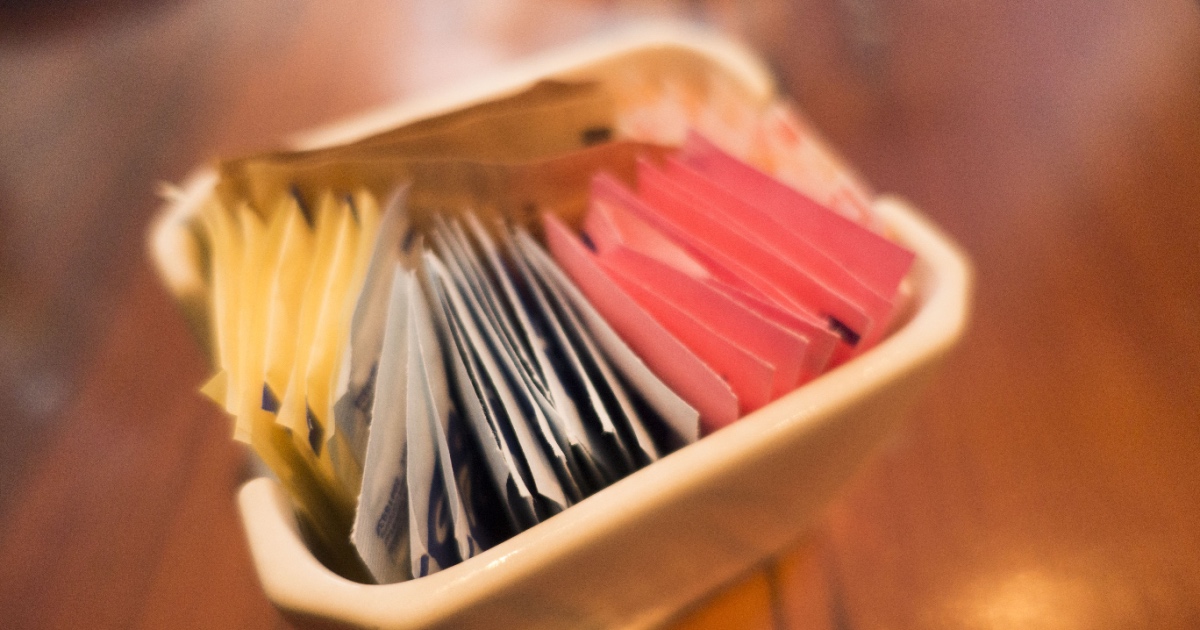

Saccharin was already long considered the “safe” alternative to sugar before researchers in 2025 linked it to nearly double the cardiovascular death risk in diabetic and pre-diabetic adults. The sweetener that once replaced sugar in coffee cups and diet sodas across America now sits at the center of a rapidly expanding body of evidence suggesting the entire category of artificial sweeteners carries potential consequences that were not fully understood when regulators first approved them.
Science has moved fast. Researchers at Tufts University published a meta-analysis in mid-2026 covering 21 randomized clinical trials showing that artificial sweeteners, compared directly to plain water or a placebo, raised both fasting insulin levels and HbA1c (the standard marker of long-term blood sugar control) in adults. The finding was unambiguous enough that the study’s senior author, cardiologist Dariush Mozaffarian, director of the Food is Medicine Institute at Tufts, warned that “the rapidly increasing use of these sweeteners has outpaced our understanding of their long-term health effects.”
That warning appears well-timed. From cancer immunotherapy interference and gut microbiome disruption to cardiovascular mortality and intergenerational effects, the potential health risks of artificial sweeteners being documented across peer-reviewed literature in 2025 and 2026 are both broader and more specific than at any previous point. This report draws together the key findings.
A Quick Overview:
A convergence of clinical trial data, large-scale cohort studies, and molecular research has produced consistent signals that non-nutritive sweeteners (NNS) – including aspartame, sucralose, saccharin, and acesulfame potassium (Ace-K) – are not biologically inert. The most significant 2025-2026 findings document direct effects on insulin metabolism and blood sugar regulation, gut microbiome disruption, impairment of cancer immunotherapy, and cardiovascular disease risk. Regulatory bodies have responded unevenly: the World Health Organization revised its guidance on sweeteners and weight management, the European Food Safety Authority (EFSA) cleared Ace-K at approved levels, and the U.S. state of Louisiana enacted legislation banning aspartame in public school meals starting in 2028.
The Metabolic Signal: Insulin, Blood Sugar, and the Artificial Sweeteners Health Risks Study
A review and meta-analysis from the Food is Medicine Institute at Tufts University, published in Current Atherosclerosis Reports, found that across 21 randomized clinical trials in adults, artificial and other low-calorie sweeteners raised fasting insulin and HbA1c compared to non-caloric controls such as water or placebo, and showed a trend toward worsening insulin sensitivity.
Lead researcher Meng Wang, a research assistant professor at the institute, noted what distinguished the analysis from prior work: “What makes our analysis notable is that, by focusing on noncaloric comparators, we better isolated the direct physiological effects of the sweeteners themselves, not the calories they replace.”
In addition to randomized trials, the team reviewed large observational studies, which generally found that consuming non-nutritive sweeteners is linked to a higher risk of developing cardiometabolic diseases. The researchers noted that these studies have limitations, as people already at risk for these conditions may be more likely to choose these products. Different sweeteners may also have different health effects, so grouping them together may obscure the full picture – but taken together with the clinical trial findings, the researchers say the overall body of evidence raises concern.
Cohort studies assessing NNS from all dietary sources suggest that total NNS intake and each commonly used NNS are associated with a higher risk of type 2 diabetes, and that total intake and specific agents are associated with certain cardiovascular disease outcomes.
The practical takeaway from the Tufts analysis is direct: choosing a diet soda over water is not a metabolically neutral swap. HbA1c elevation, even modest, is clinically significant because it reflects sustained glucose exposure that accumulates silently over months before it registers as disease.
Cardiovascular Risk: Aspartame, Ace-K, and Sucralose
The cardiovascular implications of specific sweeteners have been studied most thoroughly in the NutriNet-Santé cohort, a prospective French study involving over 100,000 participants tracked across multiple years.
The study examined associations between artificial sweeteners from all dietary sources and risk of cardiovascular diseases, including 103,388 participants. Artificial sweeteners – especially aspartame and acesulfame-K – were associated with increased risks of cardiovascular and cerebrovascular diseases.
More specifically, aspartame was linked to elevated risk of cerebrovascular events (strokes and related conditions), while acesulfame potassium and sucralose were each associated with heightened coronary heart disease risk. These are observational findings – they establish association, not causation – but the scale of the cohort and the consistency of the signals across different sweetener types make them difficult to set aside.
Aspartame’s neurological profile extends beyond vascular risk. Studies have shown that artificial sweeteners impact various functions of the gastrointestinal system, and others have demonstrated an association with neurologic symptoms such as headache and taste alteration.
Saccharin and Mortality: A Stark Signal in Vulnerable Populations
While saccharin has been approved for use in the U.S. food supply for decades, little was known about its long-term health effects in high-risk groups. A study examining the association between saccharin intake and mortality in diabetic and pre-diabetic populations from NHANES 1988-1994 found that, after multivariable adjustment, increased absolute saccharin intake was associated with higher all-cause mortality, CVD mortality, and cancer mortality in that population.
Among overweight participants specifically, elevated saccharin intake was linked to a heightened risk of cancer mortality, with a hazard ratio of 7.369.
Published in the British Journal of Nutrition, these findings are particularly relevant because saccharin is still commonly used in some tabletop sweeteners and food products, and because people managing diabetes – the exact population most likely to reach for zero-calorie sweeteners – appear to face the greatest mortality risk from this specific compound. The study’s authors note the findings applied even at saccharin intakes below the FDA’s established acceptable daily intake limit.
Sucralose and Cancer Immunotherapy: A New Front
The most clinically urgent artificial sweetener health risk to emerge in the 2025 research cycle involves sucralose, the sweetener sold under the Splenda brand, and its apparent interference with cancer treatment.
Research by the University of Pittsburgh and UPMC Hillman Cancer Center found that patients with melanoma and non-small cell lung cancer who consumed high levels of sucralose had a worse response to immunotherapy and poorer survival than those with diets low in the artificial sweetener.
The mechanism has been clarified through both human patient data and mouse experiments. Sucralose shifted the composition of the gut microbiome, increasing bacterial species that degrade arginine – reducing levels of this amino acid in the blood, tumor fluid, and stool. Sucralose may weaken cancer immunotherapy by altering gut bacteria and reducing arginine levels needed for immune cells, though supplementation with arginine or citrulline could counteract this effect.
The study showed that sucralose consumption modifies microbiome composition, restricts T-cell metabolism and function, and limits immunotherapy response in preclinical models of cancer and in patients with advanced cancer treated with anti-PD-1-based immune checkpoint inhibitors. Sucralose consumption was associated with a reduction in microbiota-accessible arginine, and amino acid supplementation or fecal microbiome transfer from anti-PD-1 responder mice completely restored T-cell function and immunotherapy response.
Published in Cancer Discovery, a journal of the American Association for Cancer Research, the study is the first to directly link sucralose intake to cancer treatment outcomes in human patients. For any patient currently undergoing immune checkpoint inhibitor therapy, the question of sucralose intake is now clinically relevant – even if it has not yet become part of standard oncology dietary guidance.
The Gut Microbiome Connection
The immunotherapy data cannot be understood apart from the wider evidence base on sweeteners and the gut microbiome – the trillions of bacteria, fungi, and other microorganisms that live in the digestive tract and regulate everything from immune function to metabolic health.
One reviewed trial using detailed microbiome profiling along with experiments transferring microbes from humans to mice found that certain low-calorie sweeteners altered the composition and the function of the gut microbiota.
Concerns extend to gut health, where sweeteners like saccharin have been linked to inflammatory bowel diseases, gut microbiota disruption, increased intestinal permeability, and dysbiosis (an imbalance in the gut microbial community), leading to metabolic disturbances such as impaired glucose tolerance, insulin resistance, and heightened systemic inflammation. These disruptions reduce the production of short-chain fatty acids crucial for insulin sensitivity, further contributing to metabolic disorders like type 2 diabetes.
Research published in the International Journal of Molecular Sciences found that non-caloric sweeteners alter gut microbiota composition and neural circuits that regulate feeding behavior, which may help explain why some sweetener consumers report increased appetite and caloric intake despite choosing nominally “calorie-free” products.
This connects directly to the findings on ultra-processed foods and metabolic disease – many ultra-processed products that are marketed as “diet” or “light” contain multiple non-nutritive sweeteners simultaneously, and their combined microbiome effects remain largely unstudied.
Intergenerational Effects: What Animal Data Suggests
Francisca Concha Celume of the Universidad de Chile, lead author of an article in Frontiers in Nutrition, noted that findings raise the question of “whether they influence metabolism in ways we do not yet fully understand.” The 2026 study, titled “Artificial and Natural Non-Nutritive Sweeteners Drive Divergent Gut and Genetic Responses Across Generations,” found effects extending across generations in animal models.
Animal data on aspartame also showed developmental effects: long-term exposure from pregnancy to offspring resulted in delayed puberty in female offspring rats, alongside evidence of mitochondrial dysfunction and oxidative stress, according to a 2025 review of emerging aspartame research. These are preclinical (animal) findings and cannot be directly applied to human pregnancy outcomes, but they do underscore the need for caution in populations for whom the regulatory guidance is least developed.
Sucralose raises a specific concern for pregnant and nursing women: a 2025 study in Nutrients confirmed that sucralose crosses the placental barrier and is detectable in breast milk, meaning fetal and infant exposure cannot be avoided when a pregnant or nursing woman consumes it regularly.
The Cancer Question: What the Broadest Evidence Actually Shows
Despite the signals above, the question of the artificial sweetener cancer connection remains scientifically unresolved – and the most comprehensive analysis available in 2025 reaches a cautious conclusion.
Previous meta-analyses exploring the relationship between artificial sweetener consumption and cancer risk have shown inconsistent results. In an umbrella review of systematic reviews and meta-analyses encompassing 35 datasets, artificial sweetener intake was not significantly associated with cancer risk overall. The authors caution that this finding reflects the effect of various sweeteners grouped together and should not be extrapolated to individual compounds.
That caveat is critical. Pooling all sweeteners together may conceal real risk from specific compounds in specific populations. The saccharin data in diabetic adults, the sucralose data in cancer patients on immunotherapy, and the 2023 classification of aspartame as a Group 2B possible carcinogen by the WHO’s International Agency for Research on Cancer (IARC) all point to compound-specific and context-specific risks that aggregate analyses cannot capture. The IARC’s parallel body, JECFA (the WHO/FAO Joint Expert Committee on Food Additives), reaffirmed that aspartame is safe at current typical intake levels – a position the FDA has not moved away from, with aspartame not appearing on the agency’s list of food chemicals under active safety review.
Regulatory Landscape
The WHO issued guidance recommending that non-sugar sweeteners should not be used for weight control or to reduce the risk of chronic disease – a significant shift from the longstanding framing of these products as health-neutral sugar alternatives.
In Europe, EFSA completed a full re-evaluation of acesulfame K in 2025 and concluded that intake at approved levels is unlikely to raise cancer or cardiovascular risk – a finding that stands in tension with the NutriNet-Santé cohort data associating acesulfame K with coronary heart disease.
At the U.S. state level, Louisiana enacted SB 14 in June 2025, banning aspartame from public school meals effective the 2028-2029 school year – the first state-level legislative restriction on a specific artificial sweetener in the U.S.
Read More: The Next-Gen Artificial Sweetener You Might Already Be Eating (and Breathing)
What This Means
The accumulated evidence from 2025 and 2026 does not support the conclusion that all artificial sweeteners are acutely dangerous to all people. What it does support – with growing confidence – is that these compounds are not metabolically inert, and that their effects vary meaningfully by compound, by population, and by individual health status.
For patients currently undergoing cancer immunotherapy, the sucralose data from the University of Pittsburgh and UPMC Hillman Cancer Center is specific enough to warrant a conversation with an oncologist about dietary intake of sucralose-containing products. The mechanism – gut microbiome disruption reducing arginine availability and impairing T-cell function – is documented in both mouse models and human cancer patients, making it one of the most clinically grounded artificial sweeteners health risks identified to date.
For people managing diabetes or pre-diabetes, the saccharin mortality data published in the British Journal of Nutrition is a direct signal that the sweetener most commonly used in this population may carry its own cardiovascular and cancer mortality risks. Swapping saccharin for water, or for naturally derived alternatives that do not disrupt gut microbiota, is a reasonable, low-cost reduction in risk.
For the general population, the Tufts meta-analysis is the most actionable new finding: non-nutritive sweeteners raised fasting insulin and HbA1c compared to water in controlled trials. The dose required to produce these effects in the clinical trials reviewed was consistent with everyday diet soda consumption. Until long-term randomized controlled trials clarify whether these metabolic changes accumulate into clinical outcomes over years, the WHO’s position – that sweeteners should not be viewed as health tools – represents the most evidence-consistent guidance currently available.
The practical default, supported by the breadth of the current evidence base, is to minimize reliance on artificial sweeteners and to treat water, sparkling water, or minimally sweetened beverages as the genuine neutral options they are. Specific sweetener choices matter: acesulfame K, aspartame, sucralose, and saccharin have different risk profiles and affect different populations in different ways. Treating them as interchangeable is not supported by the 2025-2026 science.
Disclaimer: This information is not intended to be a substitute for professional medical advice, diagnosis, or treatment and is for information only. Always seek the advice of your physician or another qualified health provider with any questions about your medical condition and/or current medication. Do not disregard professional medical advice or delay seeking advice or treatment because of something you have read here.
AI Disclaimer: This article was created with the assistance of AI tools and reviewed by a human editor.