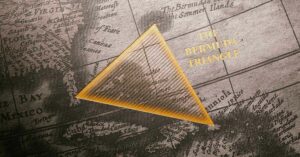

Lloyd’s of London has charged the same shipping insurance rates for Bermuda Triangle voyages since the 1970s. That’s not an administrative oversight – it’s one of the clearest signals available that the world’s most sophisticated maritime risk assessors see nothing unusual about the stretch of ocean that has captivated conspiracy theorists for decades.
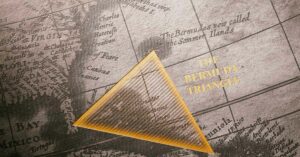
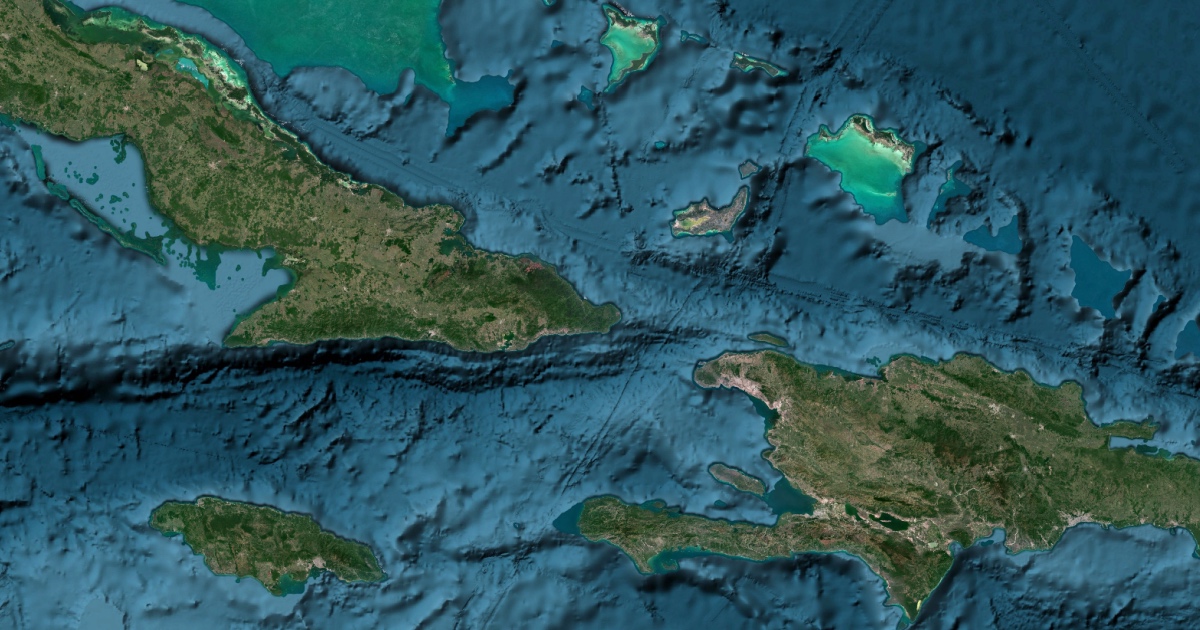
The Bermuda Triangle mystery has generated alien theories, claims of lost Atlantis portals, and entire television franchises built on the idea that something inexplicable swallows ships and planes whole. The zone stretching from Miami to Puerto Rico to the island of Bermuda has been associated with more than 50 ships and 20 airplanes disappearing over hundreds of years. Yet the institutions with the most to lose financially from that data – insurers, naval authorities, aviation regulators – have consistently refused to treat it as anything other than a particularly busy and meteorologically demanding patch of ocean.
So what does science actually say about what’s happening there? Several converging explanations have emerged in recent years, some of them stranger than the myths they replace. The answer is less about the supernatural and more about physics, geography, human error, and waves that were only officially recognized by the scientific community in the 1990s.
1. Rogue Waves That Can Snap a Ship in Two
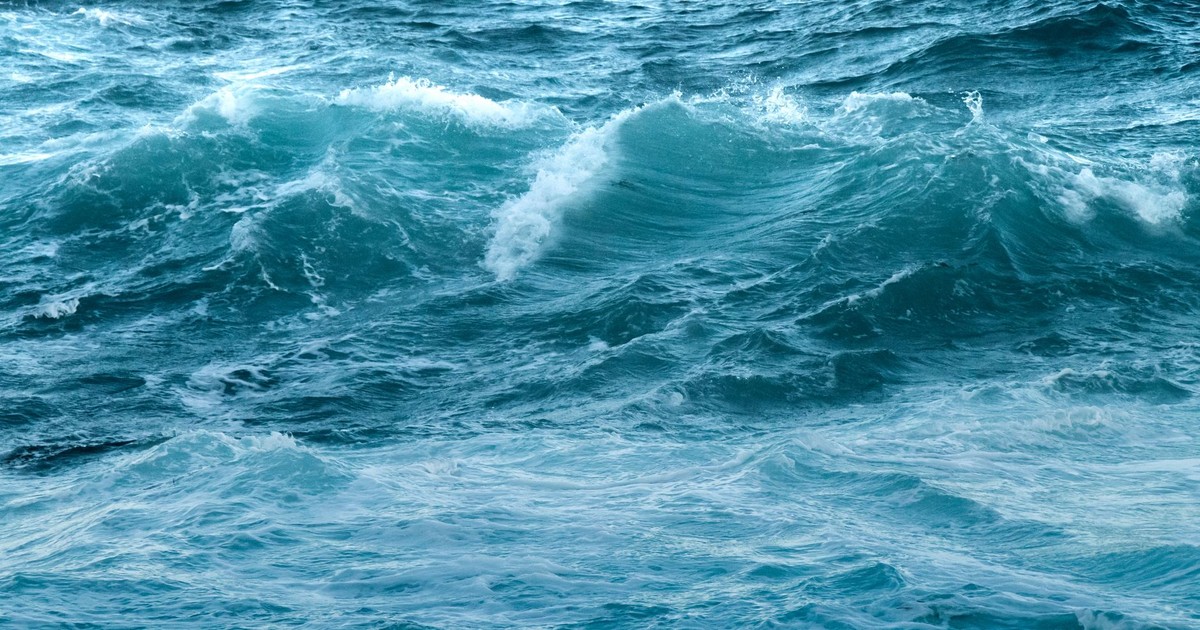
Dr. Simon Boxall, an oceanographer and principal teaching fellow at the University of Southampton, found that the Bermuda Triangle region experiences rogue waves – a natural ocean phenomenon where waves can form around 100 feet high, coming from all angles, and are powerful enough to break a ship in half. What makes the Bermuda Triangle particularly prone to this is its geography. When storms from the south and north converge, along with disturbances from Florida, a potentially lethal combination of giant waves can form, according to Boxall’s research.
Rogue waves form when multiple storms converge, causing waves to combine and amplify. While waves from a single storm typically max out at around 10 to 12 meters, rogue waves can be significantly larger and far more destructive. If a wave reaches 30 meters high and the distance between wave peaks is around 200 to 300 meters, a large ship could be suspended between two wave crests with no support in the middle, causing it to snap in two.
To test how this would play out in practice, Boxall and other researchers reconstructed a scale model of one of the ships that disappeared in the Bermuda Triangle – the USS Cyclops. Boxall described waves measuring in excess of 30 meters, noting that if a ship is struck by one, it can sink in a matter of two or three minutes. Despite their devastating potential, Boxall emphasized that rogue waves are rare and unlikely to be the cause of every disappearance in the Triangle. He believes most incidents are likely due to human error or severe weather conditions.
2. The USS Cyclops: A 542-Foot Ship That Simply Vanished
The USS Cyclops is one of the most haunting cases associated with the Bermuda Triangle. The 542-foot vessel went missing in 1918 with 306 crew members on board, and no wreckage has ever been found. It sent no distress signal. There was no storm on record at the time of its disappearance. For over a century, this case has been the centerpiece of Bermuda Triangle mythology – the ship too large, and too silent in its end, to have met an ordinary fate.
According to the Naval History and Heritage Command, the USS Cyclops had supported warships as a unit of the Naval Auxiliary Force before the war. The ship disappeared in March 1918 while returning from Brazil. Numerous ships sailed to locate the vessel, which was initially thought to have been sunk by a German submarine. Her wreck has never been found, and the cause of her loss remains unknown.
What makes the Cyclops significant for the rogue wave theory is its physical profile. The ship’s enormous flat-bottomed hull would have made it especially vulnerable to being lifted at both ends by two wave crests simultaneously, the exact failure mode Boxall’s simulation demonstrated. The absence of any distress call is consistent with that scenario too: a vessel snapped in two within minutes doesn’t leave time to radio for help.
3. Flight 19 and the Navigation Problem Everyone Misread
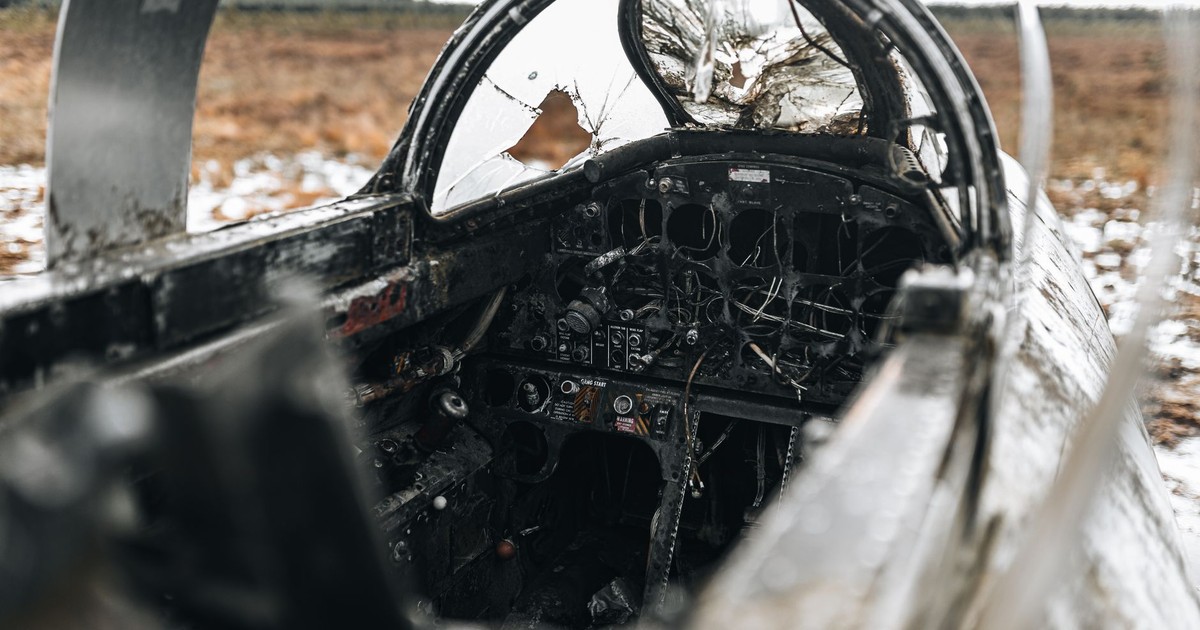
Five Navy Avenger torpedo bombers disappeared on a training flight in December 1945, a case that became the most cited example in Bermuda Triangle lore and sparked theories ranging from alien abductions to supernatural forces. Fourteen crew members were lost. A rescue aircraft sent to find them also disappeared. The incident became the founding myth of modern Bermuda Triangle obsession.
The Naval History and Heritage Command records that fragmentary radio communications indicated compass failure and disorientation of the flight leader as the likely cause, leading to fuel exhaustion. The lead pilot, Lt. Charles Taylor, had his compass malfunction during a training exercise he was unfamiliar with, became convinced he was flying over the Gulf of Mexico when he was over the Atlantic, and led his squadron in the wrong direction until they ran out of fuel over open ocean.
The rescue aircraft that vanished the same evening, a PBM Mariner, was later determined by investigators to have most likely exploded in mid-air – a known mechanical issue with that aircraft type. The National Archives’ official record of the incident concludes the Navy found the rescue aircraft was lost to a faulty fuel system explosion, while Flight 19 itself was lost to pilot error. As Boxall has noted, “academics have ignored the area for years – because there’s really nothing special there.” Flight 19 was a navigation tragedy compounded by mechanical failure, not evidence of paranormal geography.
4. The Methane Theory That Didn’t Hold Up
One explanation that gained serious scientific traction in the late 1990s was the methane hydrate theory. The idea was that large deposits of frozen methane on the seafloor could suddenly destabilize, releasing massive gas bubbles that would reduce water density enough to sink ships instantly – and potentially ignite engines on low-flying aircraft. It was vivid, physically plausible, and widely reported.
NOAA has acknowledged that environmental considerations could explain many, if not most, of the disappearances in the region. However, the specific methane mechanism has since been ruled out for the Bermuda Triangle itself. According to a BBC Science Focus review, studies by the US Geological Survey recorded no significant methane releases in the Bermuda Triangle region in the past 15,000 years – making it an elegant theory with no geological backing in this specific location.
The deeper problem with the methane explanation is that it was applied selectively. The seafloor beneath the triangle does contain some hydrate deposits, as do hundreds of other ocean regions worldwide. Nothing about the Triangle’s geology makes it uniquely prone to the kind of sudden release that the theory requires.
5. Magnetic Anomalies and the Compass Problem
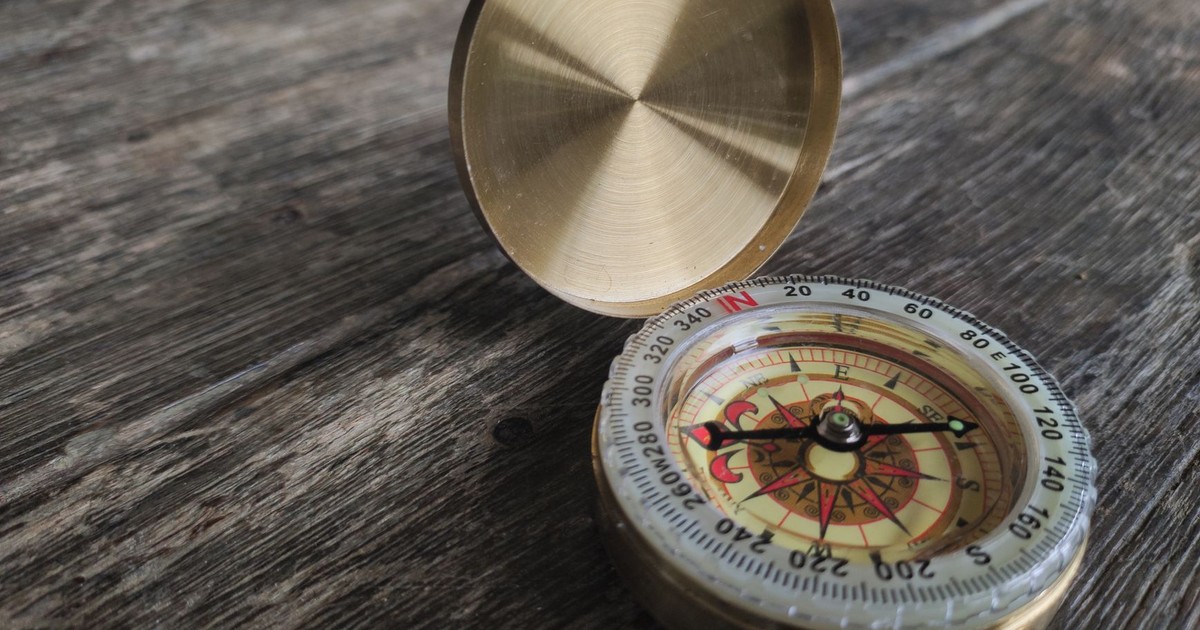
Christopher Columbus noted erratic compass behavior crossing this region in 1492, and his account is often cited as the earliest recorded evidence that something strange was happening. The Bermuda Triangle region has a documented history of magnetic anomalies where true north and magnetic north can align – but this is a known and natural phenomenon, not unique to the Bermuda Triangle.
Magnetic declination – the difference between true geographic north and the direction a compass needle points – varies across the planet and shifts over time. The Bermuda Triangle sits near one of the zones where that declination is relatively small, which historically meant compasses could appear to behave unusually to navigators unfamiliar with the local variation. For Columbus, sailing with instruments calibrated for European waters, the change would have been noticeable. For modern pilots and sailors with GPS and updated magnetic charts, it’s a non-issue.
What the compass narrative did, effectively, was create a template for misinterpreting normal navigation challenges as evidence of supernatural interference. Every subsequent incident involving disorientation – including Flight 19 – got filtered through that frame, lending each new case an air of mystery that simpler explanations didn’t carry.
6. The Traffic Volume No One Talks About
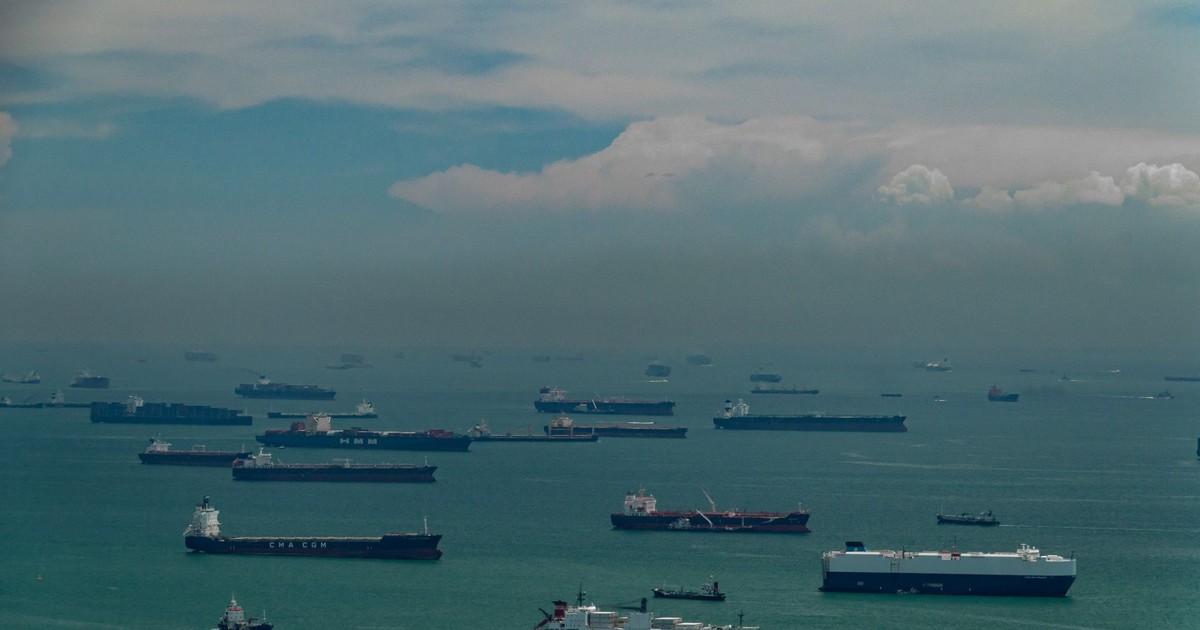
Rogue waves occur around the globe, and the Bermuda Triangle itself was only created as a concept in 1952 – prior to that, there was no established mystery around the region, according to Boxall. The timing matters. Boxall has noted that approximately 33% of all privately owned boats in the United States reside within the Bermuda Triangle area, and a 2019 US Coast Guard report showed that 82% of all incidents at sea occurred because people had no training or safety equipment.
Lloyd’s of London has maintained the same shipping insurance rates for Bermuda Triangle voyages since the 1970s, indicating no elevated actuarial risk compared to other busy shipping corridors. Australian scientist Karl Kruszelnicki has backed this position, alongside NOAA, stating that the number of disappearances in the Bermuda Triangle is the same as anywhere else in the world on a percentage basis.
The statistical picture that emerges is straightforward: concentrate a third of the nation’s private boats, add one of the world’s busiest commercial shipping and flight corridors, factor in the Gulf Stream’s capacity to rapidly shift weather from calm to violent, and incidents will occur. More incidents than in quieter waters, simply because of exposure time and traffic volume – not because the ocean itself is anomalous.
7. How the Myth Was Built – and Who Built It

In 1975, author Larry Kusche published a book debunking the Bermuda Triangle legend, revealing that reports had been inaccurate, exaggerated, or unverified, according to BBC Science Focus. Kusche went back to primary sources – weather records, Lloyd’s shipping logs, Coast Guard reports, newspaper archives – and found that storms had been omitted from accounts, ships had disappeared outside the Triangle’s boundaries but been attributed to it, and some vessels listed as lost had simply never existed.
The concept of the Bermuda Triangle as a named, defined mystery zone didn’t exist before 1952, when writer George X. Sand first described it in a magazine article. Charles Berlitz stoked the legend further in 1974 with a sensational bestseller that popularized alien theories and Atlantis explanations for a mass audience. By the time Kusche dismantled those claims a year later, the mythology had already embedded itself deeply enough in popular culture that the debunking reached far fewer people than the original fabrication.
Modern satellite tracking and new ICAO (International Civil Aviation Organization) standards that require aircraft in distress to broadcast their position every minute have essentially eliminated the data gaps that historically fueled Bermuda Triangle myths. Ships and planes no longer simply “vanish” without a trace – they have transponders, emergency beacons, and satellite uplinks that leave a record of exactly what happened and where.
Read More: The Mystery of the Bermuda Triangle May Be Solved
What You Can Take From This
The Bermuda Triangle mystery, stripped of its mythology, reduces to a set of compounding physical realities: an unusually high concentration of maritime traffic, a meteorological environment where three storm systems can converge, a documented capacity for rogue waves to sink large vessels within minutes, a pre-GPS era ripe for navigation errors, and a handful of authors who amplified and embellished every ambiguous incident they could find.
Boxall has stressed that belief in the Bermuda Triangle mystery often overrides scientific facts, noting: “Once people make up their minds, it’s hard to convince them otherwise.” That cognitive stickiness is arguably the most durable part of the phenomenon. The rogue wave explanation, the magnetic declination data, the insurance rates, and the Coast Guard statistics don’t generate television documentaries the way portals and alien bases do.
The ocean does present genuine, measurable hazards in this region – powerful weather, strong currents, and rare but catastrophic wave events that science only formally acknowledged in the 1990s. Those hazards deserve respect, and sailors and pilots who underestimate the Gulf Stream’s volatility or the speed at which weather can turn in this corridor do so at real risk. A supernatural explanation isn’t required. The physics is more than sufficient.
AI Disclaimer: This article was created with the assistance of AI tools and reviewed by a human editor.