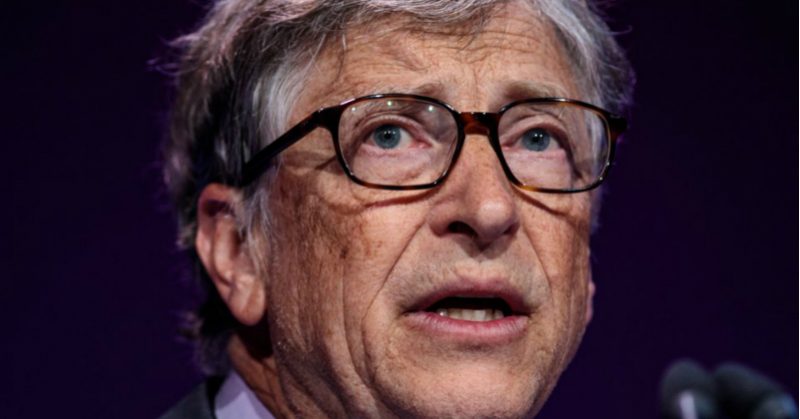
Bill Gates Sold Every Microsoft Share He Owned — Here’s Why It Matters
There are moments in financial history that stop you cold – not because markets are crashing or a company has collapsed, but because something symbolic and almost unthinkable has quietly happened in a regulatory filing. This is one of those moments.
The man who built Microsoft from a college dorm-room dream into one of the most valuable companies in the history of capitalism no longer owns a single share of it. Not one. The severance is complete, documented in black and white in a mandatory disclosure to the U.S. Securities and Exchange Commission, and the implications for investors, for the company, and for our understanding of how wealth really works are worth examining carefully.
What does it mean when a founder walks away entirely? And more importantly, does it mean anything at all for ordinary shareholders still holding the stock? The answers require looking past the headline and into what’s actually driving the decision – because the story is far more interesting, and far more instructive, than the surface reading suggests.
A Quick Overview: On May 16, 2026, the Bill & Melinda Gates Foundation Trust officially divested its remaining shares in Microsoft Corp (MSFT), selling 7.7 million shares valued at approximately $3.2 billion, marking the end of a decades-long financial relationship between the Foundation and Microsoft. The Trust’s 13F filing for the quarter ended March 31, 2026 confirmed the complete exit, leaving the Trust, which holds a portfolio valued at $31.7 billion, with zero Microsoft shares. Three forces explain the move: concentration risk management, philanthropic liquidity needs, and a formal 20-year wind-down plan announced in May 2025. This report examines each of those forces, contextualizes the divestment within Microsoft’s current financial position, and considers what, if anything, it means for investors still holding MSFT.
The Anatomy of a Historic Exit
From Dorm Room to Dominant Position
Gates dropped out of Harvard University to start Microsoft with Paul Allen in 1975, later serving as the company’s CEO from its founding until 2000, and as its chairman until 2014. He resigned from the board entirely in 2020. Microsoft made Gates the world’s youngest self-made billionaire in 1987, and he was regularly listed as the world’s richest person on the Forbes Billionaires List.
For decades, Microsoft stock sat at the very heart of Gates’ personal wealth and the Foundation’s investment portfolio. The Foundation did not purchase its Microsoft shares on the open market. The entire position was built through direct donations of Microsoft stock from Bill Gates’ personal wealth over many years.
In Q3 2022, when a large number of Microsoft shares were added to the Trust, it became the portfolio’s largest holding, accounting for 27%. However, since Q4 2023, the Gates Foundation Trust began to reduce its stake in Microsoft. As of March 2025, the Trust held 28.5 million Microsoft shares, valued at $10.7 billion, accounting for roughly 26% of its overall portfolio.
The Final Steps
The Trust’s 13F filing for the quarter ended September 30, 2025, revealed it had significantly reduced its stake in Microsoft, cutting its Microsoft holding by 65% over the previous quarter. Microsoft dropped to number four in the Trust’s portfolio. Then came the coup de grâce.
In a Friday disclosure with the Securities and Exchange Commission, the Trust revealed that it sold its final 7.7 million shares during the first quarter of 2026. The divestment, valued at approximately $3.2 billion at current market prices, marks the end of a decades-long equity relationship between the charity and the tech giant Gates co-founded.
The Trust’s investment decisions are overseen by Gates himself. The fund’s sole trustee is Bill Gates, who has influence over investment decisions, though it’s managed by Cascade Asset Management, the private investment firm that handles assets for both Gates and the Foundation Trust.
Three Reasons This Is Not a Vote of No Confidence
Reason One: Concentration Risk Is Real
Every serious portfolio manager understands concentration risk – the danger that comes from holding too large a position in any single asset, no matter how strong that asset appears. Concentration risk is real, even when the stock is one you founded. The Foundation’s obligation is to fund its charitable mission, not honor sentimental attachments.
This is a fundamental principle of institutional investing, and foundations are held to it more strictly than individual investors. A foundation that allowed its entire grantmaking capacity to rise and fall with the share price of a single tech stock would be failing its governance obligations, regardless of that stock’s pedigree.
Reason Two: Rational Portfolio Management
Microsoft’s stock had run hard, and though the valuation appeared reasonable especially compared to its tech peers, trimming a concentrated position is rational portfolio management. When a single holding grows to represent more than a quarter of a $30 billion portfolio, institutional discipline demands reduction.
The stock’s retreat from its all-time highs also provides context for the Trust’s timing. According to historical price data from MacroTrends, Microsoft had fallen significantly from its 2025 peak, making it one of the weaker performers among the Magnificent 7 in 2026. That correction, partly driven by investor anxiety over escalating AI capital spending, meant the Foundation was liquidating into a period of relative weakness, not peak exuberance. Selling into a drawdown reinforces that this was a planned, systematic exit rather than an opportunistic offloading at the top.
Reason Three: Philanthropy Requires Liquidity
Deploying tens of billions in annual grants requires liquidity that a single equity holding, however excellent, cannot efficiently provide. The Trust was acting like a portfolio manager, not a sentimental founder.
This is perhaps the most important factor of all, and it connects directly to a much larger announcement Gates made in May 2025. Bill Gates announced he will shut down the Gates Foundation and give away nearly all of his personal wealth over the next 20 years. Gates announced he now plans to distribute “virtually all” of his wealth, around $200 billion by his estimate, within the next 20 years, before shuttering the foundation on December 31, 2045.
On the occasion of its 25th year, the Gates Foundation committed to accelerating its mission by spending $200 billion over the next 20 years. Gates plans to increase the Foundation’s annual budget from $6 billion to $9 billion.
The foundation’s board approved the accelerated timeline with a change to the foundation’s charter, which had previously set the organization’s end date for 20 years after Gates’ death. The funding pledged for the last 20 years actually exceeds the foundation’s current endowment, which stands at $77 billion. Gates plans to donate 99% of his remaining fortune to the foundation over the next two decades.
The logic becomes clear. You cannot distribute $9 billion annually in grants from a portfolio anchored by a volatile single-stock position. The divestment is part of the Gates Foundation’s long-term strategy to incrementally allocate its entire capital base to philanthropic grants over the next 20 years, gradually reducing the size of the portfolio rather than parking it in long-term equities. The Microsoft sale is not a statement about Microsoft. It’s a statement about how to fund the largest philanthropic commitment in modern history.
Those interested in earlier examples of billionaires committing to spend their fortunes entirely during their lifetimes, rather than endowing permanent institutions, will find relevant context in the story of Chuck Feeney, who donated his entire $8 billion fortune and inspired Gates and Warren Buffett to launch the Giving Pledge in 2010.
The Tax Dimension
One detail that escaped most headlines concerns how this sale is taxed. Because the Foundation did not purchase its Microsoft shares on the open market – the entire position was built through direct donations of Microsoft stock from Gates’ personal wealth – foundations do pay a small tax, but not the standard capital gains tax. The sale of the shares is subject to a federal excise tax of 1.39% on the net capital gains.
That distinction matters enormously when assessing the economics of the transaction. A standard investor selling a $3.2 billion position at a significant gain would face a far heavier tax burden. The Foundation’s structure, by design, allows the vast majority of that capital to flow toward charitable purposes rather than to the Treasury.
What Microsoft’s Fundamentals Actually Say
Here is where the instinctive investor reaction – “if Gates is selling, should I be selling too?” – deserves a clear-eyed response.
According to stock data from Stock Analysis, Microsoft reported $281.7 billion in total revenue for fiscal year 2025, representing 14.9% growth compared to the previous fiscal year. The company’s operating margin was 45.6% in fiscal year 2025, reflecting strong core business profitability. Microsoft’s trailing twelve-month free cash flow ending December 2025 was $77.4 billion. It holds one of the strongest balance sheets in corporate America, with over $78 billion in cash and short-term investments.
In Q2 of fiscal year 2026, revenue came in at $81.3 billion, up 17% year over year, with Azure growing 39%. Azure continues growing at a double-digit pace, while Microsoft’s AI investments through OpenAI partnerships position it at the center of the generative AI race.
The valuation picture has also shifted meaningfully after the stock’s retreat from its highs. A 2026 analysis from GuruFocus suggests MSFT is currently undervalued, with a GF Value of $549.37 compared to its current price of $421.92, representing approximately 23% undervaluation. The company’s current P/E ratio of 25.1x sits significantly below its 5-year median P/E of 34.15x.
That last data point is worth sitting with. The stock is trading at a meaningful discount to its own historical valuation average – at precisely the moment its founder’s charity is exiting. That’s not a contradiction. It reflects two entirely separate forces operating independently of each other.
A Notable Counter-Move
The same week the Gates Foundation disclosed its final exit, another well-known investor moved in the opposite direction. According to a May 2026 report from CNBC, billionaire Bill Ackman used the same day’s filings to disclose that his firm Pershing Square Capital Management had built a new 5.65 million share Microsoft stake, with the position valued at nearly $2.3 billion. Ackman stated that Pershing Square would disclose “a new position in Microsoft, a company we have followed for many years now offered at a highly compelling valuation,” framing the buy as a valuation bet on Microsoft’s AI franchise.
The Risks That Remain Real
Intellectual honesty requires acknowledging that Microsoft faces genuine headwinds, independent of this divestment. In the first half of fiscal year 2026, Microsoft had already spent more on capital expenditure than in the entire fiscal year of 2025, with annualized CapEx tracking toward $130 billion or more. Microsoft’s capital intensity has roughly tripled in three years, as the company transitions from a software business that happened to run cloud infrastructure into an infrastructure business that happens to sell software.
Risks exist. AI infrastructure spending remains expensive. Regulators continue examining large technology firms. Competition from Amazon and Google will not disappear. These are legitimate considerations for any investor assessing the stock today, and they should be weighed honestly against the strong revenue and cash flow profile.
The Gates Foundation Trust’s complete exit from Microsoft is a historic event in symbolic terms. A co-founder’s charity severing the last financial link to the company he built over five decades is the kind of moment that stops investors in their tracks. But the signal it sends about Microsoft the business is far weaker than the signal it sends about the Foundation’s own obligations and strategy.
The move aligns with Gates’ philanthropic strategy to gradually wind down the Foundation’s operations over the next 20 years, directing all assets toward charitable purposes rather than maintaining a permanent fund. The Trust was never managing money to beat the S&P 500. It was managing money to fund vaccines, fight disease, and reduce poverty on a global scale. Liquidating a $3.2 billion equity position to fund a $9 billion annual grant-making operation is not a market call. It is accounting.
For investors, the practical questions remain the same ones they faced before this filing: Does Microsoft’s revenue growth justify its current valuation? Can it convert enormous AI infrastructure spending into durable returns? How should Azure’s growth trajectory be weighed against rising CapEx pressure? Those questions have answers, and they’re worth pursuing. What they don’t depend on is whether Bill Gates still holds the shares.
The founder has left the building, financially speaking. The building, it turns out, is doing quite well.
Disclaimer: This information is not intended to be a substitute for professional financial advice, investment advice, tax advice, or legal advice, and is provided for informational purposes only. Always seek the guidance of a qualified financial advisor, accountant, or other licensed professional regarding your personal financial situation or investment decisions. Do not make financial, investment, or tax decisions based solely on information presented here. Past performance is not indicative of future results, and all investments carry risk, including the potential loss of principal.
AI Disclaimer: This article was created with the assistance of AI tools and reviewed by a human editor.